
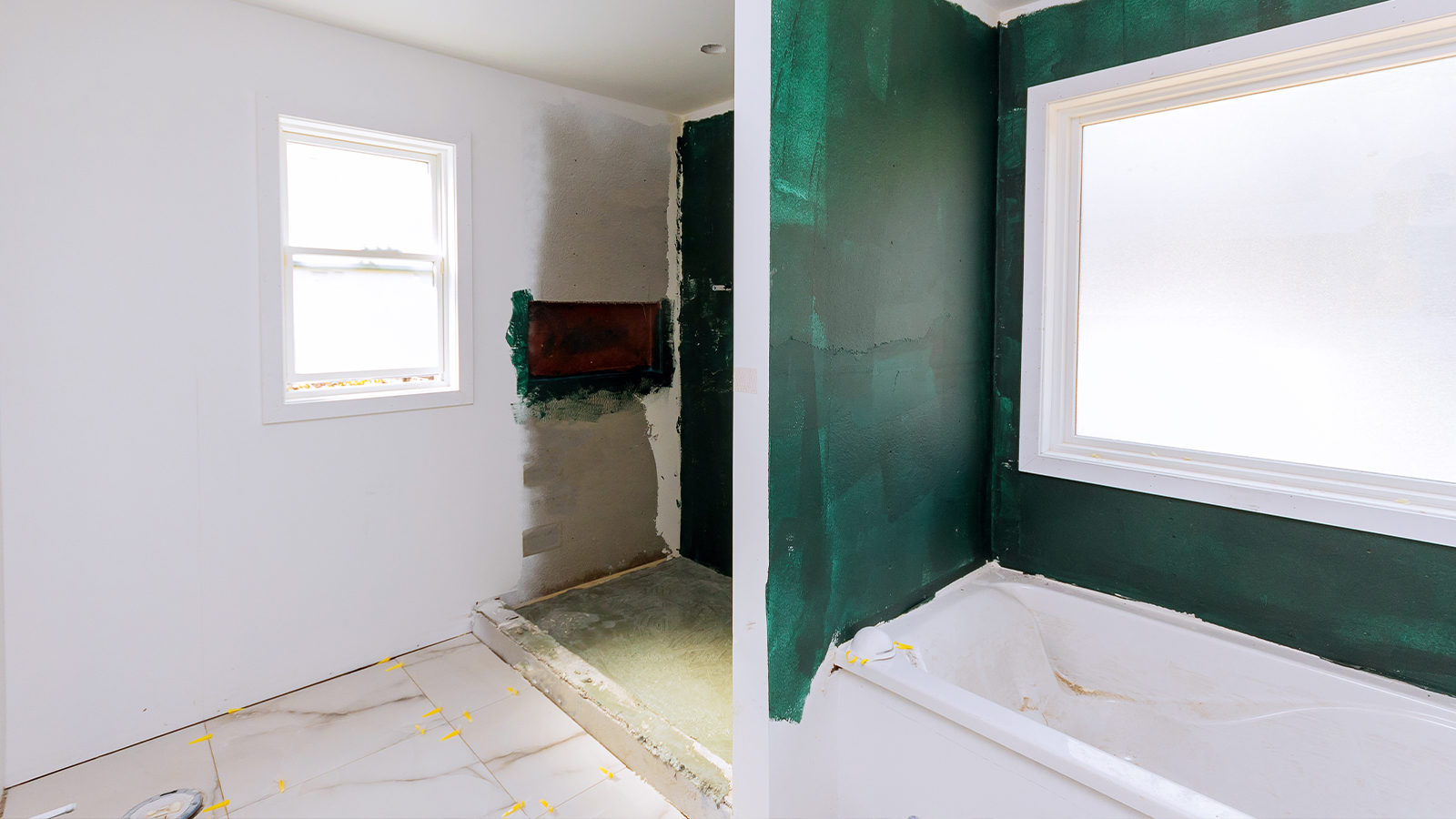
Most bathroom remodel mistakes don’t surface during construction. They appear months later — in a joint that keeps cracking, a cabinet warped by moisture, or a surface pulling away from the shower wall. Many homeowners don’t realize this until the damage is already well underway. This guide covers the most common bathroom remodel mistakes we see in Houston, why they happen, and what to do differently.
Key Takeaways
- Most costly mistakes happen before demo begins, not during construction
- Moving drain lines adds thousands in unexpected cost
- Choosing the wrong surface materials causes early failure
- Poor ventilation causes rapid surface deterioration throughout the bathroom
- Planning grab bar support costs far less before surfaces are installed than after
- Licensed remodeling services exist for a reason — shortcuts create long-term exposure
Costly Mistakes Start in the Planning Phase — Not on the Job Site
Something we always explain before starting a remodel is this: the decisions made in the first two weeks matter more than anything that happens on the job site. Most homeowners treat planning as optional and jump straight to product selection. That is one of the biggest mistakes to avoid — because a layout confirmed after materials are ordered costs real money to reverse.
Lock In the Layout Before Ordering Fixtures and Materials
One of the most common mistakes we repeatedly see is purchasing a vanity, fixture, or material before measurements are finalized on paper. It creates compounding problems:
- Door swings that conflict with the confirmed layout
- Storage that doesn’t fit the actual space
- Materials ordered in the wrong quantity or wrong size
In a small bathroom, there’s no margin for these errors. Confirm everything on paper before a single item is purchased.
Start With a Complete Budget — Not Just a Wish List
Many clients call us after having made this mistake: starting demo without a fully-loaded budget. Scope creep takes hold fast.
Build a 15–20% contingency into the estimate before work begins. Treat it as part of the plan — because most homes we visit in Houston have the potential to reveal hidden conditions behind the walls once demolition starts. A client who budgets for surprises stays on schedule. One who doesn’t gets stalled.
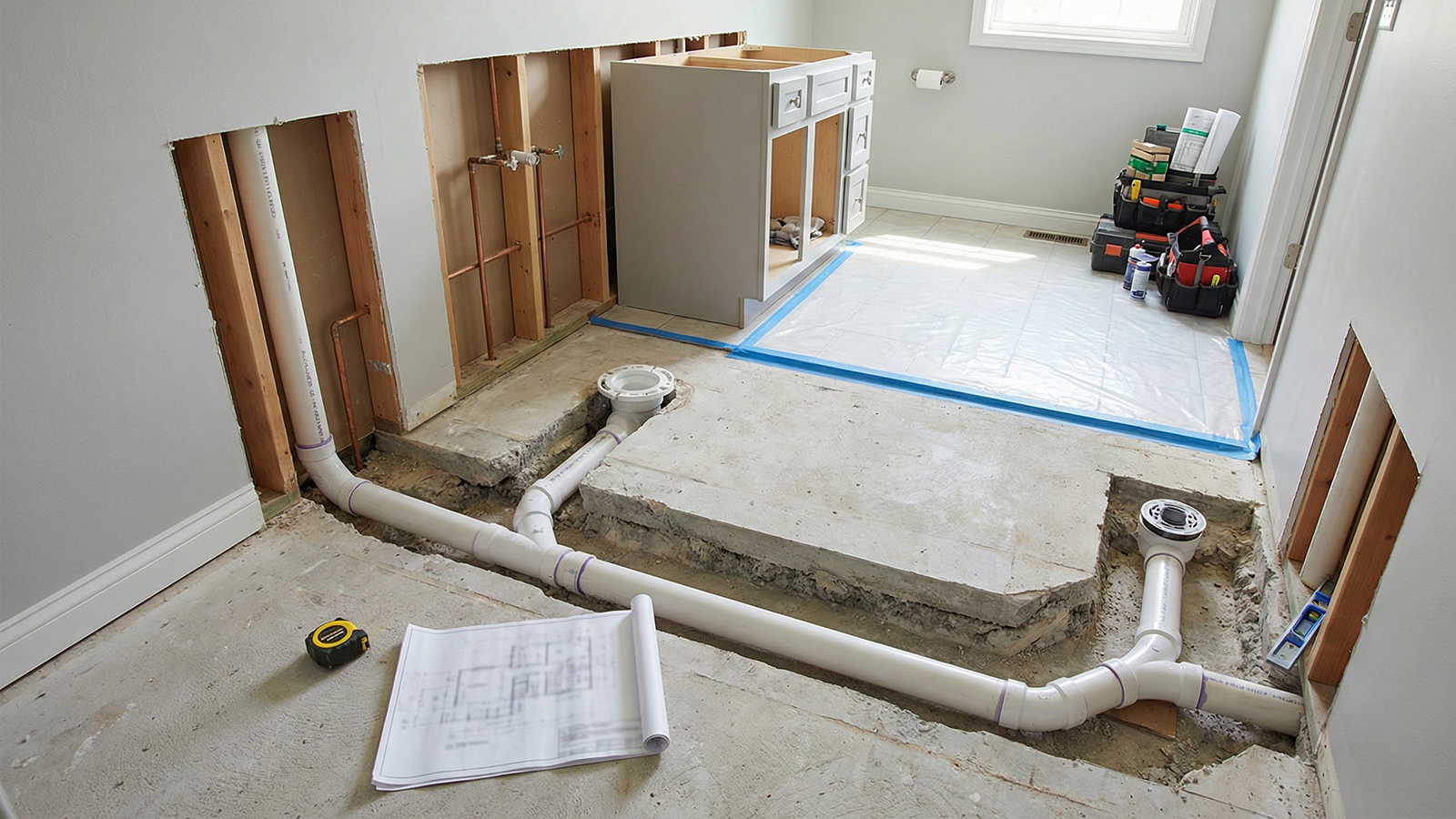
Moving the Drain Lines Costs More Than Most Expect
Relocating plumbing is one of the most expensive decisions in a bathroom remodel. What looks like a minor drain shift often requires a licensed plumber to re-route lines with proper slope — sometimes through concrete or structural framing.
We see this often, especially in homes built in the 1980s, where the existing drain configuration simply wasn’t designed for the layouts homeowners want today. This single change consistently adds thousands to projects originally scoped as cosmetic updates.
The fix: Work with existing plumb locations wherever possible. If a change is genuinely necessary, price it before demo starts — re-routing after walls are open is significantly more expensive than planning for it upfront.
Learn More: Cost Saving Tips for Bathroom Remodels
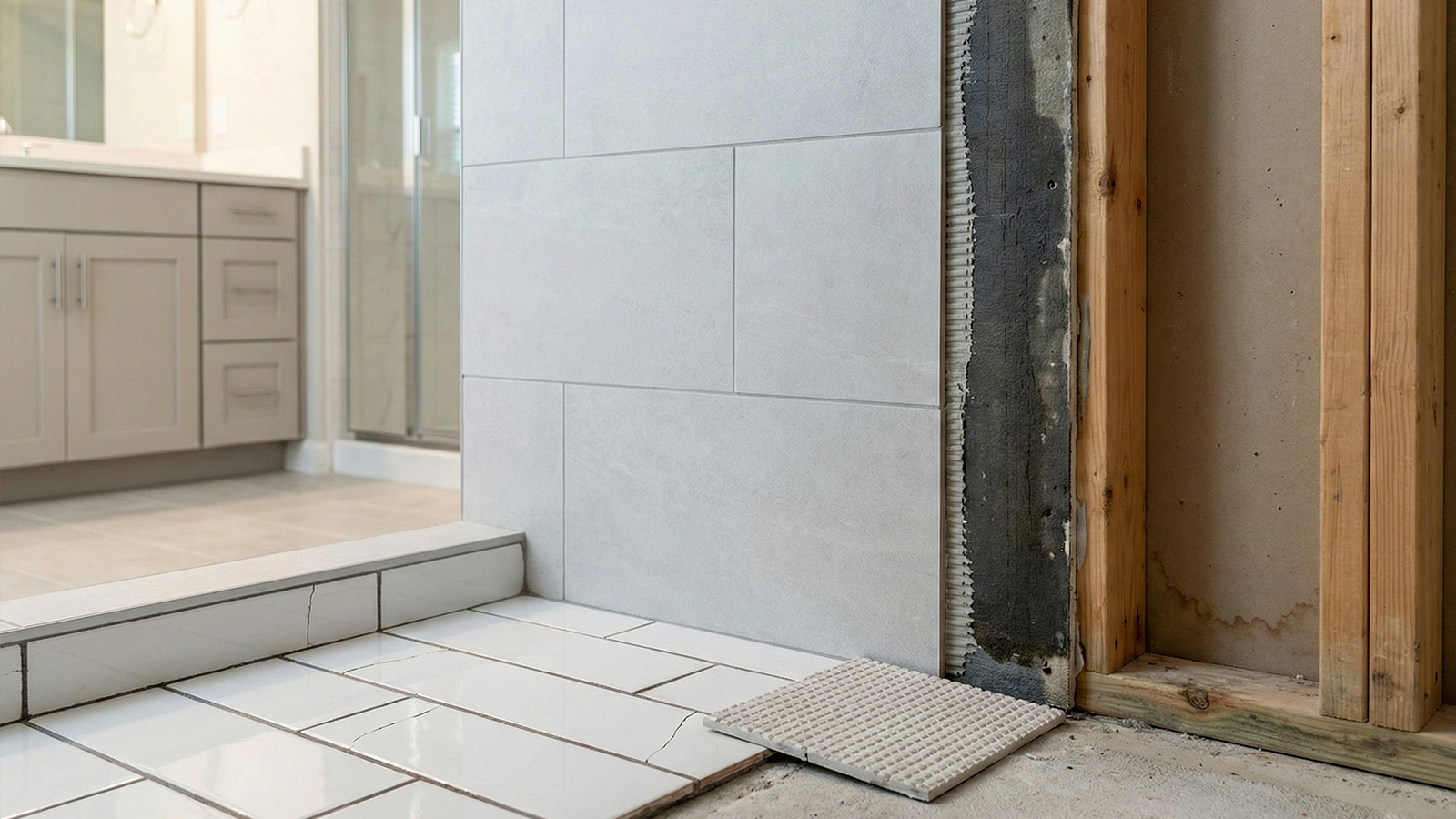
Choosing the Wrong Materials for the Wrong Surface
Wrong materials are where renovation mistakes turn into structural problems. Bathrooms are high-moisture environments, and not every adhesive, surface material, or grout is rated for the application.
Why the Wrong Tile Creates Long-Term Problems
Wall tile and shower floor tile are not interchangeable — and this is one of the main issues we see in Houston homes. A product rated for walls lacks the slip resistance required on a wet floor surface. Installing it on a shower floor creates a safety hazard and leads to surface failure within the first year.
Here’s what we specify instead:
- Shower floors: Tile with a DCOF rating of 0.42 or higher
- Shower walls: Large-format porcelain (12×24 or larger) — fewer joints mean less moisture infiltration
- Selection approach: Choose tile as a coordinated system, not separately — mismatched finishes and scale conflicts are avoidable
Skipping the Waterproofing Membrane Behind the Shower
Many homeowners don’t realize this until it’s too late: the tile surface alone does not stop water. The waterproofing membrane behind it does.
When that membrane is absent or improperly applied, water reaches the wall substrate and causes damage that isn’t visible until it’s already serious. We’ve opened walls where the tile still looked acceptable on the surface while the framing behind had been compromised for years. In Houston’s climate, this failure accelerates faster than in drier regions.
Skipping the membrane is how a bathroom renovation turns into a full tear-out.
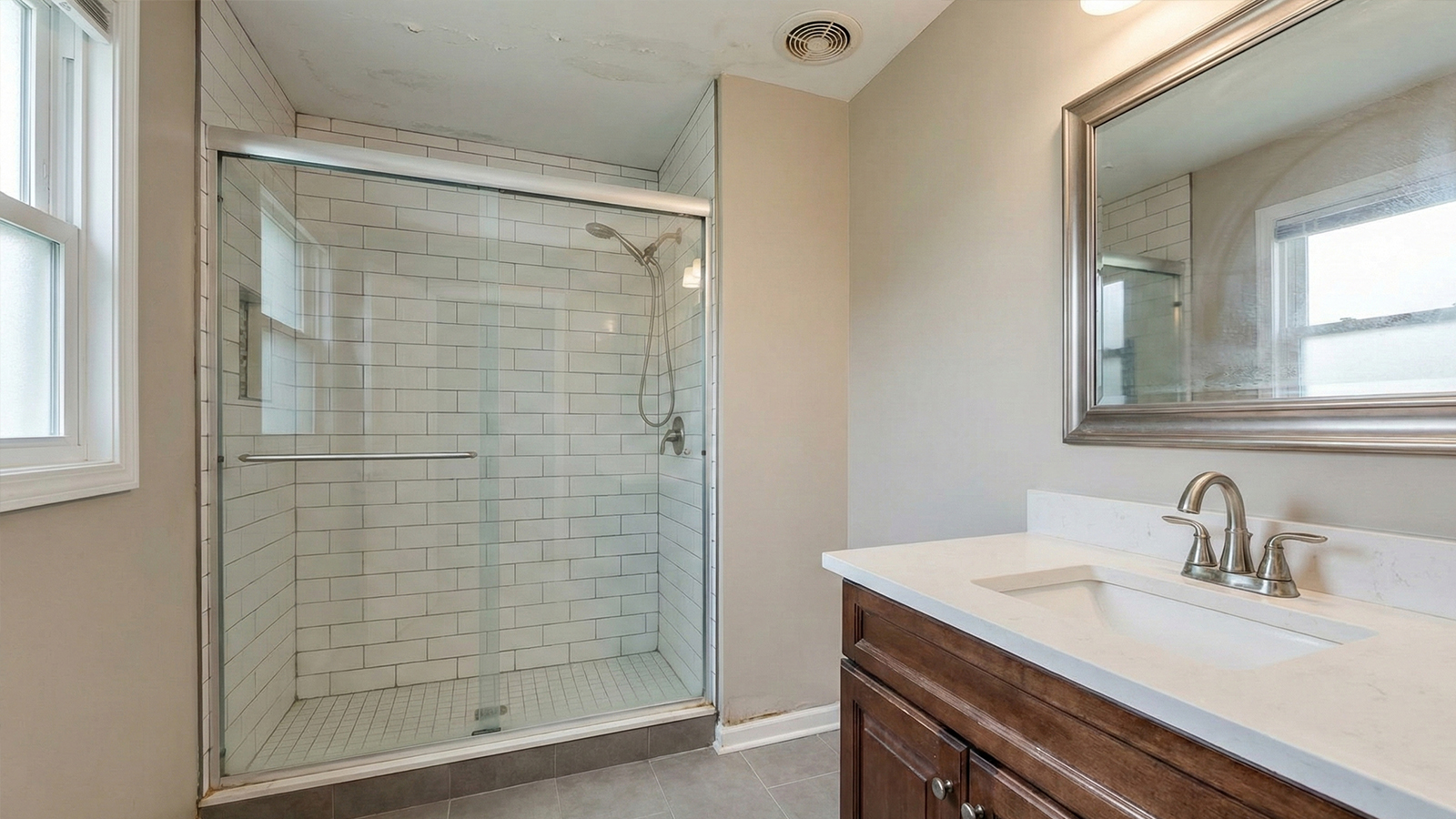
Poor Ventilation Is One of the Costliest Renovation Regrets
Walk into a bathroom without adequate airflow after a few years and the evidence is clear:
- Paint peeling above the shower
- Grout lines darkened with mold growth
- Cabinet faces delaminating at the edges
- Fixture finishes oxidizing ahead of schedule
One of the most common mistakes we repeatedly see is treating ventilation as an afterthought. It gets overlooked during the remodel and becomes one of the most destructive failures over time.
How Poor Airflow Destroys a Remodel From the Inside Out
Humidity that has nowhere to go attacks every surface. Adhesive bonds weaken. Moisture breaks down grout. The cabinet under the vanity swells shut. A bathroom remodel that skips proper exhaust planning begins degrading within a few years — regardless of material quality.
Sizing the Exhaust Fan Correctly for a Houston Bathroom
Most of the homes we visit in Houston are running undersized fans that recirculate rather than exhaust. Here’s what we recommend:
- Minimum 1 CFM per square foot — and in Houston’s humidity, exceed that baseline
- The fan must vent to the exterior, not the attic — recirculating units do nothing for moisture control
- For bathrooms with an enclosed shower, a secondary unit inside the enclosure is worth the investment
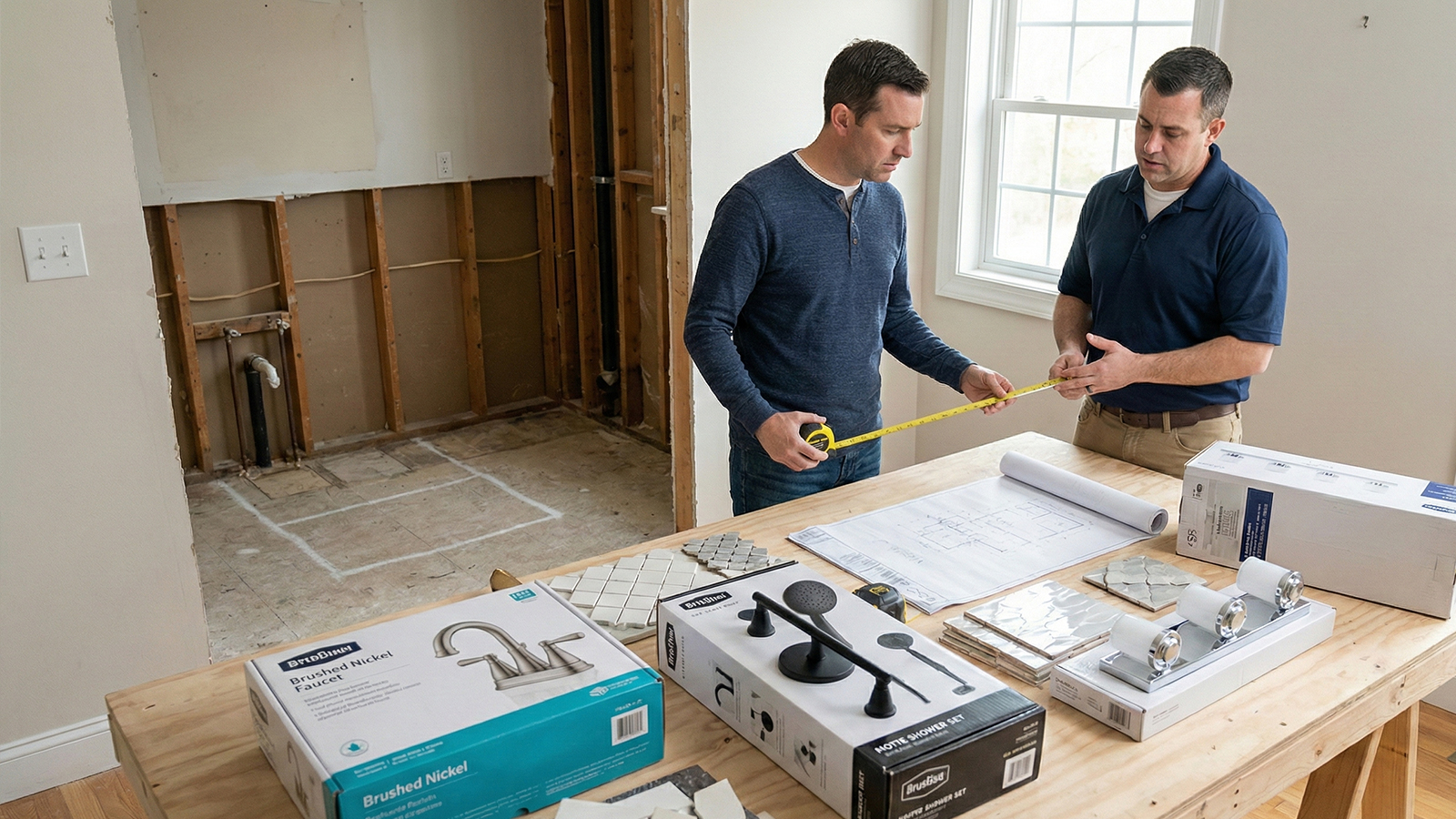
Buying Fixtures and Materials Before the Design Is Confirmed
Many clients call us after having placed orders before their layout was locked in — and the costs add up fast. Restocking fees, wrong-size fixtures, quantities that don’t match the confirmed space.
Before anything is ordered, confirm as a complete set:
- Faucet and toilet hardware
- Shower fixture and shower doors
- Light fixtures
- All finish finishes matched across the set
One mismatched finish or a special-order item that doesn’t fit the confirmed space can delay the entire project by weeks.
What Licensed Remodeling Services Actually Cover
Something we always explain before starting a remodel is the permit question. In Houston, plumbing and electrical work beyond like-for-like replacement requires a permit — including moving drain lines, adding circuits, and modifying electrical systems.
Unpermitted work surfaces at resale, during insurance claims, and when future projects open the same walls. Correcting it after the fact costs more than doing it right the first time. The permit process exists to protect the investment, not complicate it.
Plan for Accessibility Before the Renovation Starts
Accessibility is the consideration most commonly deferred — and most commonly regretted. Many homeowners don’t realize this until they’re facing a fully tiled shower with no blocking in the walls.
Here’s the cost reality:
- Blocking for grab bars during framing: Nearly zero added cost
- Adding support after tile is set: Cutting finished walls, patching, and retiling — significant cost
Decide before the renovation starts, not afterward:
- Curbless shower entry
- Wider door rough-in
- Fixture placement at appropriate heights
These decisions are nearly invisible in cost during construction and significant in cost after completion.
How HL Remodeling Helps Houston Homeowners Avoid Costly Bathroom Remodel Mistakes
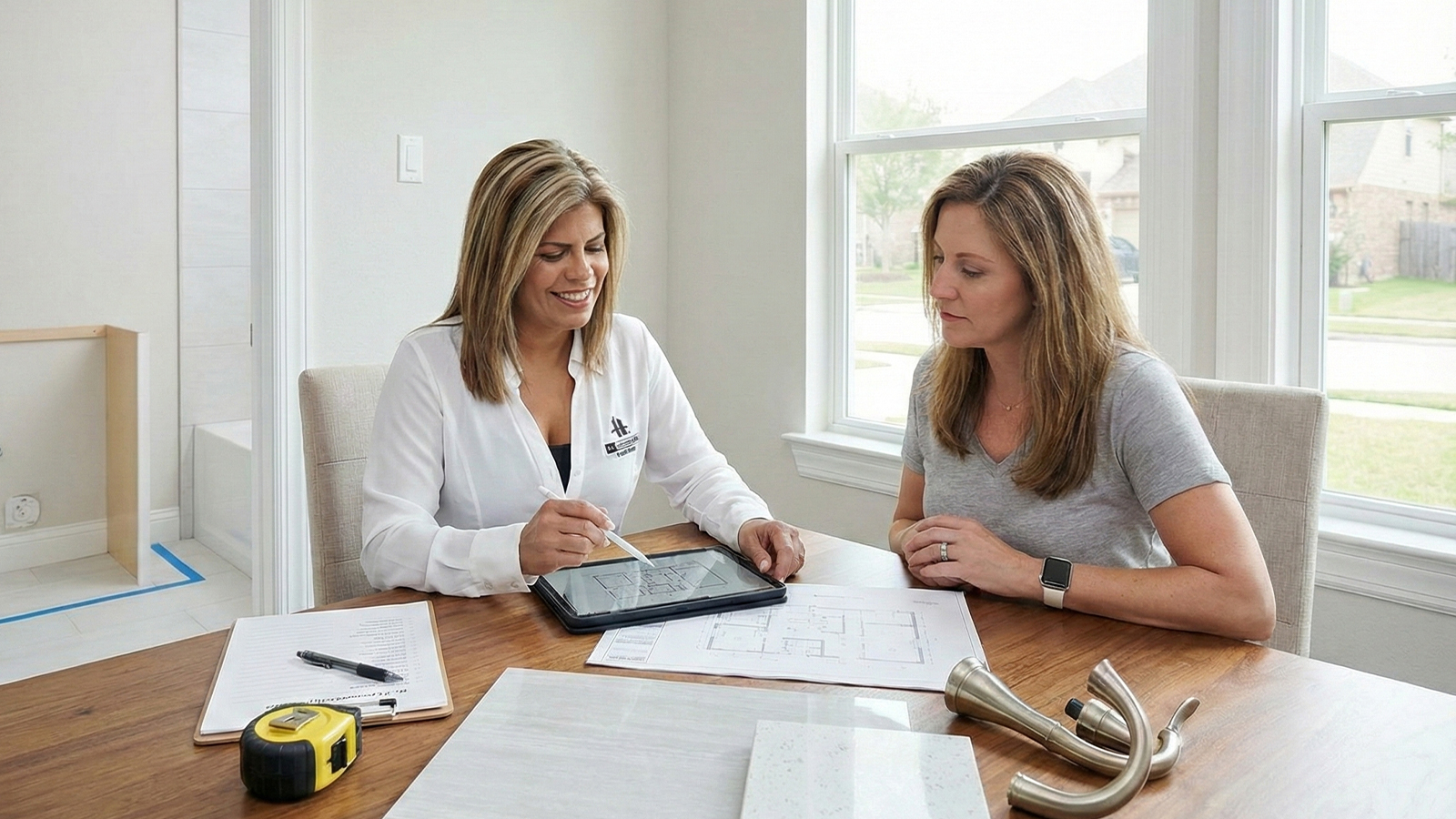
We work with Houston homeowners across the full range of bathroom remodel projects — and see the same mistakes appear repeatedly, most rooted in planning decisions made before the first wall opened.
One of the main issues we see in Houston homes is remodels that began failing within two years — not because of poor materials, but because of what was skipped during installation. We worked with one homeowner whose bathroom remodel from two years prior had started falling apart: tile separating from the shower walls, the vanity cabinet swollen shut from sustained moisture. The root cause was a missing membrane and an undersized exhaust fan — two oversights a pre-construction review would have caught. The repair required a complete tear-out and rebuild.
With a proper plan in place from the start, neither issue would have made it past the design phase.
Our process reviews layout, plumb locations, ventilation requirements, material specifications, and permit scope before a single wall opens — so the renovation delivers on its promise from day one.
Ready to Plan a Bathroom Remodel the Right Way?
The best time to avoid bathroom remodel mistakes is before the project begins. HL Remodeling works with Houston homeowners to plan and build every bathroom correctly from the ground up. Schedule a consultation to discuss your goals, scope, and timeline with our team.
Frequently Asked Questions
What is the most common mistake made when remodeling a bathroom?
The most common mistake is purchasing tile, fixtures, and materials before the bathroom layout is confirmed. Orders placed without verified measurements lead to restocking fees, wrong-size installs, and mid-project delays. Confirming measurements and the finish schedule before buying anything eliminates most of this risk.
How do I avoid going over budget on a bathroom remodel?
Budget overruns almost always trace to two causes: scope changes after demo begins and hidden damage inside the walls. Build a 15–20% contingency into the budget, lock the layout before construction starts, and avoid changing product selections mid-build.
What bathroom work requires a permit in Houston?
Any supply or drain changes, new electrical circuits, and structural modifications require a permit. Like-for-like swaps — replacing a toilet at the same location — generally do not. A licensed contractor will identify which scope items trigger permit requirements before work begins.
Can I install my own shower tile without a contractor?
Someone with tiling experience can install wall tile in a shower, but the membrane beneath it carries most of the risk. Improperly applied waterproofing leads to water damage inside the wall — often invisible for months. Have a licensed contractor handle membrane prep if you plan to tile the shower yourself.
Why is my renovated bathroom developing problems so quickly?
Early failure almost always points to inadequate airflow or a compromised membrane behind the shower tile. In Houston’s humidity, an undersized fan allows moisture to saturate finishes and surfaces within months. Confirm the fan is correctly sized and vents to the exterior.
How do I know if my contractor sealed the shower correctly?
Before tile installation, the membrane should pass a flood test — the shower floor is dammed with water for 24 hours to check for leaks. After completion, look for shifting tile, discoloration at wall junctions, or moisture stains on adjacent walls as early warning signs.