
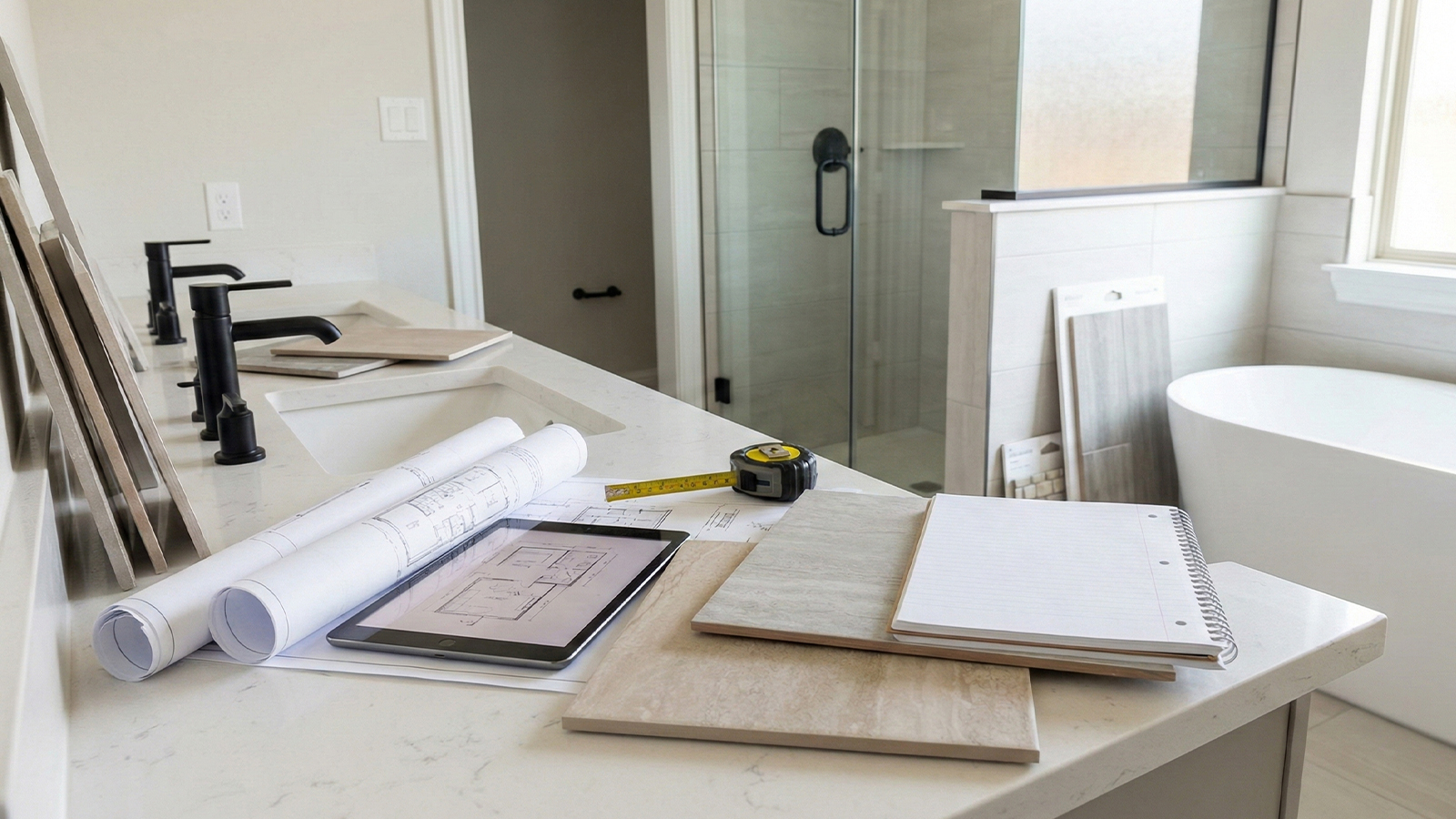
The bathroom sees more daily use than almost any other room in your home — and a poorly planned bathroom remodel is one of the most expensive mistakes you can make in home improvement. Houston homeowners who end up with a beautiful new bathroom aren’t always the ones who spent the most. They’re the ones who planned before they purchased. This step-by-step guide covers everything you need to plan a bathroom renovation that stays on budget, finishes on time, and delivers the result you’re after.
Key Takeaways
- Define your renovation goals and wish list before ordering materials or hiring anyone
- Work with your existing plumbing layout whenever possible to control project costs
- Budget 15–20% contingency for hidden issues like water damage and outdated wiring
- Select tile, vanity, fixtures, and faucets as a coordinated system — not separately
- Know which tasks a contractor must handle and which are reasonable to DIY
- Lock in all materials before demolition begins to prevent costly project delays
Start With Your Renovation Goals and Wish List Before You Touch a Single Tile
Every successful bathroom remodel starts with clarity, not a cart full of samples. Before you renovate, write down what’s actually wrong with your current bathroom — is it storage, outdated tile, a shower that hasn’t been updated in years, or a layout that never worked? Rank those problems by priority before you spend a dollar.
Your wish list is where everything goes: a freestanding bathtub, heated flooring, a double vanity, new light fixtures, a walk-in shower. Write it all down, then separate must-haves from nice-to-haves. This forces real decisions before the renovation starts — and it keeps the project from expanding into something your budget can’t support.
Know the Difference Between a Cosmetic Update and a Full Remodel
Not every outdated bathroom needs a complete remodel. Sometimes a new coat of paint, updated faucets, and a fresh vanity transform the space without touching a single plumb line or tile. A full remodel means replacing the floor, opening walls, and potentially replumbing the entire bathroom. A cosmetic update means working with what’s there. Knowing which one you actually need before you set a budget is the most important planning decision you’ll make.
Learn More: How Long Does A Bathroom Remodel Take In Houston?
Plan Your Bathroom Layout Before Anything Gets Ordered
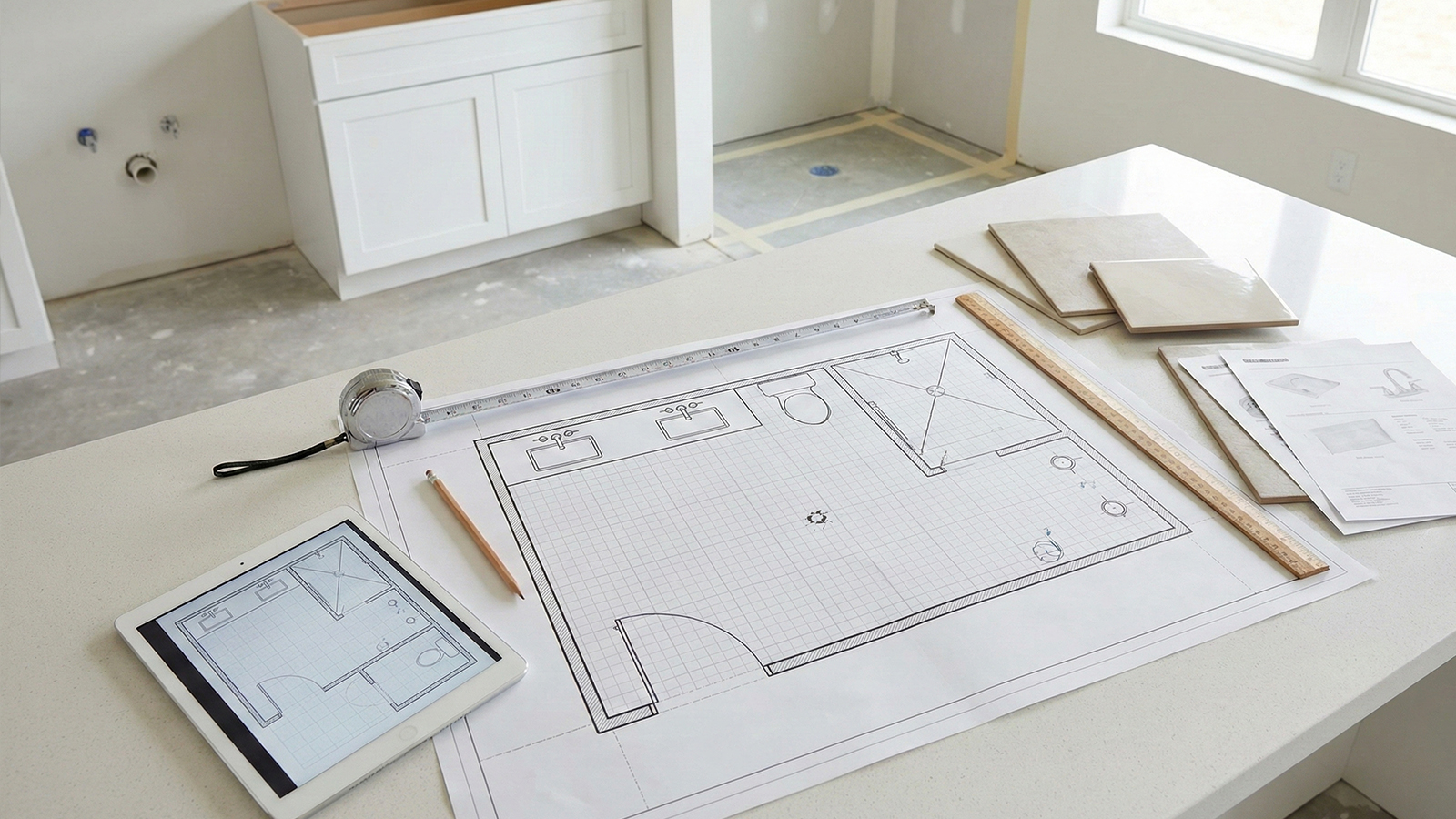
The layout is the most consequential decision in the entire bathroom remodeling process. Once you commit to a floor plan, everything else — tile size, vanity dimensions, shower configuration — has to work within it. This is not a decision to make at the showroom.
Work With Your Existing Plumbing When You Can
Moving plumbing is one of the fastest ways to blow a budget. Shifting the toilet, relocating the shower, or moving a tub to the opposite wall means opening floors, re-routing drain lines, and adding weeks to your project timeline. We consistently see Houston homeowners save $3,000–$6,000 by keeping the plumb layout intact and redesigning around existing drain and supply locations. Unless there’s a compelling functional reason to move things, design around what’s already there.
Mapping the Layout for a Small Bathroom
In a small bathroom, every inch is a decision. A scaled bathroom layout drawing helps you see door swing clearance, spacing around the toilet, and whether a full bathtub fits or whether a shower-only configuration makes more sense for the space. We recommend having this drawn — even by hand — before any contractor quotes work or any materials are ordered.
Set a Budget That Accounts for What You Can’t See
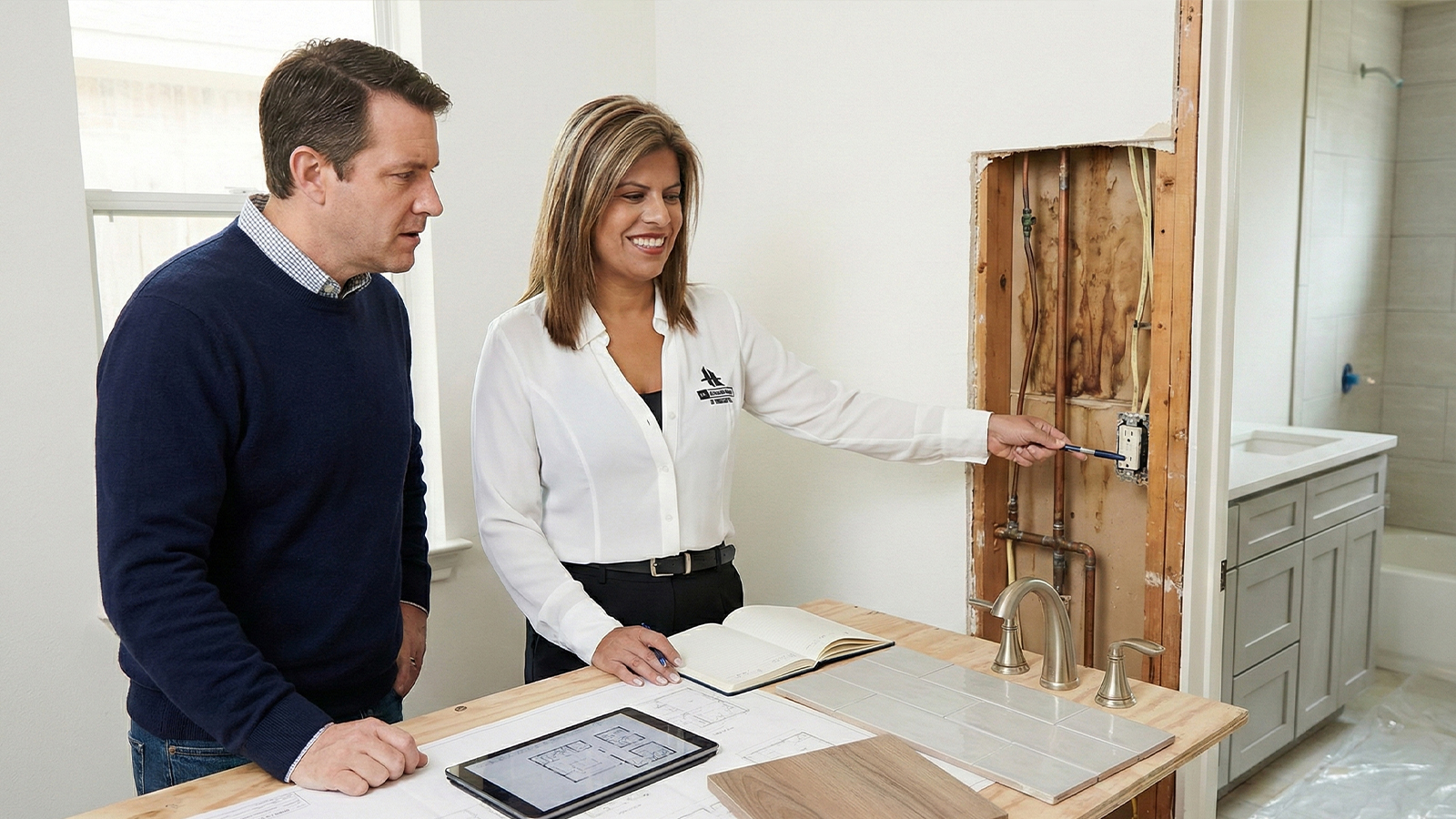
Houston homes built before 1990 regularly hide problems behind walls. Water damage, corroded supply lines, outdated wiring, and subfloor rot are common discoveries during demolition. According to the Remodeling Cost vs. Value Study, a mid-range bathroom remodel in the South Central region returns around 66 cents on the dollar at resale — making it one of the stronger home improvement investments available, as long as the budget is controlled from day one.
Plan for a contingency of 15–20% on top of your estimates. That buffer is what separates a renovation that finishes clean from one that stalls when the unexpected hits.
Where to Spend and Where to Save on Bathroom Materials
Not every line item deserves equal budget weight. Spend on tile for the shower floor and shower walls — these surfaces take the most moisture exposure, and failure leads directly to water damage inside your walls. Spend on the vanity if storage is a priority, since cheap cabinet construction degrades quickly in humid conditions. Spend on the shower fixture and faucet — low-quality valves corrode and fail. Pull back on mirror frames, towel bars, and decorative accessories, where budget options perform the same as premium ones.
| Item | Recommended Approach | Why |
|---|---|---|
| Shower floor + wall tile | Invest | Moisture exposure; grout failure causes structural damage |
| Vanity cabinet | Invest | Humidity degrades cheap materials fast |
| Shower fixture / faucet | Invest | Valve quality directly affects longevity |
| Light fixtures | Mid-range | Visible and functional; worth modest investment |
| Mirror / towel bars | Save | Aesthetic only; easy to swap later |
Choose Your Materials and Fixtures With the Finish Line in Mind
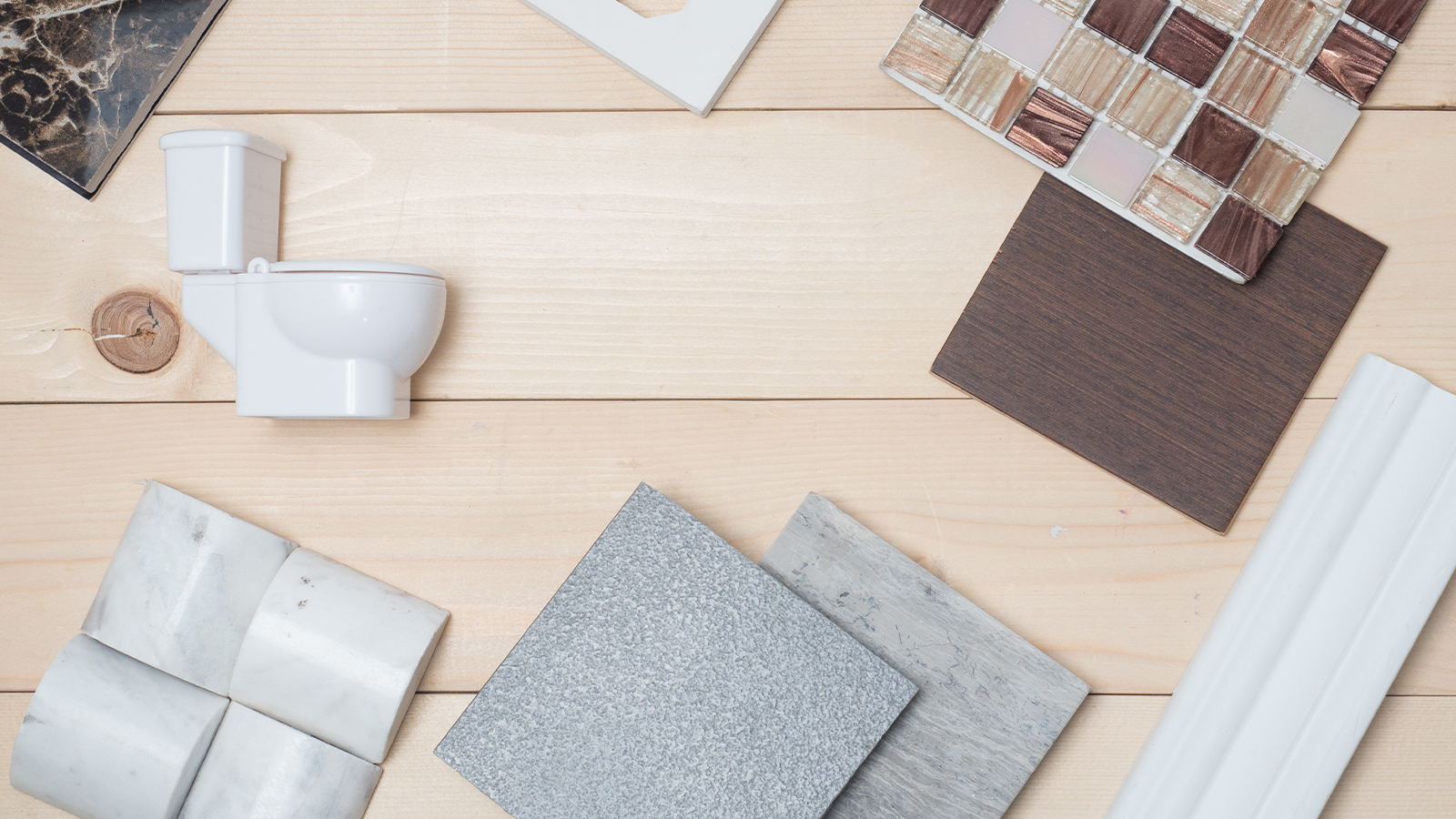
Selecting bathroom fixtures and finishes one piece at a time is one of the most common planning mistakes we see. The tile, vanity, shower doors, and light fixtures need to work as a coordinated system — finish, scale, and style should all be decided before the first order is placed.
Tile Selection — Floor, Shower Walls, and Accent Details
For the shower floor, choose a tile rated for wet areas with a slip-resistance rating of 0.6 or higher. For shower walls, large-format tile in 12×24 or larger reduces grout lines and makes routine cleaning easier. Accent tile works well as a horizontal band in the shower or as a feature wall behind the vanity — limit it to one application per bathroom or it competes with itself.
We also recommend sealing all grout at installation and again at the six-month mark. In Houston’s humidity, unsealed grout is a slow water damage problem waiting to happen.
Vanity, Fixtures, and Faucets — Picking for Longevity, Not Just Looks
The vanity anchors the bathroom visually and functionally. Choose a cabinet with dovetail drawer construction and soft-close hardware — these hold up in high-humidity environments far better than standard box construction. Pair it with a faucet finish that coordinates with your shower fixture and toilet hardware. For shower valves, Moen and Delta pressure-balancing valves are reliable at a mid-range price point. The fixture is one place where cutting costs tends to produce callbacks within two to three years.
If your bathroom remodel includes a bathtub, confirm the rough plumb location before ordering — bathtub drain placement is fixed, and getting it wrong after tile is set is an expensive correction.
DIY vs. Hiring a Contractor — Know What You’re Getting Into
Most Houston homeowners can handle painting, swapping a toilet, installing a new vanity, or laying floor tile with patience and the right tools. The work that requires a licensed contractor includes anything involving plumbing supply lines, drain re-routing, electrical panel connections, and permit-required structural changes.
Houston’s local building codes require permits for plumbing and electrical work that goes beyond like-for-like replacement. If your remodel involves moving a plumb line, adding a circuit, or making structural changes, a licensed contractor is a legal requirement — not just a recommendation. We’ve seen unlicensed work on tile and shower walls create moisture problems that required gutting an entire bathroom six months later. The savings from cutting corners on contractor work rarely survive first contact with a repair estimate.
Build a Project Timeline That Keeps the Renovation on Track
A standard bathroom remodel in Houston runs 2–4 weeks for a cosmetic update and 4–8 weeks for a full gut renovation. The sequencing matters as much as the schedule: demolition first, then rough plumbing and electrical, then waterproofing, then tile, then fixture installation, then finish work. Each phase has dependencies — tile can’t go in until waterproofing passes inspection, and fixtures can’t be set until tile is complete and cured.
The most common cause of delay isn’t labor — it’s materials. Tile and vanity lead times run 2–6 weeks depending on the supplier. Order everything before demo starts. A contractor who lets demolition begin without confirmed material delivery is setting the renovation up for a stall that costs both time and money.
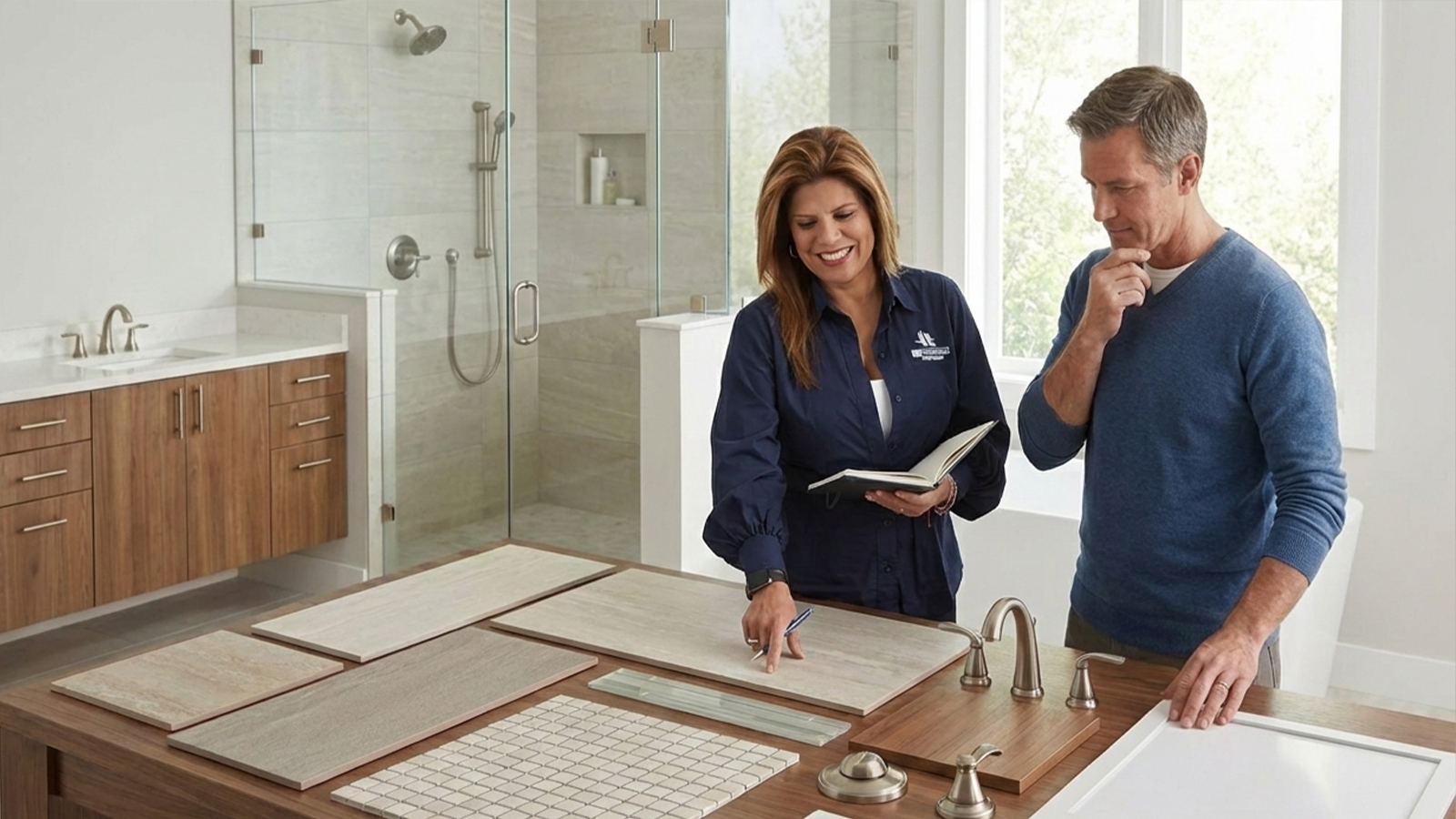
How HL Remodeling Helps Houston Homeowners Plan and Execute a Successful Bathroom Renovation
We work with Houston homeowners at every stage — from early layout decisions through final fixture installation. Most clients come to us after trying to piece the project together on their own and realizing the decisions compound faster than expected.
One homeowner we worked with had a guest bathroom that hadn’t been touched in over 20 years. They came in expecting a tile refresh and a new vanity. Once demo opened the walls, we found corroded supply lines and a shower that had been quietly leaking into the subfloor for years. Because they had built contingency into the budget, the repairs didn’t derail the project. The bathroom finished on schedule and came in under the revised budget.
That’s what careful planning makes possible. We bring a full contractor and project management process that keeps material orders, subcontractors, and inspections coordinated — so the renovation doesn’t stall between phases.
Ready to Plan Your Bathroom Remodel?
A well-planned bathroom renovation doesn’t happen by accident. It happens because someone thought through the layout, locked in materials before demo, built in contingency, and brought in the right contractor for the work that required a license. HL Remodeling helps Houston homeowners renovate bathrooms that are built to last — on budget and on schedule. Schedule a consultation to walk through your goals, layout, and timeline with our team.
Frequently Asked Questions
How much does a bathroom remodel cost in Houston?
A bathroom remodel in Houston typically runs $8,000–$15,000 for a mid-range update and $20,000–$40,000 for a full gut renovation. Costs vary based on bathroom size, material selections, and whether plumbing or electrical work is involved. According to the Remodeling Cost vs. Value Study, mid-range bathroom remodels in this region return approximately 66% of cost at resale. Getting accurate quotes from a licensed contractor before committing to a scope is the best way to set a realistic budget.
How long does a bathroom renovation take from start to finish?
A cosmetic update typically takes 2–4 weeks. A full renovation involving new tile, replumbing, and fixture replacement runs 4–8 weeks depending on material lead times and contractor scheduling. The biggest driver of timeline overruns is materials arriving late — order everything confirmed before demolition begins.
Do I need a permit to renovate my bathroom in Houston?
Yes, if the work involves plumbing supply or drain changes, electrical upgrades, or structural modifications. Like-for-like fixture replacements — swapping a toilet for the same configuration — generally don’t require a permit. Houston’s local building codes are specific about what triggers a permit requirement, and a licensed contractor will know exactly which scope items need one.
Should I move my plumbing during a bathroom remodel?
Only if there’s a strong functional reason to do so. Moving plumbing in a bathroom remodel adds significant cost and extends your timeline. The toilet, shower, and tub are the most expensive to relocate because they require drain re-routing under the floor. We advise clients to design around the existing plumb layout whenever the floor plan allows.
What’s the best tile for a shower in a Houston home?
For the shower floor, use a small-format mosaic tile — 2×2 or penny rounds — where more grout lines provide better grip on wet surfaces. For shower walls, large-format porcelain in 12×24 or larger keeps grout joints minimal and limits moisture infiltration. In Houston’s humidity, the waterproofing membrane behind the tile matters as much as the tile itself.
How do I plan a bathroom remodel on a tight budget?
Start by keeping the existing plumb layout intact — that alone saves thousands. Prioritize the shower, floor tile, and vanity where quality matters most, and save on accessories and decorative items. A bathtub-to-shower conversion is a cost-effective way to modernize a bathroom without a complete remodel, and it frees up meaningful square footage in a tight layout.