
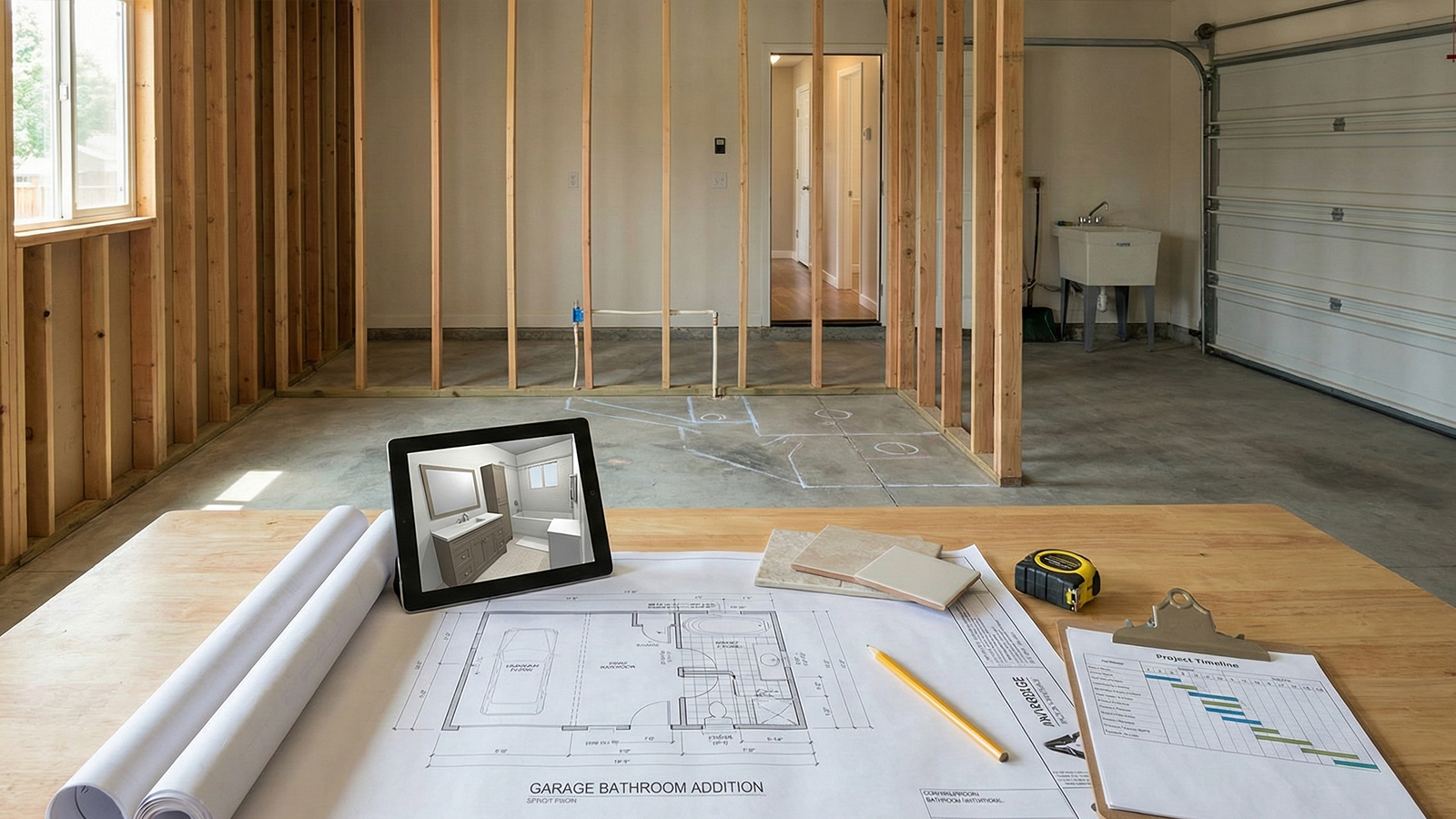
Turning unused garage space into something valuable starts with knowing what you’re getting into. Whether it’s a workshop, guest suite, or office, adding a bathroom to your garage changes how you use your property.
Many homeowners have successfully transformed their areas. A bathroom addition can cost between $30,000 and $60,000, depending on your plans. This increases property value and makes daily life easier for any homeowner.
At HL Remodeling, we specialize in bathroom renovation conversions in Houston, Texas. We know that local building codes, plumbing, and ventilation are essential for this success.
This guide will help you understand permits, design, and budgeting with confidence.
Key Takeaways
- Converting unused garage space requires proper planning and understanding requirements
- Budget expectations for projects should range from $30,000 to $60,000
- Plumbing infrastructure, electrical systems, and proper venting impact timeline
- Working with experienced contractors familiar with Houston codes prevents costly mistakes
- Property value increases significantly when conversions meet safety standards
Understanding the Scope of Your Garage Home Addition
Planning your conversion is key to success. Many homeowners rush into design without checking if their structure can handle it or securing permits.
At HL Remodeling, we guide Houston homeowners through the planning process.
Evaluating Your Garage Structure and Location
First, is your garage attached or detached? This choice affects your timeline, budget, and complexity.
An attached garage is easier—you can tap into your home’s systems, meaning less work and cost.
A detached garage is more challenging. You’ll need to run supply lines across your yard , requiring trenching and managing water pressure issues .
We also evaluate your structural integrity. Can your garage support new plumbing? Is the foundation right for drainage ? How much square footage and square feet do you have ?
| Consideration | Attached Garage | Detached Garage | Impact on Project |
|---|---|---|---|
| Plumbing Complexity | Lower – short pipe runs | Higher – requires trenching | Affects timeline by 2-4 weeks |
| Electrical Access | Simpler connection | More complex | Adds $2,000-$5,000 |
| Water Pressure | Consistent | May require booster pump | Additional $800-$1,500 |
| Waste Management | Gravity drainage sufficient | Often requires ejector pump | Adds $1,200-$2,500 |
Building Codes and Permit Requirements
Ignoring building codes is a big mistake. Every municipality has its own rules for this work. Houston has specific standards for this conversions.
You’ll need to meet minimum ceiling heights and doorway widths . Zoning laws and zone requirements determine what you can build on your property.
Permits are essential for plumbing, electrical, and structural this work. Skipping this costs more later. Unpermitted work can kill home sales or mean tearing out completed installations.
Work with your local planning office from the start. Check local requirements before beginning your garage project.
Full Bathroom vs Powder Room: Deciding What You Need
A complete facility has a toilet, sink, and shower or tub—necessary for living space like a guest suite or office.
A powder room has just basic fixtures, suitable for a this workshop or gym. It’s simpler and cheaper .
This choice affects your construction project. Complete facilities add more plumbing complexity, require more space, and cost more.
At HL Remodeling, we help homeowners make the right decision for their budget and what codes require.

Essential Plumbing and Electrical Requirements For Your Bathroom in your Garage
Adding a bathroom to your garage involves complex systems. If done wrong, you could face leaks, hazards, and code violations . Professional help is essential for this work.
Installing a Plumbing System to Your Garage
Adding infrastructure to your garage means extending your home’s water and waste systems. If your garage is attached, you can tap into plumbing easily by running pipes through walls or under the floor.
Drainage is a major challenge for any garage. Fixtures need proper slope to the main sewer line. If your floor is higher than the sewer line, gravity-fed drains work well .
If your floor is lower, you have options :
Sewage ejector pumps collect waste in a sealed pit and pump it uphill when full. They’re strong enough for complete garage facilities but need regular maintenance.
Upflush systems use a macerator to grind waste and pump it through smaller pipes, meaning less floor demolition .
Detached structures need trenching from your house . Distance affects water pressure , potentially requiring booster pumps.
That concrete? You’ll likely break through it . Installing a bathroom in any garage often requires jackhammering sections for drain pipes.
Your plumbing system to your garage needs to handle hot and cold water, waste drainage, and venting. Most places require proper venting to prevent sewer gases . A qualified plumber is essential to meet code.
| Plumbing Solution | Best For | Complexity | Cost Range |
|---|---|---|---|
| Gravity-Fed Drainage | Floor above sewer line | Moderate | $3,000 – $6,000 |
| Sewage Ejector Pump | Complete facility below sewer | High | $5,000 – $9,000 |
| Upflush Toilet System | Powder room minimal demolition | Moderate-High | $4,000 – $7,500 |
| Detached Connection | Standalone structures | Very High | $8,000 – $15,000+ |
Electrical Work and Wiring Your New Bathroom Project
Garage spaces usually have some electrical capacity. But facilities need more: dedicated lighting, an exhaust fan, GFCI-protected outlets, and possibly heating elements .
Check if existing capacity can handle the extra load . Sometimes the current circuit is enough for a powder room. Other times, you need new wiring from your main panel .
GFCI protection is mandatory to prevent electrical shock in wet areas. Your fan prevents moisture buildup and is required by code if your garage is windowless.
Electrical permits are required almost everywhere for this work. A licensed electrician is needed because improper wiring in wet areas is dangerous.
Working with Existing Plumbing and Electrical Systems
When adding facilities to it, you’re integrating with current infrastructure. Can your existing plumbing handle extra demand? Old pipes corrode, reducing flow .
Your main sewer line capacity needs checking . If undersized, you might face backups .
On the electrical side, your panel’s capacity is critical . Modern facilities need dedicated circuits. If your panel lacks available slots and amperage, you’ll need an upgrade before starting it project.
HL Remodeling assesses your home’s infrastructure to identify issues before they become expensive problems. This integration phase determines whether your addition works reliably.
Proper integration protects your investment. Well-connected systems add value to your garage; poorly integrated ones become liabilities causing ongoing headaches.
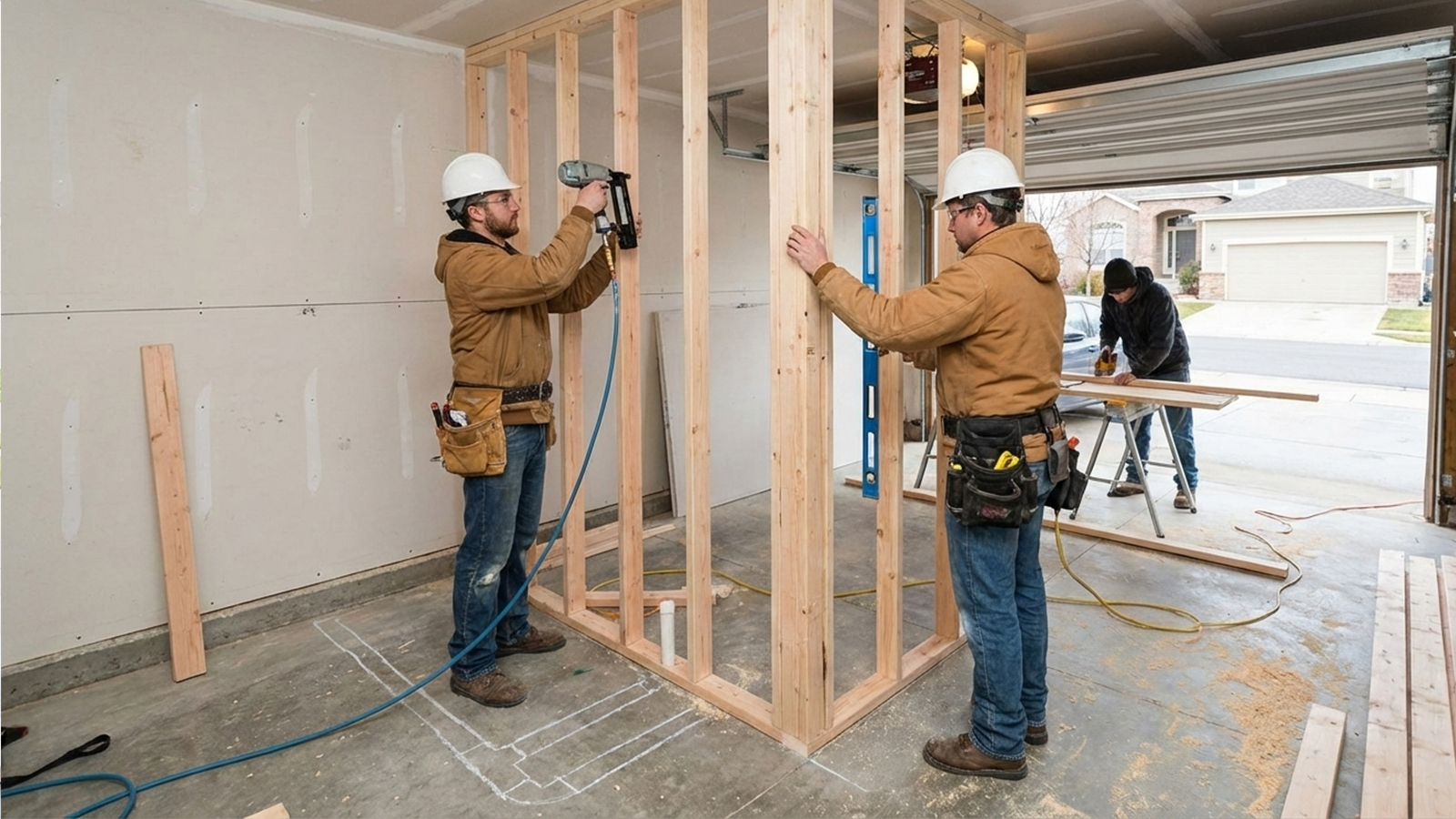
Design and Space Planning for Your Garage Addition
Choosing the right design makes your garage conversion successful. It’s about making every inch of garage space count.
Optimizing Location Within Your Garage
Where you position facilities is critical. Once pipes and walls are in place, moving them is extremely expensive .
The best spot balances several factors . Being close to existing systems saves money through less digging and reduced labor .
Think about how you’ll use it area. For a home office, put facilities near the entrance. For a guest suite, keep them private.
Your structure also plays a role. Existing columns, doors, and windows limit placement options.
Selecting Fixtures and Features for Your New Space
Every fixture choice affects function and budget.
Start with essential fixtures —gravity-flush models work best with proper drainage. Upflush systems handle tough tough spots. Wall-mounted versions save garage space.
Sink selection affects looks and function . Wall-mounted sinks suit small areas. Vanities offer storage but take more room.
Proper vent systems are mandatory to keep moisture and odors away . If possible, add a window for better air circulation.
| Fixture Type | Space Required | Complexity | Cost Range | Best Application |
|---|---|---|---|---|
| Standard Fixture | 30″ x 48″ | Moderate | $300-$800 | Complete garage facilities with drainage |
| Upflush System | 30″ x 48″ | Moderate | $1,200-$2,000 | Garage locations without gravity drainage |
| Wall-Mounted Sink | 20″ x 24″ | Low-Moderate | $200-$600 | Garage powder rooms |
| Vanity with Storage | 24″-36″ width | Moderate | $500-$1,500 | Garage spaces needing storage |
Don’t forget storage and lighting —both are essential for usability and safety.
Transforming Your Garage into Versatile Living Space
Adding facilities does more than provide convenience. It transforms your garage into real living space that adapts to your needs.
These garage conversions can change your life. They turn spaces into offices, workshops, or guest accommodations. Having proper facilities in your guest suite makes it welcoming. For fitness enthusiasts, a gym with a shower is ideal.
Consider common garage uses:
- Office Setup: Eliminates interruptions and maintains professional boundaries
- Guest Accommodations: Private facilities create comfortable spaces for visitors
- Multigenerational Living: Separate amenities provide independence and privacy
- Rental Income Unit: Complete capabilities increase marketability and rental rates
- Hobby and Workshop Space: Convenient facilities mean extended project time
At HL Remodeling, we understand your vision. We’re transforming your garage to serve you perfectly.
Good design today means no regrets tomorrow.
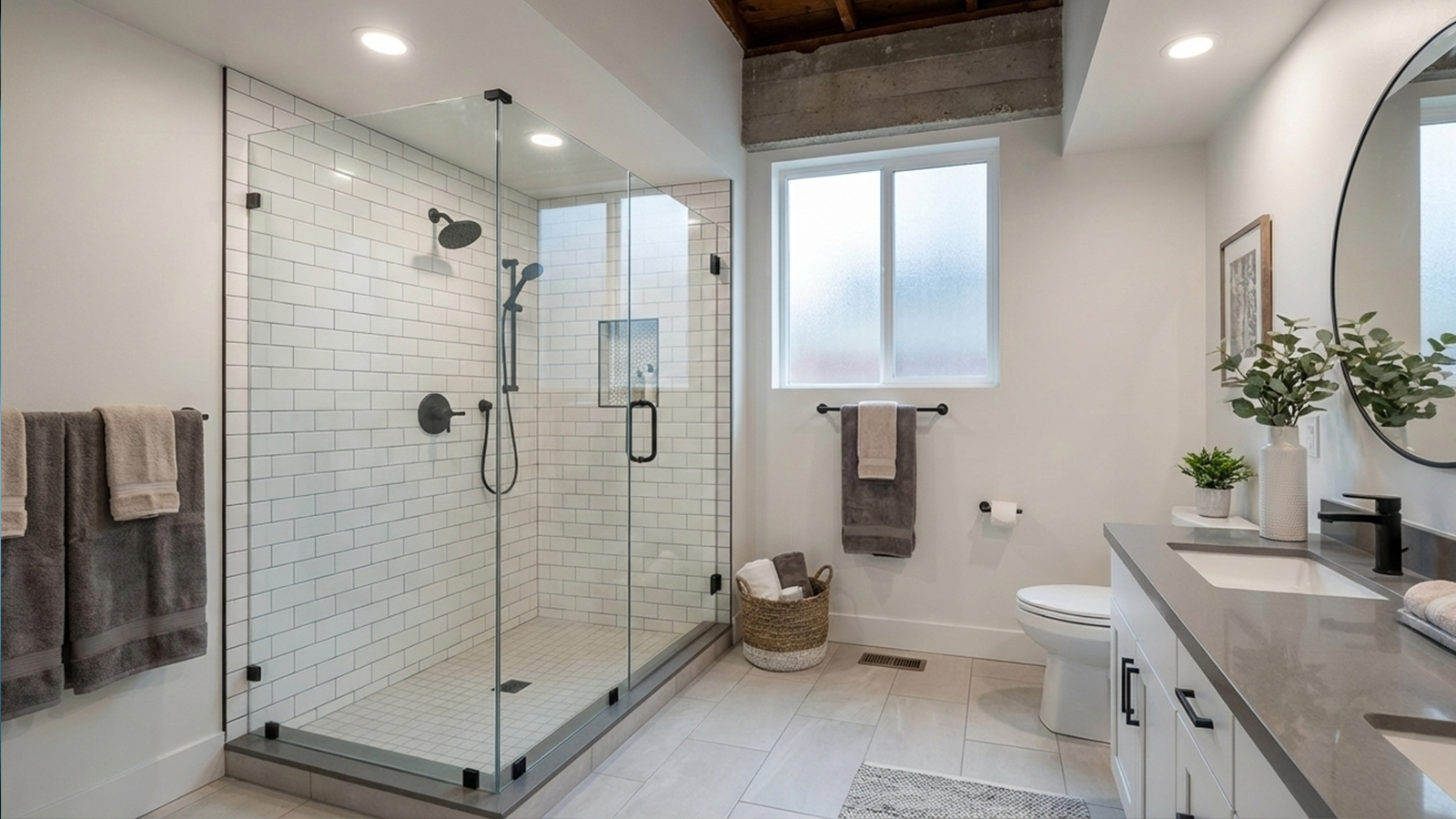
Budgeting and Managing Costs For Your Garage Conversion
Knowing your budget early helps avoid surprises. Garage costs usually range from $30,000 to $60,000 depending on size, fixtures, and plumbing and electrical work complexity.
At HL Remodeling, we show you where your money goes—no hidden fees.
Breaking Down Your Investment
Basic construction costs about $200-$300 per square foot. Small powder rooms cost $5,000-$7,500, while larger facilities cost $10,000-$15,000.
Permits cost $500-$2,000. Plumbing runs $3,000-$10,000+ depending on complexity. Electrical work adds $1,500-$5,000. Fixtures and finishes range from $2,000 to $10,000+.
| Cost Category | Budget Range | Mid-Range | Premium |
|---|---|---|---|
| Construction (per sq ft) | $200-$250 | $250-$300 | $300-$400 |
| Plumbing Installation | $3,000-$5,000 | $5,000-$7,500 | $7,500-$10,000+ |
| Electrical Work | $1,500-$2,500 | $2,500-$4,000 | $4,000-$5,000+ |
| Fixtures & Finishes | $2,000-$4,000 | $4,000-$7,000 | $7,000-$10,000+ |
Budget 10-20% extra for surprises. For a $50,000 project, keep $5,000-$10,000 aside.
Attached or Detached Garage: How Location Impacts Your Budget
Attached spaces cost less, typically $30,000-$40,000, and take 4-6 weeks. You save on infrastructure because everything is closer.
Detached structures cost $40,000-$60,000+ and take 8-12 weeks or more. Distance means more work—trenching and extended installation add significant costs.
Every foot of distance adds complexity. Get quotes from at least three contractors. Compare what’s included, not just price.
Realistic budgeting ensures stress-free renovation.

Working With HL Remodeling As Your Bathroom Contractor For Your Garage Bathroom Addition
Choosing the right contractor is key to garage success. HL Remodeling is your go-to in Houston for this work. We focus on garage conversions, and our expertise has built our reputation.
We understand Texas challenges like foundation and humidity issues. Our team includes licensed plumbers and electricians experienced in projects.
Here’s our typical timeline:
| Project Phase | Duration | Key Activities |
|---|---|---|
| Initial Consultation | 1 week | Garage assessment, budget, planning |
| Design & Permitting | 2-3 weeks | Garage plans, permit applications |
| Attached Construction | 4-6 weeks | Plumbing, electrical, finishing |
| Detached Construction | 8-12 weeks | Extended utility runs, completion |
We handle all necessary permits and know what Houston requires for installations. We use quality materials and ensure proper installation.
Working with HL Remodeling means straight talk, realistic timelines, and transparent pricing .
Ready to transform your garage? Contact HL Remodeling today to discuss your garage project.
Conclusion – Your Garage Bathroom Project
Adding a garage bathroom is a smart choice for homeowners. It turns unused garage space into a useful area that fits your lifestyle.
This upgrade boosts your home’s value. By converting space, you make your home more versatile for families or renters.
HL Remodeling is your go-to for additions in Houston. We handle all the tricky parts like permits and infrastructure, delivering successful projects that add real value. This this work needs skilled hands—it’s not a job for beginners.
Contact us today and let’s chat about bringing your garage bathroom to life!
FAQ
Do I need a permit to add a bathroom to my garage?
Yes, permits are required for plumbing, electrical, and structural changes. In Houston, we work with offices to secure permits.
Can I add a bathroom to a detached garage?
Yes, but it’s more complex and expensive than attached structures. You’ll need trenching, which adds excavation costs and may require pump systems.
How much does it cost to add a bathroom to a garage?
Costs range from $30,000-$60,000 depending on type, complexity, and fixtures. This includes permits and labor.
How long does it take?
Attached projects take 4-6 weeks, while detached ones take 8-12 weeks. Permitting adds 2-3 weeks.
Will this increase my home’s value?
Yes, these additions can significantly increase your home’s value. In Houston, extra amenities are valuable and make homes more attractive to buyers.