

We’ve stood in dozens of these rooms, so we know yours before we walk in. The counter with no clear space, the dated tub-and-shower combo you’d rather a guest never used, a layout that wastes half the few square feet you’ve got.
Most Houston homeowners live with a cramped, sub-50-square-foot bath for years, convinced a small bathroom remodel means either a fortune or a project they’ll botch. It’s neither.
Our Houston bathroom remodeling team works on these tight, older spaces every week, and this guide cuts straight to what matters: real local cost, a smarter layout, and storage that finally clears your floor.
Key Takeaways
- A small bathroom remodel in Houston typically runs $8,000 to $25,000 depending on whether you keep your plumbing where it is or move it.
- Keeping fixtures in their existing rough-in positions is the single biggest cost-saver, often saving $3,000 to $5,000 over a full reconfiguration.
- The real storage gains in a tight bath come from recessed niches, wall-hung vanities, and vertical space, not from adding furniture.
- A pre-demo assessment catches galvanized pipe, subfloor rot, and code issues before they spiral your budget.
Know what a small bathroom remodel actually costs in Houston before you plan anything
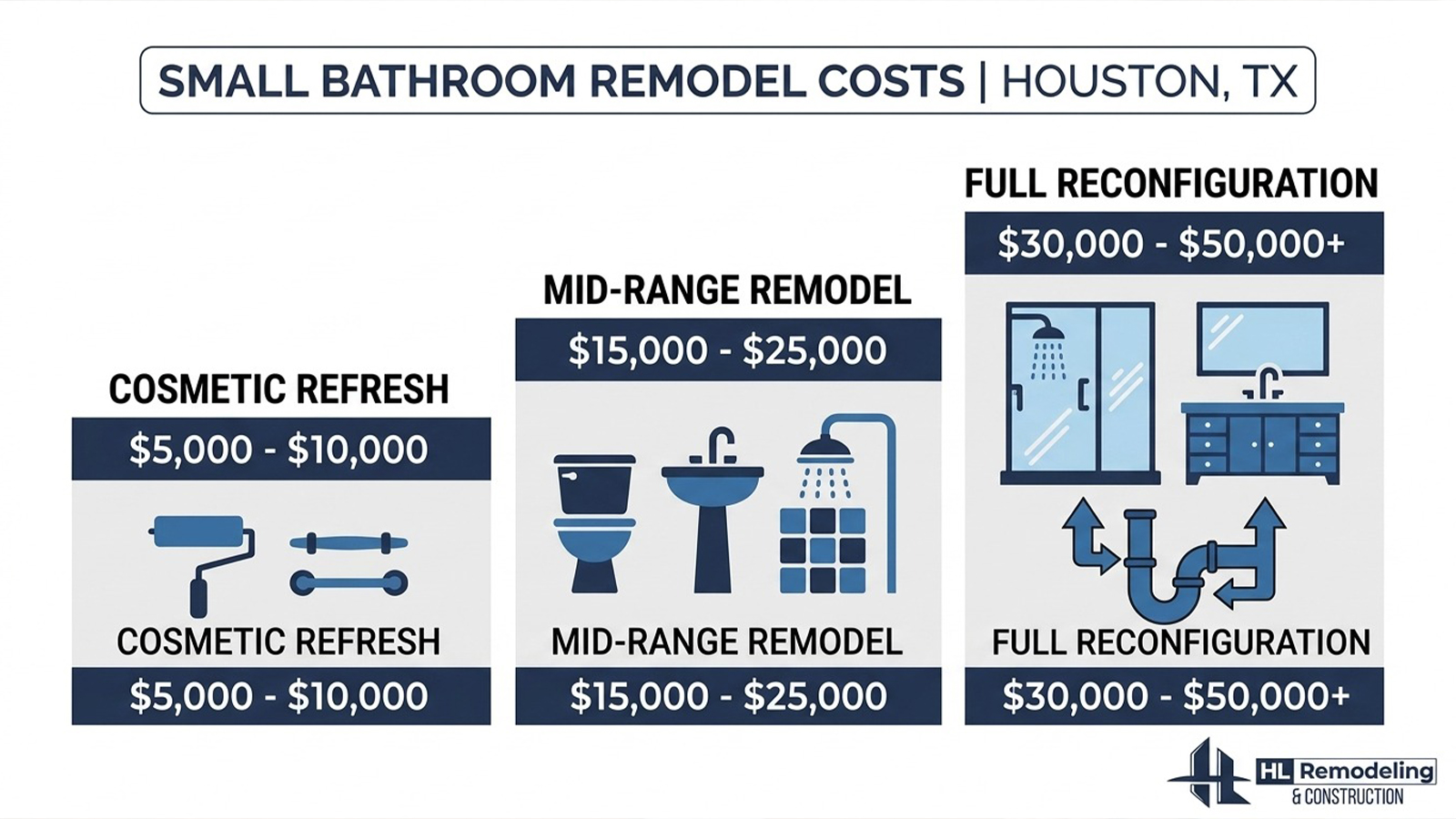
Price is the first question every homeowner asks us, so let’s get specific. A small bathroom remodel in Houston usually lands between $8,000 and $25,000, and the spread comes down to one decision: whether you move the plumbing or work with what’s already there. That single choice shifts your budget more than any tile, fixture, or finish you’ll pick later.
Moving a toilet, shower drain, or vanity supply line means opening walls and floors, re-routing vents, and pulling licensed plumbing permits. In a sub-50-square-foot room, that work often adds $3,000 to $5,000 with nothing visible to show for it. The fixtures look the same to a guest whether they sit in the original spot or two feet over. That’s why we walk every client through a keep-versus-move conversation before a budget is ever set.
| Project Scope | What’s Included | Typical Houston Range |
|---|---|---|
| Cosmetic refresh | New tile, vanity, fixtures, paint, same layout | $8,000 – $12,000 |
| Mid-range remodel | New layout within existing plumbing zones, custom vanity, tiled shower | $12,000 – $18,000 |
| Full reconfiguration | Relocated plumbing, structural changes, permits, wet-zone rework | $18,000 – $25,000+ |
A high-end reconfiguration with relocated plumbing sits at the top of that table for a reason. Where your project lands depends on what we find once we measure the room and look at the bones behind the walls. If you want a number tied to your actual bathroom rather than a national average, that’s exactly what a free in-home assessment gives you.
Get the layout right, because in a small bath every inch is permanent
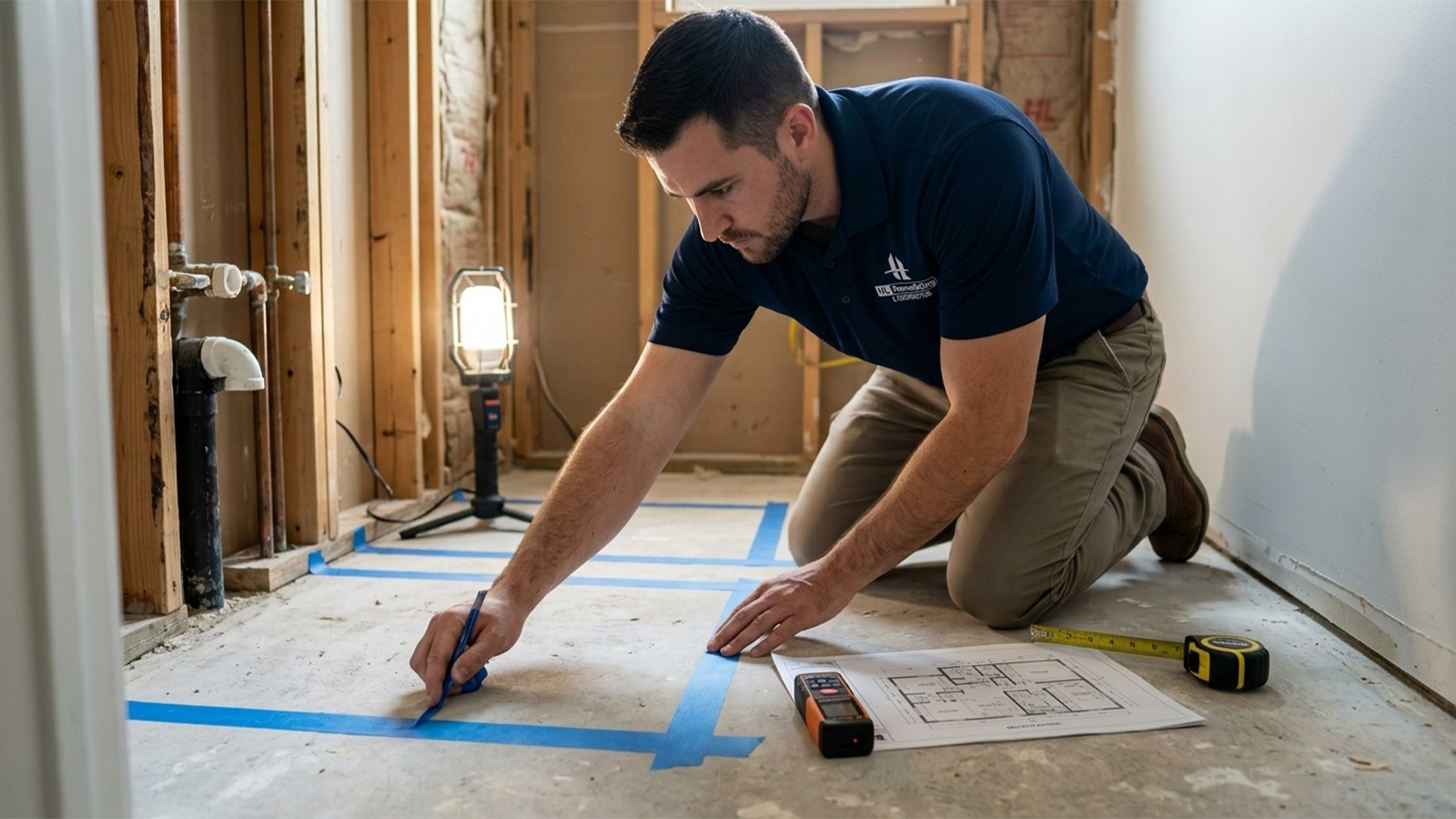
In a room this size, layout is not decoration. It is the difference between a bath that feels open and one that feels like a closet with a toilet. Once tile is set and fixtures are plumbed, every choice is locked in, so the planning has to be right the first time.
Work within your wet zones instead of fighting them
The smartest small-bath layouts respect where the plumbing already lives. Keeping the toilet, shower, and vanity near their existing rough-in positions saves real money and avoids tearing into load-bearing walls. We can usually create the open feeling you’re after by changing the door swing, swapping a bathtub for a curbless walk-in shower, or shifting a vanity a few inches, all without touching the supply lines.
Wet zone clearances are also code, not preference. Houston building code dictates minimum spacing around toilets, showers, and vanities, and getting it wrong means an inspection failure and expensive tear-out after the tile is already down. We measure those clearances before anything is ordered, which is one of the most common mistakes we fix on projects a homeowner started alone.
Choose fixtures that buy back floor space
Scale matters more in a small bath than anywhere else in the house. A wall-hung toilet, a corner sink, or a 30-inch vanity instead of a 36 can open up enough floor to make the whole room breathe. A low-profile shower with a clear glass shower panel removes the visual wall that a tub-shower combo creates, and a small space reads larger instantly.
We pair those fixtures with the right rough-in work behind the wall, because a floating vanity that isn’t blocked into the studs correctly will sag or pull loose within months. The look is clean. The structure underneath it is not something to improvise.
Solve your storage problem without stealing floor space
Storage is usually the real complaint underneath “this bathroom is too small.” The fix is rarely adding furniture. It’s using the space inside and above the walls you already have to maximize what you’ve got.
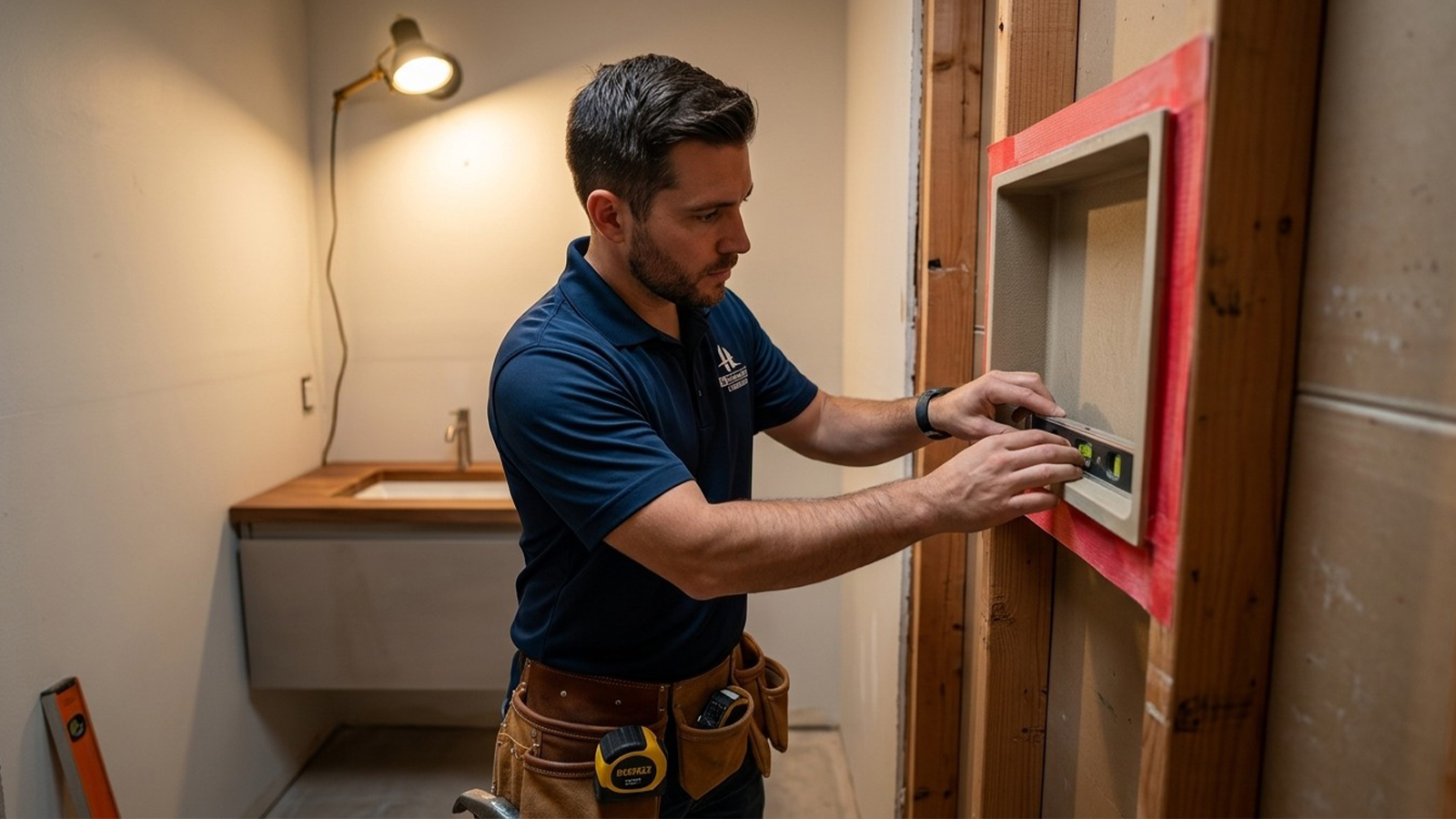
Recessed niches built into the shower or over the toilet pull storage into the wall cavity instead of out into the room. A built-in medicine cabinet set between the studs does the same. Vertical space above the toilet, a wall-mounted vanity with a drawer, and a tall narrow linen tower in a dead corner all add real capacity without costing you a single floor inch.
Here’s the issue with the popular ones. A recessed niche cut into a wet wall has to be waterproofed and flashed correctly or water finds its way behind the tile and into the cavity. We’ve opened walls where a DIY niche was leaking quietly for months, and by then the damage was no longer a tile problem. In an older Houston home, that water travels into framing fast, and what started as a built-in storage upgrade becomes a rebuild.
That’s the line worth knowing. The design ideas are yours to dream up. The waterproofing, structural blocking, and stud-cavity work behind them are where a small bathroom remodel stops being a weekend idea.
Plan for what’s behind your walls before demo begins
This is the part most online guides skip, and it’s the part that wrecks budgets. Older Houston homes carry problems you can’t see until demo starts, and a small bathroom is where they hide.
The surprises older Houston homes hide
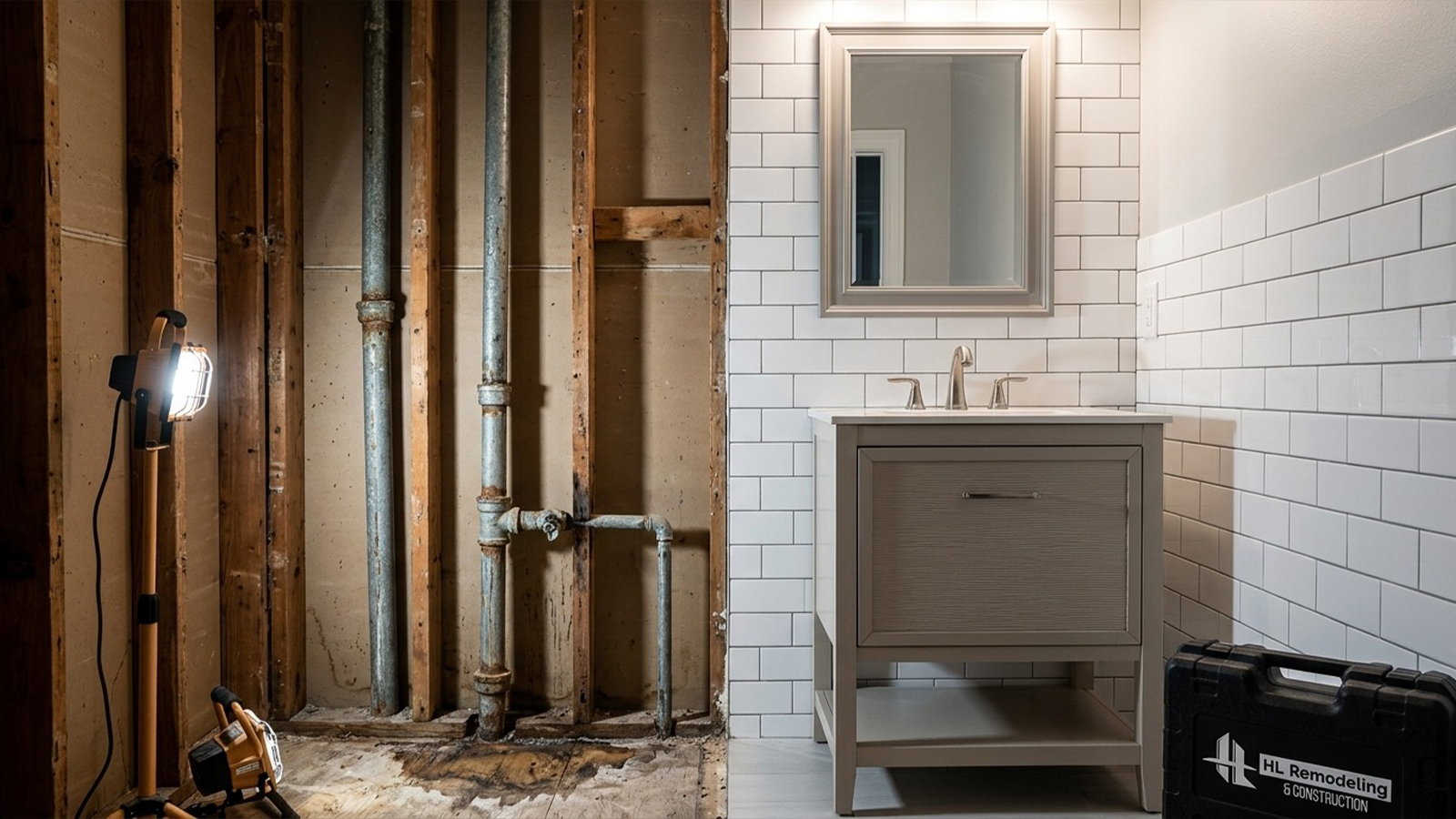
Galvanized supply pipes corrode and choke off water pressure, and once a wall is open, code often requires replacing them rather than patching back to old material. Aluminum wiring from certain decades has to be corrected to current code at any wet-zone outlet. Subfloor under an old tub is a common surprise, where slow leaks have softened the wood for years without a sign at the surface. Any one of these turns a planned number into a moving target if you find it mid-project instead of before.
That’s exactly why a pre-demo assessment matters. When we open the scope before tile is ordered, we price these realities in from the start instead of calling you with bad news halfway through. One homeowner came to us after starting a tile refresh alone. Once the old vanity came out, the subfloor underneath was rotted from a supply leak nobody had spotted. Because the framing and plumbing got handled correctly before new tile went down, the repair stayed contained instead of spreading into the next room.
Why the sequence can’t be shortcut
A small bathroom remodel in Houston is a permitted, sequenced construction job, not a tile swap. Plumbing and electrical rough-in, inspection, waterproofing, tile, fixtures, and final inspection each have to happen in order, and each step depends on the one before it being correct. We pull the permits, schedule the licensed trades, and stay on top of inspections so the work passes the first time.
Unpermitted plumbing or electrical, whether DIY or from an unlicensed handyman, can void your homeowner’s insurance and legally block the sale of your home until it’s disclosed or retroactively permitted. We see the cost of skipping that planning all the time. The remodel that should have run $5,000 becomes a $15,000 rebuild when failing grout and caulk let water spread inside the wall cavity for weeks before anyone noticed. The fix for that is not a better tile saw. It’s knowing what to handle, and in what order, before demo begins.
Conclusion
Once fixtures are plumbed and tile is set, every inch is locked in for good, which is exactly why the planning matters more than the demo. A pre-demo assessment is what catches hidden moisture, galvanized pipe, or a code problem before it ever touches your budget. In a room this small, getting the plan right the first time is the whole game.
Book a free in-home consultation with HL Remodeling. A Houston remodeling specialist will walk your bathroom, assess your layout and storage challenges, flag any hidden moisture or code issues before anything gets torn out, and hand you a clear scope and cost estimate with no obligation. Call (346) 837-0007 or request your consultation online, and we’ll respond the same day.
Frequently Asked Questions
How much does a small bathroom remodel cost in Houston?
A small bathroom remodel in Houston typically runs $8,000 to $25,000, with most sub-50-square-foot projects landing in the $12,000 to $18,000 range. The biggest cost driver is whether you keep your plumbing in place or relocate it, since moving fixtures can add $3,000 to $5,000. Older Houston homes can also add cost if demo uncovers galvanized pipe, aluminum wiring, or subfloor damage. A pre-demo assessment is the only way to get a number tied to your actual room instead of a national average.
Can I remodel a small bathroom myself to save money?
A full small bathroom remodel involves work that requires licensed trades and permits in Houston for anything beyond paint and a new mirror. Wet-zone electrical, plumbing rough-in, and code clearances around fixtures all have to pass inspection, and getting them wrong means tear-out and rework. Waterproofing behind tile and recessed niches is also unforgiving, since a small mistake leaks silently into framing for months. The money you’d save on labor is usually less than the cost of correcting one missed step.
How long does a small bathroom remodel take?
Most small bathroom remodels in Houston take two to four weeks from demo to final inspection. The timeline depends on the sequence of plumbing, electrical, waterproofing, tile, and fixture work, plus the inspection scheduling between stages. Older homes can add time if hidden pipe or subfloor issues surface during demo. Planning the full scope before demo keeps the schedule predictable instead of open-ended.
Do I need a permit to remodel a small bathroom in Houston?
A permit is required in Houston for any work that moves plumbing, alters electrical, or changes the structure. Unpermitted plumbing or electrical work can void your homeowner’s insurance and legally block the sale of your home until it’s disclosed or retroactively permitted. A cosmetic refresh that keeps everything in place may not need one, but the line is easy to cross without realizing it. HL Remodeling pulls the permits and schedules inspections as part of the project so the work is documented and passes cleanly.
What’s the best way to add storage to a small bathroom?
The best storage in a small bathroom comes from the space inside and above your walls rather than added furniture. Recessed niches, between-the-stud medicine cabinets, wall-mounted vanities, and vertical space above the toilet all add capacity without taking floor space. The catch is that anything cut into a wet wall has to be waterproofed and structurally blocked correctly, or it leaks and fails within months. That’s why these storage solutions are best installed as part of a properly sequenced renovation, not as a standalone weekend add-on.