

Most Houston homeowners who regret their kitchen remodel don’t realize it until they’re already past the point where changing course is cheap. You’ve done the research, set a budget somewhere between $30,000 and well over $100,000, and now you’re comparing contractor bids trying to figure out which decision will cost you later.
A kitchen remodel is one of the highest-stakes investments a homeowner makes, and in Houston, the margin for error is smaller than most people expect. A national survey found that 74% of homeowners report some form of remodel regret, with overspending, delays, and contractor problems leading the list. Before you commit to anything, see how HL Remodeling helps Houston homeowners get this right from the start.
Key Takeaways
- Houston’s year-round humidity averaging 75%+ disqualifies many standard materials that perform fine in drier climates
- Permits are required for most kitchen remodels involving electrical, plumbing, or structural changes in Harris County — skipping them creates serious legal and resale exposure
- Custom cabinets and appliances regularly carry 6–14 week lead times — ordering mid-project causes contractor downtime billed directly to you
- 74% of homeowners report remodel regrets, most commonly overspending, delays, and hiring the wrong contractor
- One conversation with a licensed local contractor before ordering anything can prevent every mistake on this list
The Houston Kitchen Problems Most Homeowners Don’t See Coming
Houston is not a forgiving environment for a careless remodel. The city’s subtropical climate keeps humidity at 75% or higher for most of the year, and that moisture works against standard materials in ways that only become visible months after installation. Cabinet finishes delaminate. Floors buckle near the sink. Drywall compounds absorb moisture and quietly lose integrity behind a fresh coat of paint.
The risk gets worse near the floor. Houston’s flooding history and expansive clay soil make moisture intrusion beneath improperly installed kitchen flooring a well-documented local problem. A slow leak under a dishwasher can rot a subfloor for months, turning a routine renovation into a $10,000 to $25,000 structural repair. Material and labor costs in Houston also run above national averages, so every mistake costs more to fix here than almost anywhere else. These problems are preventable — but only if they’re caught before demolition begins.
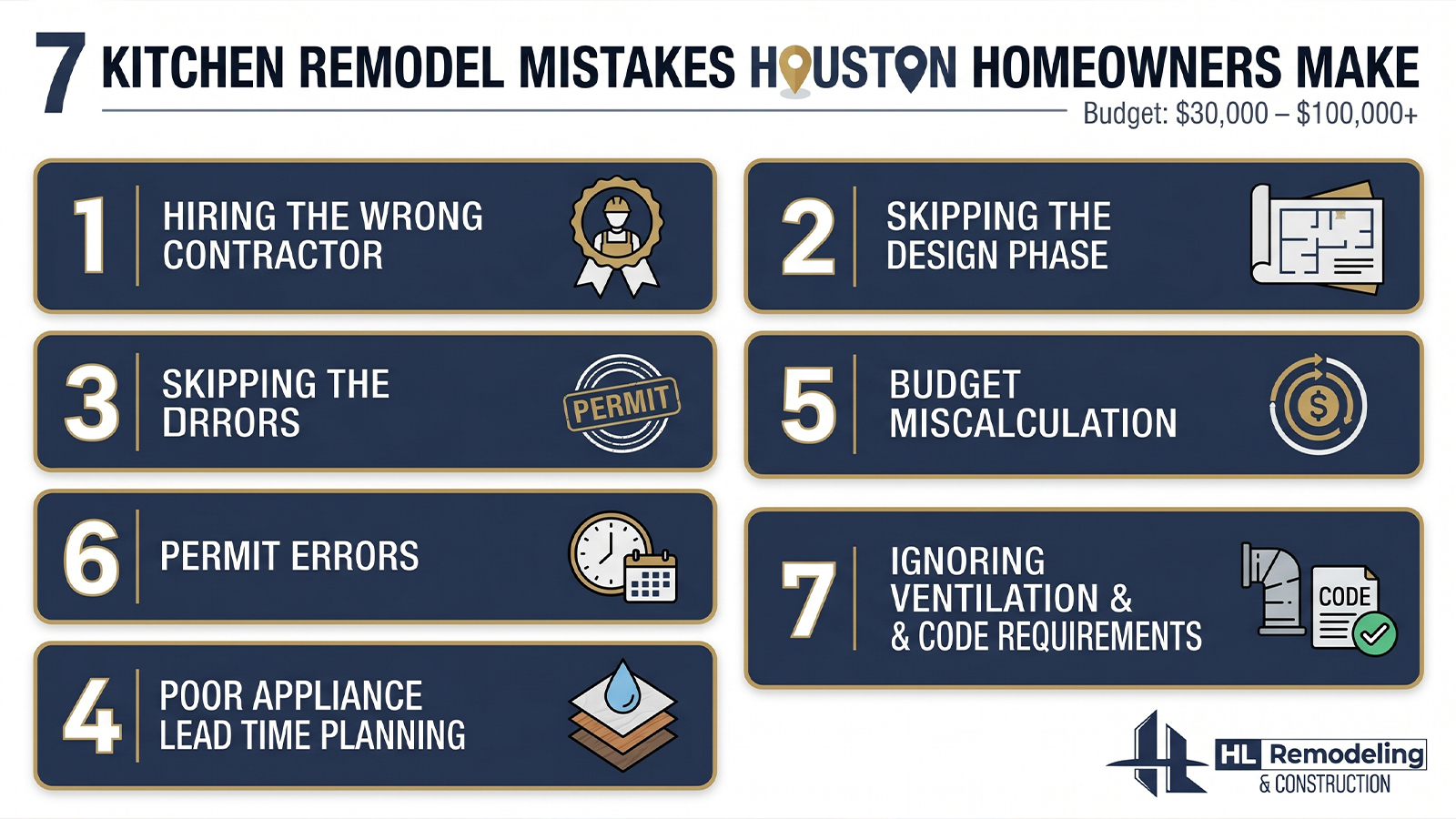
Kitchen Remodel Mistakes That Cost Houston Homeowners the Most
Hiring the Wrong Contractor — or Skipping Verification Entirely
This is the single most consequential decision in the entire process, and the place where the most preventable damage happens.
Houston’s remodeling contractor market is largely unregulated. The pattern is common: an unlicensed contractor takes a large deposit, begins demo, then slows or disappears entirely, leaving the homeowner with exposed walls, no functional kitchen, and limited legal recourse. Before signing anything, verify licensing through the Texas Department of Licensing and Regulation, confirm current insurance, and ask specifically about permit history with the City of Houston. Request references from projects of comparable scope. A qualified contractor coordinates permit applications as a standard part of the project — homeowners working with unlicensed operators are personally exposed to every violation that follows.
Skipping the Design Phase (or Rushing It)
Poor planning before demolition is the origin of most kitchen remodel regrets.
The relationship between the refrigerator, sink, and primary cook zone determines how the space feels to use every single day. When those three elements are positioned well, cooking and cleanup are efficient. When they’re not, even a beautifully finished kitchen becomes a daily frustration. The design phase is also where appliance placement, pantry access, outlet locations, and ventilation get resolved. Houston building code has specific ventilation requirements that generic national design guides don’t account for, and insufficient outlet placement is among the most expensive fixes after tile is set and cabinets are installed. A professional designer or design-build contractor catches these errors in planning — not after the fact. Homeowners who shortcut this stage consistently end up spending more to correct it later.
Getting the Permit Wrong — or Skipping It Altogether
Most kitchen remodels in Houston involving electrical work, plumbing changes, or structural modifications require permits from the City of Houston Permitting Center. Homeowners who skip this step to save time routinely pay far more later. A city inspector who identifies unpermitted work can issue a stop-work order and require that completed work be torn out for proper inspection, with fines that often exceed what the original permit would have cost.
The consequences extend beyond the project itself. Unpermitted work discovered during a home sale can delay or kill closing, force legal disclosure to buyers, and reduce resale value. In a city with Houston’s storm and flood history, insurance claims tied to unpermitted work are routinely denied. Plan for permit approval to add two to four weeks to your timeline — a professional contractor builds that window into the schedule from the beginning.
What Houston Homeowners Get Wrong About Materials and Appliances
Many flooring and cabinet products sold at national retailers are rated for standard climate conditions. In Houston, that rating is not enough.
Solid hardwood floors near a sink or dishwasher absorb humidity and expand until they buckle. Budget-grade cabinet material — particle board and certain MDF formulations — swells and warps within a few years in this environment. Choosing the wrong floor material near water sources is one of the most common errors that leads directly to subfloor damage, and by the time it’s visible, the repair cost is already significant. For flooring, luxury vinyl plank and large-format porcelain tile are the most climate-appropriate choices for this market. For cabinets, solid wood species with tight grain structures or higher-grade MDF with proper sealing hold up far better than budget alternatives. These decisions need to be finalized before demolition begins — selected mid-project under pressure, they almost never get the attention they require.
The Appliance and Storage Miscalculation
Storage is the most frequently cited kitchen remodel regret, and it consistently surprises homeowners who believed they had planned carefully.
New appliances consume cabinet and pantry space originally designated for food and supplies, and the shortfall only becomes obvious after installation is complete. One planning error that comes up repeatedly: skipping the appliance garage — a designated storage zone in the pantry, designed during the planning phase, that conceals countertop appliances behind a single door and preserves the clean visual lines most homeowners are after. Refrigerator placement relative to the sink and cook zone also affects daily workflow more than most people anticipate when reviewing a floor plan on paper. These decisions belong in the design phase, not in a last-minute conversation after cabinets are already ordered.
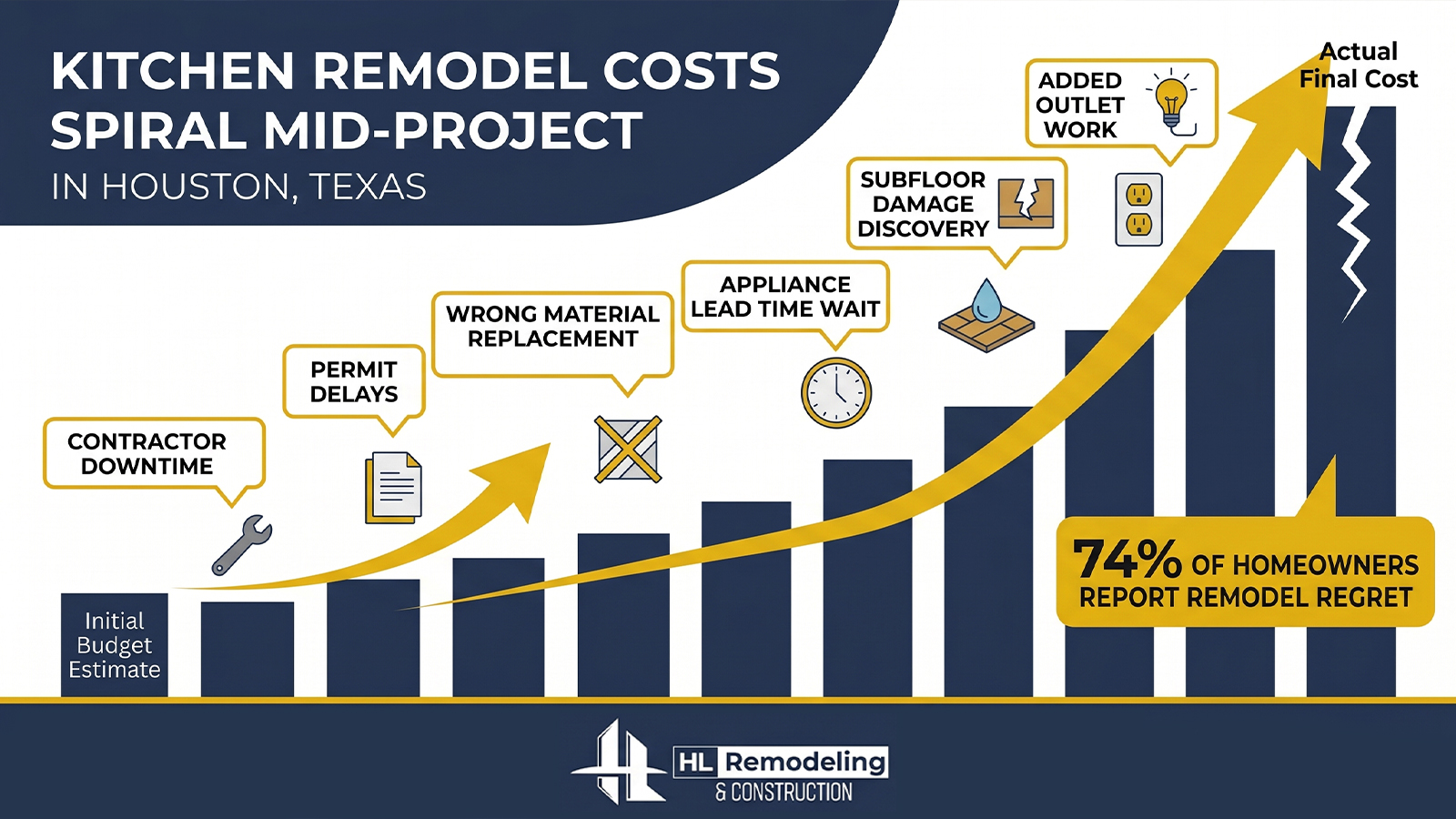
The Budget Spiral: Why Kitchen Remodel Costs Grow Mid-Project
Every change made after demolition begins multiplies in cost. Moving a sink after plumbing rough-in costs several times what it would have cost to plan correctly from the start. The same applies to ventilation corrections, electrical rerouting, and cabinet revisions. Lead times for custom cabinets and appliances in Houston regularly run six to fourteen weeks, and homeowners who order mid-project face a delay in progress billed back to them in contractor time. The table below shows how the cost of correcting an error changes depending on when it is caught.
| Stage When Error Is Caught | Typical Cost to Fix | Example |
|---|---|---|
| During design and planning | Low — adjustment cost only | Changing cabinet layout before orders are placed |
| After materials ordered, pre-installation | Moderate — restocking fees and redesign | Reordering appliances due to measurement error |
| Mid-installation | High — labor, materials, and delay costs | Moving a sink after plumbing rough-in |
| After project completion | Very high — demolition plus rebuild | Fixing ventilation or unpermitted electrical |
The cheapest moment to fix any error is before work begins. Homeowners who work with HL Remodeling before a single decision is finalized consistently end up with tighter timelines and final costs that match what they were quoted.

Ready to Start Your Kitchen Remodel the Right Way?
Every mistake on this list is real and avoidable. Houston homeowners who end up with regrets rarely made one catastrophic decision — they made a series of small ones that compounded. Wrong contractor, rushed planning, late appliance orders, skipped permits, climate-wrong materials. Each one alone is manageable. Together, they are how a $60,000 kitchen remodel becomes a $90,000 one you still don’t love.
The difference between a kitchen remodel you’re proud of in ten years and one you regret starts with one conversation before a cabinet is ordered. Contact HL Remodeling today for a free kitchen remodel consultation in Houston. Walk through your project with an experienced local contractor, get straight answers on permits, realistic timelines, and the right materials for this climate, and leave with a no-obligation estimate before you commit to anything. Call (346) 837-0007 or schedule online.
FAQ
Do I need a permit for a kitchen remodel in Houston, Texas?
Yes. The City of Houston and Harris County require permits for most kitchen remodels involving electrical, plumbing, or structural changes. Unpermitted work creates legal, insurance, and resale exposure. A licensed contractor handles permit coordination as part of the project scope.
How long does a kitchen remodel take in Houston?
Minor refreshes run three to four weeks. Standard remodels typically take eight to ten weeks, and luxury renovations run twelve to sixteen weeks. Permit approval adds two to four weeks to any timeline. Ordering all materials before demolition begins is the single most effective way to avoid a delay.
What materials should I avoid in Houston’s climate?
Solid hardwood flooring near water sources and budget-grade cabinet materials perform poorly in Houston’s humidity. Luxury vinyl plank, large-format porcelain, and properly sealed higher-grade MDF are more appropriate choices. A local contractor with Houston project experience is the most reliable source for climate-specific material guidance.
How do I choose the right kitchen remodel contractor in Houston?
Verify licensing through TDLR, confirm insurance, and request references from Houston-area projects of comparable scope. Ask specifically about permit experience with the City of Houston. Avoid contractors who request large upfront deposits without a written contract.
What is the most common kitchen remodel regret?
Storage miscalculation leads the list, followed by hiring the wrong contractor and unexpected cost overruns. Planning cabinet and pantry storage before design is finalized — and accounting for appliance footprints from the start — prevents the most common functional regrets.
How much does a kitchen remodel cost in Houston?
Houston kitchen remodels typically range from $30,000 for mid-range projects to $100,000 or more for full luxury renovations. Material and labor costs run above national averages. A detailed written estimate before committing — including permit fees and material lead times — is the most reliable way to budget accurately.