
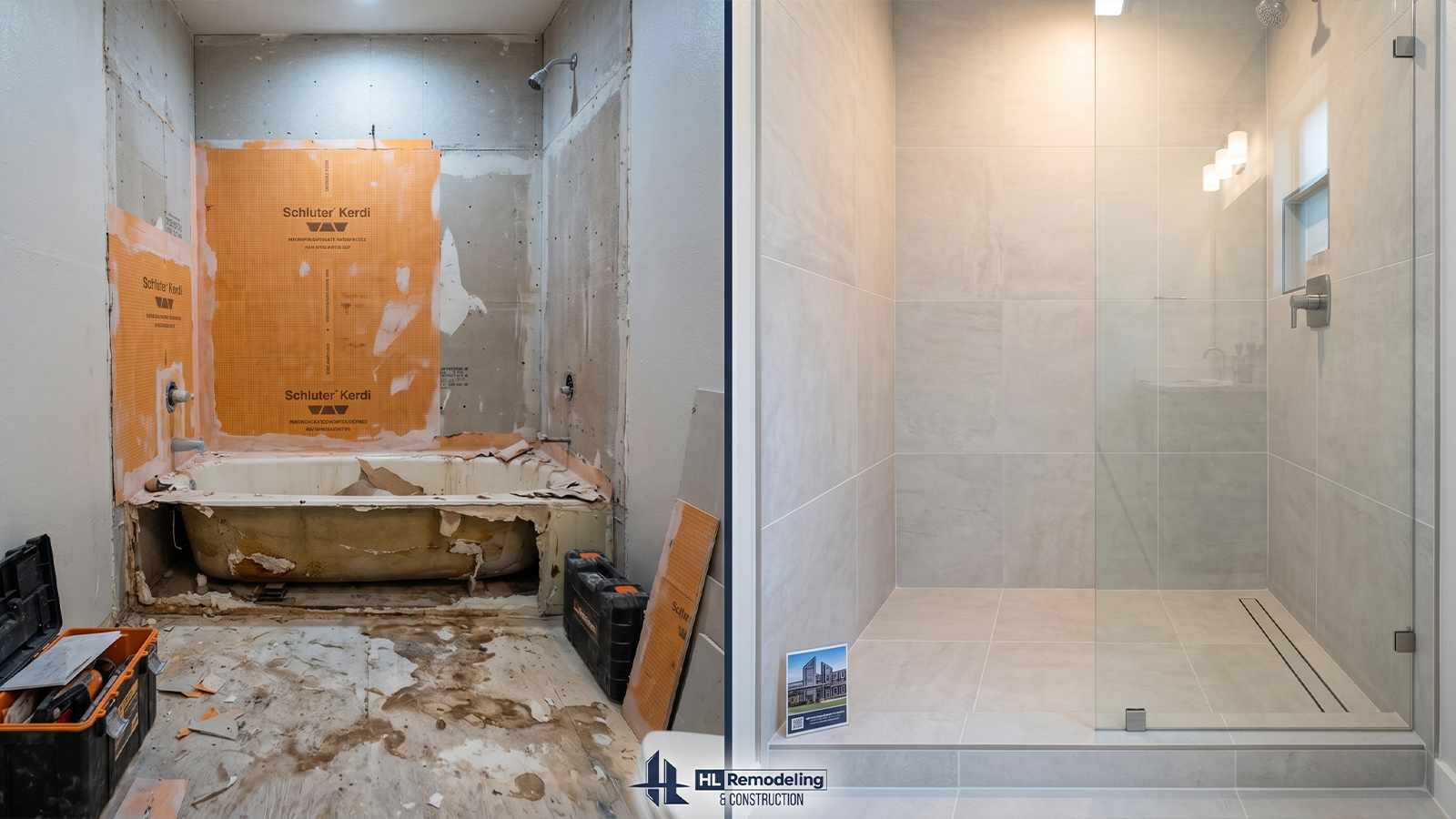
Replacing a bathtub with a walk-in shower is one of the more consequential decisions a Houston homeowner can make — and one of the more misunderstood ones. A tub-to-shower conversion in Houston typically costs between $3,000 and $12,000, depending on tile selection, plumbing scope, and finish level. Most homeowners land around $8,000 to $9,000 for a full primary bathroom conversion with tile walls and a glass enclosure.
Before you schedule anything, there is one Houston-specific factor that shapes the entire project: waterproofing. Skipping proper waterproofing is the most expensive mistake you can make in a shower remodel. This guide covers exactly what you need to know before demo begins.
Key Takeaways
- A full tub-to-shower conversion in Houston costs $3,000–$12,000 depending on materials, plumbing changes, and finish level
- Removing the only bathtub in a home can reduce buyer pool — in a single-bathroom home, this matters significantly
- The City of Houston Development Services Department requires a plumbing permit when drain location is altered
- Budget $500–$1,500 specifically for waterproofing — systems like Schluter Kerdi or Redgard are the professional standard
- A realistic timeline from demo to final walk-through is 10–14 days for a standard primary bathroom conversion
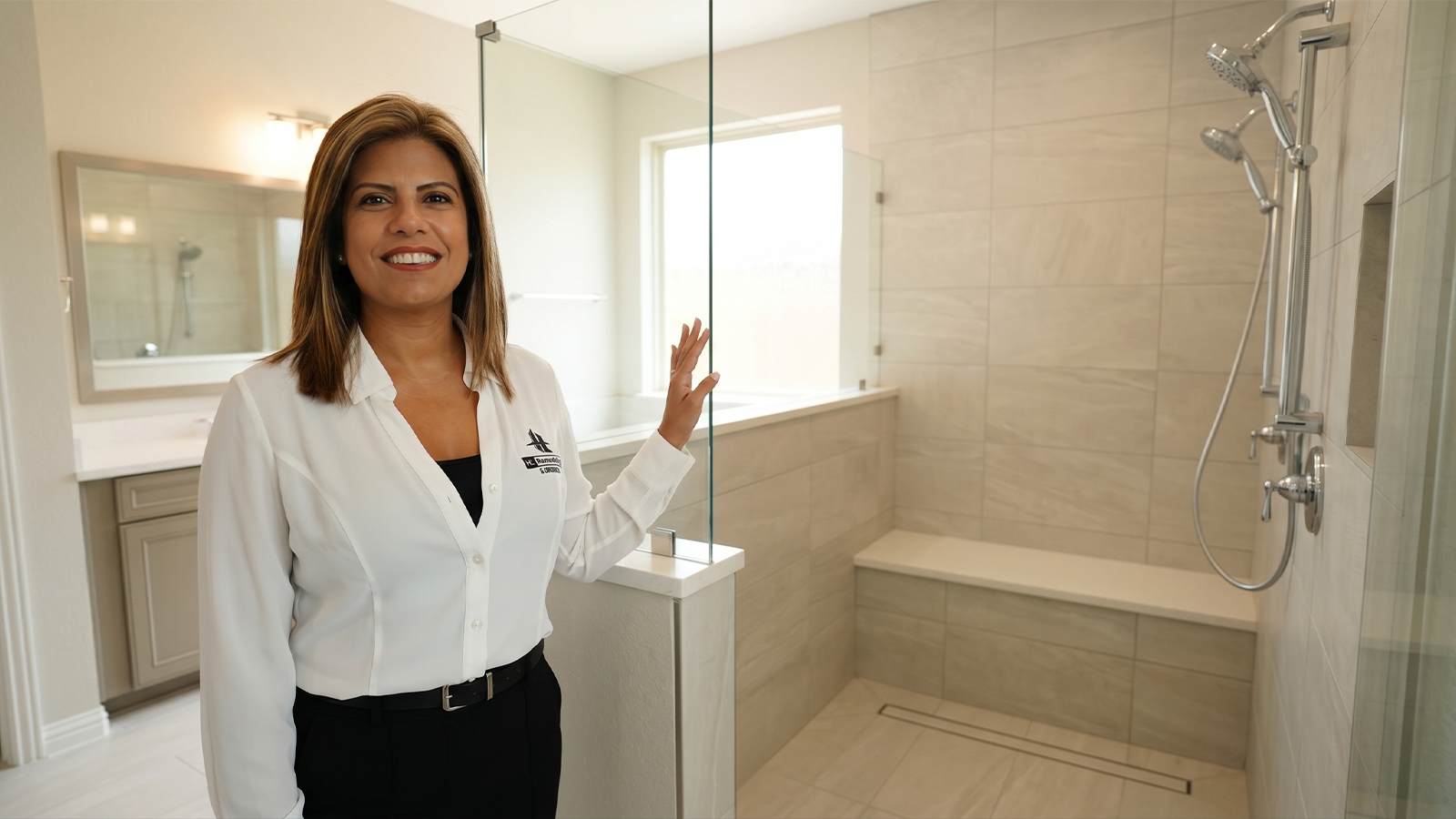
Should You Replace Your Tub? The Bathroom Remodel Decision Every Houston Homeowner Needs to Make First
The most common fear before converting a tub is resale value. It is a legitimate concern, but the answer is more specific than most articles admit.
Will Removing My Bathtub Hurt My Home’s Resale Value?
In a home with two or more bathrooms, removing one bathtub rarely affects resale value in any meaningful way. The risk concentrates in single-bathroom homes, where eliminating the only bath option can noticeably shrink your buyer pool. Houston’s suburban housing stock, particularly in Katy, Sugar Land, and The Woodlands, skews heavily toward three-bedroom, two-bathroom layouts. Most homeowners considering this conversion are in a safe position as long as one tub remains somewhere in the home.
The National Association of the Remodeling Industry reports that midrange bathroom remodels recover roughly 66% of cost at resale nationally. In Houston’s competitive market, a well-executed walk-in shower renovation adds both visual appeal and accessibility that buyers notice.
Accessibility deserves real weight here. ADA guidelines set the minimum walk-in shower size at 36 by 36 inches, with curbless entry and grab bar blocking in the walls. AARP’s 2024 survey found that 75% of adults 50 and older want to remain in their homes as they age — a properly designed shower conversion directly supports that goal and adds long-term value beyond any resale calculation. If you genuinely soak regularly, factor that in. If the tub sees fewer than a few uses per month, the conversion almost certainly makes sense.
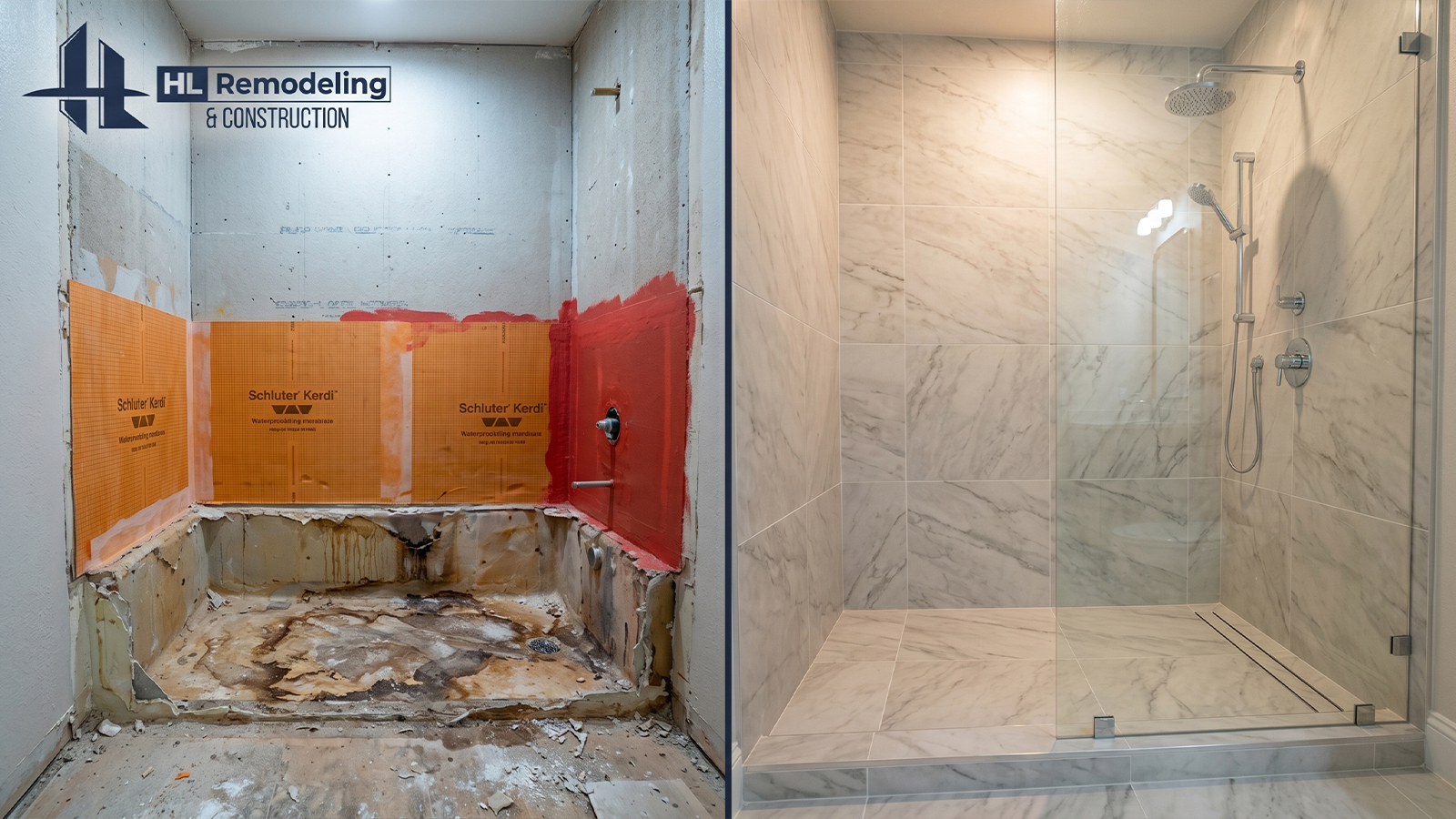
Before Demo: What Houston Bathrooms Hide and Why Waterproofing Cannot Be Optional
What Demo Day Reveals — and How to Budget for It
Fiberglass surrounds and acrylic inserts were standard in Houston homes built between the 1980s and early 2000s. They delaminate over time, water infiltrates quietly for years, and by the time you notice a soft subfloor or discoloration at the grout line, moisture has typically been reaching the framing long before that. Before demo begins, watch for soft spots near the tub, musty odor around the surround, rust at the drain flange, or grout that sounds hollow when tapped. Mid-demo discoveries typically add $500 to $3,000 to project cost. Budget for that possibility before work starts.
Waterproofing is where most shower remodels either hold up or fail. Three systems dominate professional Houston bathroom remodels: Schluter Systems Kerdi membrane, a sheet-applied system fully bonded to the substrate and widely regarded by NKBA-certified professionals as the most reliable option for tile shower applications; Redgard Waterproofing Membrane by Custom Building Products, a liquid-applied alternative well-suited to simpler layouts; and the EPDM shower pan liner, the traditional standard beneath mortar-bed shower floors. Budget $500 to $1,500 for waterproofing materials and labor — it is a non-negotiable line item, not an upgrade.
A properly waterproofed shower pan should hold standing water for 24 hours without measurable drop before a single tile goes down. Houston’s Gulf-adjacent geography creates sustained moisture exposure that most markets simply do not face at the same level. Proper waterproofing is the baseline here, not an option.
Learn More: Cost Saving Tips For A Bathroom Remodel
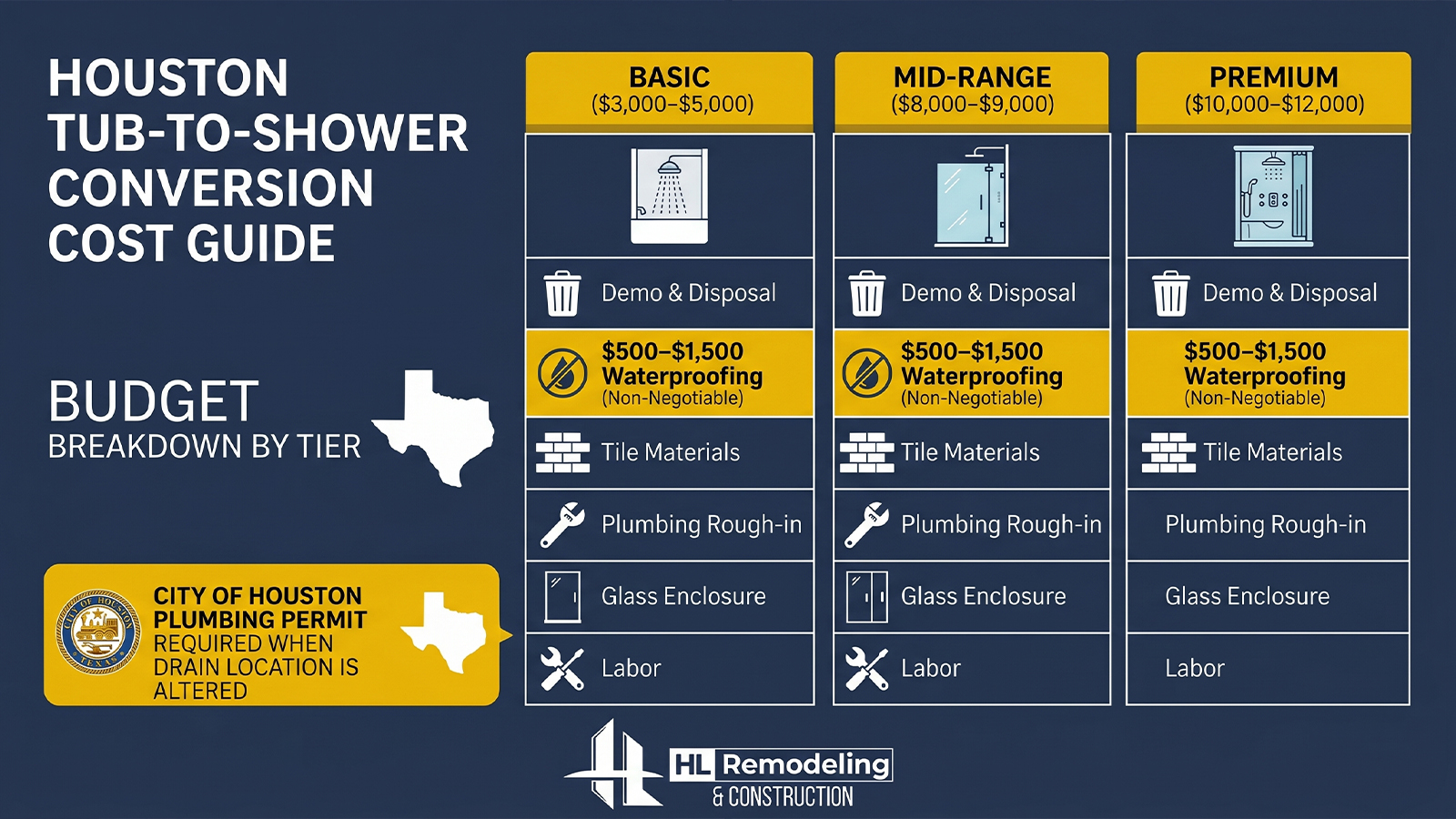
Houston Shower Remodel Cost Breakdown, Permits, and What the City Requires
Full Cost Breakdown: Tub-to-Shower Conversion in Houston
| Line Item | Basic | Mid-Range | Premium |
|---|---|---|---|
| Tub removal and demo | $300–$500 | $500–$800 | $800–$1,200 |
| Shower pan / liner | $400–$600 | $600–$900 | $900–$1,500 |
| Tile materials | $400–$800 | $800–$1,800 | $1,800–$4,000 |
| Tile labor | $600–$1,000 | $1,000–$2,000 | $2,000–$3,500 |
| Waterproofing system | $500 | $800–$1,000 | $1,200–$1,500 |
| Fixture installation | $200–$400 | $400–$700 | $700–$1,500 |
| Glass enclosure | $400–$700 | $700–$1,500 | $1,500–$3,500 |
| Permits and inspection | $150–$250 | $250–$350 | $350–$400 |
| Total range | $2,950–$4,750 | $5,050–$9,050 | $9,250–$17,100 |
Houston tile labor runs $8 to $15 per square foot. Moving the drain location adds $800 to $2,000 independently of everything else. Materials are also subject to Texas’s 8.25% sales tax, which adds meaningfully to tile, glass, and fixture costs — a detail most national guides miss entirely.
The City of Houston Development Services Department requires a plumbing permit whenever a drain location is altered or supply lines are rerouted. Any plumber performing work under that permit must hold a current license from the Texas State Board of Plumbing Examiners. Cosmetic-only work at the same plumbing locations may not trigger a permit, but moving the drain always does. Inspectors typically review rough-in plumbing, waterproofing flood test documentation, and final fixture installation. Skipping permits creates disclosure complications at resale — and that problem surfaces at the worst possible time.
Timeline and Expert Tips for Hiring the Right Houston Bathroom Remodeling Company
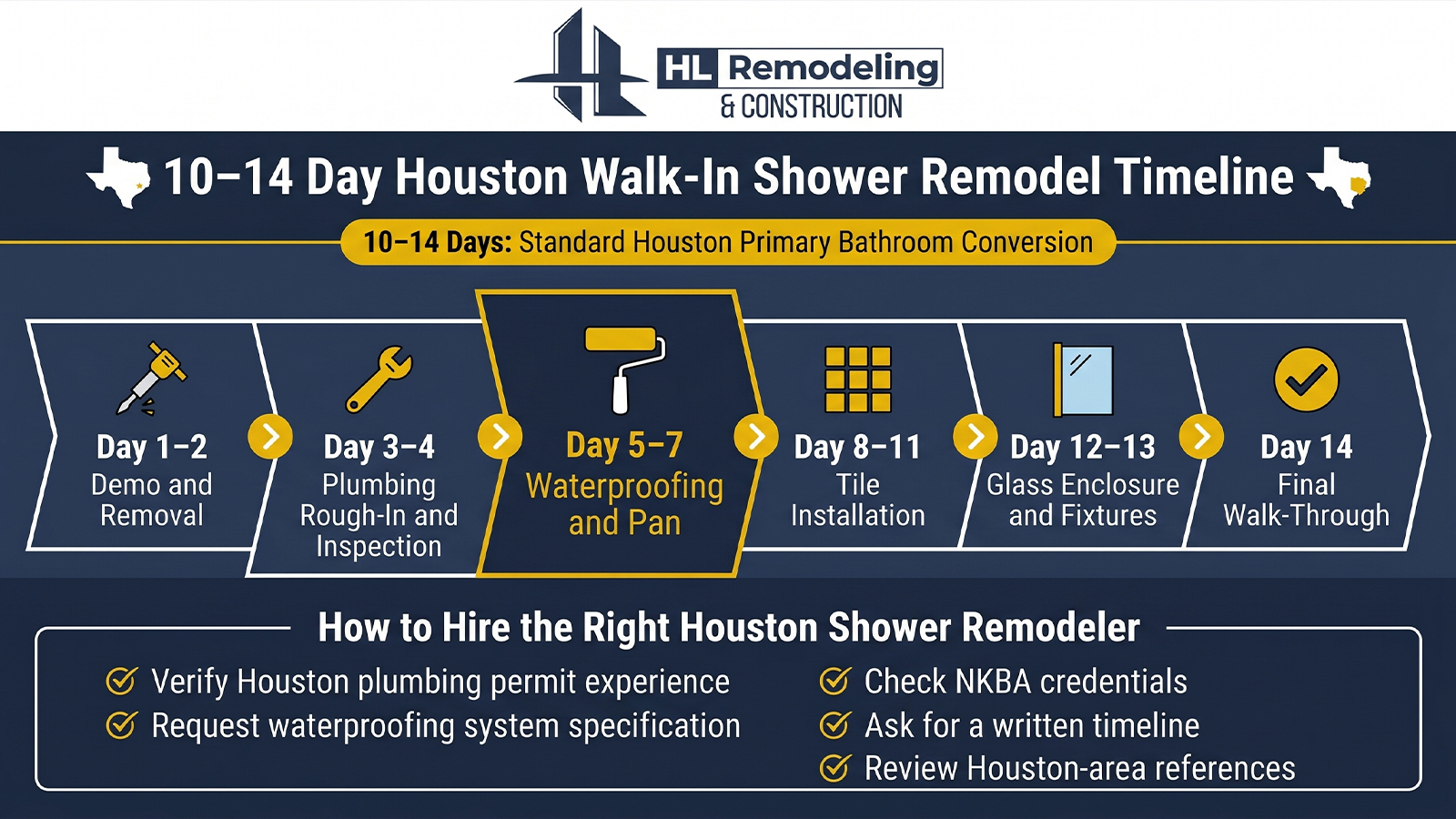
A professional team should complete a standard primary bathroom conversion in 10 to 14 days. Demo and subfloor inspection take the first two days, followed by rough plumbing and any drain repositioning. Waterproofing installation and the 24-hour flood test come next, then tile installation over two to three days depending on layout. Glass enclosure installation, fixture hookup, grout sealing, and the final walk-through close out the project. Pre-order tile and specialty glass panels before demo begins — large-format tile and frameless glass can add three to seven days if ordered after work starts. A project running past three weeks without a clear explanation is worth a direct conversation with your contractor.
Expert Tips: What to Ask Before You Hire a Bathroom Remodeling Company
Verify every contractor’s license through the Texas Department of Licensing and Regulation database before signing anything. Then ask directly: “Which waterproofing system do you use, and will you perform a flood test before laying tile?” A contractor who cannot answer that specifically is a red flag. Other warning signs include no written scope of work, no permit pulled for drain relocation, vague warranty terms, and pressure to commit before comparing bids. NARI membership and NKBA certification are meaningful trust signals when evaluating Houston bathroom remodeling companies. Financing for qualified homeowners is often available up to 72 months through reputable bath renovation contractors — ask about it during your consultation.
Conclusion
You now have the cost framework, permit requirements, waterproofing standards, and contractor vetting criteria to move forward without getting caught off guard. A walk-in shower conversion done correctly in Houston — with proper waterproofing, licensed plumbing, and quality tile installation — delivers a bathroom you will actually want to use every day. Schedule a free consultation with HL Remodeling to confirm your layout, scope your budget, and get a clear project plan from a team with direct Houston experience behind it.
FAQ
How much does a tub-to-shower conversion cost in Houston, TX?
Most Houston homeowners spend between $5,000 and $10,000 for a mid-range conversion with tile walls, a glass enclosure, and updated fixtures. The full range runs $3,000 to $12,000 depending on whether plumbing lines are relocated and what materials are selected.
Will removing my tub hurt resale value?
Not in a home with two or more bathrooms. In a single-bathroom home, eliminating the only bathtub can reduce buyer interest, particularly among families. Keeping at least one tub elsewhere in the home removes that concern entirely.
What permits are required for a shower remodel in Houston?
A plumbing permit through the City of Houston Development Services Department is required whenever drain or supply line locations change. Cosmetic-only work at the same plumbing locations may not trigger a permit requirement — confirm with your contractor before assuming.
How long does a walk-in shower remodel take?
A professional team typically completes a standard primary bathroom conversion in 10 to 14 days. Pre-ordering materials before demo begins prevents the most common delays.
What is the best waterproofing system for a tile shower?
Schluter Systems Kerdi membrane is the professional standard for full tile shower applications, recommended by NKBA-certified contractors. Redgard Waterproofing Membrane by Custom Building Products is a reliable liquid-applied alternative for simpler projects.
Do I need a licensed plumber for a shower conversion?
Yes. Any work performed under a City of Houston plumbing permit requires a plumber licensed by the Texas State Board of Plumbing Examiners. Verify that license before work begins.
Is a walk-in shower worth it if I rarely use the tub?
Almost always. If your tub sees fewer than a few uses per month, a walk-in shower conversion improves daily bathroom function, refreshes the space visually, and supports long-term accessibility.