
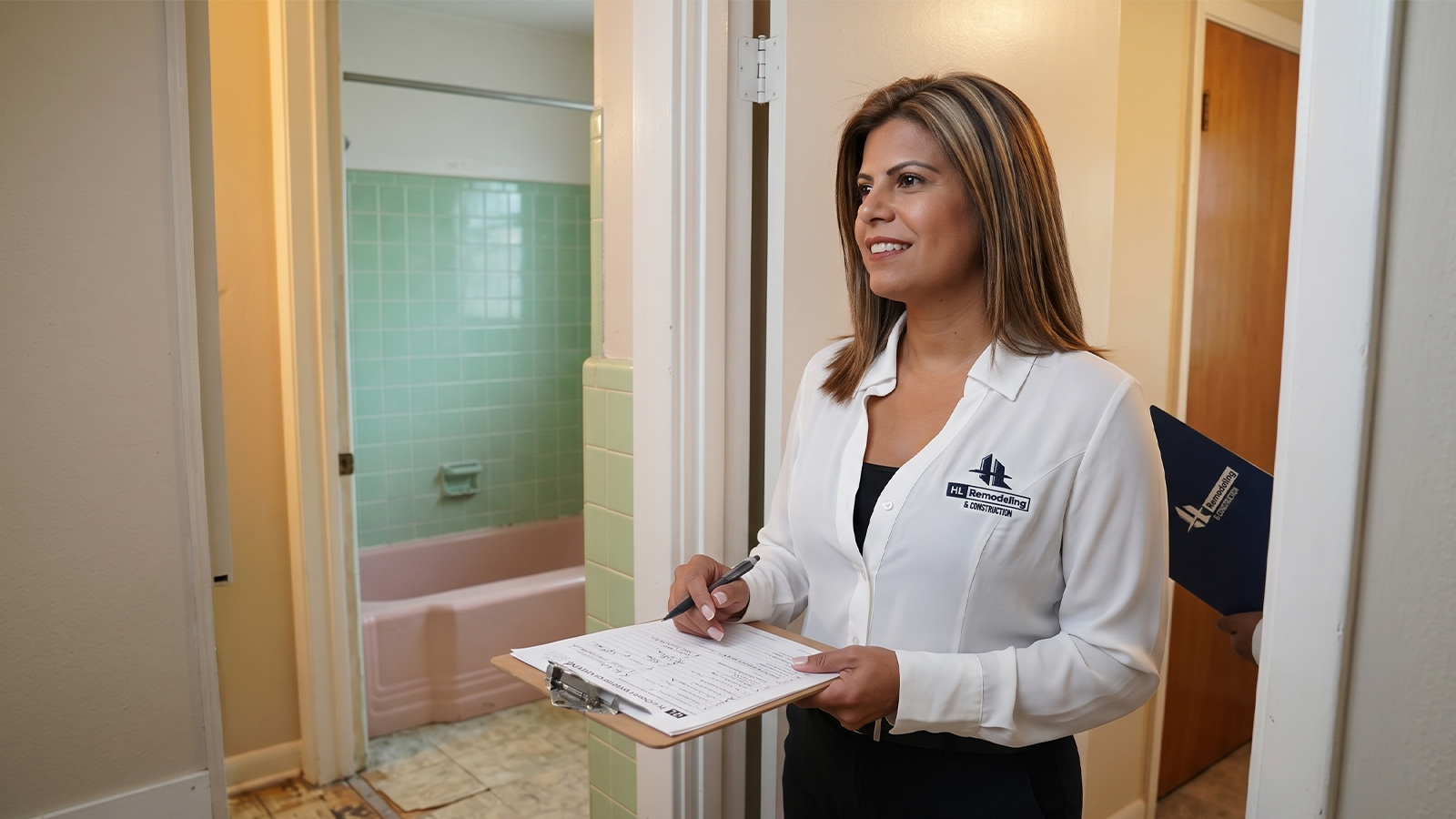
If you own a brick ranch in Spring Branch and you’re finally ready to gut that original bathroom, most remodeling articles stop being useful at exactly the point where you need them most. Bathroom remodeling in Spring Branch is a different conversation than a standard renovation — the homes here carry fifty-plus years of cast iron pipes, clay-soil movement, and sealed moisture that generic advice never accounts for.
You’ve roughed out a budget, started calling contractors, and somewhere along the way — maybe a neighbor said something about old pipes, maybe you noticed a soft spot near the tub — you started wondering what is actually behind that tile.
That instinct is correct. This article gives you the pre-demo framework that experienced contractors use on homes of this era before a single wall comes down.
Key Takeaways
- Spring Branch homes built before 1975 almost always contain original cast iron drain lines and galvanized supply pipes — both require professional assessment before demolition begins
- A pre-demo inspection covering plumbing, subfloor condition, electrical, and ventilation is standard practice for any honest contractor working in older Houston homes, not an upsell
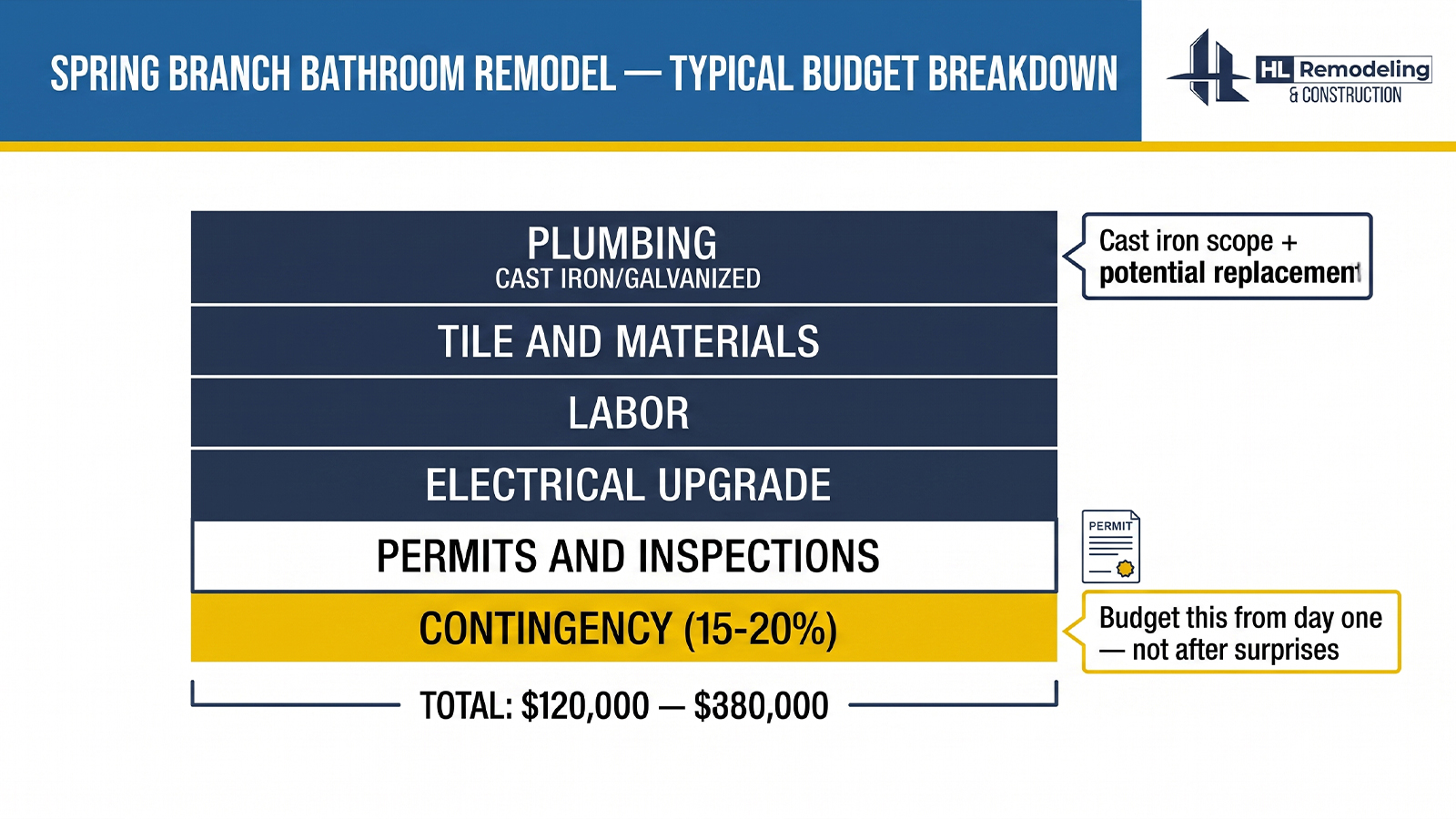
- Budget a 15–20% contingency from day one; hidden discoveries during demolition are common in homes of this era, not exceptional
- Pulling a City of Houston building permit protects you as the homeowner — the inspection process it triggers is a safeguard, not a formality
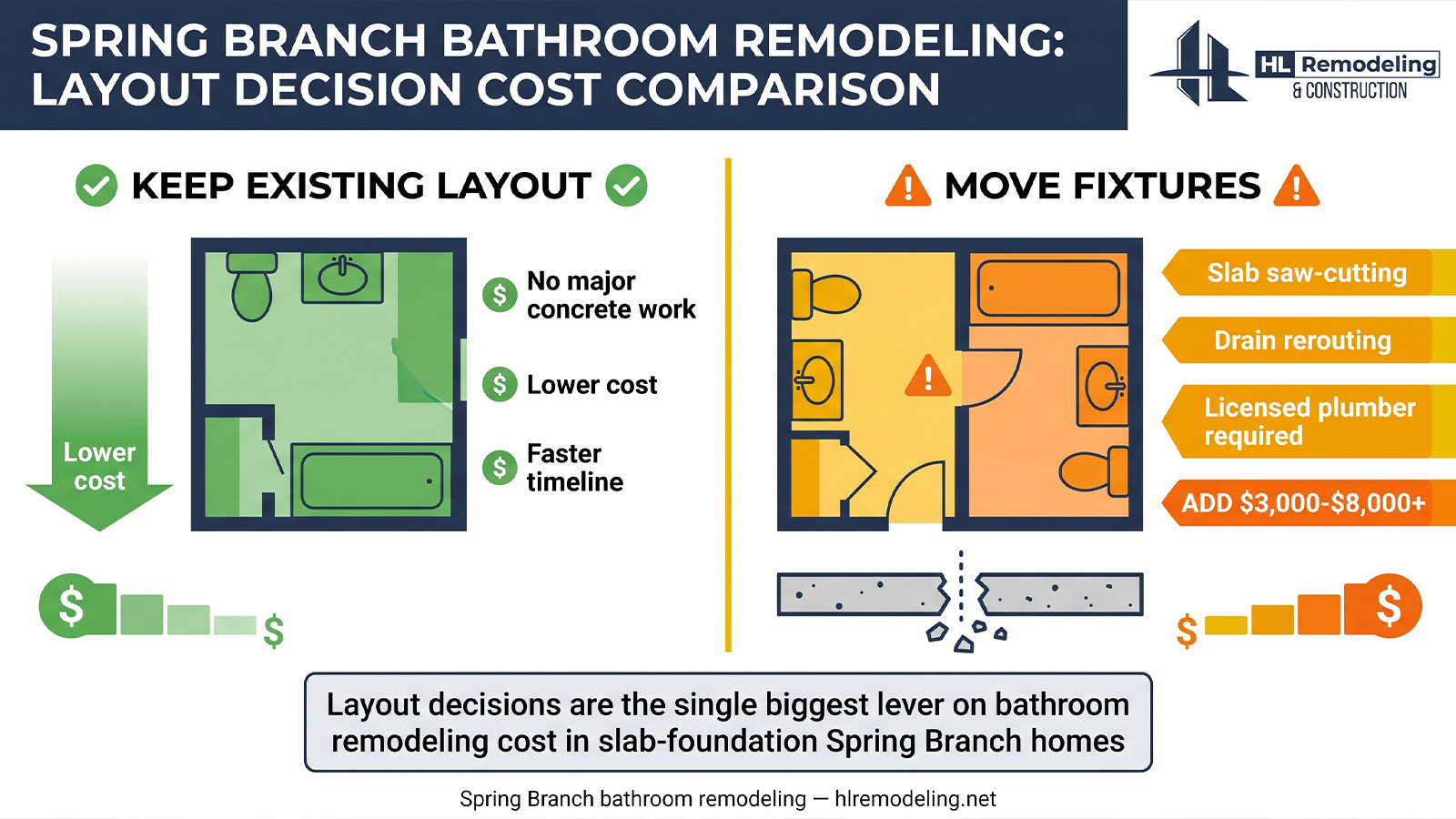
- Keeping the existing layout saves significant money; moving fixtures in a slab-foundation home triggers saw-cutting, drain rerouting, and licensed plumber involvement that can add thousands to your remodel cost
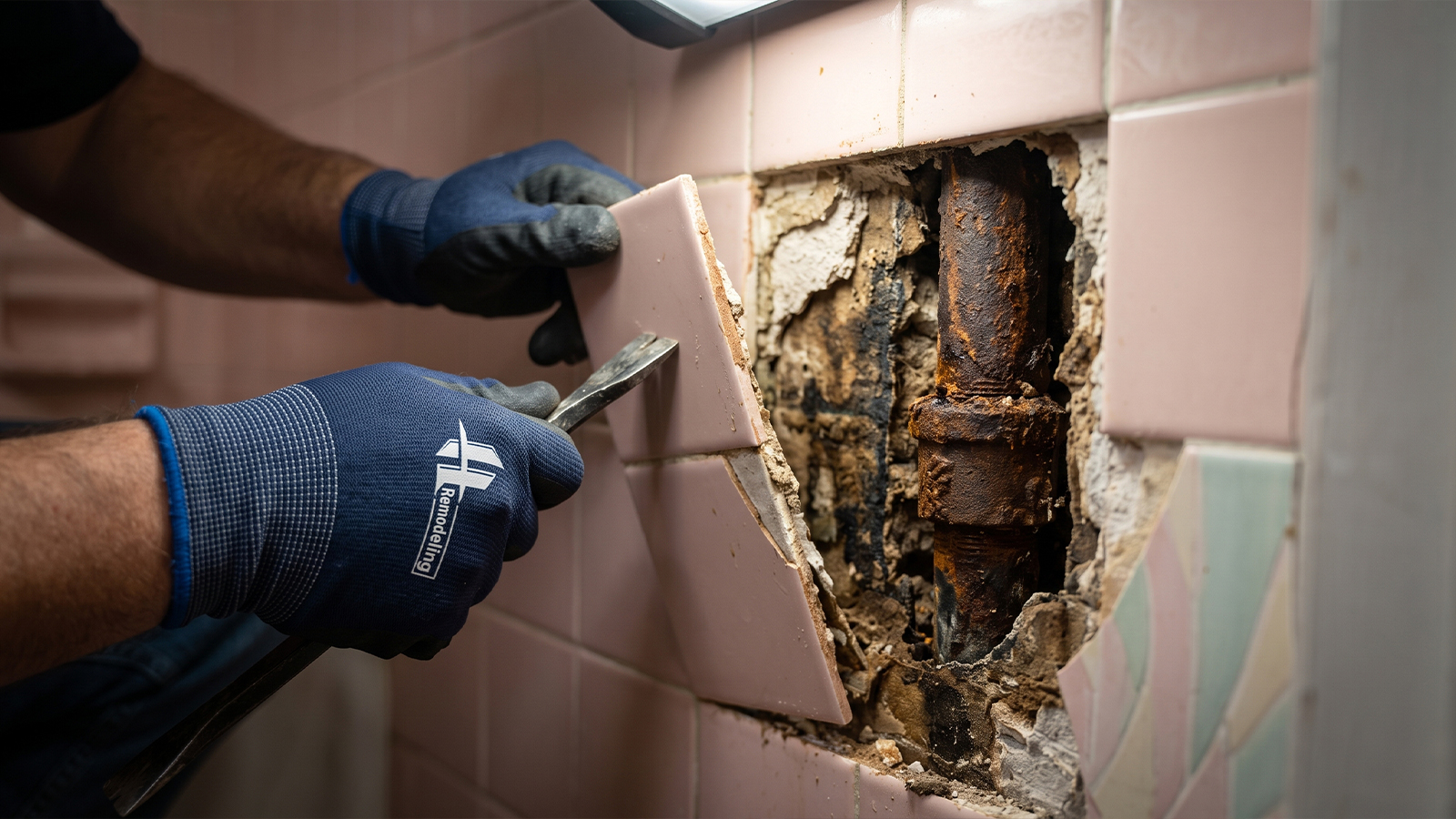
What Spring Branch’s Older Homes Are Hiding Behind the Tile
Spring Branch is not a generic Houston neighborhood, and its homes are not generic remodeling projects. The residential character along Long Point Road — the generous lots, the solid brick construction, the mid-century ranch layouts — comes with a set of hidden conditions that define what bathroom remodeling actually involves in homes built here between the 1950s and 1970s.
The five things we encounter most often in Spring Branch bathroom remodeling projects are cast iron drain lines at or past end of life, galvanized supply lines corroding from the inside out, pre-GFCI electrical wiring that cannot support modern fixture loads, slab voids created by Houston’s clay-soil movement, and moisture damage concealed behind original tile and drywall.
These are structural characteristics of the era and the neighborhood — not worst-case scenarios. In homes we’ve worked on just off Long Point Road, cast iron drain lines are almost always original and well past their service life by the time the homeowner calls us.
That is the baseline for a pre-1975 home that has never had a full bathroom gut-remodel.
The Plumbing Reality Inside a 1950s–1970s Houston Home
No other factor determines the true scope and cost of bathroom remodeling in homes of this era more than plumbing condition. Walls can be patched, tile can be replaced, fixtures can be swapped in a day. Plumbing that fails mid-project is an entirely different problem.
Cast Iron Drain Lines: Age, Risk, and What We Check First
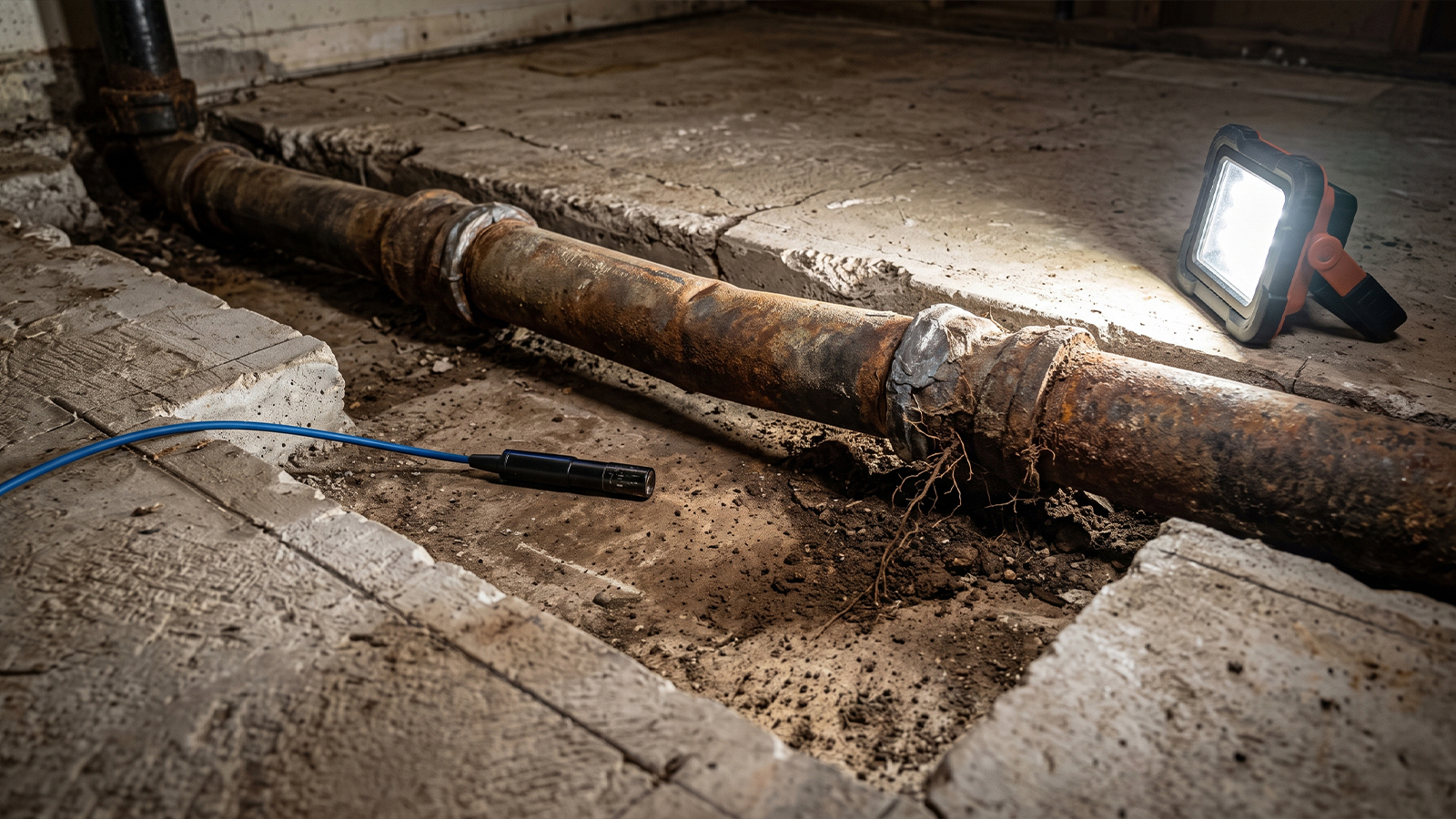
Cast iron was the standard drain pipe material in Houston homes built through the early 1980s. Pipes installed in the 1950s and 1970s are now 50 to 70 years old, at or past their practical end of life. The common failure modes are internal cracking, root intrusion through joint gaps, bellying where the pipe has lost proper slope, and partial collapse — none of which are visible from above the slab. Demo activity directly above aging cast iron lines can worsen existing fractures or shift already-compromised sections.
A camera scope inspection of the existing drain lines should be included in or formally offered alongside the project estimate. If the scope reveals failures, drain line replacement requires saw-cutting the concrete slab, recalculating drainage slope, and coordinating a licensed plumber.
We regularly find cast iron lines with active cracks or partial collapse in homes along the Rollingwood Drive corridor — in several cases, beginning demolition without prior scoping would have made the damage irreversible without an emergency slab repair.
Galvanized Supply Lines: The Inside-Out Corrosion Problem
Galvanized steel supply lines are deceptive. The pipe exterior looks intact while the interior bore is already narrowed by rust deposits, reducing pressure and setting up failure under mechanical stress.
Cutting into walls to reposition fixtures or simply disturbing lines that have not been touched in decades can cause joints to fail under pressure. If galvanized pipe is confirmed in your home, full supply line replacement should be budgeted as part of the remodel scope — not held as a conditional add-on if problems appear during demolition.
Electrical and Ventilation: What Pre-1980 Wiring Cannot Support
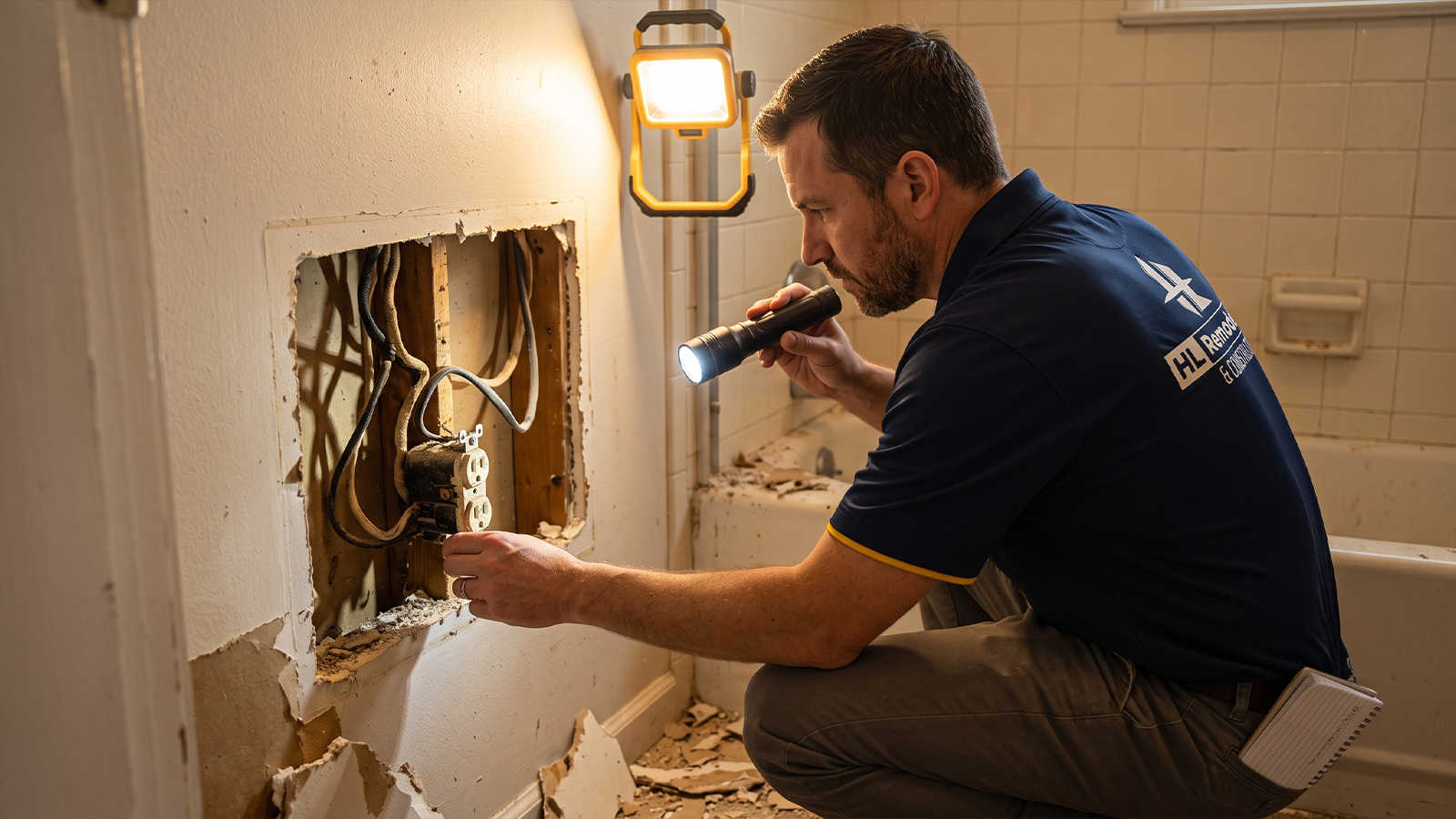
Bathroom remodeling in a pre-1980 Houston home requires an electrical conversation that is separate from the aesthetic decisions. Original wiring in homes of this era typically does not meet current code requirements for GFCI protection near water sources. The load requirements for contemporary fixtures — heated tile floors, high-output exhaust fans, walk-in shower systems with multiple spray heads — frequently exceed what original circuits were designed to carry.
Ventilation is a structural moisture issue in Houston’s climate, not a comfort feature. Many Spring Branch homes from this era were built with exhaust fans vented into the wall cavity or attic rather than to the exterior. Current code requires exhaust fans to vent through the roof or a gable wall with properly sealed and insulated ductwork. A bathroom remodeling project is the right time to bring ventilation into compliance, because doing it after the walls are finished means opening them again.
Houston homeowners who skip the permit process often pay a much larger price when unpermitted work surfaces during a future home sale — electrical inspection triggered by the permit is protection for the homeowner, not a formality.
What Spring Branch’s Slab Foundations Reveal Once the Floor Comes Up
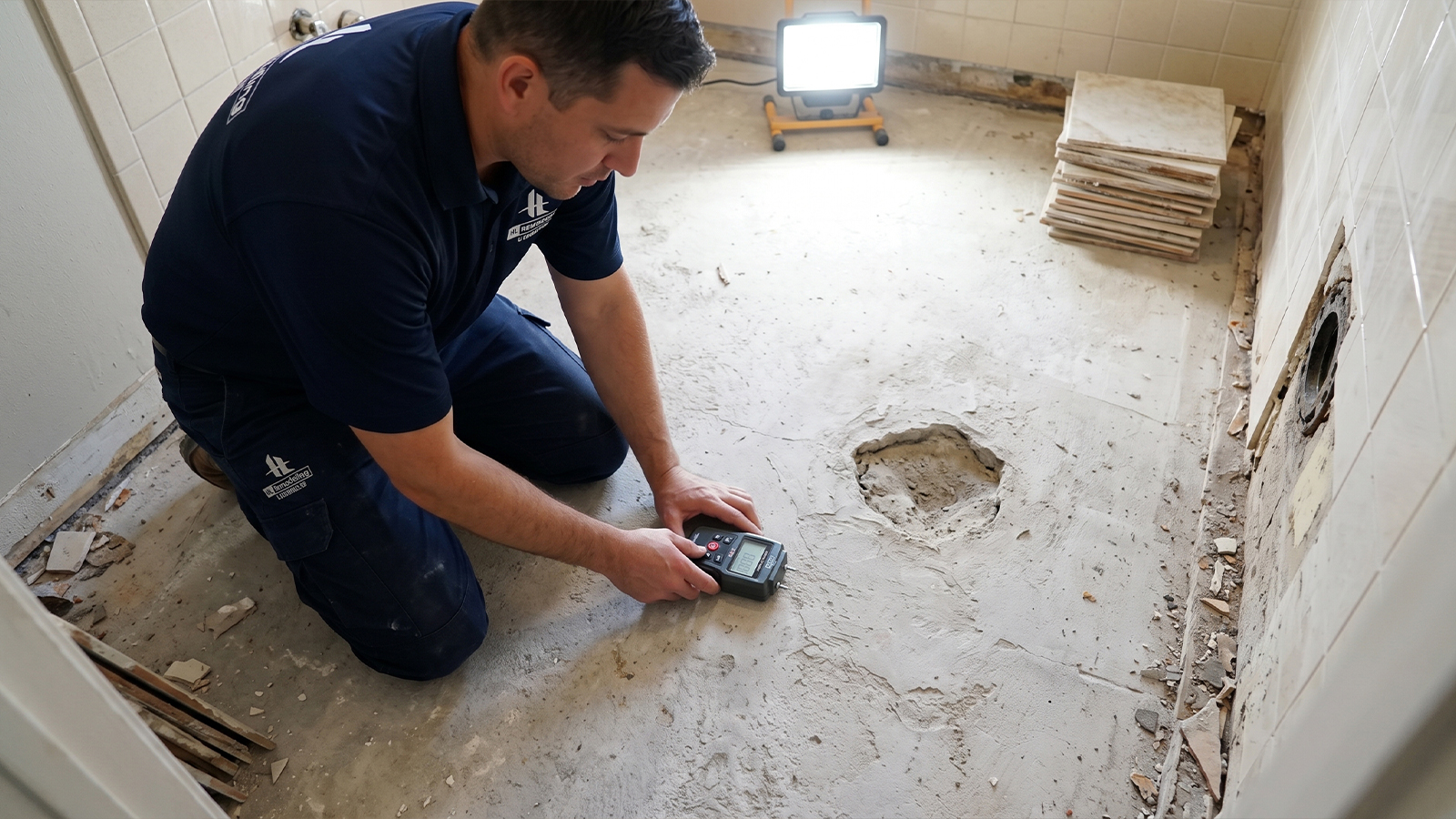
Houston’s clay-heavy soil expands when wet and contracts sharply when dry, sometimes shifting several inches in a single season. Over the decades that a Spring Branch home has been sitting on that slab, those repeated cycles create cumulative stress at pipe joints and beneath the concrete itself. Voids form. Hairline cracks develop. Almost none of this is visible until the tile floor comes up.
Surface signals that indicate a deeper slab or floor problem include soft spots when walking across the bathroom, slow drains that do not respond to standard clearing, staining at the base of walls near the tub or toilet, and a persistent musty odor.
In homes near the Hillendahl Boulevard corridor, we consistently find that tile removal reveals voids beneath the floor requiring grout injection or re-leveling before new tile can go down. This is predictable in Spring Branch — not rare. A contractor who assesses only visible surfaces when writing your estimate is deferring that discovery cost to you at the worst possible moment.
Moisture, Mold, and Decades of Inadequate Ventilation
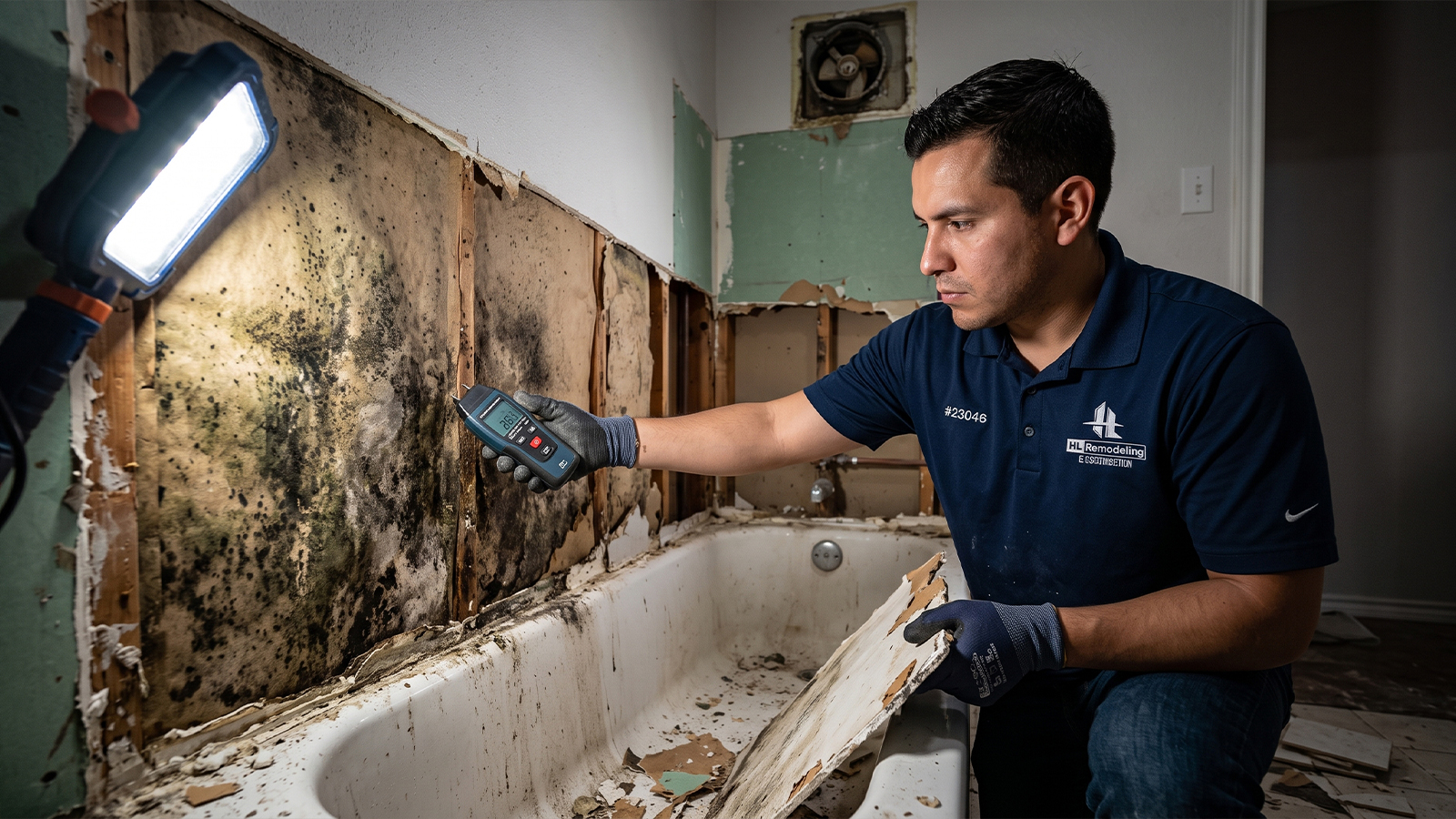
Behind original tile walls in Spring Branch bathrooms, there is frequently a record of every slow leak, every humid season, and every year the exhaust fan was undersized or absent — written in discolored drywall, soft framing lumber, and mold that has been growing undisturbed for decades. Visual signals include discolored drywall at the base of walls, bubbling paint on adjacent surfaces, tile grout that is soft or crumbling near the waterline, and a musty smell homeowners often attribute to age rather than active moisture.
A cosmetic refresh — replacing fixtures, repainting, regrouting — does not address what is behind the wall. In many Spring Branch homes of this era, the first full bathroom remodel will reveal moisture damage sealed behind original tile for forty or fifty years. Proper waterproofing behind tile, mold-resistant drywall in wet zones, and correctly sized exhaust ventilation are baseline requirements in Houston’s climate — not high-end upgrades. When mold remediation is triggered by a demo discovery, it must be scoped, priced, and communicated in writing before work continues past that point.
Bathroom Design and Layout Decisions That Shape Your Budget
Walk-In Shower Conversions and What They Actually Require
Bathroom design conversations in older Spring Branch homes have to start with the floor plan before they get to fixtures and finishes. The layout of a bathroom in a slab-foundation home is not a preference that can be casually adjusted — it is a cost variable that shapes every subsequent decision.
Walk-in shower conversions are among the most requested layout changes in Spring Branch homes of this era, and for good reason. The original tub-only or tub-shower combinations in 1950s and 1960s bathroom layouts rarely reflect how people use the space today. A walk-in conversion is achievable within the existing footprint in most cases, but only if drain placement is assessed before demolition begins.
Keeping vs. Changing Your Layout
Keeping the toilet, shower, and tub in their current positions preserves existing drain connections and avoids concrete cutting. Moving any fixture requires rerouting drain lines beneath the slab — hiring a licensed plumber, cutting the concrete, maintaining proper drainage slope, and repacking the subfloor after the new lines are in place. The cost difference between preserving the layout and changing it is often $5,000 to $12,000 on a mid-range remodel, depending on what is being moved and how far. Structural changes to the floor plan should be finalized before any demo begins — changes made mid-project cost significantly more than changes made on paper.
Home Remodel Cost Breakdown: What Spring Branch Homeowners Should Budget
Remodel Cost in Houston: Per Square Foot Ranges for Older Homes
On a per square foot basis, expect to pay between $120 and $275 per square foot for a complete bathroom renovation in the Houston market. In older Spring Branch homes, practical costs trend toward the higher end because pre-demo unknowns — pipe condition, subfloor integrity, electrical capacity — are a given rather than a variable. A remodel cost estimate that does not acknowledge this is not an accurate number for a home of this vintage.
| Remodel Type | Typical Scope | Estimated Cost Range | Per Square Foot |
|---|---|---|---|
| Cosmetic Refresh | Fixtures, tile, countertops, paint | $5,000–$12,000 | $100–$200 per sq ft |
| Mid-Range Remodel | Demo, new tile, plumbing updates, layout preserved | $15,000–$28,000 | $200–$350 per sq ft |
| Full Gut Renovation | Full demo, plumbing and electrical replacement, layout changes | $28,000–$55,000+ | $350–$600+ per sq ft |
| Older Home Contingency | Hidden conditions discovered during demolition | +15–20% of total | — |
Ranges reflect Houston market conditions and Spring Branch older-home housing stock. Actual remodel cost varies by square footage, fixture selection, and pre-demo conditions discovered.
Guest Bathroom vs. Primary Suite: Where the Budget Goes
The guest bathroom is often the last project Houston homeowners prioritize, but buyers notice both spaces. A well-executed guest bathroom renovation with updated tile, new fixtures, and a refreshed layout adds measurable value without approaching the cost of a primary suite renovation. Homeowners dealing with newer housing stock in Sugar Land or Pearland face a different risk profile — fewer unknowns, newer pipes, newer slabs. Spring Branch’s older homes carry a different cost structure, and an honest estimate for a bathroom remodel in Houston reflects that distinction.
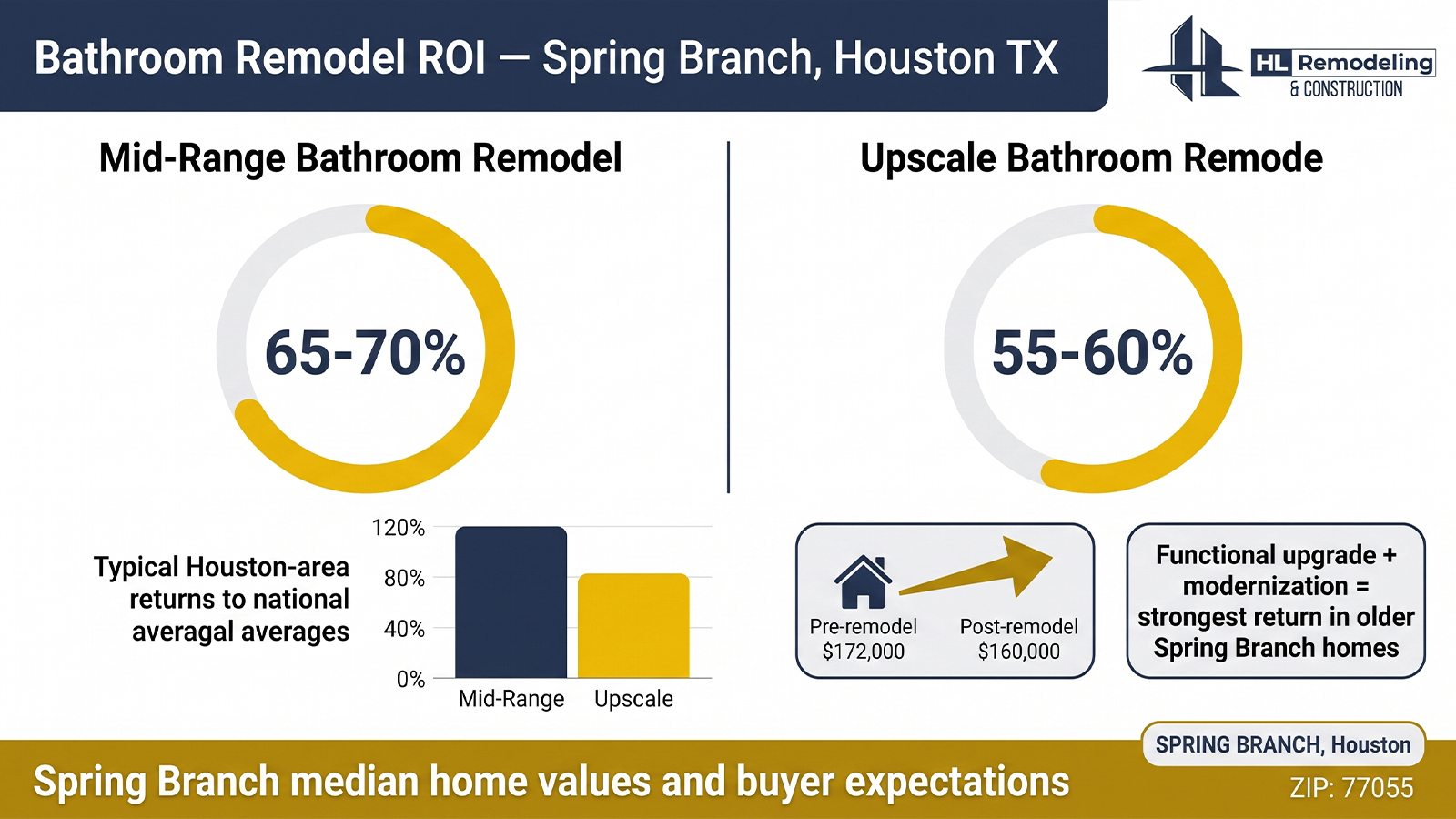
ROI in Houston: What a Bathroom Remodel Returns in Spring Branch
Houston Home Values and the Case for Renovation
A mid-range bathroom remodel in Houston typically returns 60–75% of cost at resale. In Spring Branch, where surrounding housing stock is predominantly original-era construction, an updated bathroom is a genuine competitive advantage — not an expected baseline. Buyers comparing a home with an original 1960s bathroom to one with a completed renovation price that difference, and appraisers reflect it.
High-end finishes beyond neighborhood comps, however, do not always produce proportionally higher returns. A well-executed mid-range home remodel in Spring Branch will frequently outperform a luxury renovation that pushes the home’s value above what the immediate blocks support.
Matching the renovation scope to the neighborhood is a financial decision as much as a design one. Home renovation completed without permits is an ROI problem that surfaces at exactly the wrong moment — during a home inspection before sale. Buyers and lenders treat unpermitted work as a liability, and the cost of correcting it at closing regularly exceeds what the permit would have cost at the time of the work.

Choosing a Home Remodeling Company in Spring Branch
The right remodeling company for a Spring Branch home is one that has been inside homes of this era, knows what the walls look like before they are opened, and builds that knowledge into the estimate rather than treating every discovery as a surprise change order. Ask for camera scope inspection of drain lines before demo. Ask how the contract handles hidden condition discoveries. Ask whether the contractor pulls permits or expects you to manage that process.
We work in Spring Branch homes regularly, and we would rather spend thirty minutes walking through your bathroom before the project scope is written than discover something mid-demo that changes the entire budget conversation. If you want to talk through what your specific home actually needs, reach out to HL Remodeling at (346) 837-0007 or request a free consultation online.
Conclusion
Spring Branch is one of the few Houston neighborhoods where the housing stock itself is a reason people stay. The brick ranch homes along Long Point Road and throughout the Hillendahl area have real bones — they were built to last. But lasting sixty years is not the same as being ready for a modern bathroom renovation without a proper assessment first.
The pre-demo phase is where a remodeling project either gets set up for a clean outcome or gets set up for a mid-project crisis.
Houston homeowners who approach that phase with the right questions get better results, better budgets, and a renovation that holds up the way the original construction was meant to.
FAQ
What do contractors typically find inside the walls of older Spring Branch homes?
The most common discoveries in pre-1975 Spring Branch bathrooms are cast iron drain lines with cracks or bellying, galvanized supply lines with significant interior corrosion, pre-GFCI wiring, slab voids beneath tile floors from clay-soil movement, and moisture damage or mold concealed behind original tile and drywall. None of these are unusual — they are predictable characteristics of homes built in this era.
Do I need permits for a bathroom remodel in Houston?
Yes. The City of Houston requires permits for any remodeling work that involves plumbing, electrical, or structural changes. Pulling a permit triggers the city’s inspection process at each phase of work, which protects you as the homeowner. Unpermitted work creates complications at resale and can require costly correction after the fact.
How much does a bathroom remodel in Houston cost per square foot?
Complete bathroom renovations in the Houston market typically run $120 to $275 per square foot. In older Spring Branch homes, costs trend toward the higher end of that range because of the greater likelihood of pre-demo discoveries. A remodel in Houston for a home of this era should include a 15–20% contingency budget on top of the base estimate.
Can I keep my existing bathroom layout to save money?
Yes, and in a slab-foundation home it is one of the most effective ways to control remodel cost. Keeping the toilet, tub, and shower in their current positions avoids saw-cutting the concrete and rerouting drain lines — work that can add $5,000 to $12,000 or more to a mid-range project. Finalizing the layout before demo begins is essential.
What is the ROI on a bathroom remodel in Spring Branch?
A mid-range bathroom remodel in Houston typically returns 60–75% of cost at resale. In Spring Branch, where surrounding homes are predominantly original-era construction, an updated bathroom is a stronger market differentiator than it would be in a newer subdivision. Walk-in showers, updated fixtures, and current tile selections are the features that appraisers and buyers respond to most consistently in this market.