
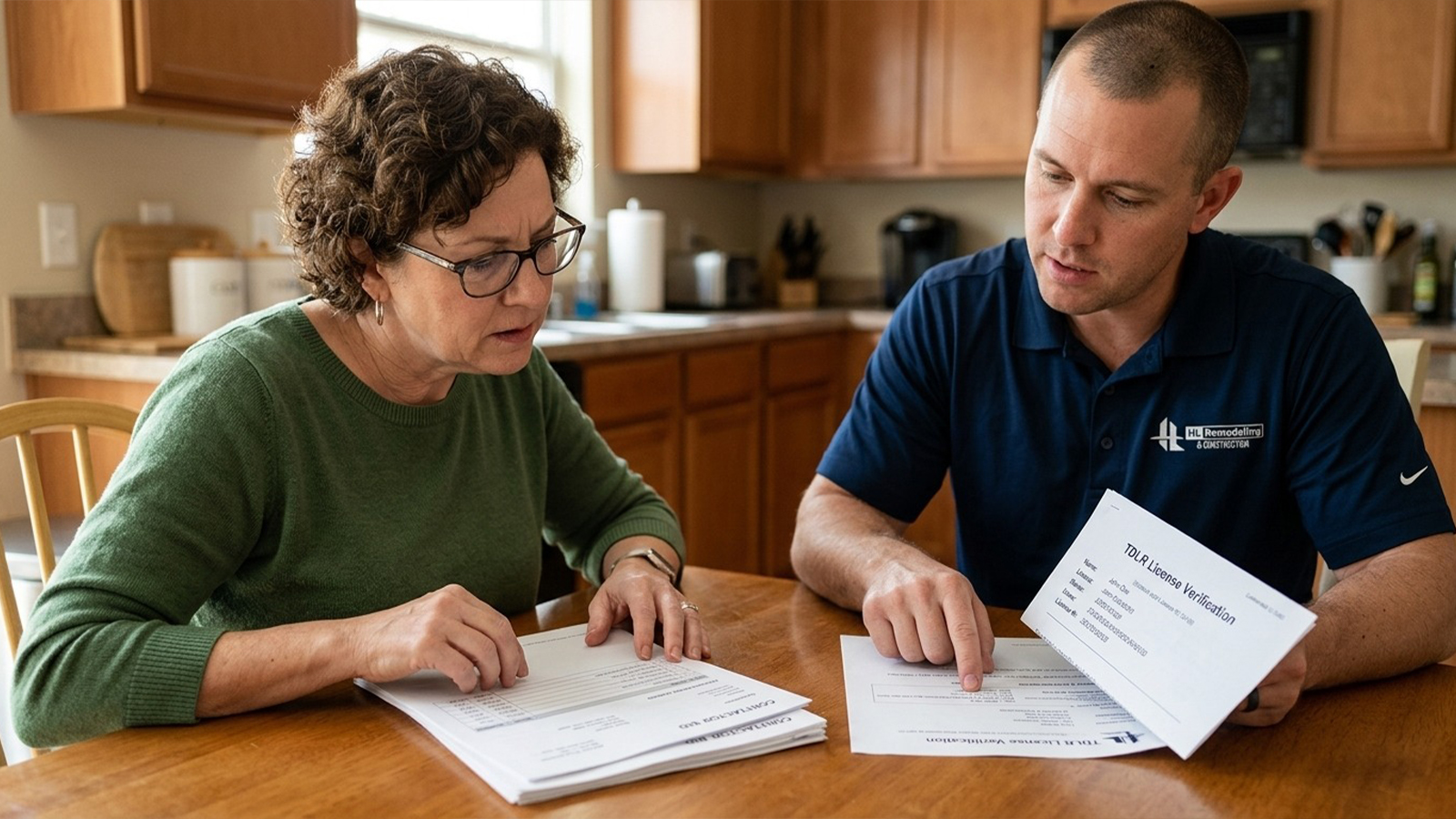
If you’re holding two or three bids right now and one number is dramatically lower than the others, that gap isn’t a deal. It’s a question mark. Houston’s contractor market operates differently than most of the country, and the rules around licensing, permits, and insurance create real exposure for anyone who hires without knowing what to check. Before you sign anything, take a look at our remodeling services in Houston to understand what professional work actually covers, then read through what follows. This is your framework for making the right contractor hire before a wrong decision costs you far more than the higher bid would have.
Key Takeaways
- Texas does not require a general contractor license at the state level, which means Houston homeowners carry the entire burden of vetting
- Permits pulled through Houston’s One-Stop permit office protect your sale price; skipped permits can collapse a closing
- Front-loaded payment schedules remove your financial leverage the moment a dispute starts
- Online reviews alone won’t show BBB complaint records or Harris County court filings
- Getting a professional benchmark before you evaluate bids is the fastest way to avoid a costly mistake
What “Licensed” Actually Means in Texas, and Why It Changes Everything
Texas does not require a state-level general contractor license. No TDLR credential, no statewide exam, no bond requirement. Any person can legally call themselves a general contractor in Houston, which means your vetting process is the only line of defense you have. This surprises most homeowners who assume “licensed” points to something verifiable on a state database. It doesn’t, not for general contractors.
Verify Licensing for the Trades That Do Require It
Specialty trades working under your general contractor, including electricians, plumbers, and HVAC technicians, do require state licenses in Texas. You can verify electrical and HVAC licenses through TDLR at tdlr.texas.gov and plumbing licenses through the Texas State Board of Plumbing Examiners. If a contractor can’t provide those license numbers on request, that’s a signal worth acting on before you sign.
Make Sure Your Contractor Is Properly Insured
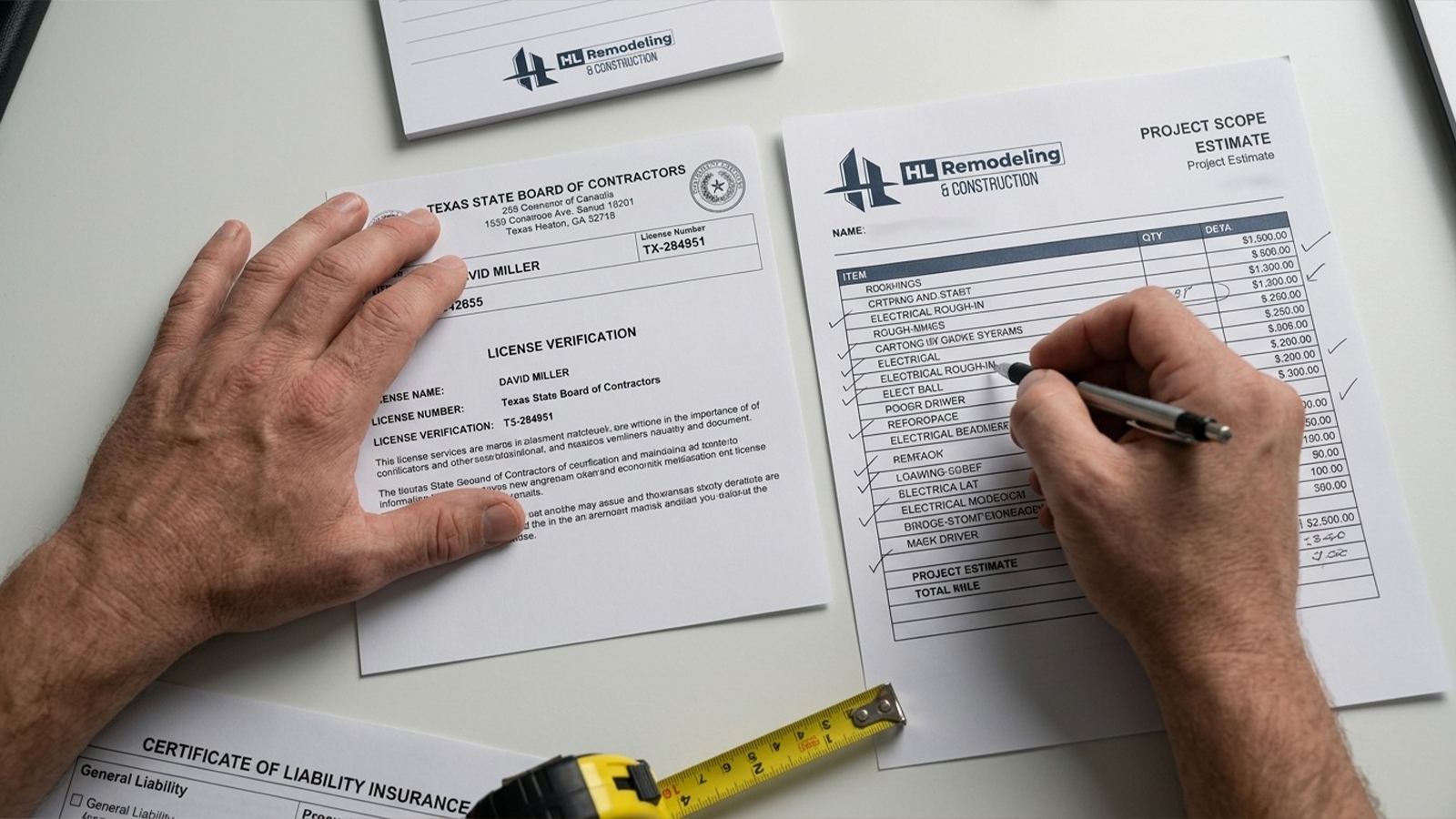
Ask for a certificate of insurance before any conversation goes further. General liability insurance covers damage to your property; workers’ compensation covers injuries on your job site. Texas is the only state where workers’ comp is optional for private employers, with roughly 72 percent opting out. If an uninsured worker is injured on your property, you absorb that liability directly. A certificate is not enough on its own. Call the insurer listed and confirm the policy is active. Policies lapse, and some contractors present outdated certificates. Confirming the contractor is properly insured takes two minutes and tells you something critical about their professionalism.
How to Read Inconsistent Bids Without Getting Burned
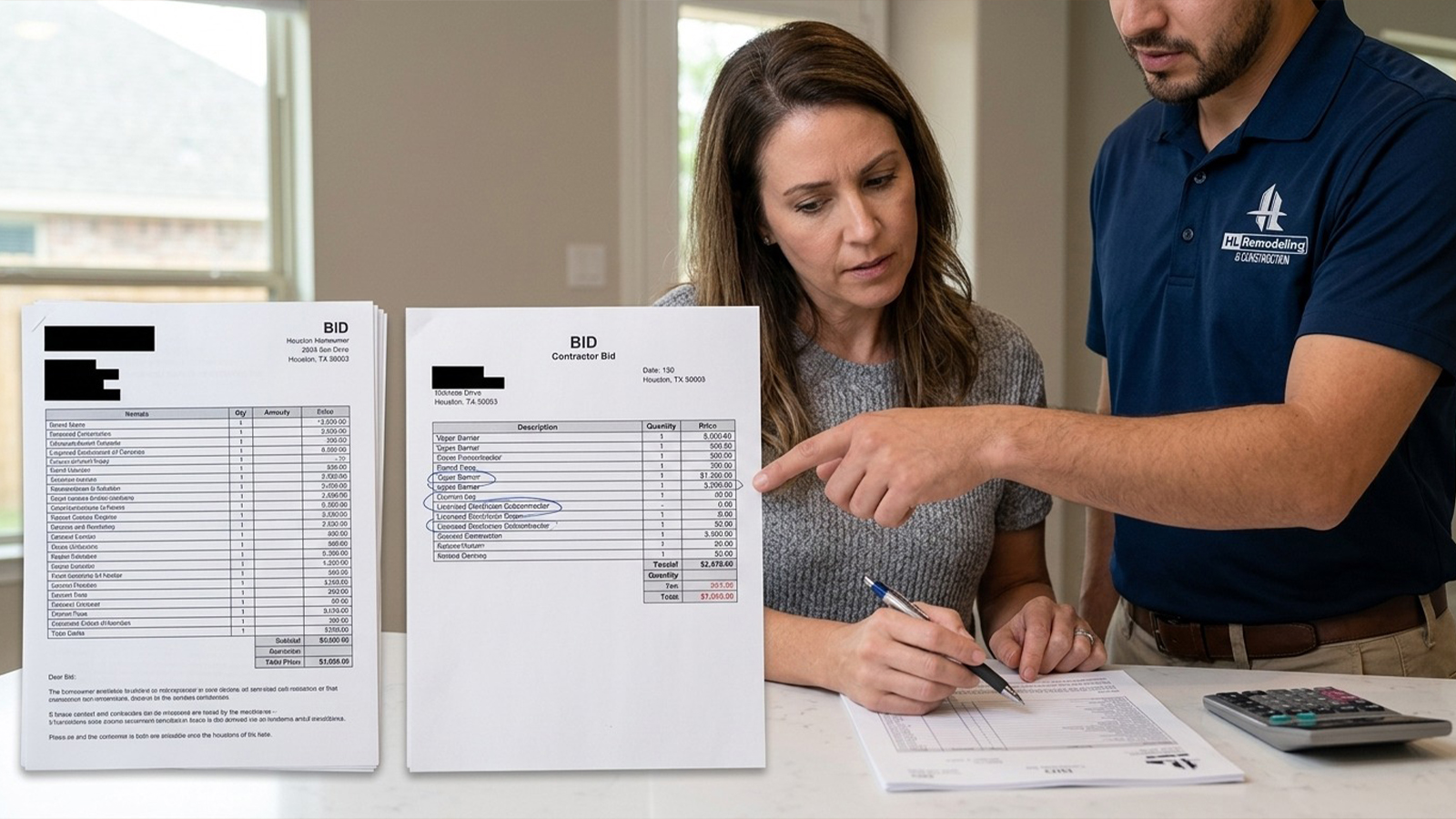
Three bids that are $20,000 apart are not three options for the same job. They are three different scopes, written on the same paper. A low bid often excludes permit fees, demolition disposal, or subcontractor markup. Those costs don’t disappear; they surface mid-project. Get at least three in-person estimates and request detailed written estimates from every contractor, itemized by labor, materials, permits, and subcontractor costs.
| Bid Component | What a Legitimate Bid Includes | Red Flag |
|---|---|---|
| Labor | Broken out by trade | Lump sum, no breakdown |
| Materials | Named specifications | Open-ended allowances |
| Permits | Listed as a line item | Not mentioned |
| Payment Schedule | Tied to milestone completion | Large upfront deposit |
| Change Orders | Written process described | Verbal agreements only |
When you place bids side by side at this level of detail, what’s missing becomes visible fast. Ask directly: what is not included in this price? A contractor who can’t answer clearly hasn’t priced the job thoroughly.
The Permit Gap That Kills Houston Homeowner Sales
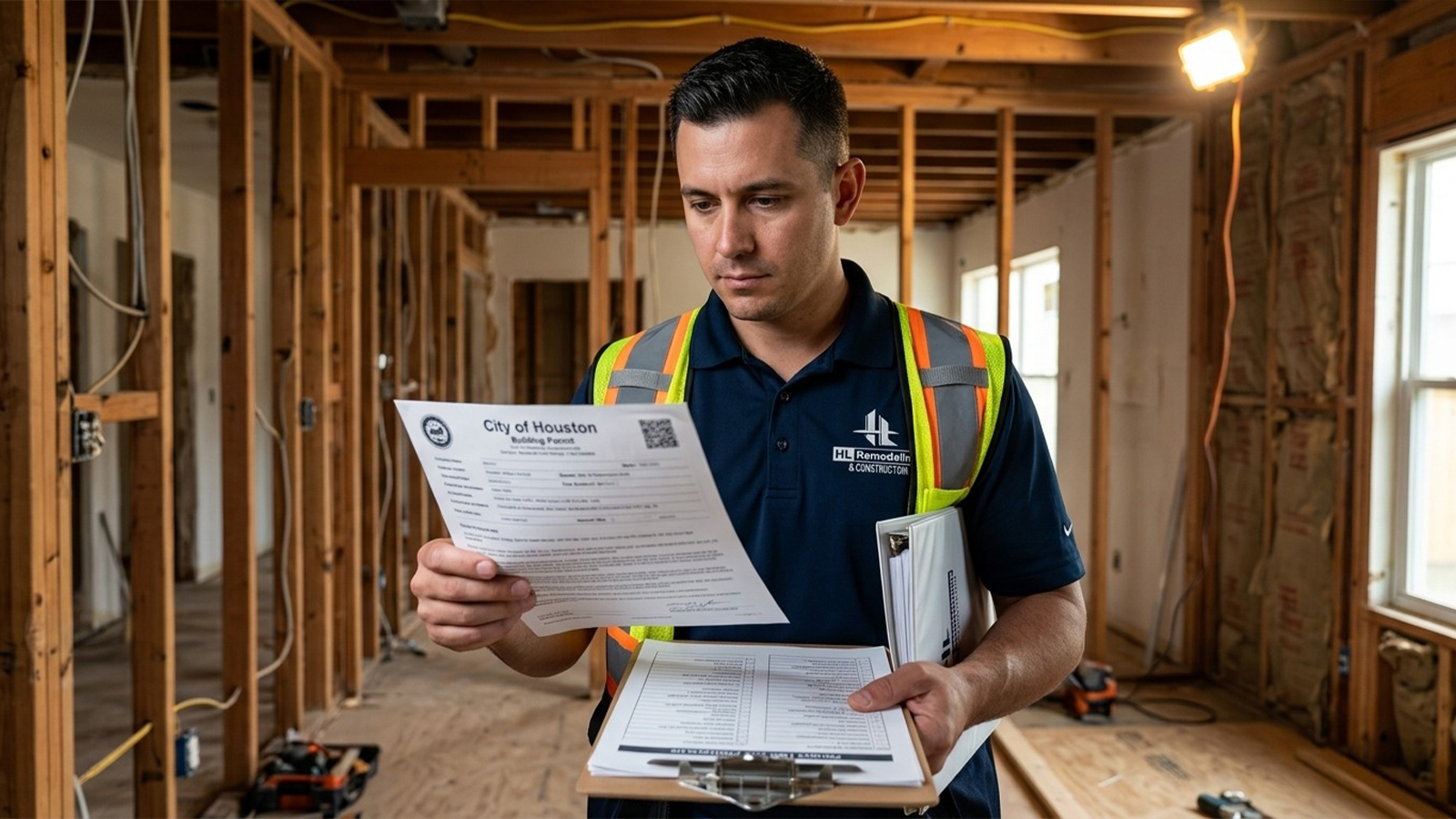
Houston requires permits for most structural, electrical, plumbing, and mechanical remodeling work. Purely cosmetic updates are exempt, but anything touching utilities or structure goes through the Houston Permitting Center’s One-Stop office. Skipping permits creates stop-work orders, penalty fees often double the original permit cost, and in some cases forced demolition of completed work.
The real-estate consequence is where homeowners get hurt most. Unpermitted work discovered during a buyer’s inspection can stall or kill a closing. If remediation is required under a buyer’s inspection contingency with a deadline approaching, costs run 40 to 60 percent higher than they would under normal circumstances. That premium lands on the seller. If your property sits in a flood zone, the stakes compound further. Roughly one in three Houston properties is subject to post-Harvey Chapter 19 requirements, which now mandate elevation above the 500-year flood level, not the 100-year standard. A contractor unfamiliar with Houston’s floodplain rules can pull the wrong permits and expose you to forced remediation when you try to sell your home.
Ask your contractor which permits they plan to pull and when before work begins. The answer should be specific. If it’s vague, get a second opinion. We pull permits on every project that requires them; it creates a paper trail that protects the homeowner long after the project is done.
Learn More: 7 Kitchen Remodel Mistakes Houston Homeowners Make
Review the Contract and Protect Your Payment Schedule
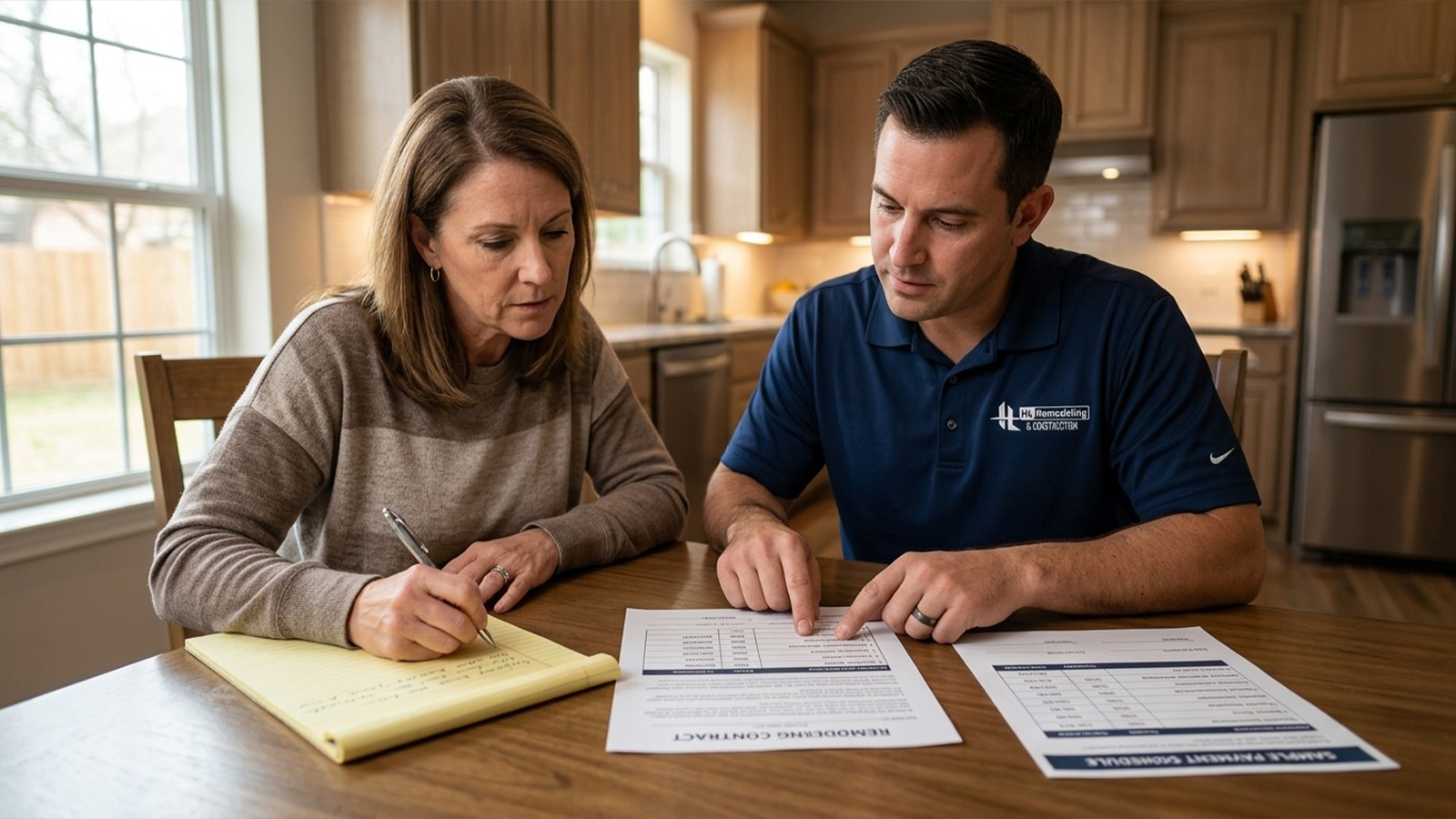
A reasonable deposit runs 15 percent or less of the total project cost. Anything higher front-loads financial risk before meaningful work begins. Once a contractor holds 60 to 70 percent of the budget before the project is halfway done, your leverage is gone. Milestone-based payments, tied to verified stages you can see and confirm, are the practical protection.
What the Contract Must Cover Before You Sign
The contract should name the full scope of work, specify materials by brand or product where relevant, outline milestone-based payments, set start and completion dates, and include a written change order process. Change orders must require written approval before work proceeds. A contractor who resists putting that language in the contract is telling you something about how they plan to handle surprises.
Houston small claims court caps recovery at $20,000, far below what most major remodeling projects cost. If a dispute goes wrong, your options outside of small claims are slow and expensive. The contract is your protection before you ever need to use it.
Evaluate Online Reviews, Then Go Deeper
Online reviews tell you about communication, scheduling, and whether people would hire again. They don’t surface contractor-specific complaint records. Check BBB complaint history and search Harris County district court records for the contractor’s business name before you hire. Patterns of abandoned projects and unpaid subcontractors show up in court filings, not Yelp. Ask for 3-5 references from completed projects similar to yours, and calling references is worth the time: ask whether the project finished on schedule, whether there were surprise costs, and whether they’d hire the contractor again. Ask to visit a current job site if possible. Cleanliness and organization signal professionalism that reviews rarely capture.
Make the Right Call Before You Sign Anything With A Houston Contractor
Knowing the checklist is one thing. Applying it under sales pressure, against contractors who know exactly what to say and what to leave out of a bid, is where Houston homeowners get burned.
The fastest way to protect yourself from shady home improvement contractors is to have a professional benchmark before you evaluate anyone else. When you know what the work should actually cost, what permits it requires, and what materials belong in it, every contractor conversation that follows becomes easier to read.
Call HL Remodeling at (346) 837-0007 to schedule your free consultation. We’ll walk through your project scope, give you an honest ballpark, and tell you exactly what to demand from every contractor you’re considering. No obligation, and we respond the same day.
Frequently Asked Questions About Hiring a Remodeling Contractor in Houston
Does Texas require a general contractor license?
Texas does not require a general contractor license at the state level. There is no TDLR credential, no statewide exam, and no bond requirement for general contractors. Specialty trades, including electricians, plumbers, and HVAC technicians, do carry state licenses that are searchable through TDLR and the Texas State Board of Plumbing Examiners. Because any person can legally call themselves a general contractor in Texas, verifying insurance, permit history, and subcontractor credentials is the practical substitute for a license check.
What is a fair deposit for a remodeling contractor in Houston?
A fair deposit runs 15 percent or less of the total project cost. Anything above that front-loads financial risk to the homeowner and eliminates leverage if a dispute arises mid-project. A milestone-based payment schedule, with draws tied to stages you can verify, is the structure that keeps both parties accountable. Houston small claims court caps recovery at $20,000, so the payment schedule is your primary protection before any dispute starts.
Do I need a permit to home remodel in Houston?
Most residential renovation and remodeling work in Houston that goes beyond cosmetic updates requires a permit through the Houston Permitting Center’s One-Stop office. This includes structural changes, electrical upgrades, plumbing modifications, and additions. A contractor who tells you permits aren’t needed for a scope that touches utilities or structure is either inexperienced or planning to skip them. HL Remodeling identifies which permits apply during the initial consultation and pulls them before work begins.
Why are my contractor bids so far apart from each other?
Large bid gaps almost always reflect scope exclusions, not genuine price disagreement. One contractor may have left out permit fees, demolition disposal, or subcontractor labor that others included. Ask every contractor for a fully itemized breakdown covering labor by trade, named materials, permit costs, and a milestone-based payment schedule. Placing those line items side by side reveals what each bid actually covers. A comprehensive guide to reading bids starts with demanding the same level of detail from every contractor you’re evaluating.
What happens if my contractor skips permits in Houston?
Unpermitted work triggers stop-work orders, penalty fees often double the original permit cost, and in some cases a forced demolition of completed work. When unpermitted remodeling is discovered during a home sale in Houston, lenders may refuse to fund and buyers’ attorneys get involved. Remediation under an inspection contingency with a closing deadline typically costs 40 to 60 percent more than it would under normal timing. That cost lands on the seller. The permit is the paper trail that proves the work was done correctly; without it, the liability belongs entirely to the homeowner.
How do I check a contractor’s complaint history beyond online reviews?
The Better Business Bureau and Harris County district court records are the most reliable places to check a contractor’s complaint history beyond online reviews. BBB records surface formal disputes; court filings reveal patterns of abandoned projects and unpaid subcontractors that never make it to review platforms. Search the contractor’s full business name and any associated principals. Calling references from 3-5 completed projects similar to yours adds a layer of direct confirmation that no database can replace.