
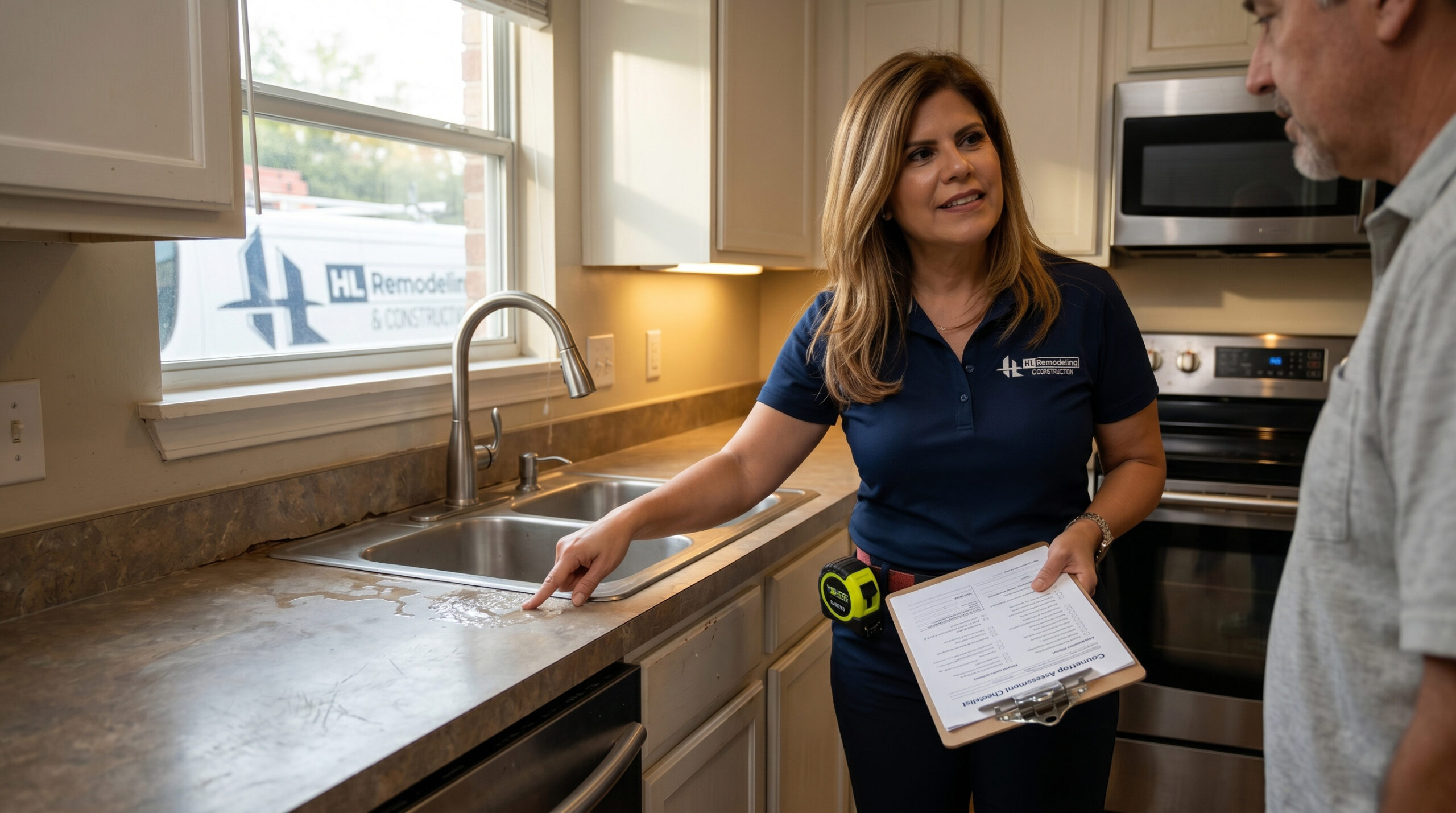
That worn countertop isn’t going to diagnose itself. For Houston homeowners weighing kitchen countertops replacing vs refinishing, kitchens demand a closer look than most — Gulf Coast humidity quietly accelerates substrate damage that turns a refinishable surface into a mandatory replacement. The wrong call costs you either a failed coating or an unnecessary demolition bill. This guide gives you a clear, material-by-material framework for making the right one for your kitchen renovation.
Key Takeaways
- Refinishing is the right move when countertop damage is purely cosmetic — surface scratches, a stubborn stain, or a faded finish — and the underlying substrate is dry, stable, and structurally sound.
- Replacement is necessary when water has penetrated the substrate, the countertop material has delaminated, or a full kitchen remodel is already underway.
- Houston’s Gulf Coast humidity accelerates laminate degradation and grout deterioration faster than in drier climates, making water damage a more common and urgent replacement trigger.
- The countertop material matters too — granite, tile, and butcher block are often strong refinishing candidates, while heavily damaged laminate countertops frequently are not.
- When the damage isn’t obvious, a professional assessment before spending money on either path is worth doing.
Signs Your Countertops Are Telling You Something
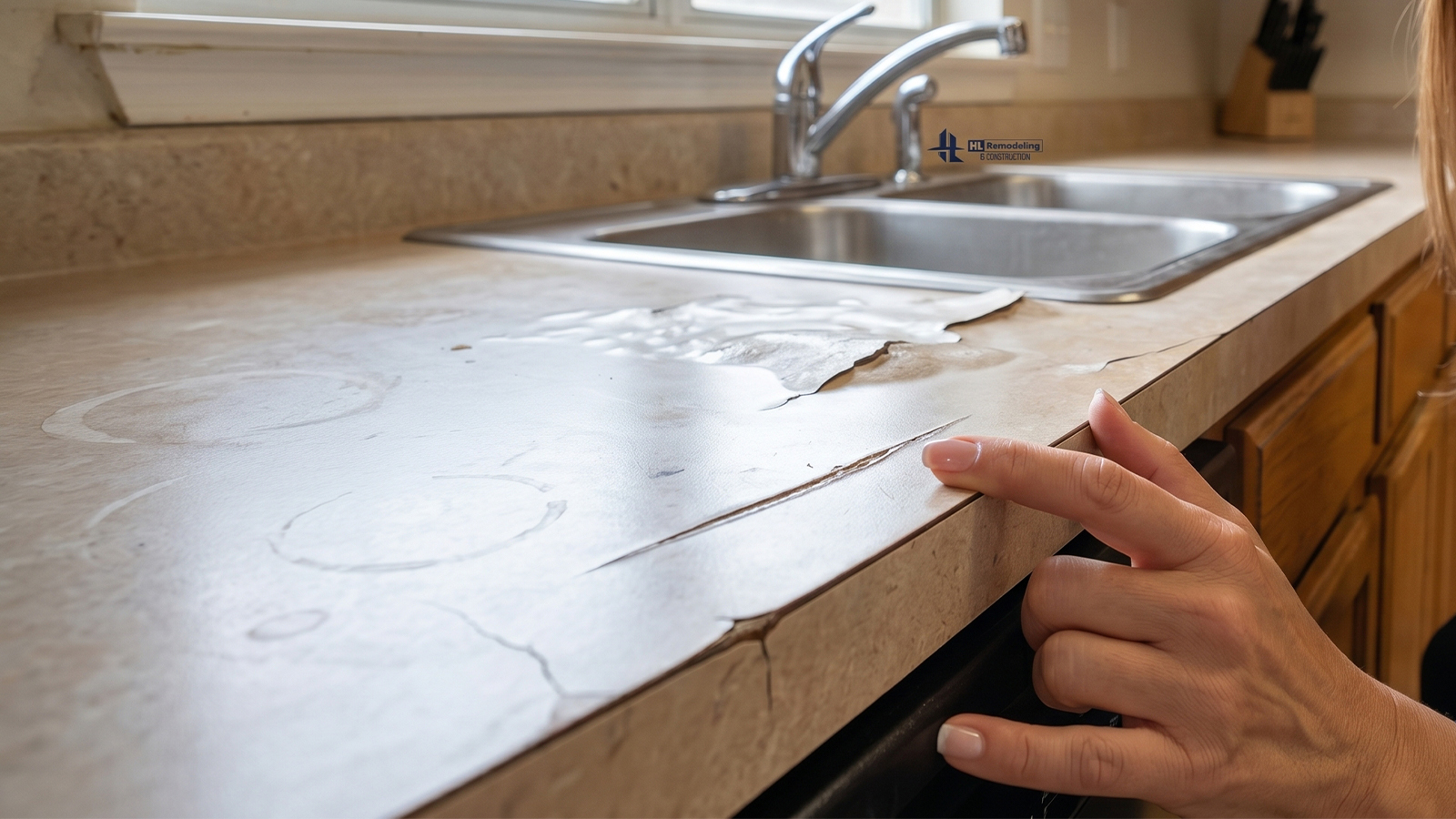
Your countertops communicate clearly if you know what to look for. A scratch that catches your fingernail, a stain that scrubbing can’t lift, a chip along the edge near the cabinet. These are everyday wear signals. The question is whether that damage stops at the surface or has gone deeper.
Surface damage, dulling, minor scratching, light staining, faded color, is typically refinishable. The countertop material underneath is still doing its job. Structural damage is a different situation. Bubbling beneath laminate, soft spots near the sink, a crack running through a granite slab, these indicate the countertop has been compromised at a level no coating can fix.
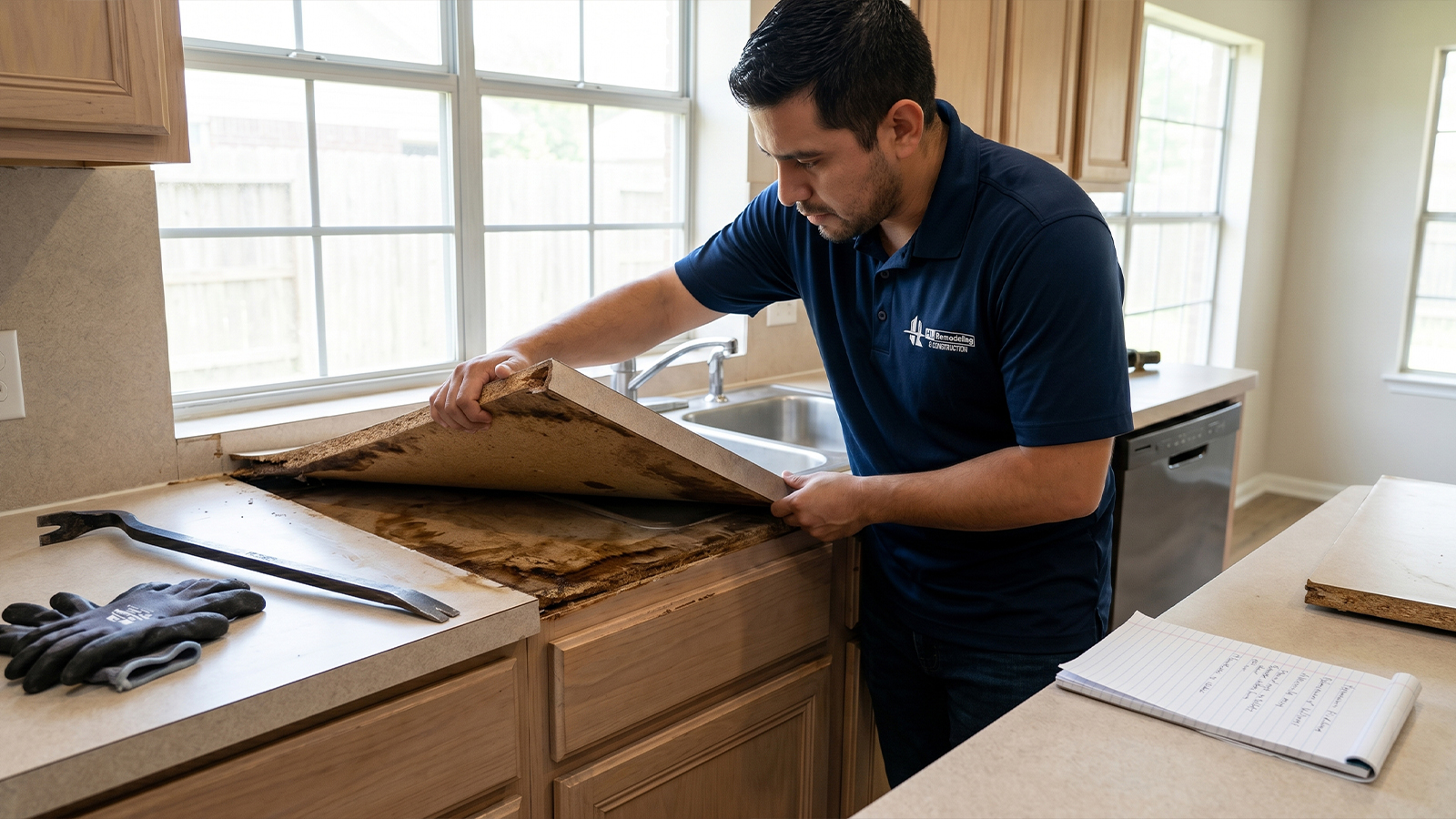
Houston makes this harder. High indoor humidity and daily cooking heat accelerate wear that might take a decade to appear in drier climates. A laminate countertop lifting at the seam near the dishwasher isn’t just cosmetically tired, it’s likely letting moisture into the particleboard core. Once that happens, refinishing is not the answer.
Refinish or Replace? Understanding Your Two Options
What Countertop Refinishing and Resurfacing Actually Mean
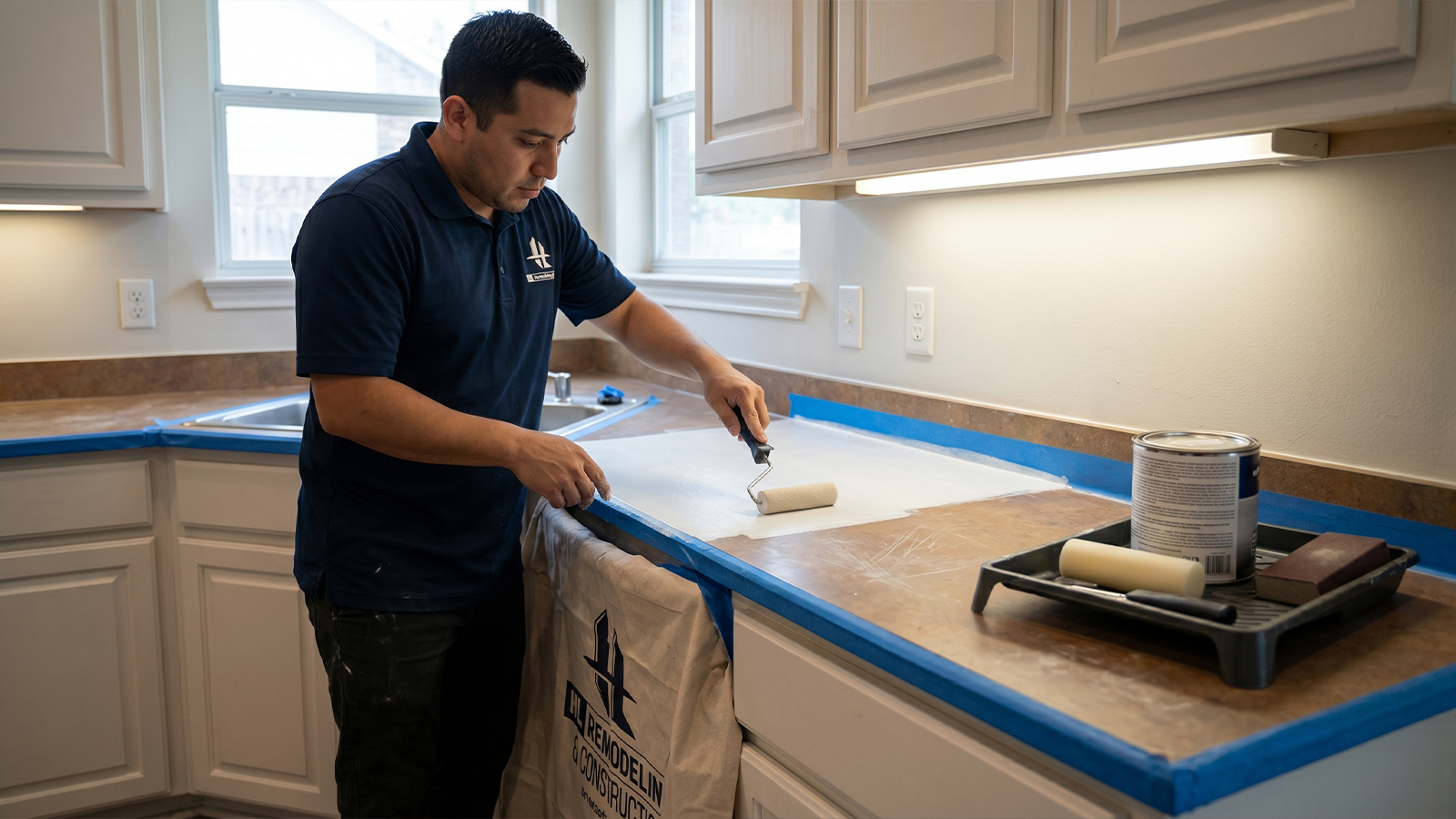
Countertop refinishing restores the surface appearance of existing countertops without removing them. The process involves cleaning the surface, repairing minor imperfections, applying a bonding primer, and sealing with a specialty coating matched to the countertop material. Countertop resurfacing goes a step further, adding a thin overlay or veneer directly over the existing surface for additional protection.
Both approaches can extend the life of your countertops and give your kitchen a fresh appearance without the cost of full countertop replacement. Professional refinishing typically costs $300 to $900, compared to $2,000 to $5,000 or more for replacement. Neither option works on a substrate that is wet, swollen, or structurally compromised — that’s the line every homeowner needs to understand before committing to anything.
When to Refinish Countertops
Good candidates for countertop refinishing include granite countertops with light etching or surface stain, tile with intact grout and a stable base, butcher block showing surface scratches or dullness, and solid-surface materials with minor cosmetic wear. Refinishing makes the most sense when you want a cost-effective refresh before a home sale or want to update the kitchen’s appearance without a full remodel. The countertop must be structurally sound, and the material must be capable of holding a new coating.
The Refinish vs. Replace Kitchen Countertops Comparison At a Glance
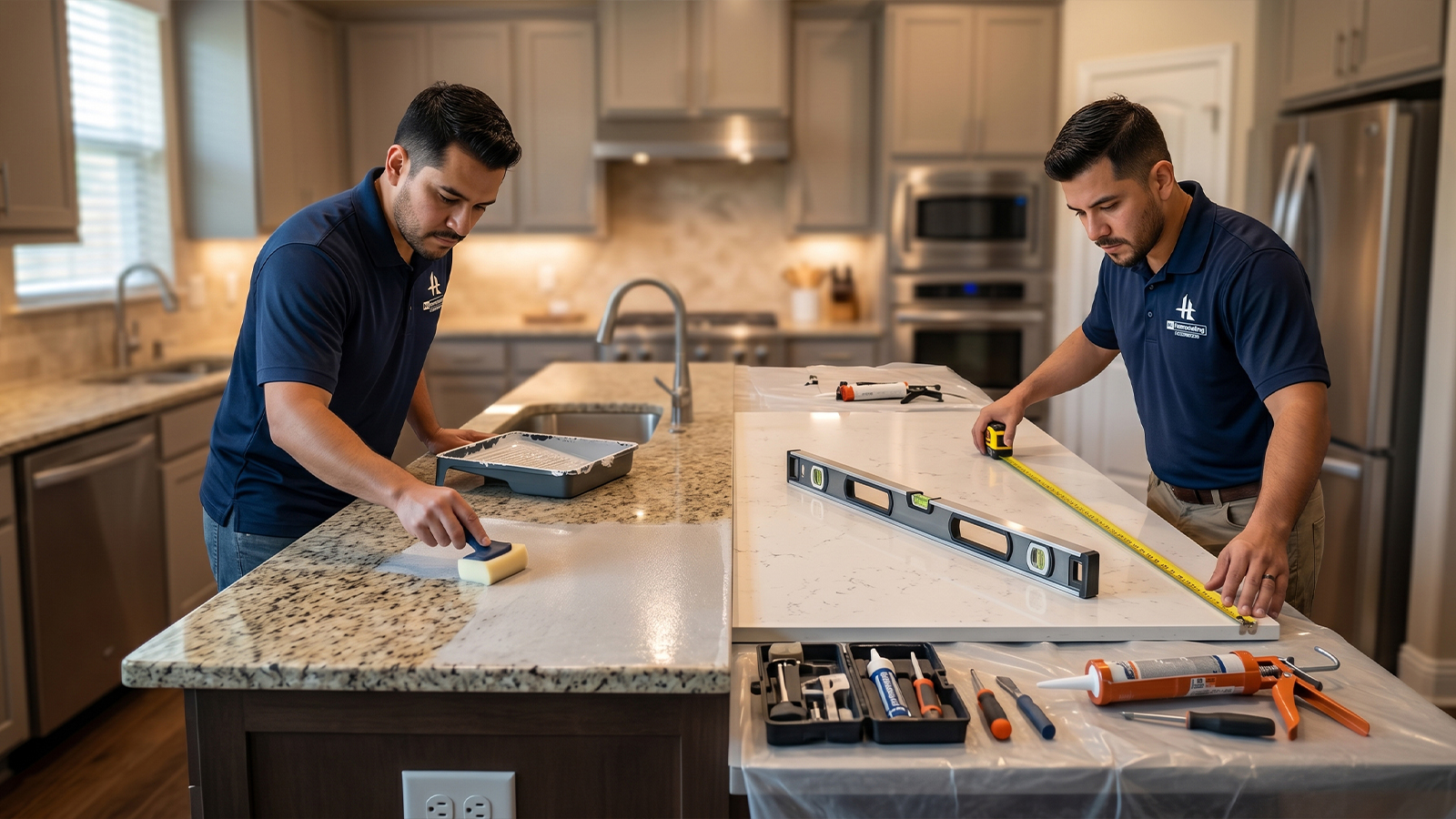
Your situation will almost always match one of two profiles.
| Factor | Refinish Countertops | Replace Your Countertops |
|---|---|---|
| **Typical Cost** | $300–$900 | $2,000–$5,000+ |
| **Timeline** | 1–2 days | 3–7 days |
| **Best For** | Surface scratch, stain, faded finish | Water damage, structural failure, full remodel |
| **Eligible Materials** | Granite, tile, laminate, butcher block | Any countertop material |
| **Lifespan Added** | 5–10 years with care | 20–30+ years (stone) |
| **Kitchen Disruption** | Minimal | Moderate to significant |
| **Home Value Impact** | Modest improvement | Stronger return |
Granite and marble with cosmetic surface damage are strong refinishing candidates. Laminate countertops with water damage at the seams are almost always replacement territory. The countertop material and the depth of damage determine which column applies.
When It’s Time to Replace Your Countertops
Signs You Need to Replace Kitchen Countertops
Some damage cannot be refinished over and attempting it only delays a larger expense.
Water that has reached the substrate is the clearest signal. Soft spots beneath laminate, swelling near the cabinet, any sign of mold beneath the surface. These mean the core is compromised. A refinish coat applied over wet particleboard will fail within months, and by the time it does, the underlying damage has spread further.
Deep structural cracks in granite and marble that run through the full slab require replacement, as does tile where the base layer has shifted, butcher block with deep rot, and any countertop that has already been refinished once and is showing new widespread deterioration.
Many Houston homes from the 1970s and 1980s housing boom still carry original laminate that has simply reached the end of its useful life.
The Cabinet Connection
If your remodel includes cabinet replacement or reconfiguration, replace your countertops at the same time. Coordinating both trades saves on labor and eliminates the risk of mismatched finishes. New countertops installed alongside new or refinished cabinets produce a cohesive result that neither project achieves on its own. HL Remodeling’s kitchen remodeling services in Houston cover both scopes, which simplifies the process considerably.

Benefits of Refinishing Your Countertops And Where It Falls Short
Refinishing your countertops is genuinely cost-effective when the damage qualifies. The process involves minimal kitchen downtime, typically one to two days, making it practical for busy households. It can bring granite, tile, and solid surfaces back to looking considerably better without demolition, and it delivers a new look at a fraction of countertop replacement cost for homeowners preparing to sell.
Where countertop refinishing falls short: it cannot stabilize a water-damaged substrate, does not deliver the long-term durability of new countertops, and heavily worn laminate rarely holds specialty coatings well over time.

How to Decide: A Simple Framework for Houston Homeowners
If your countertops show surface scratches, a persistent stain, or a dull finish and the substrate feels firm and dry, refinishing is the right starting point. If you see bubbling laminate, soft spots near the sink, a crack through the slab, or water damage near the cabinet, it is time to replace. If you’re planning a full kitchen remodel with cabinet changes, replace your countertops as part of that scope. If you can’t tell whether the damage is cosmetic or structural, have a contractor assess it before spending money either way.
Conclusion – Refinish or Replace Countertops?
Surface wear on a dry, stable substrate points toward refinishing. Water damage, soft spots, or a countertop that has reached the end of its life points toward replacement. Houston’s humidity means that window closes faster than most homeowners expect.
If you’re still unsure which side of that line you’re on, contact HL Remodeling for an honest assessment before you spend money in the wrong direction.
FAQ
Can you refinish countertops instead of replacing them?
Yes. Countertop refinishing is a legitimate alternative to full replacement when the countertop material is structurally intact and the damage is cosmetic — scratching, staining, or surface dullness. If the substrate has been compromised by water or the surface is delaminating, refinishing will not hold and replacement is required.
How long does countertop refinishing last?
A professionally applied countertop refinishing typically lasts five to ten years with proper care, depending on the material and how heavily the surface is used. High-traffic kitchens may see wear sooner, particularly around the sink. Regular sealing and gentle cleaning extend the result.
What countertop materials can be resurfaced or refinished?
Granite, tile, cultured marble, butcher block, and many solid-surface materials can be successfully refinished by a professional. Laminate countertops can also be resurfaced when the substrate is dry and intact. Heavily damaged or delaminating laminate typically cannot hold a new coating long-term and is better replaced.
Is water damage always a reason to replace kitchen countertops?
Not automatically — it depends on how far the damage has spread. Surface moisture that dried quickly without reaching the substrate may leave only a stain. Water that has swollen the particleboard core beneath laminate, however, requires full countertop replacement. Pressing along the surface and edges near the sink helps identify soft spots that signal deeper damage.
Does refinishing countertops add value before selling a home?
It can. Refinished countertops that look clean and well-maintained read well to buyers. The return is modest compared to full natural stone replacement, but for homeowners selling within one to two years with structurally sound countertops, it’s often the most cost-effective way to refresh the kitchen’s appearance without a full renovation.