
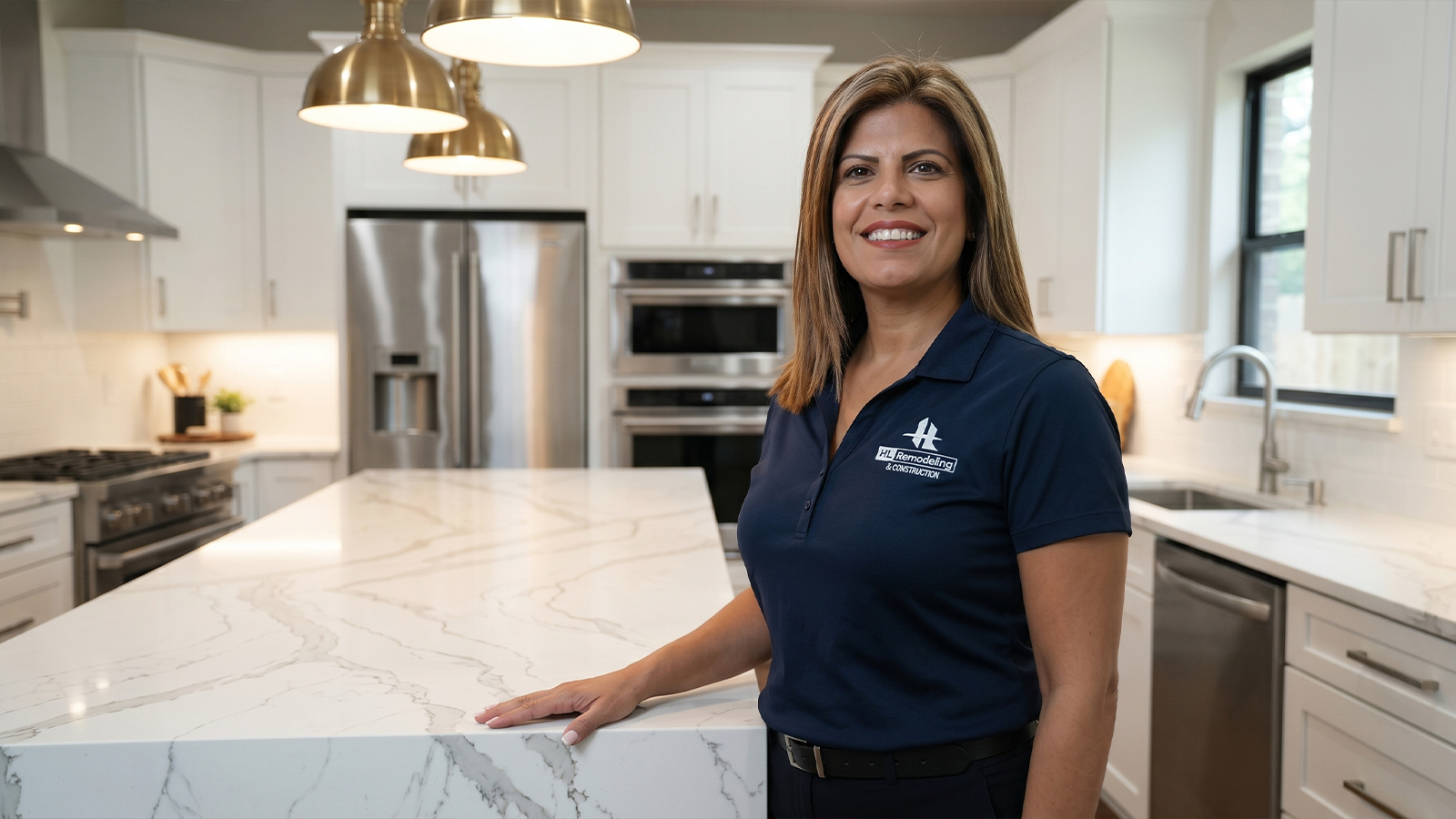
Houston kitchens are humid, heavily used, and often built around outdoor living — which makes countertop selection more specific than it looks. Quartz countertops consistently rank among the top choices for indoor kitchens and bathrooms here because they are non-porous, low maintenance, and never need to be sealed. The main limitations are heat sensitivity and outdoor incompatibility. For most Houston homeowners, the benefits comfortably outweigh the cons during a kitchen remodel, but the decision depends on how your kitchen is used and where your countertops will live.
Key Takeaways
- Quartz is the most specified countertop material among kitchen designers, according to the National Kitchen and Bath Association.
- Unlike natural stone, it does not require sealing at installation or at any point in its service life.
- Heat is the most significant limitation — a hot pan placed directly on the surface can cause permanent damage.
- Houston pricing runs from approximately $45 per square foot installed for entry-level products to $120 or more for premium brands.
- For homeowners with outdoor kitchens, UV sensitivity rules quartz out entirely.
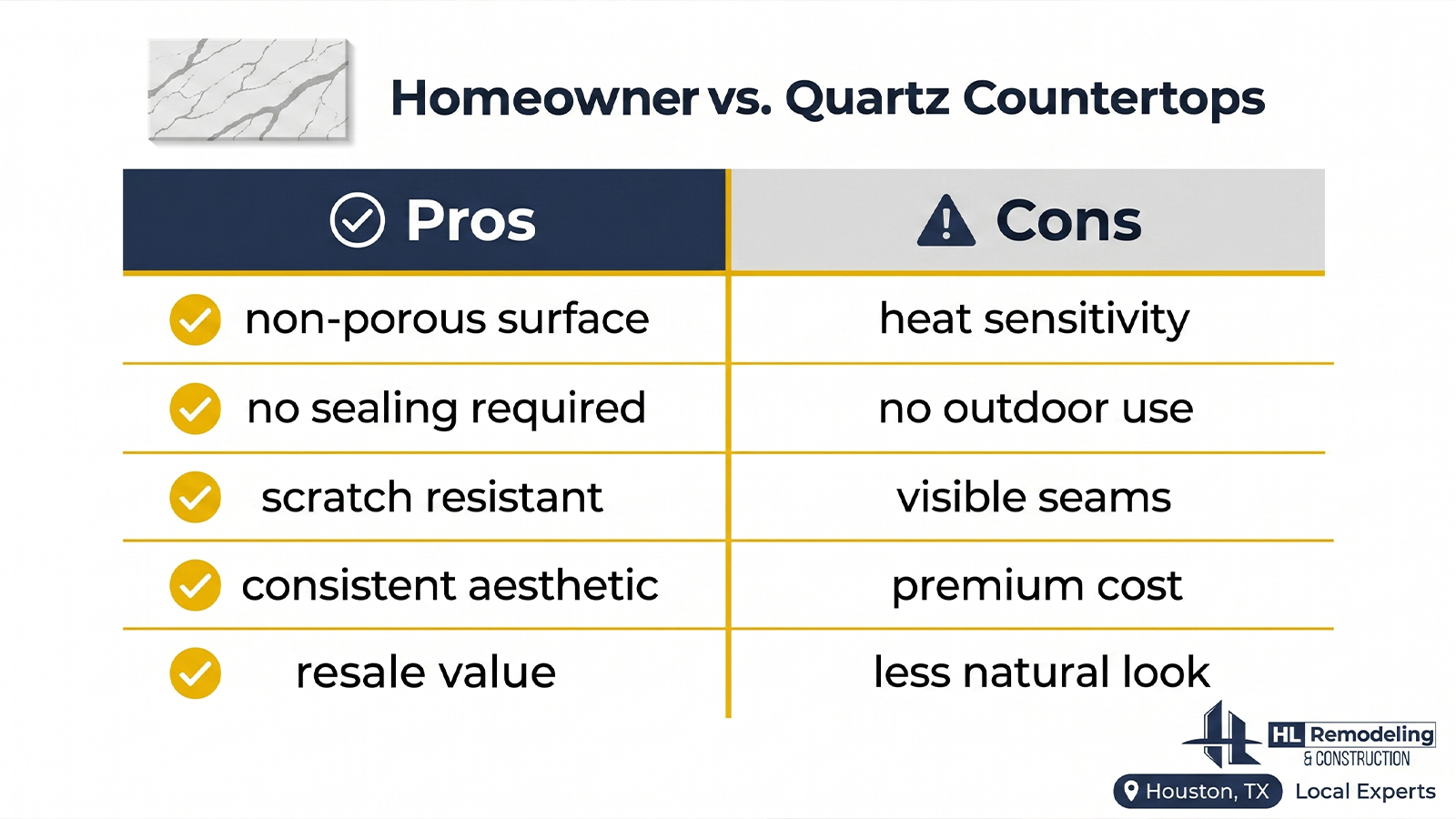
Pros and Cons of Quartz Countertops at a Glance
| Pro | Con |
|---|---|
| Non-porous surface resists stains and moisture | Vulnerable to heat — hot pans can cause permanent damage |
| No sealing required, ever | Not suitable for outdoor kitchens — UV exposure causes yellowing |
| Resistant to scratches from daily use | Seams can be visible on large countertop runs |
| Consistent aesthetic across multiple slabs | Premium brands cost more per square foot than mid-grade granite |
| Improves resale value in most Houston markets | Can look less natural than genuine stone at lower price points |
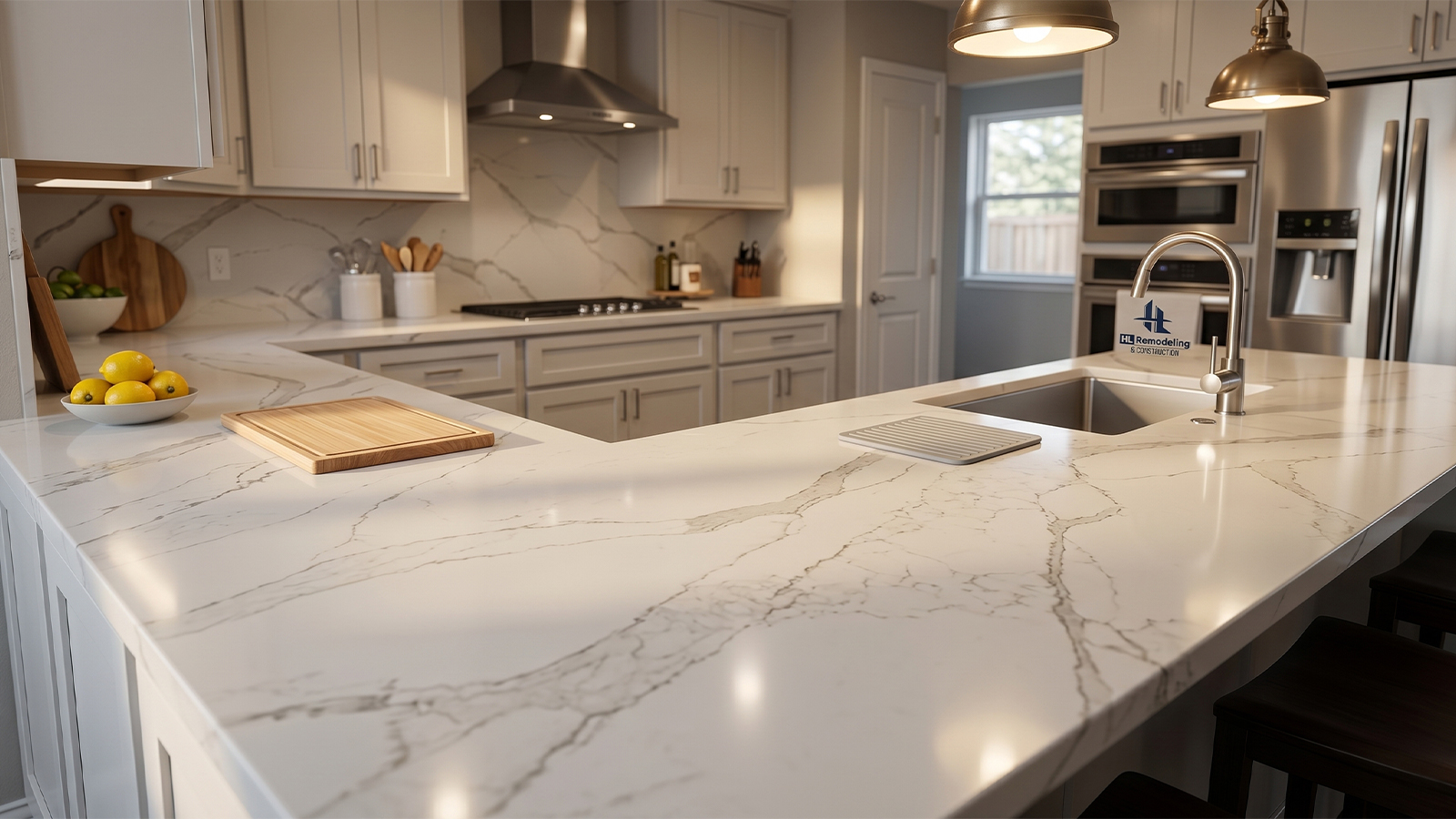
What Are the Benefits of Quartz Countertops for Houston Kitchens?
Houston kitchens take a beating — high humidity, serious home cooks, families that actually use their space. These are the conditions where countertop choices get stress-tested fast, and quartz holds up well under all of them.
Quartz rates 7 on the Mohs Hardness Scale, putting it in the same range as granite. Knives, cookware, and the friction of busy kitchens will not scratch it in normal use. The resin binder adds impact resistance that brittle natural stone like marble cannot match. Because quartz is an engineered product rather than a quarried slab, every piece is manufactured to a controlled standard with no soft veins or structural inconsistencies that can weaken the material over time.
The non-porous surface is where quartz earns particular points in Houston. The resin bonds the surface closed, which means moisture cannot penetrate, bacteria cannot colonize unsealed pores, and resists stains from coffee, wine, or cooking oil that would absorb into a porous slab. Natural stone left unsealed in a humid environment can develop ghost staining over time. Houston’s subtropical climate accelerates that risk. Quartz eliminates it. Low maintenance here is not marketing language — soap and water handles the overwhelming majority of spills.
The aesthetic gap between quartz and natural stone has largely closed. Caesarstone and Cambria produce slabs with deep veining that closely mimics Carrara or Calacatta marble. Unlike a natural slab, the pattern repeats consistently across every piece in your kitchen, which matters on large installations where multiple slabs need to read as one continuous surface. Quartz offers the look without the etching and staining vulnerabilities that make real marble a demanding choice in a working kitchen. Lower-priced products can still look flat, which is why brand selection affects the outcome.
On resale value, the Remodeling Magazine 2024 Cost vs. Value Report consistently identifies kitchen upgrades among the highest-returning renovation investments, and the National Association of Realtors lists updated kitchen countertops as a top-five feature influencing buyer decisions. In Houston’s mid-to-upper residential markets, quartz is considered a standard-quality finish in listings priced above the median.
Cons of Quartz Countertops Houston Homeowners Should Know
No countertop is without trade-offs. The cons of quartz countertops are real, and understanding them before installation prevents regret after.
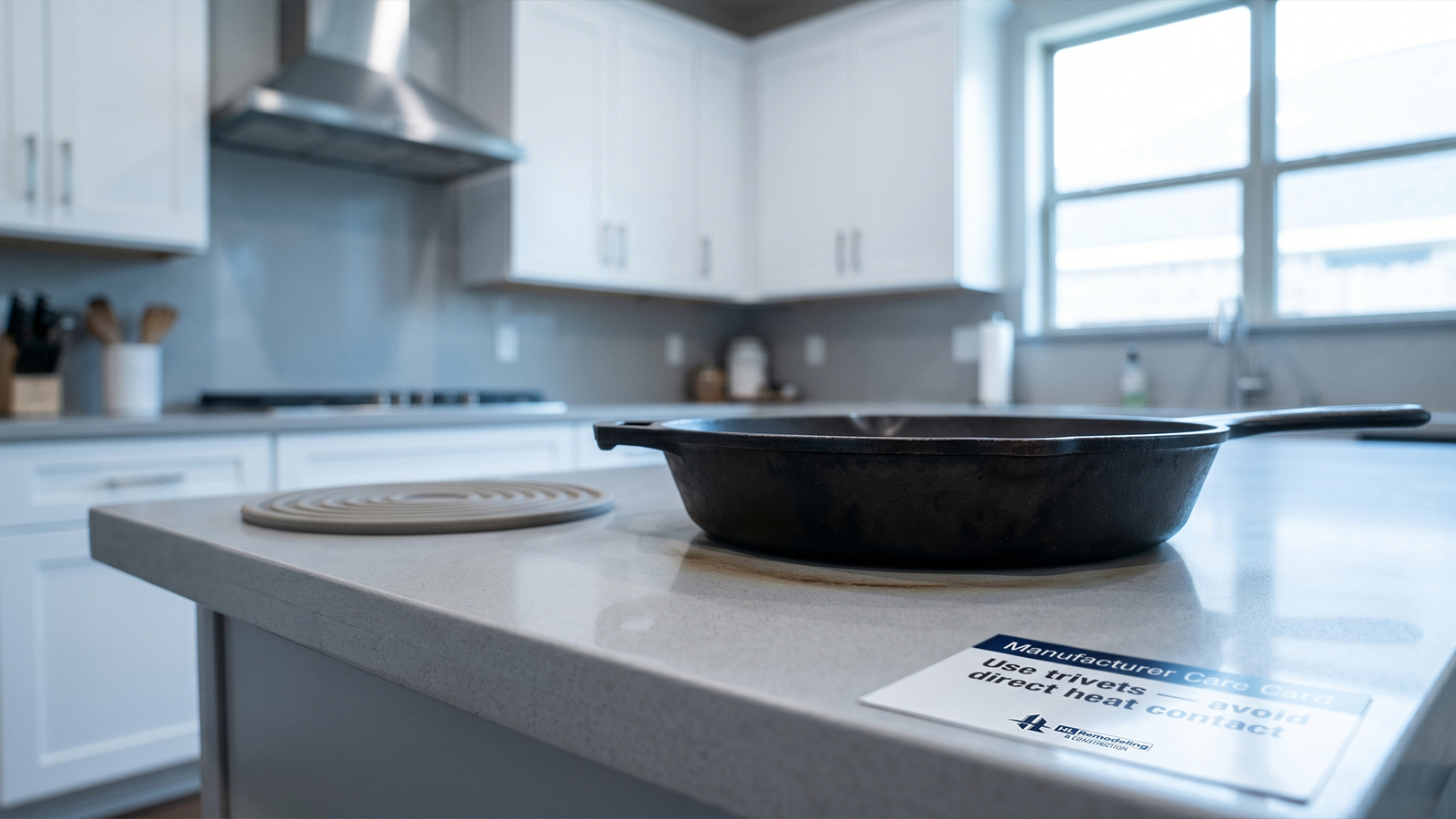
The resin content makes quartz susceptible to thermal shock. Setting a hot pan directly on the surface above approximately 300 degrees Fahrenheit can cause discoloration, cracking, or permanent scorch marks. This is the most common real-world complaint from quartz owners. Manufacturers including Silestone and Caesarstone explicitly advise against direct pan contact. Unlike granite, which tolerates more direct heat, quartz requires a behavioral adjustment — use trivets or heat pads every time. That is a minor habit for most households, but it is a real limitation worth naming plainly before you buy.
The resin is also not UV-stable. Extended sun exposure causes yellowing and surface degradation, and Cambria, MSI Surfaces, and virtually every other manufacturer void their warranties on outdoor installations for exactly this reason. For Houston homeowners who have or plan to build an outdoor kitchen, quartz is not viable. Granite, porcelain, or dekton are the appropriate choices for any surface with consistent direct sunlight. Houston averages more than 200 sunny days per year, which accelerates UV damage faster than in most U.S. cities.
Cost is worth noting as well. Premium quartz brands reach $90 to $120 or more per square foot installed, which exceeds comparable granite or marble in several cases. On large kitchen countertop runs, seams between slabs can be noticeable in high-contrast or heavily veined patterns. Choosing a lighter, more uniform pattern reduces that problem considerably.
Houston Pricing and What Homeowners Should Factor In
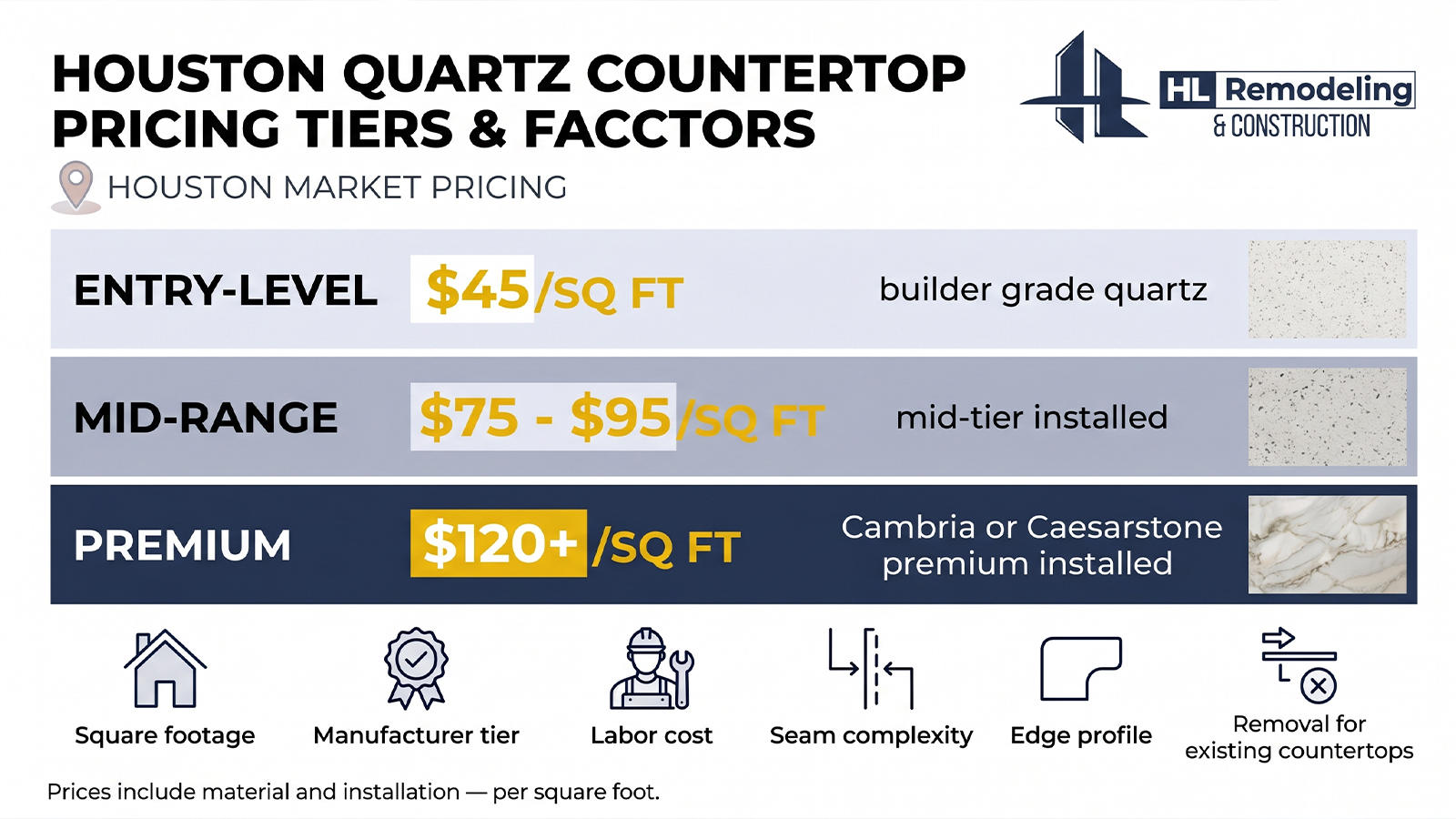
Local pricing benchmarks matter before you shop. Entry-level quartz runs approximately $45 to $55 per square foot installed, including fabrication and standard edge treatments. Mid-tier brands such as MSI Surfaces and LG Viatera fall in the $60 to $85 range. Premium lines from Caesarstone and Cambria reach $90 to $120 or more. Suppliers like OMNI Surfaces Houston stock several of these lines across the metro.
For indoor kitchen or bathroom applications, quartz performs well in Houston’s climate. The no-seal requirement is a genuine advantage — unlike natural granite or marble left in a humid environment, there is no periodic maintenance cycle to manage. New construction in Katy and Pearland frequently specifies quartz as a standard finish, while luxury remodels in River Oaks and Memorial often pair it with natural stone accents. Outdoor kitchens require a separate material plan from the start. HL Remodeling handles the full scope of kitchen remodeling projects in Houston, which makes the material selection conversation more useful because nothing is evaluated in isolation.
Is Quartz or Granite Better for Houston Kitchens?
| Factor | Quartz | Granite |
|---|---|---|
| Heat resistance | Moderate — no hot pans directly | High — handles direct heat well |
| Sealing required | No | Yes, periodically |
| Stain resistance | Excellent | Good when sealed |
| Outdoor use | Not rated | Yes |
| Aesthetic consistency | High — engineered uniformity | Variable — natural variation |
| Cost range installed | $45–$120+ per sq ft | $40–$100+ per sq ft |
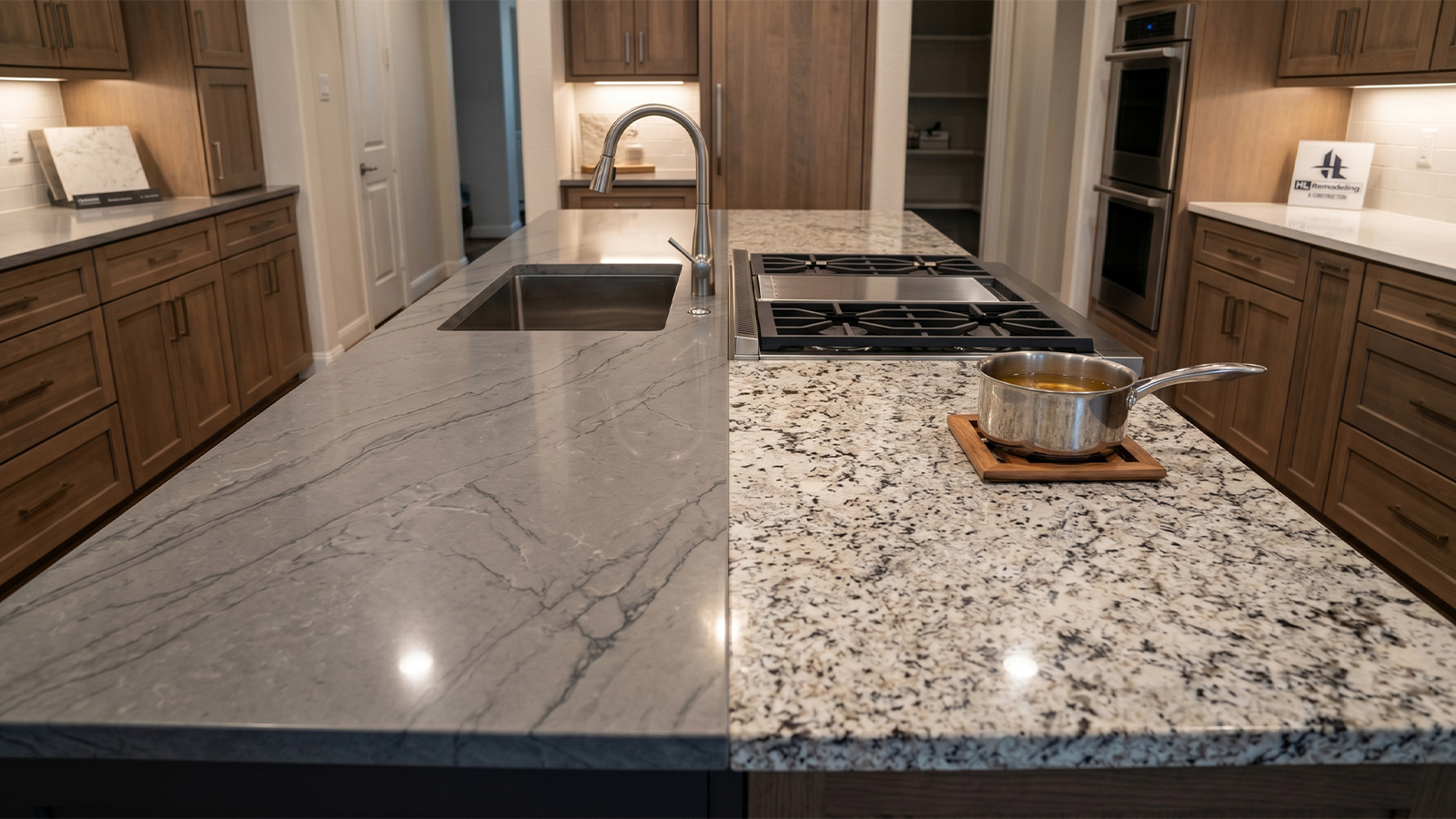
Both materials hold up for indoor daily use. Like granite, quartz is highly durable, but granite handles heat more forgivingly and offers a natural stone character some homeowners prize. Unlike natural stone, quartz does not require sealing and maintains consistent patterning across slabs. For indoor kitchens with heavy use and Houston’s humidity factored in, quartz generally edges ahead. For outdoor applications or buyers who want authentic natural variation, granite is the better fit.
How to Choose Quartz: What Houston Homeowners Should Consider
Four questions clarify the decision. How does your household use the kitchen — high-volume daily cooking or lighter activity? Quartz rewards high-use indoor environments. Do you have or plan an outdoor kitchen? If yes, quartz is disqualified for that surface and granite or porcelain should be on your list instead. What is your installed budget? If it falls below $45 per square foot, explore entry-level options from MSI or Silestone before committing. And how much direct sunlight does your kitchen receive near windows? UV exposure through large south-facing windows can affect quartz over time, so it is worth checking whether a brand addresses UV stability in its specifications.
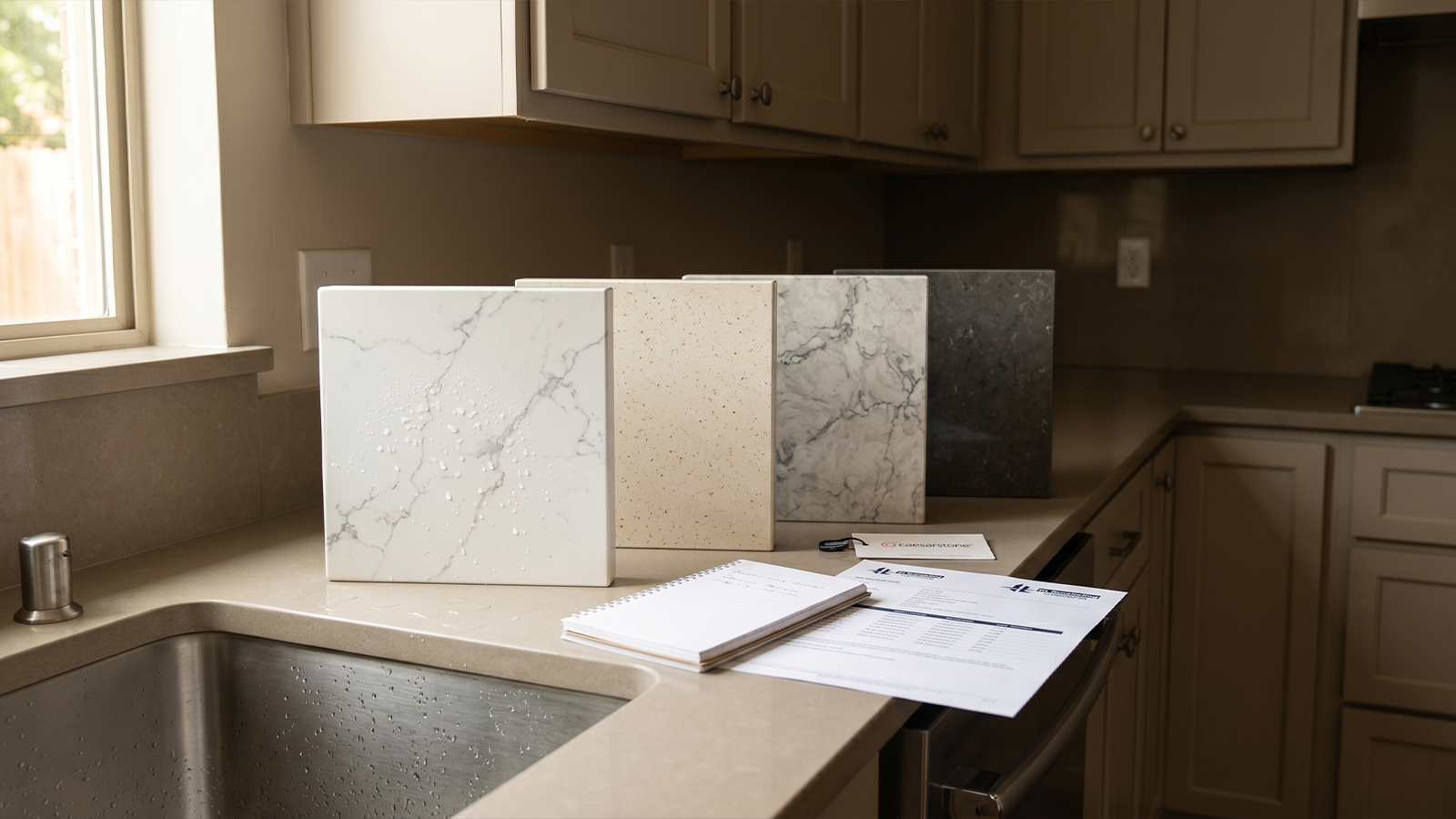
If those four answers point toward quartz, the next practical step is seeing samples in the context of your actual kitchen — your lighting, your cabinet finish, your countertop dimensions. HL Remodeling’s team works through exactly that process with Houston homeowners. Reach out online or call (346) 837-0007 to set up a time. Their bathroom remodeling services in Houston are also worth exploring if you are considering quartz for a vanity installation as well.
Conclusion
For most Houston homeowners remodeling an indoor kitchen or bathroom, quartz is a sound choice. The durability holds up, the low maintenance claim is accurate, and the design options available in 2025 have genuinely closed the gap with natural stone aesthetics. The heat limitation is manageable with trivets, and the non-porous surface is a direct advantage in Houston’s climate. The one hard line is outdoor installation — do not plan quartz for any exterior application. Get the brand selection and installation right, and it is a countertop you will not need to think about again.
FAQ
Do quartz countertops stain or discolor over time?
Quartz is non-porous and resists stains effectively under normal household conditions. Prolonged exposure to harsh chemicals like bleach or concentrated acids can dull the surface finish, so those should be avoided. Routine soap-and-water cleaning handles the vast majority of everyday spills.
How does Houston’s heat and humidity affect quartz countertops?
Humidity is not a concern — quartz’s non-porous, resin-bound construction handles moisture far better than marble or unsealed granite. The heat limitation applies specifically to direct contact, such as placing a hot pan on the countertop, not ambient Houston temperatures.
Can quartz countertops be used in Houston outdoor kitchens?
No. Quartz is not rated for outdoor installation by any major manufacturer, and warranties are voided on exterior applications. Houston’s sun causes yellowing and surface degradation over time due to the resin’s UV sensitivity. Granite, porcelain, or dekton are the recommended alternatives.
Does quartz require sealing?
No. Quartz does not require sealing at installation or at any point during its service life. The resin binder creates a non-porous surface by design, which is the core difference from granite or marble — neither of which can make that claim.
What are the biggest disadvantages of quartz countertops?
The two most significant are heat sensitivity and outdoor incompatibility. A hot pan placed directly on the surface can cause permanent discoloration, and no major manufacturer rates quartz for exterior installation. At the premium end, cost and visible seams on large countertop runs are worth factoring in before finalizing a decision.