
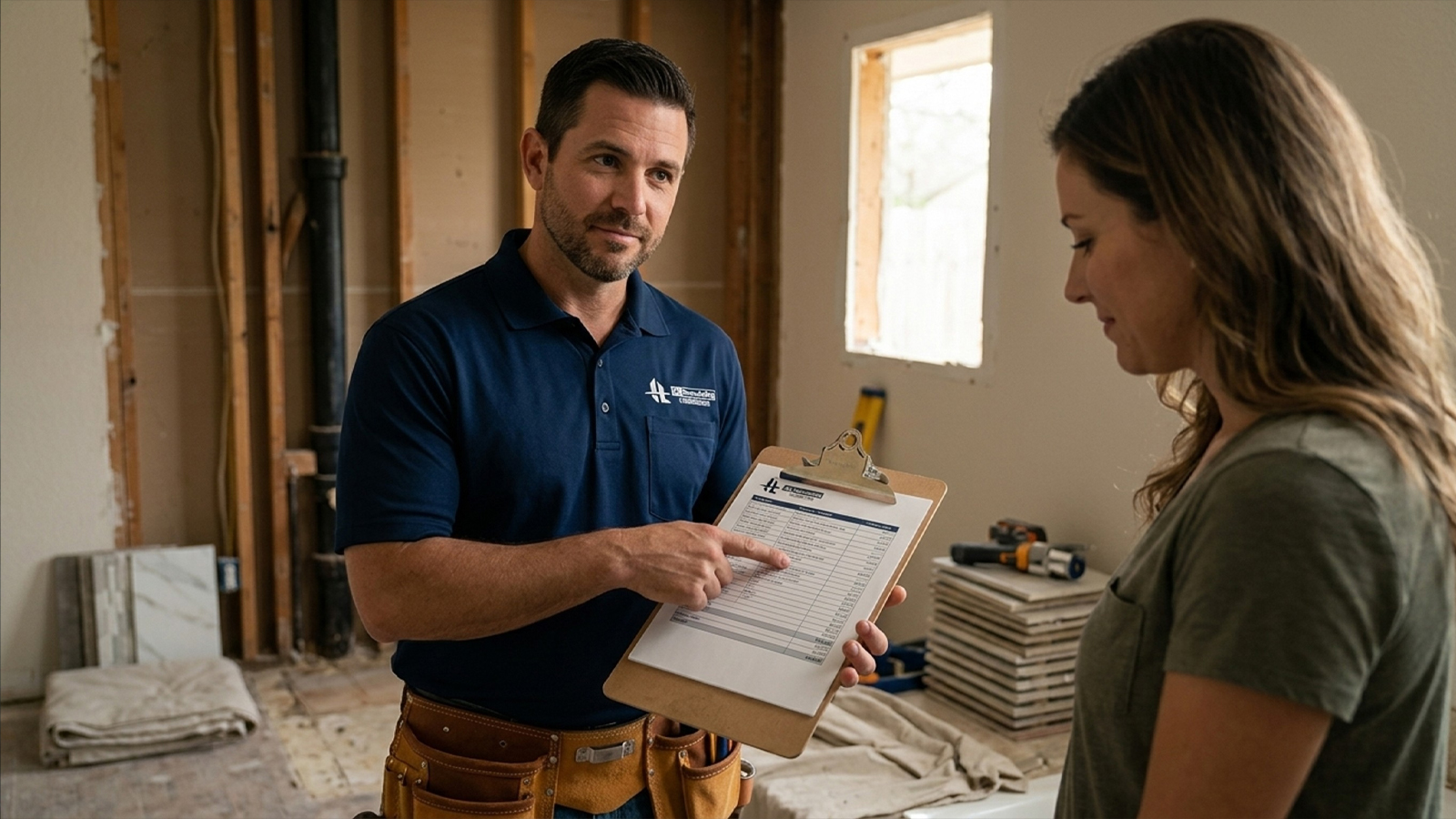
You’re standing in that outdated bathroom running the numbers in your head. Stage it over a year, or bite the bullet and do it all at once. Here’s the honest answer: whether you remodel a bathroom in phases or go all at once matters less than whether the entire scope is mapped before anyone picks up a hammer. Whether you’re leaning toward staging the work or considering a full bathroom remodeling project, that planning question is exactly what needs answering first. Understand what each path actually costs before you commit to either.
Key Takeaways
- Phased remodeling can work, but only with a written master plan. Without one, you pay setup and mobilization costs two to three times instead of once.
- A full remodel locks in plumbing, tile, and fixtures in a single pass, so nothing gets reopened or mismatched later.
- Houston’s humidity and slab foundations raise the cost of leaving a bathroom half-finished between phases.
- The real decision factor isn’t phased remodeling versus a full remodel. It’s whether the whole project, including plumbing, permits, and finishes, is planned before demolition starts.
Remodeling in Phases: What Actually Happens to Your Budget and Timeline
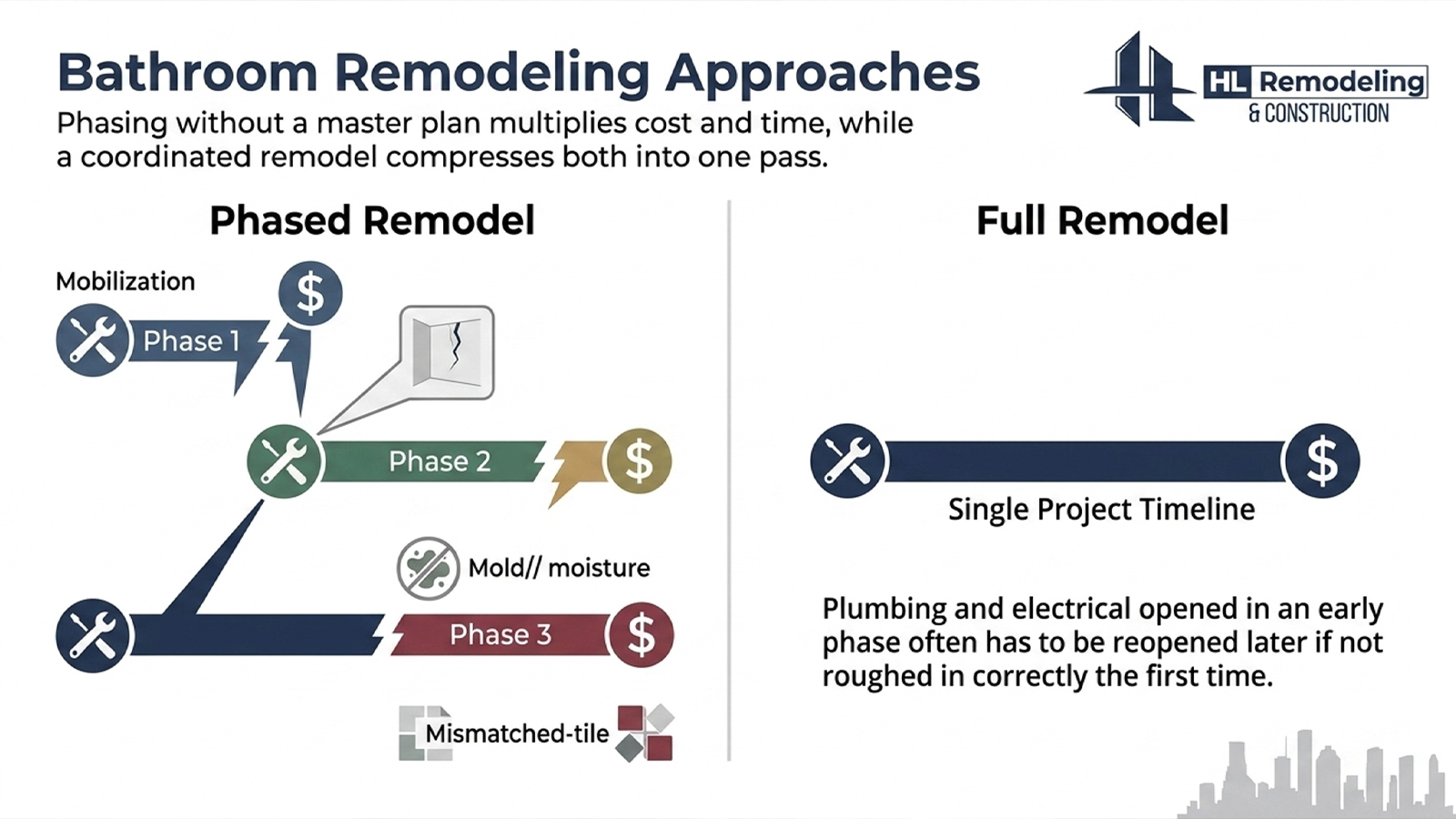
Phasing sounds like the budget-friendly choice on paper. Spread the cost over a year, tackle the vanity now and the shower later. In practice, remodeling in phases without a coordinated plan tends to cost more, not less. Every phase restarts costs that a full remodel only pays once.
Why Re-Mobilization Costs Add Up Fast
Each time a trade returns for a new phase, you pay for setup, teardown, and travel again. Plumbers and electricians charge for mobilization, not just labor, and that overhead repeats with every gap between phases. A project broken into three phases can easily pay for four or five mobilizations by the time it’s finished. If a contractor can’t show you those costs in writing before work starts, that’s worth asking about directly.
The Reopened-Wall Problem
Plumbing and electrical work opened in phase one often has to be reopened in phase two if it wasn’t roughed in correctly the first time. That means cutting into a wall that was already patched, taped, and painted. On Houston’s slab-foundation homes, common from Pearland to Cypress, moving a drain line later often means jackhammering concrete that a full remodel would have routed once. Reopened work also risks a failed inspection tied to sequencing errors nobody caught the first time, including drain and vent spacing that no longer meets code once a layout shifts mid-project. This is exactly the kind of risk a licensed team plans around before demo day, not after.
Hidden Moisture Houston Homes Don’t Reveal Until Demo
Old floor tile and tub surrounds hide problems you can’t see until demolition starts. Subfloor rot around a tub, cast iron drain corrosion, moisture trapped behind a shower wall. All common finds in older Heights and Bellaire homes. A phased approach rarely budgets a contingency for this, so the discovery stalls the whole project until money and scheduling catch up.
Add in Houston’s humidity, which sits between 75 and 90 percent relative humidity for much of the year, and an exposed wall cavity left open between phases can grow mold in as little as 24 to 48 hours [1]. Discontinued tile runs and fixture finishes compound the problem. What matched in phase one is often gone by phase two, leaving a bathroom that looks like two different decades. A written cost plan drawn up before demo starts can flag this risk early and set aside a real contingency, instead of leaving you to absorb the surprise mid-project.
Full Bathroom Remodel: Rough-In Work, Tile, and Fixture Cohesion Done Once
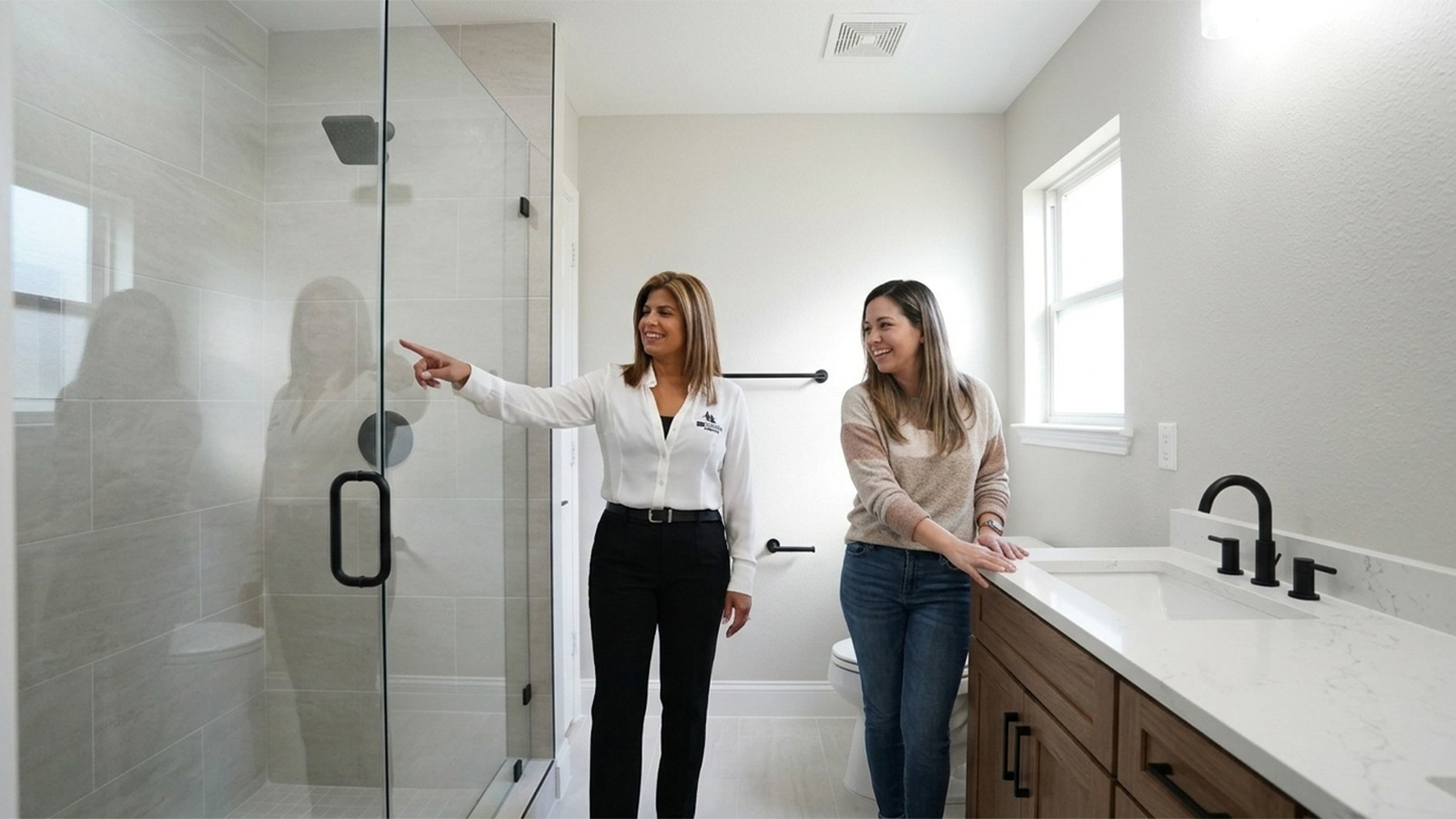
A full bathroom remodel flips the script. Instead of guessing what phase two will need, every decision gets made together before any wall goes back up: plumbing rough-in, tile layout, vanity placement, faucet and lighting selection.
One Rough-In, One Inspection Cycle
Rough-in work for plumbing and electrical happens once, correctly, because the full layout is known in advance. That means one permit application and one inspection sequence instead of two or three separate ones. The Houston Permitting Center typically issues a reviewed building permit within about 10 business days once prerequisites are met, and most bathroom renovations involving plumbing or electrical changes require that review [2]. Running that process multiple times for a phased project adds real weeks to your timeline. Weeks a full remodel never spends.
Matching Tile, Vanity, and Fixture Finishes the First Time
Ordering tile, vanity, faucet, and bathroom lighting in one selection cycle means everything comes from the same product run. There’s no risk of a manufacturer discontinuing a tile color between phase one and phase two, and no mismatched grout lines from two different batches. Fixture and cabinet spacing gets planned around the full layout too, so a vanity, toilet, and shower door all end up with proper clearance instead of being squeezed in around decisions made months apart. This is where a full remodel lets the finished bathroom read as one space instead of a patchwork of eras. It’s also the stage where a homeowner’s specific bathroom needs, whether that’s a curbless shower, a double vanity, or better storage, get built in from the start rather than bolted on later.
A Phased Remodeling Timeline You Can Actually Plan Around
A full remodel has a defined start and end date, set before demo begins. That’s the opposite of an open-ended phased project, where “phase two” has no enforced deadline and can slip six to twelve months while life gets in the way.
One Houston homeowner we worked with had lived with a half-demoed guest bathroom for nearly a year before calling us. Once the full scope was mapped, plumbing, tile, and fixtures were finished in nine weeks. No reopened walls. No surprise costs. If your bathroom has been sitting half-finished for months, that’s usually a sign the original plan was missing a piece from day one, not that you did anything wrong.
| Approach | Mobilization Cost | Timeline Risk | Finish Consistency |
|---|---|---|---|
| Phased remodeling | Paid 2-3 times | Open-ended, can stall 6-12 months | High risk of mismatched tile and fixtures |
| Full remodel | Paid once | Scheduled, finite completion date | Tile, vanity, and fixtures selected together |
If you want to see what a full remodel actually involves in scope and cost, our bathroom remodeling page walks through the process in more detail.
Conclusion
The real question was never phased versus all at once. It’s whether a master plan exists before the first hammer swings. A full remodel lets plumbing, tile, and fixtures get locked in once, with a schedule you can actually plan your life around. That’s where peace of mind comes from, not from picking the “right” strategy between two options.
You don’t have to figure this out on your own. Book a Personalized Design Discovery Session with our owner, and we’ll map your Houston bathroom’s full scope, budget, and timeline together, then hand you a written cost plan before you commit to phasing or a full remodel either way. Call (346) 837-0007 whenever you’re ready to talk it through, no pressure to decide on the spot.
FAQ
Is it cheaper to renovate a bathroom in stages or all at once?
Renovating in stages is usually more expensive over the life of the project, not less. Repeated mobilization, setup, and overhead for each phase typically outweigh any short-term savings from spreading out payments. A written cost plan drawn up before demo starts shows exactly where those savings disappear, and where a full remodel actually costs less in total.
What order should you renovate a bathroom in?
A bathroom renovation generally follows demolition, plumbing and electrical rough-in, waterproofing, tile, then fixtures and finishes. Getting this order wrong, especially the rough-in stage, is the leading cause of walls that have to be reopened later. That’s why sequencing is handled by a licensed team working from a single plan rather than pieced together phase by phase.
Do you need a permit to remodel a bathroom in Houston?
Yes, most bathroom remodels involving plumbing, electrical, or structural changes require a permit in Houston. The Houston Permitting Center generally reviews and issues residential permits within about 10 business days once prerequisites are satisfied [2]. Phased projects often trigger multiple permit cycles instead of one, adding weeks of waiting time to an already extended project.
Can I live in my house during a bathroom remodel?
Most homeowners can stay in their home during a bathroom remodel, especially if there’s a second bathroom available. A full remodel with a set schedule minimizes disruption because the work has a defined end date, unlike an open-ended phased timeline that can drag on for months. That predictability matters for daily routine, especially with kids or a single working bathroom.
What happens if plumbing or electrical is left exposed between remodel phases?
Exposed plumbing or electrical between phases invites moisture damage, pest intrusion, and mold growth, which can appear in Houston’s humidity within 24 to 48 hours [1]. Open wall cavities also give pests an easy entry point during the gap between phases. Sealing the entire project into one continuous timeline removes that window of exposure altogether.
What causes most bathroom remodel delays and cost overruns?
Most delays and overruns come from hidden subfloor rot, discontinued finishes, and phase-two work that has no enforced deadline. Demolition often reveals moisture damage or outdated wiring that a phased plan never budgeted for. A written, itemized cost proposal drawn up before construction begins accounts for these risks upfront instead of discovering them mid-project.
How long does a phased bathroom remodel take compared to a full remodel?
A phased bathroom remodel often stretches well beyond its original timeline, sometimes six to twelve months longer than planned, because there’s no enforced schedule for later phases. A full remodel, by contrast, runs on a published timeline with milestone check-ins from start to finish. That structure is what keeps a full bathroom remodel finishing in weeks rather than dragging into a second year.