
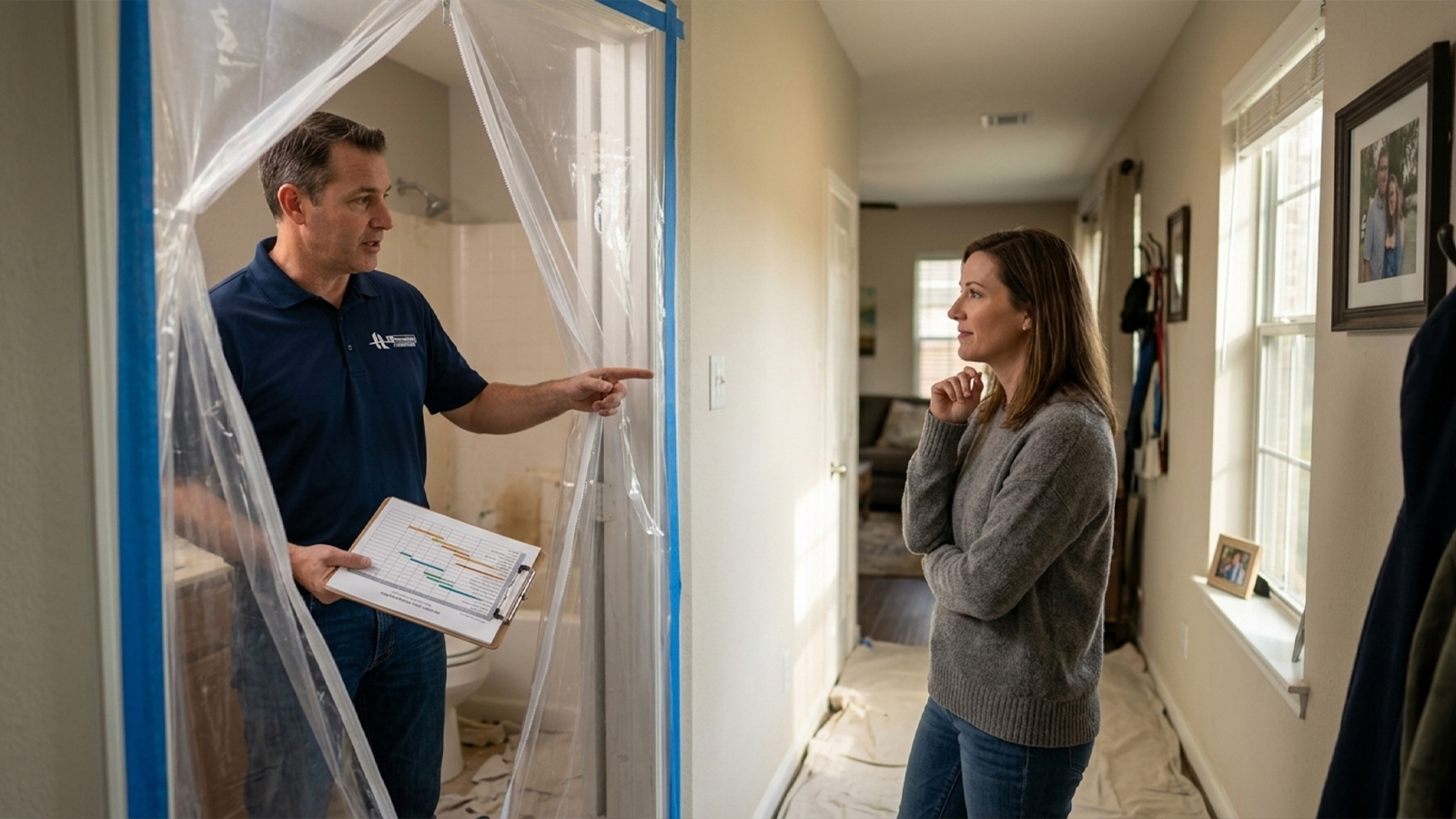
“Can I actually live here while this happens?” It’s the question every Houston homeowner types into Google before signing a contract, and the honest answer isn’t about how tough your family is. It depends on whether your bathroom remodel is planned around containment, scheduling, and access before the first hammer swings, or figured out after the fact.
If you’re weighing whether to stay put or find a place to crash for a few weeks, the details of professional bathroom remodeling planning matter more than your family’s tolerance for dust. Most Houston homeowners can stay home through a bathroom remodel comfortably, once they know what to plan around.
Key Takeaways
- Staying home during a bathroom remodel is realistic for most Houston households, but it depends heavily on scope and how many bathrooms the home has.
- Dust from demolition can travel through HVAC ductwork into bedrooms and living areas within 48 hours without a containment plan.
- Homes with only one bathroom need a documented access and fixture plan before work begins, not after the toilet is disconnected.
- Houston permit and inspection timelines can pause a project mid-demo, one of the most common reasons a 3-4 week remodel stretches into 8 weeks or more.
- The real variable isn’t willpower, it’s whether your contractor hands you a written schedule and containment plan before demo day.

Living In Your House During a Bathroom Remodel: What It Actually Depends On
Whether you can comfortably live in your house during a bathroom remodel comes down to three things: the scope of the job, how many bathrooms you have, and how tightly the trades are sequenced. A cosmetic refresh with new fixtures and a fresh coat of paint barely registers day to day. A full gut remodel, demo to the studs with moved plumbing, new tile, and a new vanity, is a different animal entirely.
Partial Update vs. Full Gut: Why Scope Changes Everything
Many homeowners compare notes with a neighbor who did a “quick bathroom remodel” and expect the same experience. In older Houston neighborhoods like the Heights, Montrose, and Garden Oaks, original plumbing and narrow wall cavities often mean scope widens once demo starts, turning a planned two-week job into something longer. Knowing which category your remodeling project falls into before signing a contract sets realistic expectations from day one.
| Project Type | Typical Timeline | Daily Living Impact |
|---|---|---|
| Cosmetic refresh (fixtures, paint, vanity swap) | 3-7 days | Minimal, bathroom usable most nights |
| Mid-scope update (new tile, updated plumb lines) | 2-3 weeks | Moderate, one bathroom unavailable |
| Full gut renovation (structural, moved plumbing) | 4-8 weeks | Significant, temporary access plan required |
Why Self-Coordinated Trades Create Scheduling Gaps
Trying to schedule your own plumber, electrician, and tile setter is where most DIY-managed timelines fall apart. A plumber finishes early. The tile setter can’t start for three more days. A one-week gap becomes two. That gap collides badly with a work-from-home schedule or a household’s daily routine, since nobody warned you the bathroom would sit half-finished for a week. One contractor coordinating every trade under a single schedule closes that gap before it opens and helps reduce stress and inconvenience for everyone still living around the work.
Dust, Noise, and the Construction Zone: Why Containment Plans Matter
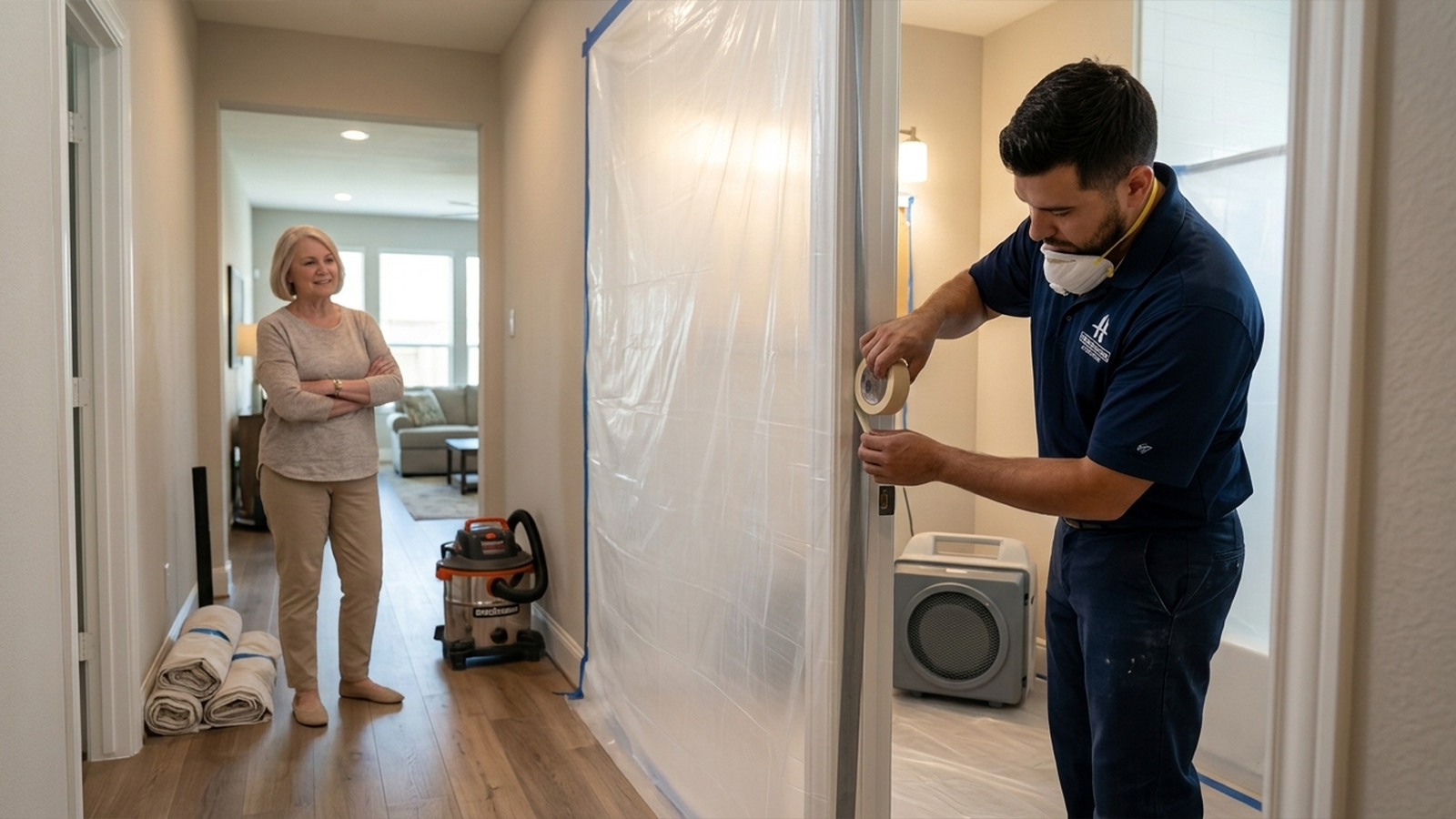
Once demolition starts, your bathroom becomes a construction zone whether or not the rest of the house stays livable. Dust and debris don’t stay put on their own. Tile or drywall demo throws fine particulate into the air almost immediately.
How Fast Dust Actually Spreads Through Your Home
That particulate finds its way through HVAC return vents into bedrooms and living areas within hours, and certainly within 48 hours, if the system hasn’t been sealed off ahead of time. Houston’s humidity adds another layer here. Moisture from cut water lines or wet-sawed tile settles into nearby drywall faster in this climate, which can lead to mildew if it isn’t managed early.
Noise Windows and Water Shutoffs: The Schedule Conflicts No One Warns You About
Without a written schedule, noise and water shutoffs tend to land at the worst possible moments: a work call, nap time, dinner prep. That’s not bad luck, it’s a planning gap. Plastic barriers, sealed HVAC returns, and portable air purifiers cut down on the spread, but only when a contractor sets them up as a system before demo, not scrambled together after dust has already reached the hallway.
This is usually the point where homeowners realize the containment plan matters more than the demo itself. If you want to see what that plan looks like on paper before you commit to anything, that’s exactly what we walk through in a free consultation.
Surviving a Bathroom Renovation With Only One Working Bathroom
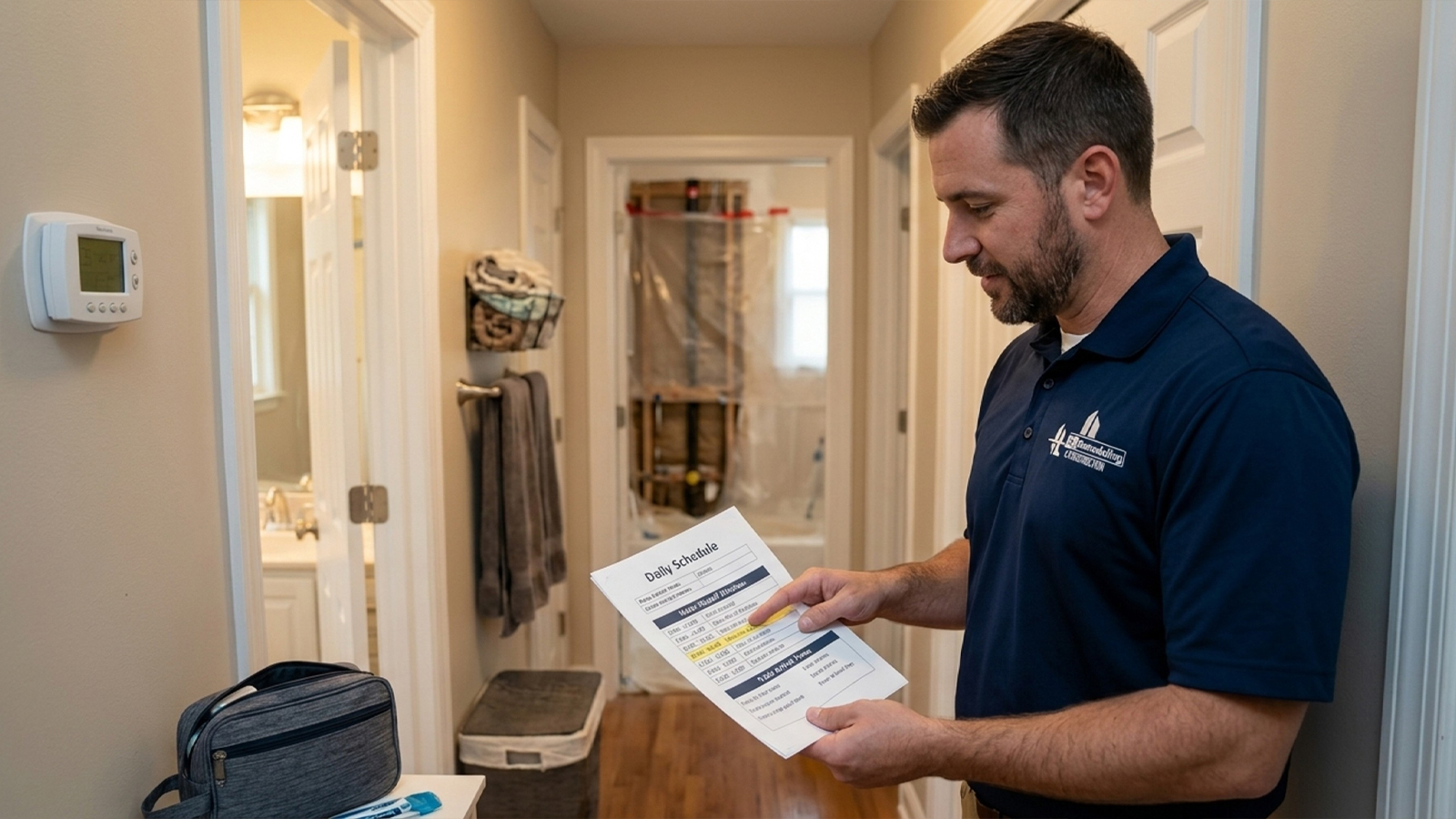
Homes with a single bathroom carry the highest stakes in this whole conversation. Surviving a bathroom renovation under those conditions takes a real backup plan mapped out before demo, not improvised the day the toilet gets disconnected.
Keeping a Fixture Usable as Long as Possible
A well-sequenced project leaves the toilet installed and functional until the last possible phase, so the household isn’t without that one fixture for the entire job. Bathing and temporary shower access usually mean using a neighbor’s place, a short-term rental, or a portable option set up in another part of the house, and knowing in advance where you’ll bathe each week removes a lot of the guesswork. None of those choices should get decided in a panic. They need to be mapped against the actual construction schedule so everyone knows which days require a plan B.
What Happens If Permits or Inspections Delay the Project
One Houston homeowner in an older bungalow assumed their remodel would move straight through once demo started. City inspection scheduling pushed the timeline back nearly two weeks, but because the project had a documented contingency plan, the family already had temporary bathroom access arranged and didn’t lose use of their home in the meantime. In Houston, plan review and inspection timelines through the Houston Permitting Center can run from a few days to several weeks depending on project complexity [1], and a permit that lapses from inaction can require re-filing and add real delay.
That brings up the real question underneath all of this. It isn’t whether you can live at home during a remodel, it’s whether your contractor has a written plan for containment, noise windows, and daily cleanup before a single wall comes down.
Conclusion
The question homeowners start with, can I stay home during a bathroom remodel, was never really about grit or patience. It’s about whether the contractor walks in with a written containment and schedule plan before demo day, or figures it out as they go. Clear communication, realistic expectations, and a documented plan are what actually keep disruption in check and protect your peace of mind, not a tidy garage or a stack of plastic sheeting bought at the last minute.
That’s the whole difference, and it’s one you can settle before a single wall comes down. If you’re planning a bathroom remodel in Houston and want a straight answer for your own home, we’ll walk through a written Dust and Disruption Containment Plan with you in advance, room by room, week by week, as part of a free consultation. You’ll know what each phase looks like, when the noise happens, and where you’ll shower in between. Reach us at (346) 837-0007 whenever you’re ready to talk it through, no pressure, just a real conversation about what living in your house during the work will actually look like.
FAQ
Can you live in your house during a bathroom remodel?
Most Houston homeowners can live in their house during a bathroom remodel, especially for partial updates or when the home has more than one bathroom. Full gut renovations require more planning around dust, noise, and water access, but they’re still manageable with a documented schedule. The deciding factor is whether your contractor maps out containment and access before work begins, not how tolerant your household is of disruption. Homes with a single full bathroom need the most detailed plan of all.
How long does a bathroom remodel take?
A bathroom remodel typically takes three to four weeks for a full renovation and less for a cosmetic update, though timelines vary by scope. Projects without a published schedule are the ones most likely to slip well past that window. Uncoordinated trade scheduling is one of the leading reasons a planned few weeks turns into two months of living in disruption. A contractor who documents milestones upfront keeps that risk in check.
What if my home has only one bathroom during the remodel?
A single bathroom home needs a temporary access plan in place before demolition starts, not after. That usually means leaving the toilet installed and functional as long as possible and arranging a backup shower option, whether that’s a neighbor’s house, a short-term rental, or a portable setup elsewhere in the home. This scenario is common in older Houston homes built with a single full bathroom. Planning it in writing avoids the scramble that happens when access disappears without warning.
Do I need a permit to remodel a bathroom in Houston?
Most bathroom renovations in Houston that touch plumbing, electrical, or structural elements require a permit through the Houston Permitting Center. Review and inspection timelines can run from a few days to several weeks depending on project complexity [1]. Missing a required step can pause work mid-project, leaving a bathroom torn apart with no clear restart date. Permit handling is something your contractor should manage directly, not something you should have to track yourself.
How is dust controlled during a bathroom renovation?
Dust during a bathroom renovation is controlled through sealed HVAC returns, plastic barriers around the work zone, and daily cleanup protocols set up before demolition starts. Without that system in place, fine particulate can spread into bedrooms and living areas within 48 hours. Containment only works when it’s planned as a coordinated system in advance, not assembled reactively once dust has already spread through the house.
What causes bathroom remodels to take longer than planned?
Uncoordinated trade scheduling is the leading cause of bathroom remodels running longer than planned, where one trade finishes early and the next isn’t available for days. That gap compounds every time it happens, turning a four-week remodel into eight or more. Missed permit steps and unexpected issues behind older walls add to that risk in Houston’s older housing stock. Single-point project management, where one contractor sequences every trade, is what closes those gaps.
Should I set up a temporary bathroom or shower during construction?
Setting up temporary shower access is worth arranging in advance if your home has only one bathroom and you’re planning a full renovation. Options typically include a neighbor’s house, a short-term rental, or a portable setup in another part of the house. This decision works best when it’s tied to the actual construction schedule rather than decided reactively once work is already underway. A documented plan tells you exactly which days you’ll need it.
Is it worth hiring a contractor instead of managing a remodel myself?
Hiring a contractor is worth it because self-managed bathroom remodels are where scheduling gaps, missed permits, and uncontained dust most often start. Coordinating plumbers, electricians, and tile setters without a single point of accountability tends to stretch timelines and increase daily disruption. Owner-direct communication and a written plan reviewed before work begins remove most of that risk. It’s the difference between guessing what happens next and knowing it in advance.