
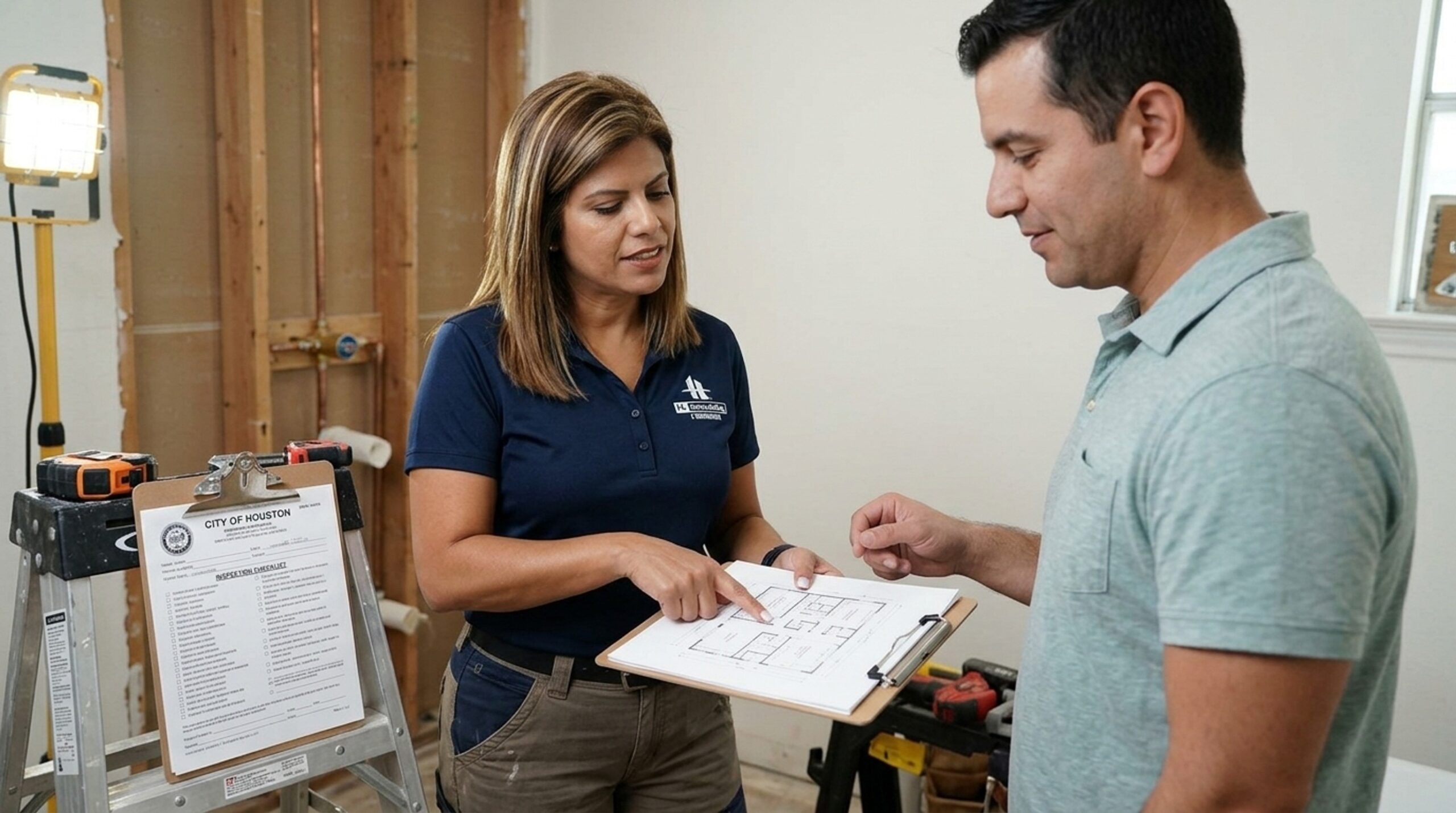
Yes, in most cases. If you’re moving plumbing lines, adding electrical circuits, or touching structural walls, the City of Houston requires a permit before that work begins. Paint and a tile refresh usually don’t need one. Are you trying to figure out what your own bathroom remodeling project needs before you pick up a hammer? This guide breaks it down by scope, not guesswork.
Houston enforces these rules through the Houston Permitting Center and Houston Public Works. They follow the International Residential Code (IRC) and Houston’s own Chapter 10 construction code. There are other local rules too, which govern how homes get repaired or renovated. By the end of this article, you’ll know which category your bathroom remodel falls into, what its permit requirements look like, what it costs to do it right, and what happens if you skip the paperwork.
Key Takeaways
- Most bathroom remodels that involve plumbing, electrical, or structural changes need permits in Houston. Cosmetic-only work like paint or a tile refresh usually doesn’t.
- Permit costs generally run $75 to $500 depending on the project. Full gut renovations can sometimes cost over $1,000 once you combine plumbing, electrical, and mechanical permits [1].
- Skipping a required permit risks stop-work orders and daily fines. It can also cause problems later when you sell your home and an inspector finds unpermitted work.
- The City of Houston Permitting Center usually handles simple permits within a few business days. Plans that need extra review can take two to four weeks.
- A contractor who pulls permits for you removes the guesswork. This keeps your renovation timeline and budget on track.
Which Bathroom Remodel Projects Require a Building Permit in Houston?
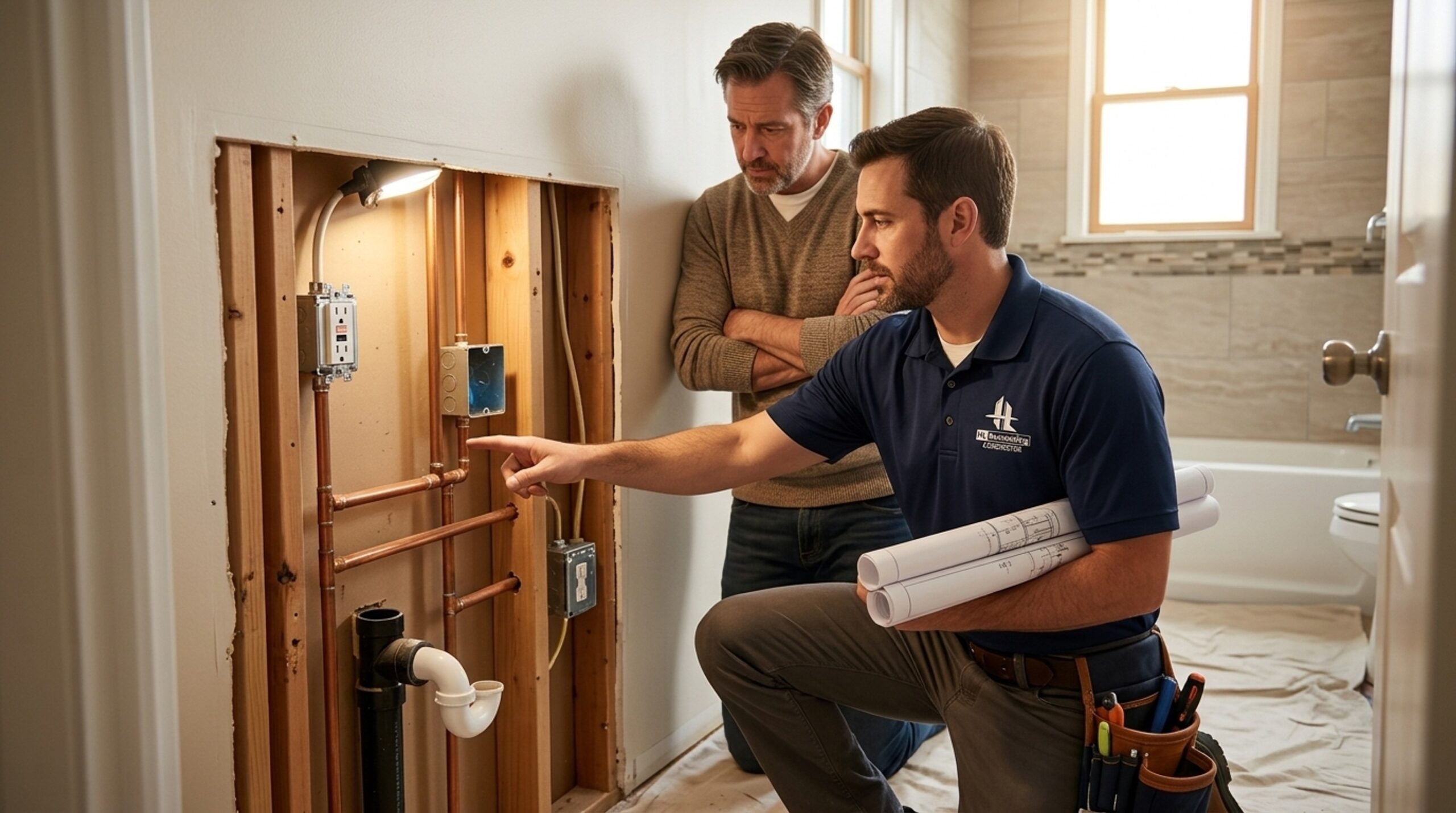
Not every bathroom project needs a permit. But more of them do than most homeowners expect. Knowing which permits apply to your specific project is the first step toward staying compliant, since permit requirements can shift depending on how far the work reaches into plumbing, electrical, or framing. Projects that move or plumb new fixtures almost always need permits. Purely cosmetic updates usually don’t. The table below shows common bathroom remodel projects and whether they usually need a permit in Houston.
| Project Type | Permit Required? |
|---|---|
| Re-tiling floors or shower walls (no plumbing moved) | No |
| Vanity swap in the same location | No |
| Toilet replacement in the same spot | No |
| Moving plumbing lines (sink, toilet, or shower relocation) | Yes |
| Electrical rewiring or adding new circuits | Yes |
| Adding a new window | Yes |
| Structural wall removal | Yes |
| Full gut renovation | Yes |
| Vanity swap that shifts the plumbing layout | Maybe |
Why Houston Enforces These Building Codes
Houston bases its permit rules on the IRC and Chapter 10. These codes protect the structural safety of your home, and they exist to make sure the structural integrity of load-bearing walls and floor framing isn’t compromised by work done without a plan review. That’s why any project touching load-bearing walls or floor framing falls under strict permit rules. The codes also prevent fire and water damage. And they keep electrical work safe.
An inspector checks a few key things. GFCI outlets must sit close enough to water sources. Exhaust fans must vent outside instead of dumping moisture into the attic. Any new water heater must meet current venting rules. And any project that needs new supply or drain lines must pass inspection before walls close up. In a humid city like Houston, trapped moisture behind a wall isn’t a small problem. It’s how mold gets started.
There’s also a resale angle. Unpermitted plumbing or electrical work often shows up during a title search or home inspection when you sell your home. It can stall a deal or lower an appraisal. Are you planning ahead for a future sale as much as your day-to-day comfort? If so, this is worth flagging early with whoever’s managing your project.
Scope Creep Is the Real Trap
A vanity swap sounds simple. But it gets complicated fast if the new cabinet needs the drain moved six inches. At that point, you’ve moved into plumbing and electrical work that needs a permit. That new drain location also has to meet code before an inspector will sign off. This happens even though the project started as a small fixture change. It’s one of the hidden costs of a bathroom remodel that catches homeowners off guard.
This happens often in older Houston neighborhoods like Oak Forest and Meyerland. Old plumbing and small electrical panels in these areas often force upgrades partway through a project. Older homes are also far more likely to have galvanized or cast-iron lines that need to be re-plumbed to meet current code. Adding a new bathroom, or making an existing one bigger, can also run into zone setback rules on your lot. That’s one more reason to confirm the full scope, and the local permit rules that apply to it, before demo day.
If you’re not sure which side of that line your project falls on, that’s a normal question to bring to a walkthrough. It’s not something to guess at alone.
Houston Permitting Requirements: Cost, Timeline & Permit Process
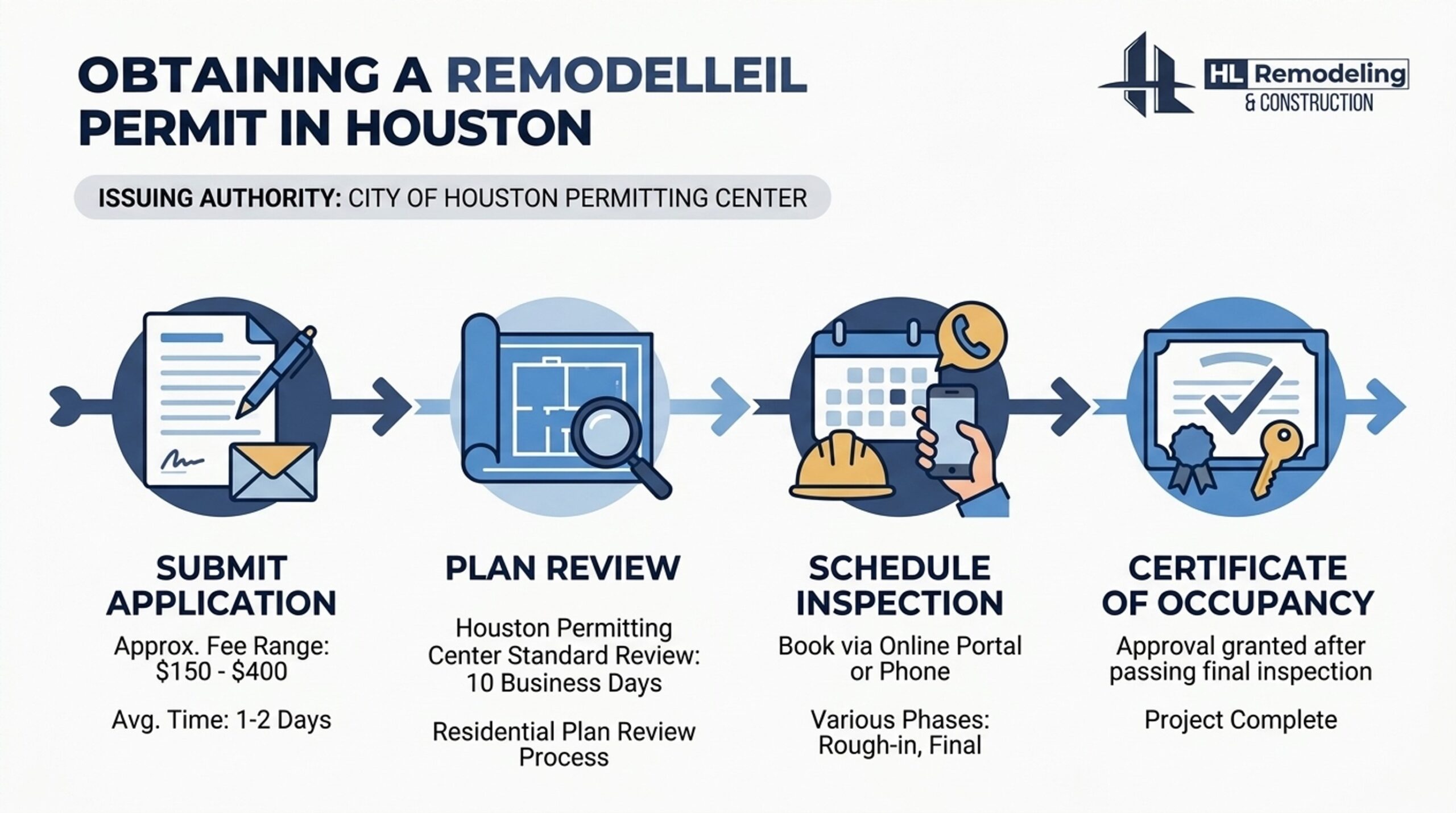
Once you know your project needs a permit, the process is fairly simple. Here’s how it works through the City of Houston Permitting Center.
- Submit your permit application online or in person through the Houston Permitting Center, describing the scope of work.
- Provide detailed plans for review if your project involves structural changes, new plumbing lines, or added electrical circuits.
- Pay the permit fees, which vary by permit type.
- Schedule inspections at set points, such as after rough plumbing and before drywall closes the walls.
- Get final sign-off once the inspector confirms the work meets code.
Permit costs in Houston usually run $75 to $500 for standard plumbing, electrical, or mechanical permits. Combined permits for a full remodel can sometimes cost over $1,000. The final cost depends on the total project cost and scope [1]. Simple permits often clear in a few business days. Anything that needs plan review, like removing a structural wall or rerouting how a bathroom is plumbed, can take two to four weeks. Homeowners researching permits for bathroom projects for the first time are often surprised at how much the timeline depends on scope rather than square footage.
A Licensed Plumber Isn’t Optional
Any plumbing permit in Houston must be tied to a plumber licensed through the Texas State Board of Plumbing Examiners (TSBPE) [2]. This isn’t just a formality. It’s a legal rule. Only a licensed plumber can legally install new fixtures, plumb a relocated drain, or move existing lines under a Houston permit. Whether it’s a simple relocation or a full rework of the supply and drain lines, the person who does the work needs to plumb it to code, not just to convenience. It’s also one reason moving plumbing during a DIY project stalls out fast if you don’t already have a licensed plumber lined up. Projects that relocate fixtures almost always require permits, and pairing that step with an unlicensed installer is one of the fastest ways to fail an inspection.
What Happens If You Skip the Permit
Working without a permit when one is required puts your whole project at risk. Skipping permits can lead to a stop-work order that halts construction in the middle of the job. A fine can also build up the longer the issue goes unresolved. Repeated violations can trigger even more fines from the city.
Later, if you sell your home, a buyer’s inspector or appraiser may catch the unpermitted work. This can delay closing or lower your sale price. Insurance companies can also deny claims tied to damage from work that was never inspected or approved.
None of this is meant to scare you off a remodel. It’s meant to show why the permit step is worth doing right the first time, whether you handle it yourself or hand it to your contractor.
Conclusion: Plan Your Houston Bathroom Remodel With Permits Handled
Permits exist for three practical reasons. They protect your safety. They protect your resale value. And they protect you legally if code enforcement or a future buyer ever asks questions. Getting this right on a bathroom renovation in Houston isn’t about jumping through hoops. It’s about making sure the walls, wiring, and plumbing behind your new tile actually hold up.
You don’t need to become a permitting expert to renovate with confidence. You just need someone in your corner who already understands local permit requirements and how they apply to your specific layout. We handle permit applications, plan review, and inspection scheduling as part of every renovation we run. That way, it never becomes a surprise cost or a task you have to chase down yourself. Every fee shows up on a written, itemized cost list before work starts, so you know exactly what you’re paying for and why. If you want a broader look at getting started, our guide on how to plan a bathroom renovation walks through the earlier decisions that shape your permit needs.
Are you weighing your options and want a straight answer on what your specific bathroom project needs? A quick conversation usually clears it up faster than searching for hours. Feel free to call us at (346) 837-0007, or reach out through our contact page whenever it’s convenient.
FAQ
Do I need a permit to remodel a bathroom in Texas?
Texas leaves most permit rules up to local cities, so the answer depends on where you live. In Houston, most plumbing, electrical, and structural bathroom work needs a permit. Local building departments also enforce their own rules on top of state plumbing licensing rules. State law requires anyone doing plumbing work to hold a license through the Texas State Board of Plumbing Examiners, no matter the city [2]. That’s a separate rule from the local permit itself, and both apply if your project touches water lines or drains. Hiring a contractor who already has these licenses and relationships removes this hurdle entirely.
How much does a bathroom remodel permit cost in Houston?
A bathroom remodel permit in Houston usually costs between $75 and $500. The exact cost depends on whether you need a plumbing permit, electrical permit, mechanical permit, or a mix of all three [1]. Full gut renovations that need multiple permits can push the total cost over $1,000. A written, itemized cost list from your contractor keeps these fees visible upfront instead of showing up as a surprise later.
What happens if I remodel without a permit in Houston?
Remodeling without a permit in Houston risks a stop-work order, a fine that can add up daily, and problems if you ever sell your home. City inspectors can make you expose finished walls or fixtures to check that the work meets code. That means redoing tile or drywall you already paid for. A licensed contractor who pulls permits before work starts avoids this risk from the start.
Can I get a permit after work has already started in Houston?
Yes, you can get a permit after the fact in Houston. But it usually means opening up finished work so an inspector can see what’s behind the walls. That means removing tile, drywall, or flooring you already installed, which costs more than getting the permit before demo started. This is one of the most common problems homeowners run into when a DIY project or unlicensed contractor skips the permit step.
Does replacing a bathtub or shower require a permit in Houston?
Replacing a bathtub or shower in the same spot, with the same plumbing connections, usually doesn’t need a permit in Houston. If the replacement moves the drain, shifts the plumbing lines, or changes a tub into a curbless shower, it likely needs a plumbing permit. It’s easy to cross this line without realizing it. That’s why it helps to confirm the scope with a professional before you order materials.
How long does it take to get a permit in Houston?
Simple bathroom remodel permits in Houston often process within a few business days after you submit your application. Projects that need plan review, such as structural changes or added electrical circuits, can take two to four weeks. The exact wait depends on how busy the Houston Permitting Center is. Contractors who already have a relationship with the permitting center often move through this timeline faster than a first-time applicant.
What bathroom projects don’t require a permit in Houston?
Cosmetic-only work like painting, re-tiling without moving plumbing, and swapping a fixture in its existing spot usually doesn’t need a permit in Houston. The moment a project moves a drain, adds a circuit, or removes a wall, it moves into permit territory under Houston’s building code. This is true even if it started as a cosmetic update. Confirming the full scope with a professional before you start demo prevents that kind of surprise mid-project.
Who handles permits during a professional bathroom remodel?
A qualified contractor should handle the entire permit process for you, from application through final inspection. We build this into every project through our Done-For-You Permit and Compliance Handling. That means you’re not the one submitting the application, tracking inspection dates, or chasing down a plan review. You get direct communication with the owner throughout, along with a written cost list that shows permit fees alongside every other project cost. Nothing shows up unexplained on your final invoice. If you’d like to talk through your project before committing to anything, getting a free consultation is a low-pressure way to start.
Sources
[1] Houston Building Permit Cost (2026): Fees + Calculator, https://permitcalculator.com/cities/houston-tx/
[2] Master Plumber – Texas State Board of Plumbing Examiners, https://tsbpe.texas.gov/license-types/master-plumber/