
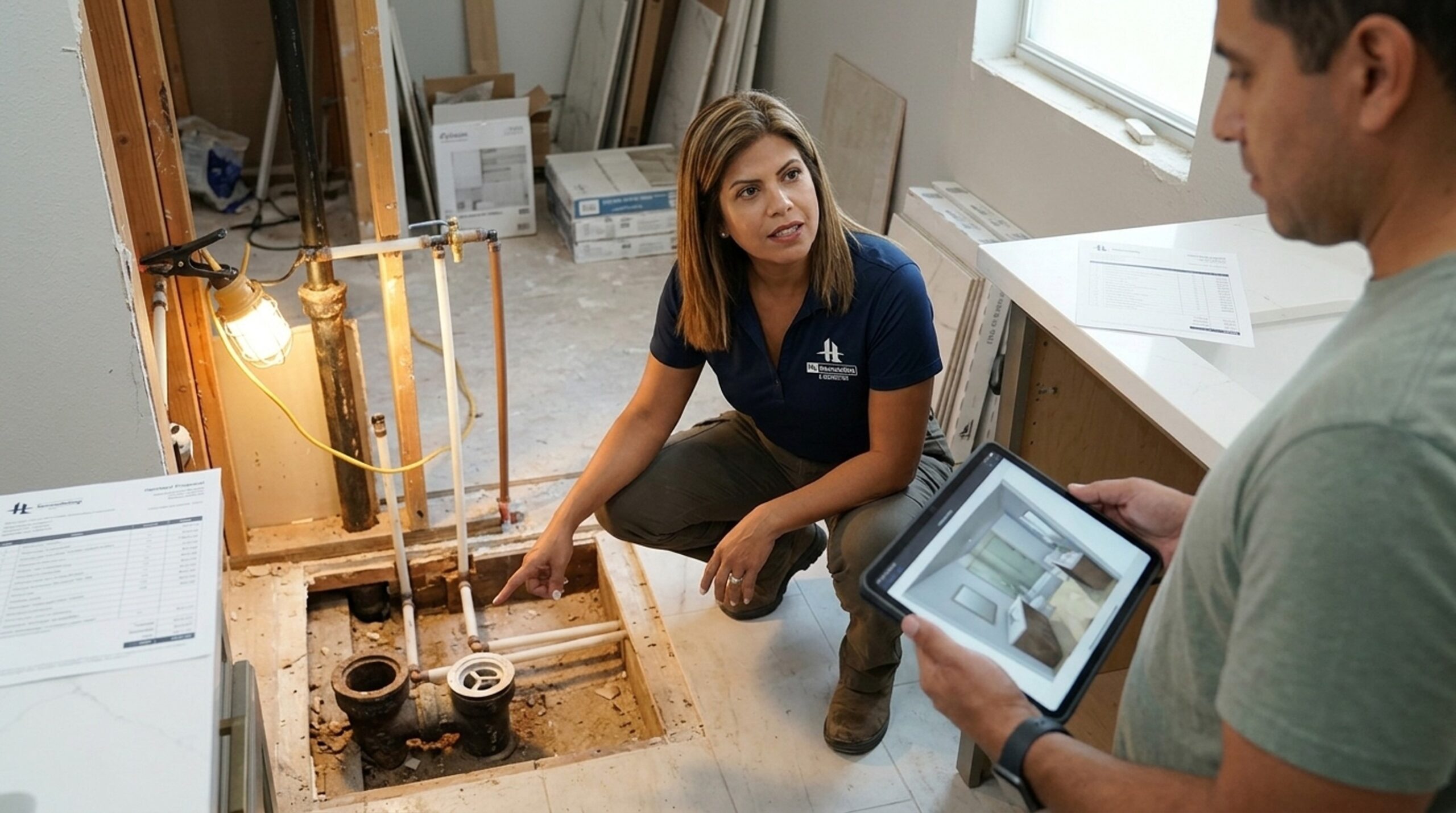
Moving plumbing during a bathroom remodel is worth it when it fixes a real layout problem. It’s not worth it just because it would be nice to have. That’s the short answer. But it also depends on a few facts: your foundation type, how far the fixtures are moving, and what you’re actually trying to fix. If you already have a bathroom remodeling plan and a rendering in hand, this is the question to settle before you set a budget.
If you’re weighing a bathroom remodel in Houston, you’re probably trying to figure out whether moving the toilet, shower, or vanity is worth it. That’s the right question to ask before a plumber starts cutting concrete. It’s the same trade-off we walk homeowners through on every project. The layout decision drives almost everything else in the budget. In fact, it’s usually the biggest swing factor in your final bathroom remodel cost.
Key Takeaways
- Moving plumbing during a bathroom remodel in Houston typically adds $1,500 to $10,000 or more, depending on scope and how far fixtures shift.
- Relocation pays off most when it solves a real layout problem or supports a walk-in shower conversion, combined bathrooms, or a primary suite addition.
- Houston’s slab-on-grade construction and clay soil raise plumbing relocation costs because concrete has to be cut, rerouted, and poured back.
- The City of Houston requires permits and a licensed plumber for any relocated plumbing lines, and permit fees are part of that final number.
- Keeping fixtures in their current spot is almost always the cheaper, faster path for a straightforward renovation or rental turnover.
What Does Moving Plumbing Actually Involve? (Slab vs. Pier-and-Beam in Houston)
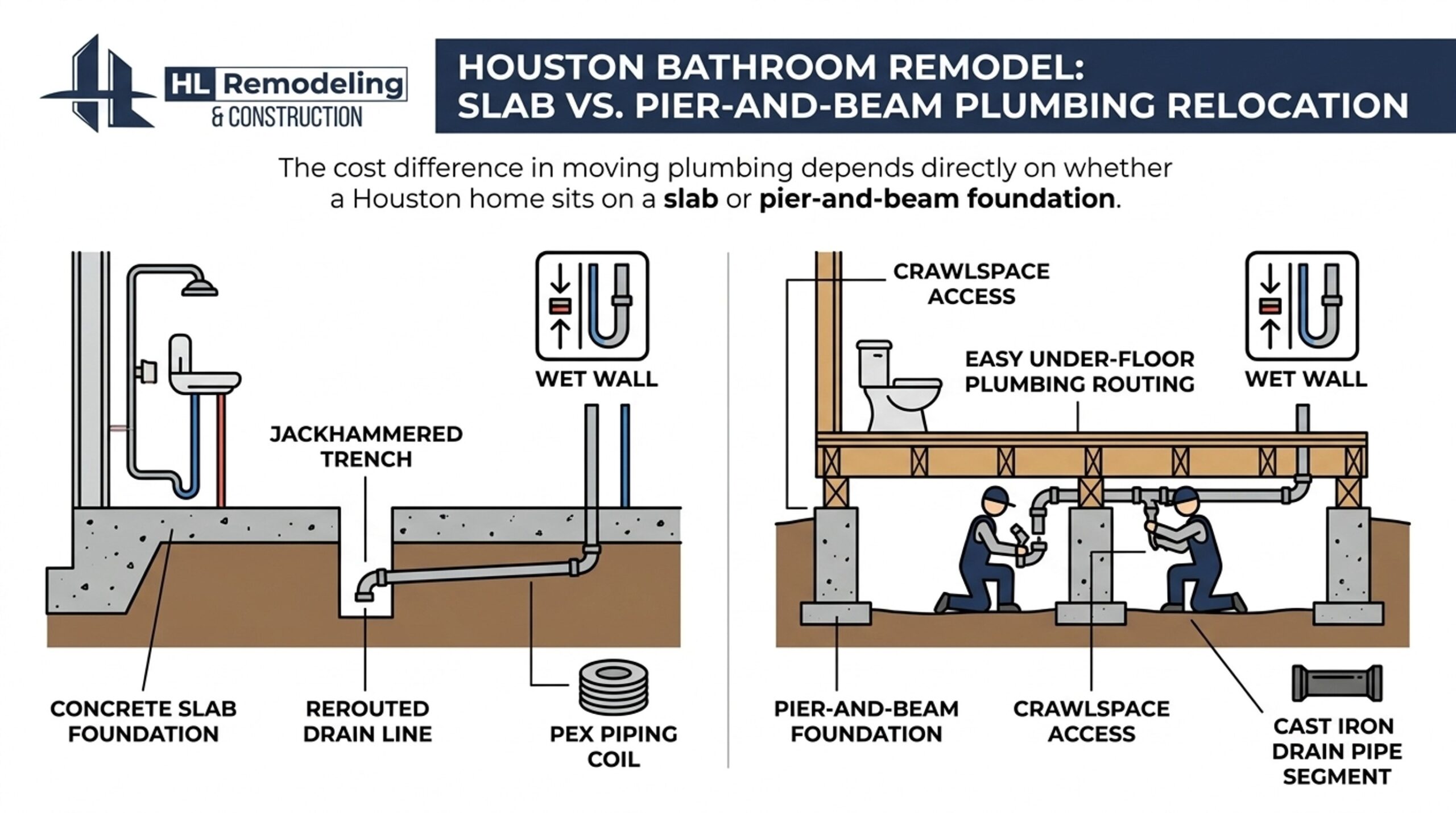
Moving plumbing means relocating the rough-in plumbing. These are the pipes and drain lines that sit below the floor and inside the walls before any fixture goes in. It’s not as simple as unscrewing a toilet and setting it a few feet away. It means opening the floor, rerouting supply and drain lines, and reconnecting everything to the existing vent stack. That way, the system still drains and vents the way it should.
Rough-In Plumbing and the Wet Wall
Most bathrooms are built around a wet wall. This is the one wall that carries the supply lines and drain pipes for every fixture in the room. Everything else depends on how well that wall was plumbed in the first place. Keeping fixtures near the wet wall keeps plumbing runs short and cheap. Move a fixture away from it, though, and a plumber has to extend pipe runs and tie new lines back into that same wet wall correctly. That adds material and labor costs fast.
Slab Foundation vs. Pier-and-Beam: Why It Changes the Math
Here’s the issue for most Houston homeowners: most homes built here since the 1960s sit on a slab foundation. That’s different from pier-and-beam construction, which is more common in older neighborhoods like the Heights and Montrose. On a slab, moving a drain means jackhammering concrete, trenching underneath, and rerouting the line. Then the floor gets poured back before tile goes down. On a pier-and-beam home, a plumber can often work from the crawlspace instead, which makes it easier to plumb new lines without disturbing the finished floor above. That means new lines get plumbed without disturbing the finished floor. It’s faster and less invasive, since there’s no slab to cut through in the first place.
Houston’s clay soil adds another wrinkle. It expands and shrinks with moisture, and that stresses pipe joints under the slab over time. That’s one reason older homes near the inner loop, still running cast iron drain lines, often need those lines fixed anyway. Demolition tends to expose problems that were invisible before. Any plumber working on relocated lines today typically switches to PEX piping. It handles soil movement better than rigid materials, and it’s far easier to run through tight slab trenches.
If demolition on your home turns up something unexpected, it helps to know that’s common, not a sign your project is off the rails. We’ll walk you through exactly what we found and what it means for your budget before any decision gets made.
The Real Cost Breakdown: Bathroom Remodel Costs in Houston by Scope
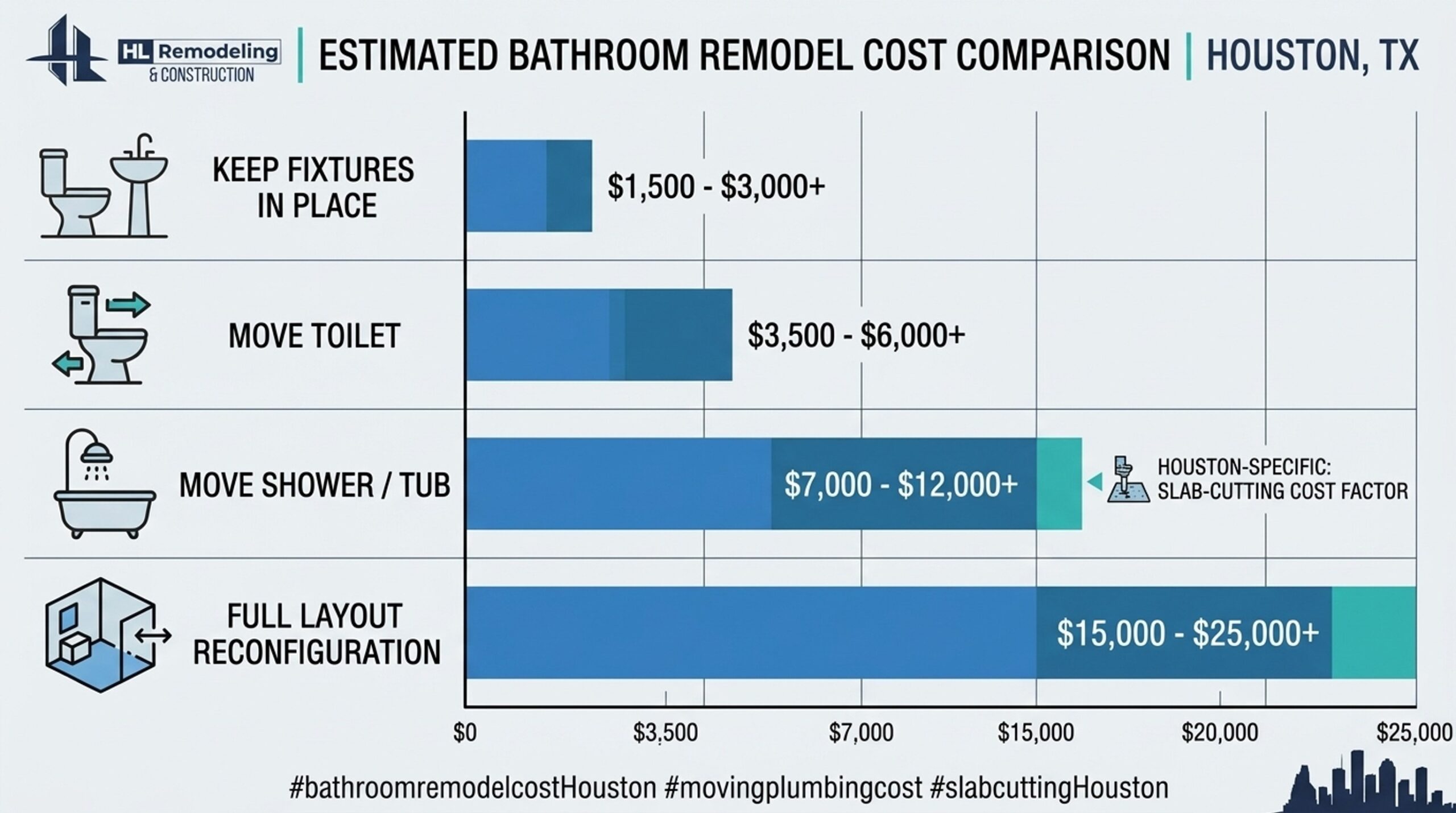
Bathroom remodel costs in Houston vary a lot depending on whether you keep fixtures where they are or move them. Labor costs typically run 30 to 50% of total project cost on a bathroom renovation, and a large share of that labor line goes straight to the plumber who has to plumb every relocated fixture correctly. That share climbs even more when slab work is involved.
Cost Comparison Table: Keeping vs. Moving Fixtures
| Scope | Estimated Added Cost | Notes |
|---|---|---|
| Keeping all fixtures in place | $0 added | Lowest cost, fastest timeline |
| Moving a toilet | $500–$2,500 | Depends on distance from existing drain |
| Moving a shower or tub | $1,500–$5,000 | Slope and venting requirements add complexity |
| Relocating a vanity or faucet line | $300–$1,200 | Usually the cheapest fixture to move |
| Full layout reconfiguration | $5,000–$10,000+ | Multiple fixtures, new wet wall, slab cutting |
A mid-range bathroom remodel in Houston generally runs $150 to $250 per square foot. A high-end remodel with custom tile, an upgraded vanity, and a full layout change can push $300 or more per square foot in Houston’s current material and labor market. Slab-cutting alone (the jackhammering, trenching, and repouring) often adds $2,500 to $7,000 on top of standard fixture and finish costs. It’s usually the biggest reason a bathroom remodel ends up costing more than expected.
Numbers like these are a starting point, not a quote. The real figure for your bathroom depends on your slab, your drain layout, and how far you’re moving things. That’s exactly what a written, itemized proposal is for.
When Moving Plumbing Is Worth It (and When It’s Not)
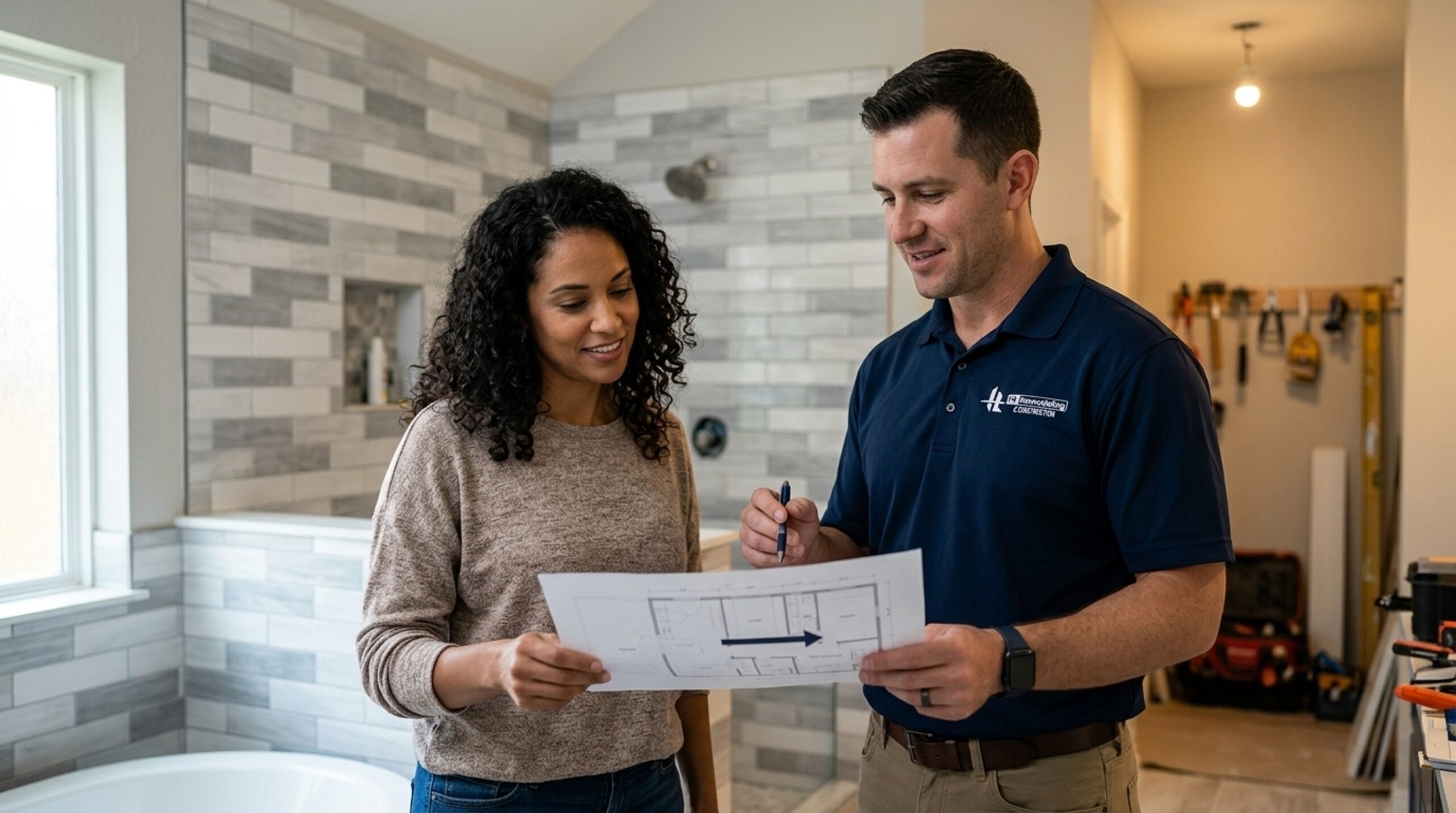
The decision usually comes down to one question: are you solving a real problem, or just chasing a look?
When It’s Worth It: Layout, Conversion, and Resale Scenarios
- Your current layout has a door that hits the vanity, a shower with no real access, or a toilet crammed next to the tub.
- You want a walk-in shower where a tub currently sits. This almost always requires drain relocation and new waterproofing.
- You’re combining two small bathrooms into one working primary bathroom, or adding a bathroom off an existing master bedroom.
- You’re doing a full gut renovation anyway, so the added plumbing cost is small next to the rest of the project.
- You live in a neighborhood like Bellaire, West University, or the Heights, where a well-built primary suite reliably supports higher resale prices.
When It’s Not Worth It: Cosmetic Refreshes and Tight Timelines
A cosmetic refresh, like new tile, a new vanity, or updated fixtures, rarely justifies moving plumbing. The same goes for rental or investment property turnovers, where the goal is a clean, working bathroom rather than a dream layout. Working inside a tight 90-day timeline? Plumbing relocation adds inspection delays that can push your whole project past that window.
If you’re not sure which camp your project falls into, that’s a normal place to be before a consultation, not a sign you need to have it all figured out yourself.
Permits, Codes, and Houston-Specific Plumbing Considerations
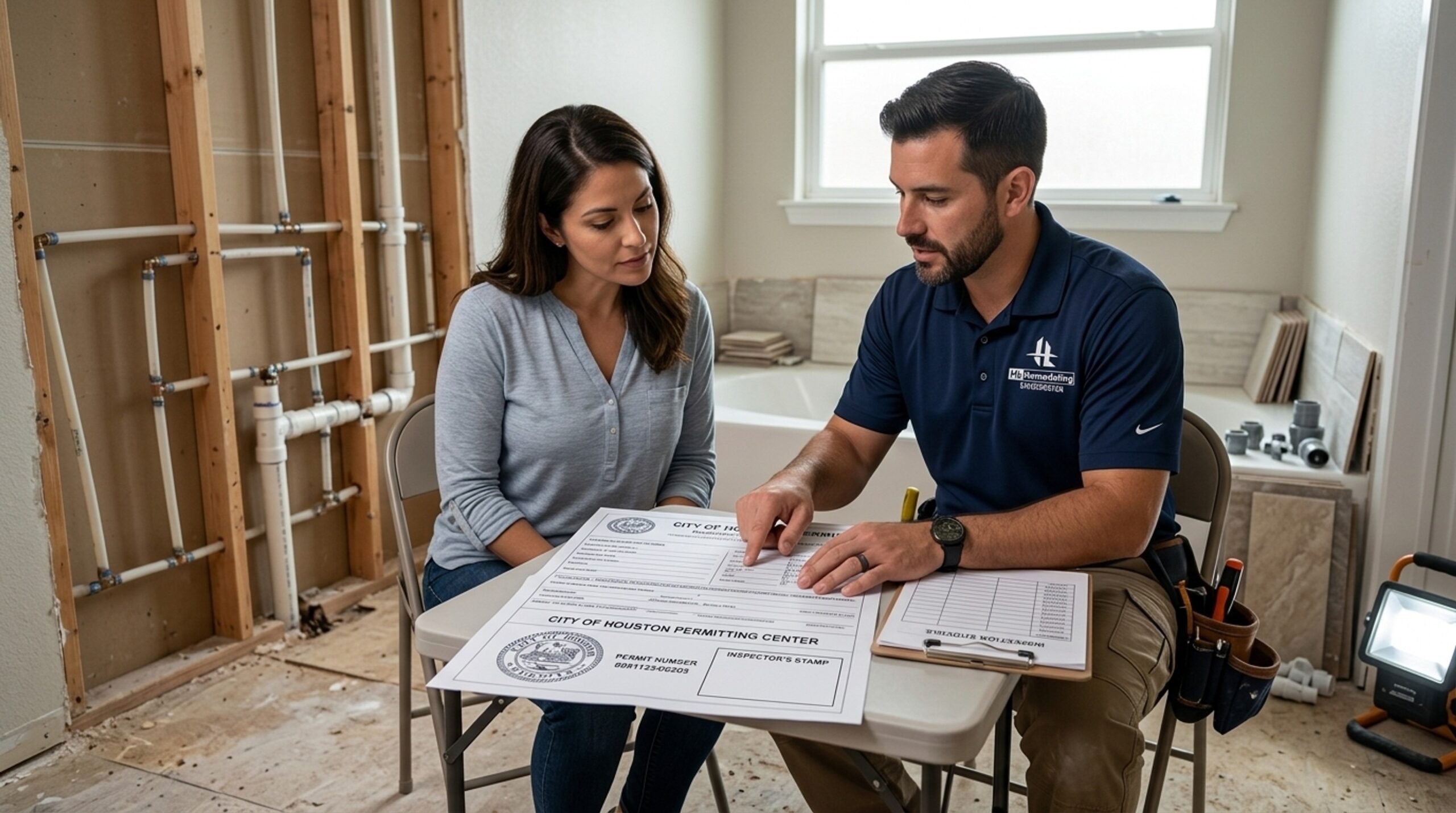
Any relocated plumbing line in Houston requires a permit through the City of Houston Permitting Center. The work itself must follow the International Plumbing Code (IPC). This isn’t optional paperwork. Houston Public Works inspects rough-in plumbing before it gets covered by drywall or flooring. Skipping that step creates real problems if you ever sell the house or file an insurance claim.
The plumber doing the work also needs to be licensed under the Texas State Board of Plumbing Examiners. Only a licensed professional can legally plumb new supply and drain lines in the City of Houston. A general contractor coordinating your remodel should pull the permit and schedule inspections as part of the project. That’s not a step you should have to handle yourself. Outdated plumbing behind older walls sometimes forces layout changes you didn’t plan for once demolition starts. That’s exactly why inspection timing gets built into the schedule instead of treated as an afterthought.
How HL Remodeling Removes the Guesswork on Plumbing Decisions
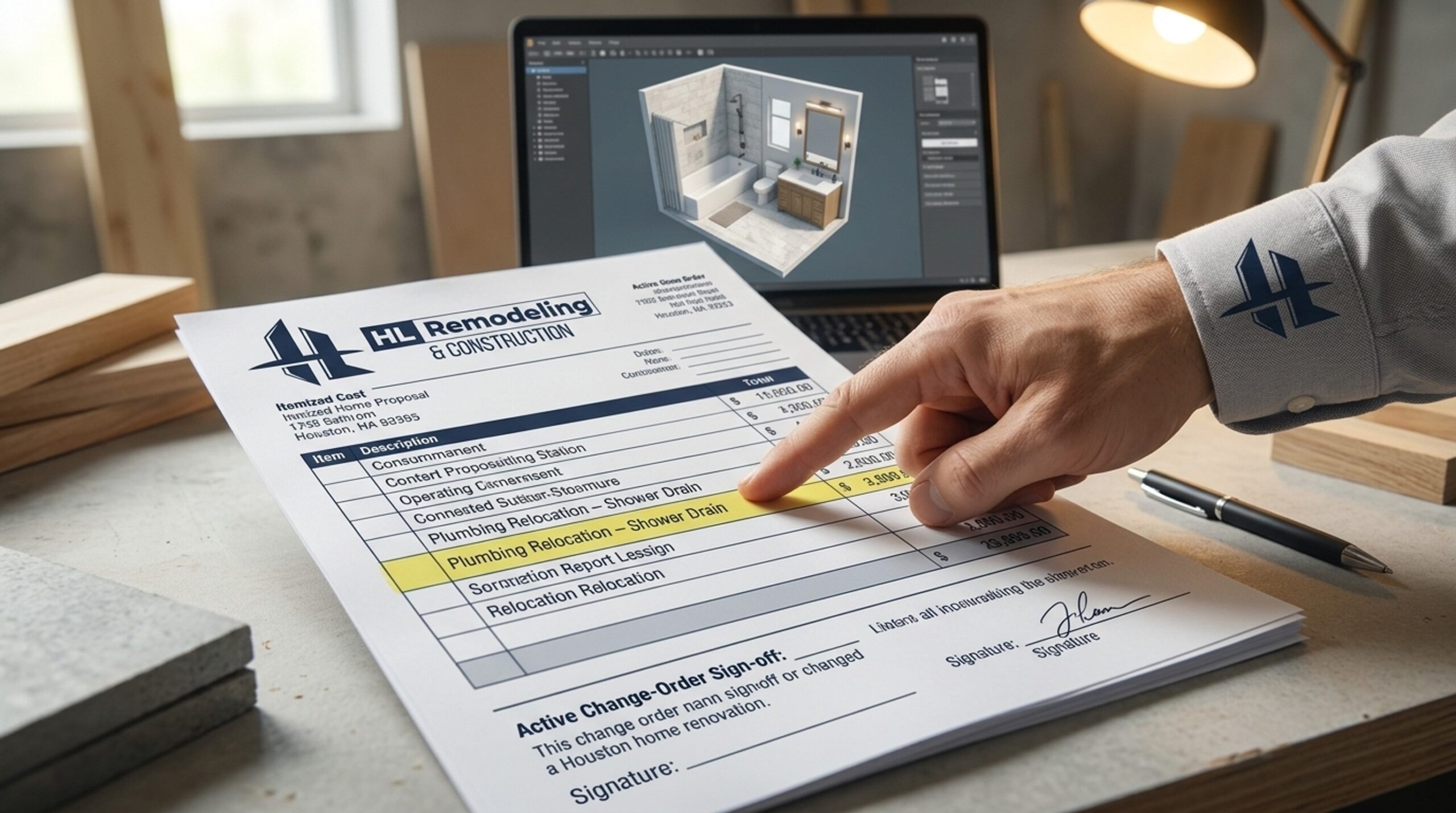
We give every homeowner a written, itemized cost ledger before any wall gets opened. That way, the plumbing relocation line item is clear and specific instead of buried in a vague estimate. You see exactly how it affects your overall bathroom remodel cost. If something changes once demolition starts, our change-order sign-off protocol means you approve the cost before it becomes a surprise invoice.
Houston homeowners planning a remodel also get pre-trade arrival notices. You know exactly when a plumber is on-site cutting slab or running new lines. Our Lifestyle-Fit Design Blueprint renders your new layout in 3D before demo begins, so you can see exactly how the team plans to plumb the new fixtures before a single pipe is touched. That means you decide on the plumbing move with a real picture of the finished bathroom, not a guess. It’s the kind of remodeling process that keeps cost factors visible from the first sketch to the final walkthrough.
None of this requires you to already know the right answer. Most homeowners walk into a first conversation with a rendering, a Pinterest board, or just a bathroom that bugs them every morning. That’s plenty to start with.
Conclusion: Make the Plumbing Decision With Confidence
Moving plumbing during a bathroom remodel is worth the cost when it solves a real layout problem or supports a change that pays off at resale. It’s rarely worth it for a cosmetic update. The right answer for your home depends on your foundation, your goals, and your budget. That’s not something a blog post can settle for you. A Personalized Design Discovery Session gets you a specific answer for your specific house, not a general rule of thumb. If you’d like to talk it through, you can reach us at (346) 837-0007 or request a free consultation, and we’ll walk your layout through it together before you spend a dollar.
FAQ
How much does it cost to move plumbing in a bathroom remodel in Houston?
Moving plumbing in a Houston bathroom remodel typically costs $1,500 to $10,000 or more. The cost depends on which fixtures move and how far. Slab-cutting adds $2,500 to $7,000 on top of standard costs because concrete has to be cut, trenched, and repoured. The exact number depends on your foundation type and the distance between the old and new drain locations. A written, itemized quote is the only reliable way to know your real cost to remodel.
Can you move a toilet drain during a bathroom remodel?
Yes, you can move a toilet drain during a bathroom remodel. It’s one of the more common plumbing relocations we handle. It requires cutting the slab, rerouting the drain line, and confirming the new location still connects properly to the vent stack. A licensed master plumber and a City of Houston permit are both required for this work. Get a site assessment before assuming a move is simple, since vent stack distance can change the cost a lot.
Do you need a permit to move plumbing in Houston?
Yes, you need a permit to move plumbing in Houston, issued through the City of Houston Permitting Center. This applies to any relocated supply or drain line, not just cosmetic fixture swaps. Houston Public Works inspects the work at rough-in and again at final sign-off. Skipping this step can create resale and insurance problems later. It’s worth confirming permit fees are built into your contractor’s proposal.
How much does it cost to move a shower drain?
Moving a shower drain typically costs $1,500 to $5,000. That’s more than moving a toilet in most cases. Showers need precise slope and venting, which adds labor time and complexity to the slab work. Houston’s clay soil and slab construction are part of what pushes this number higher than in markets with basements. A site-specific quote is the only way to know your real number, since distance moved changes the price a lot.
Is it cheaper to keep the same bathroom layout when remodeling?
Yes, keeping the same bathroom layout is almost always cheaper when remodeling. You avoid slab-cutting, rerouting, and the extra inspection time that comes with relocated plumbing lines. That said, cheaper isn’t always better if your current layout doesn’t actually work for how you live. Weigh the layout changes against the cost savings with a contractor before deciding.
What is the average cost to relocate a bathroom in Houston?
The average cost to relocate an entire bathroom in Houston runs $10,000 to $20,000 or more. That’s well beyond the cost of moving a single fixture. This scope usually involves a new wet wall, full plumbing lines, and often new electrical as well. Foundation type changes this number a lot, since slab work costs more than pier-and-beam. A detailed walkthrough with a general contractor gives you a realistic total project cost before you commit to a layout.