
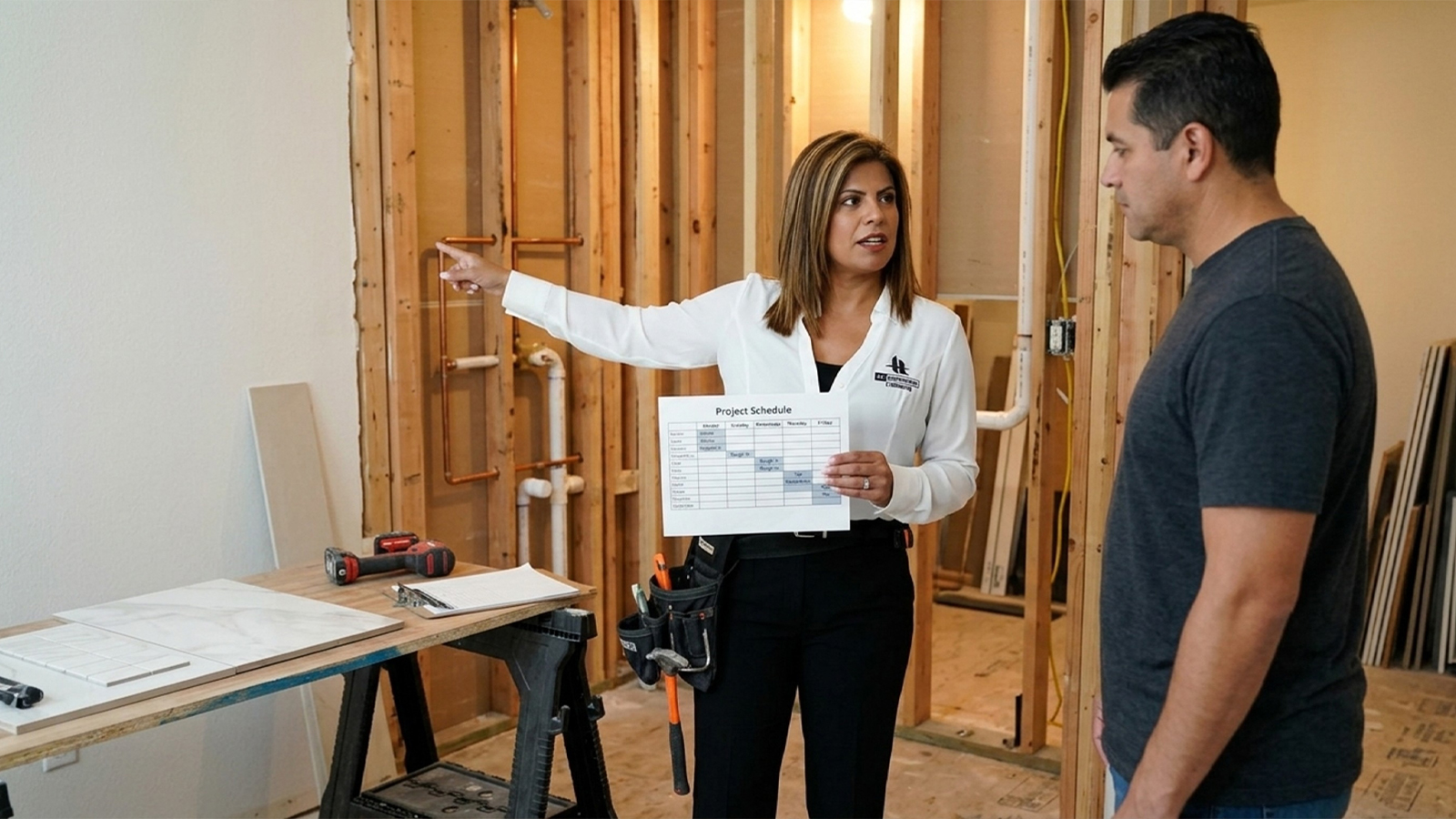
You signed the contract. The hard decisions about design and budget are behind you. Now comes the part nobody explains well: what actually happens inside your house, week by week, until you’re brushing your teeth in a finished space again.
This guide walks through the full bathroom remodeling process from start to finish, whether your project calls for our bathroom remodeling services on a full gut job or a smaller update. Either way, the steps follow a set order, and knowing that order helps you plan around the mess instead of getting caught off guard. Houston homes, especially older ones in the Heights or Oak Forest, tend to reveal a few extra steps along the way. Here’s why.
Key Takeaways
- A bathroom remodel moves through four gated stages in a fixed order, and each stage is blocked until the one before it clears — which is why sequence, not crew speed, sets your finish date.
- Every bathroom remodel follows the same core steps: demolition, rough-in plumbing and electrical work, waterproofing and tile, then fixtures and final details.
- The rough-in inspection is the biggest scheduling gate in the whole project. Walls cannot close until the city signs off, and the plumb lines behind them have to check out first.
- Tile and waterproofing take longer than most homeowners expect. Membrane cure times and slope rules can’t be rushed without risking a leak later.
- Knowing what’s normal at each stage, like dust, noise, and a few open-wall days, keeps you from worrying over things that aren’t actually problems.
Demolition Phase and What’s Behind the Walls
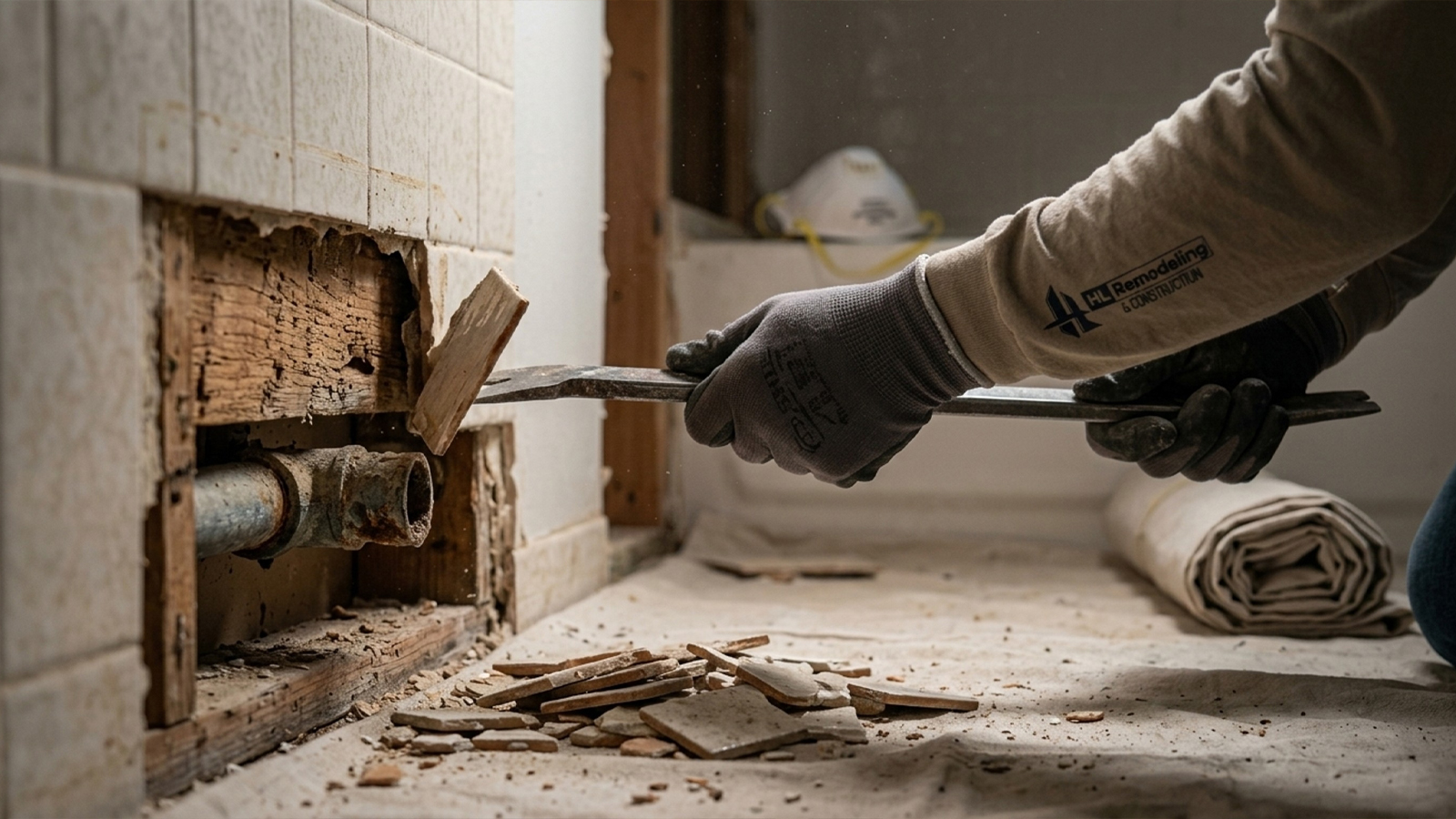
Demolition begins the moment your crew arrives. It’s loud, it’s messy, and it’s often the shortest part of the whole job. For a standard bathroom, demolition usually takes 2 to 4 days. A full gut down to the studs and subfloor, or a project with layout changes, can stretch closer to a week.
What Demolition Actually Removes
Crews strip out the old tub or walk-in shower, tile, vanity, toilet, and any flooring down to the subfloor. In older Houston homes, that subfloor sometimes turns out to be wood that’s soaked up decades of moisture, not the concrete slab a homeowner assumed was underneath.
When Demo Reveals a Problem, and What Happens Next
Opening the walls is when hidden damage shows up. Houston’s humidity and the age of a lot of local homes mean cast-iron or galvanized plumbing and soft subfloor are common finds once demolition begins. That kind of damage needs a licensed plumbing check before work continues, since a vent stack tied into rotted framing isn’t something a general look can safely approve.
This is normal, not a red flag. A general contractor who’s done this before, like us at HL Remodeling, will have already built room into your budget for this kind of surprise, so a bad subfloor doesn’t derail the whole renovation. For a sense of how a discovery like this affects your overall timeline, our guide on how long a Houston bathroom remodel really takes breaks down what’s typical and what’s a genuine outlier.
Rough-In: Plumbing and Electrical Work Before the Walls Close
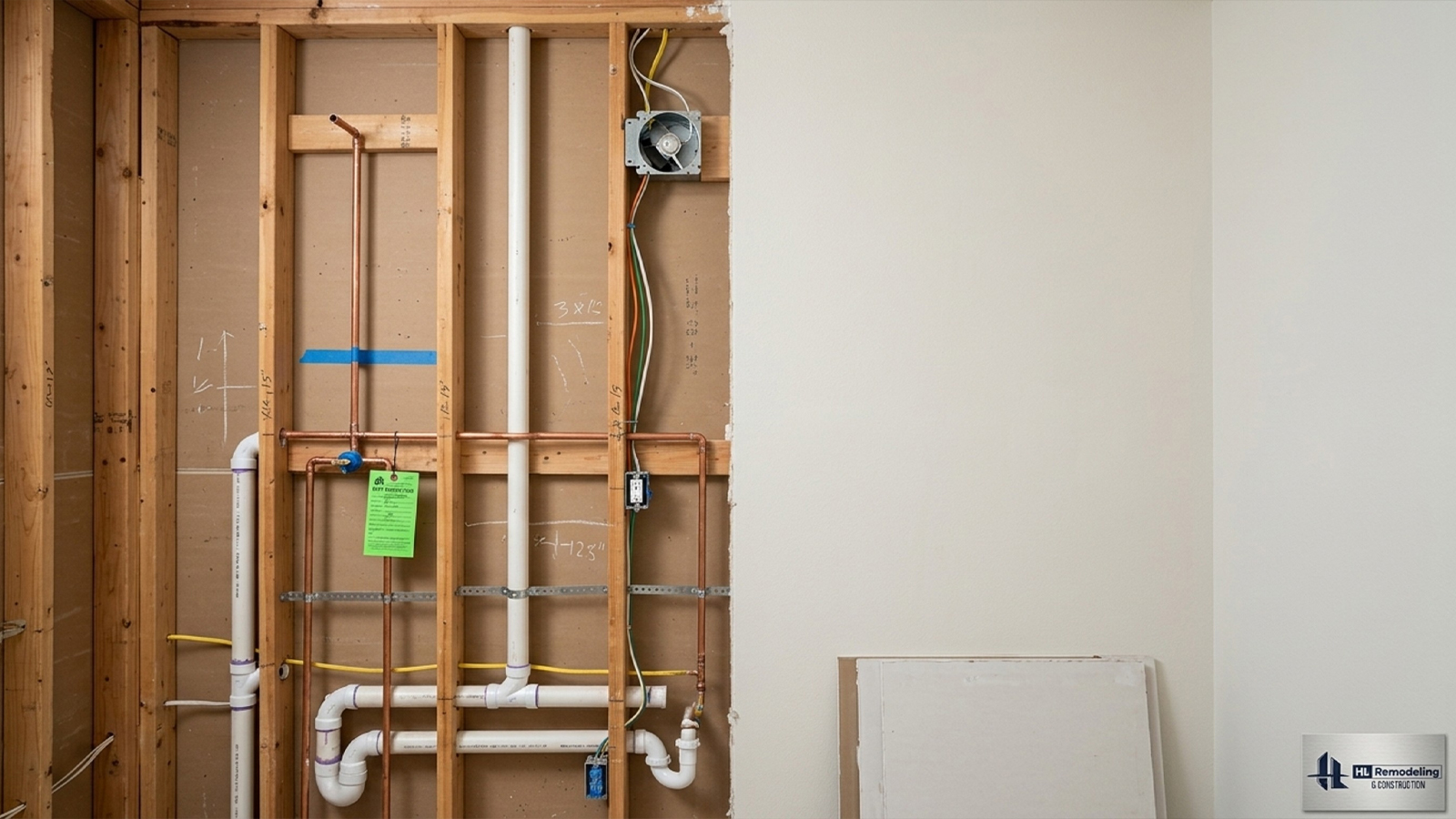
Once demolition clears the space, rough-in begins. This is where plumbing and electrical work gets set before anything gets covered up, and it’s usually the longest stretch of the early timeline.
What Gets Installed During Rough-In
Plumbers move or extend supply and drain lines, especially for a tub-to-shower conversion or a toilet shifted a few feet. A licensed plumber confirms that vent stacks and drain slopes meet code, and that every supply line runs plumb before anything gets covered up. Electricians run new circuits, wire the exhaust fan, and add outlets or lighting to match your design. Layout changes, like widening a doorway or shifting a vanity to the opposite wall, add time here because both plumbing and electrical systems have to be rerouted, not just extended.
Why the Rough-In Inspection Controls Your Whole Schedule
Once rough plumbing and electrical work is finished, the city has to inspect and approve it before walls can be closed. Inspectors check that pipes sit plumb and level, since even a slightly off line can affect drainage down the road. In Houston, we’ve seen permit review for a straightforward bathroom renovation typically takes 3 to 10 business days, and the city allows up to 45 days by code for more complex reviews. If that inspection gets missed or fails, the project stalls until it can be rescheduled, adding days you didn’t plan for.
| Phase | Typical Duration | What Gates the Next Step |
|---|---|---|
| Demolition | 2-4 days (up to 1 week for full gut) | Discovery of subfloor or plumbing damage |
| Rough-in plumbing and electrical | About 1 week, plus inspection wait | City rough-in inspection approval |
| Waterproofing and tile | 1-2 weeks | Membrane cure time and grout cure |
| Fixtures and final details | About 1 week | Material lead times, correct install order |
This one inspection is the biggest scheduling gate in the entire remodel, which is why setting it up early matters more than almost anything else in the process. For the full breakdown of who applies for what and when, our permits guide for Houston bathroom remodels covers exactly who handles each piece.
Waterproofing and Tile Installation
Once the rough-in is done and inspected, your new bathroom takes shape fast, at least visually. Underneath that visible progress, waterproofing and tile work move slower than people expect, and there’s a good reason for that.
How Waterproofing Actually Works
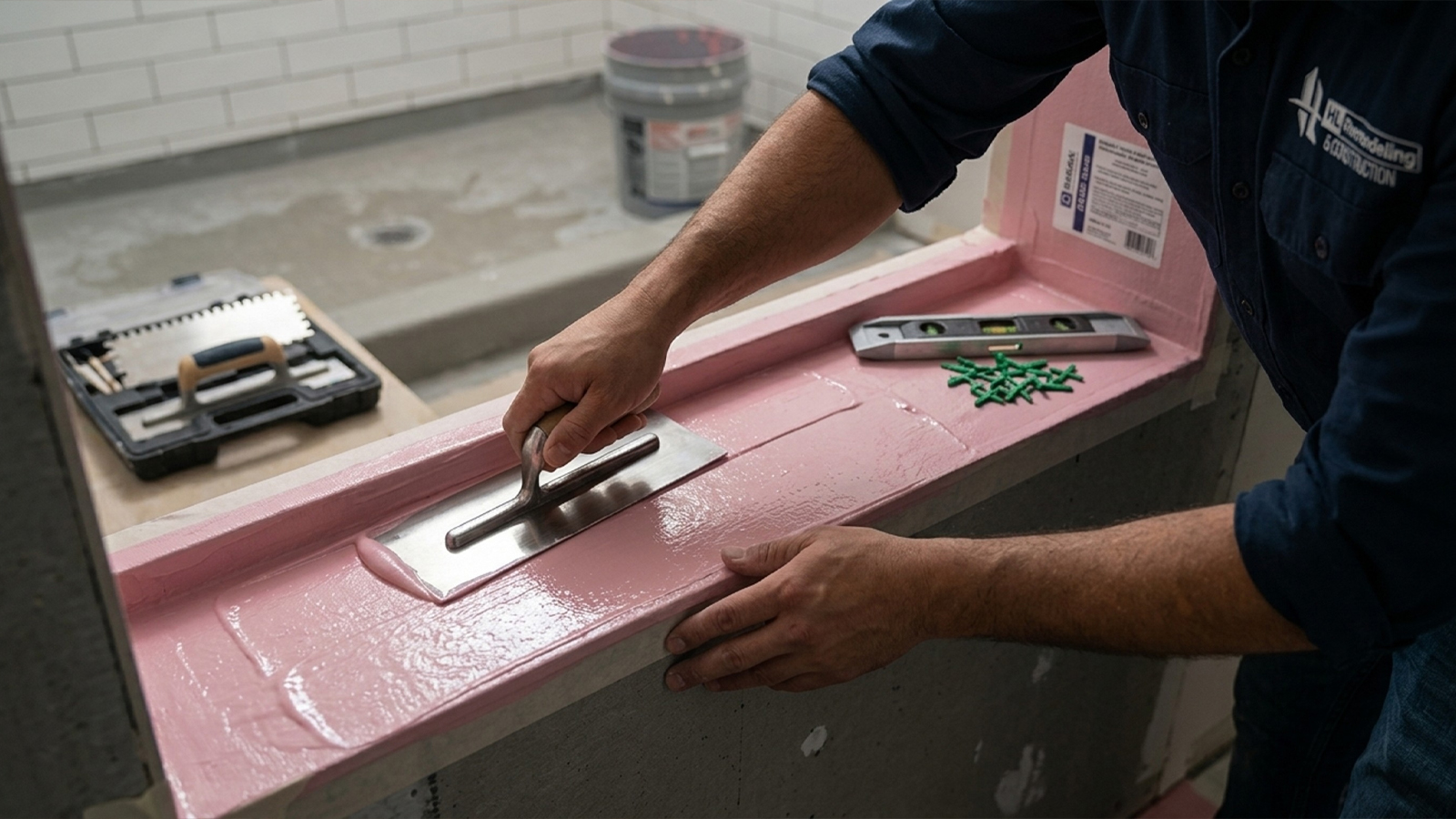
Crews install cement board over the studs, checking that each panel sits plumb against the framing. Then they apply a waterproofing membrane in the shower and tub area before a single tile goes down. That membrane needs to cure fully, and the surface needs the right slope toward the drain, before tile setting begins. A properly waterproof shower pan is one of the most important details in the entire bathroom renovation, and it’s the one layer you can’t easily inspect once tile goes down.
Houston’s humidity, which sits above 70% for much of the year, puts extra stress on grout and membranes through constant expansion and contraction between air-conditioned rooms and steamy showers. Rushing this step doesn’t cause problems right away. It shows up as a leak six months later, when fixing it means tearing out a bathroom that already looked finished.
Why Tile Takes Longer Than You’d Guess
Floor tile and shower tile installation typically take 1 to 2 weeks total, including setting time, grout curing, and sealant work. Setting new tile against a wall that isn’t plumb causes visible lippage and uneven grout lines, so crews often spend extra time confirming walls are true before the first piece goes up. Adding heated floors stretches that timeline a bit more because of the extra wiring and testing involved. Once tile is complete, grout needs its own cure time before the space can handle regular foot traffic or water.
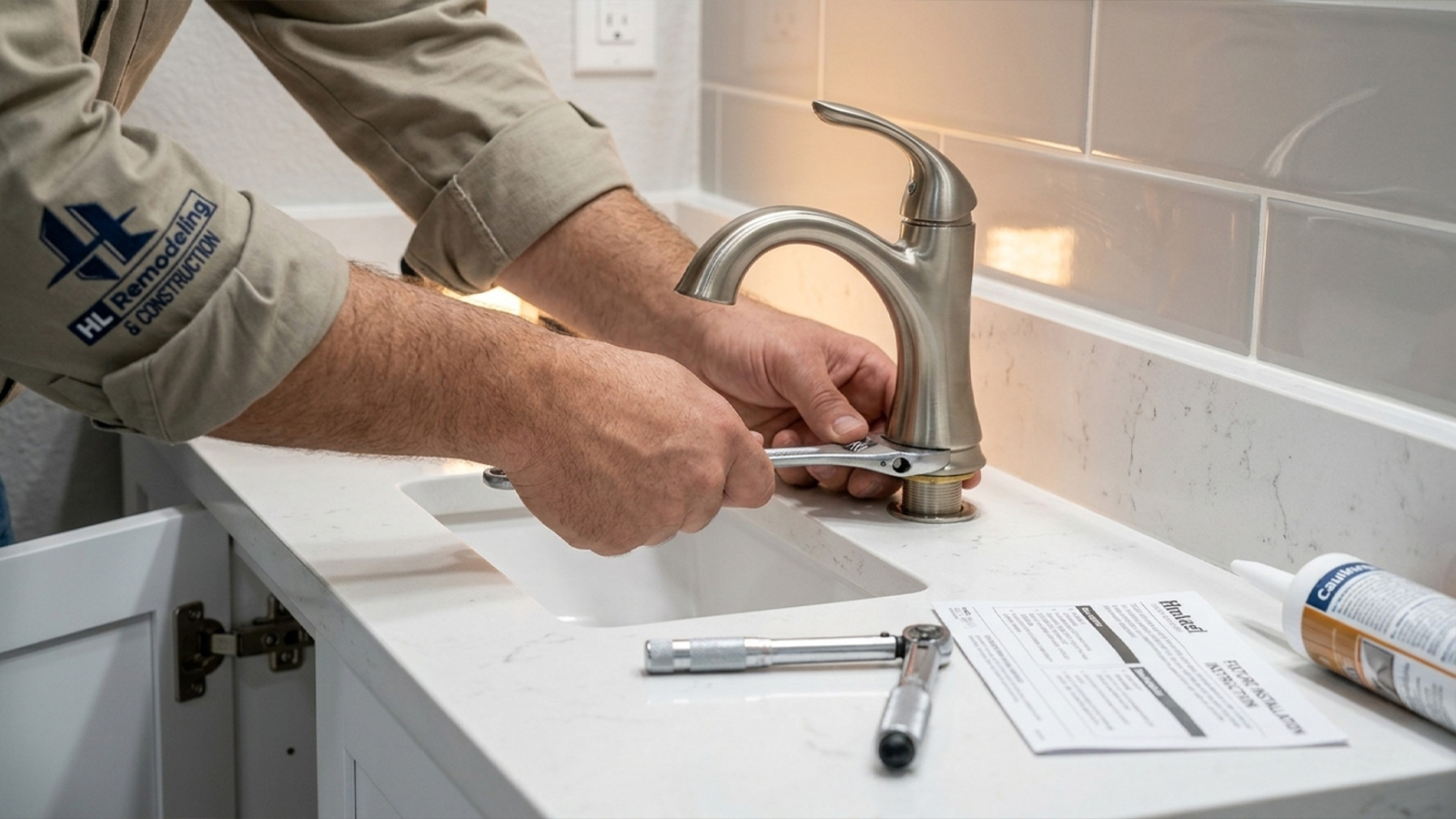
Fixtures, Cabinetry, and Final Details
This is the stage where the bathroom stops looking like a job site and starts looking like a room again. Fixture and cabinetry installation happens in a specific order, and getting that order wrong is one of the most common causes of avoidable delay.
Install Order That Prevents Rework
Vanity and cabinetry go in first, followed by countertops, which often need to be measured on-site before they’re built. Then comes the toilet, faucets, and other new fixtures, with a plumber connecting each one back into the rough-in lines set weeks earlier. The glass enclosure goes in last, after grout has fully cured, and installers confirm the enclosure track is plumb so the doors seal and swing correctly. Installing a glass enclosure or flooring out of order commonly adds 1 to 2 weeks of avoidable rework, because trades end up removing finished work to reach something installed too early.
- Vanity, cabinetry, and any double vanity setup go in first
- Countertops are measured and installed once cabinetry is anchored
- Toilet, faucets, and new fixtures are connected next
- Frameless glass enclosure goes in last, after grout cures
The Final Touches That Make It Livable
Grab bars, towel bars, and any custom storage go in during this final week. Sealant goes around seams and fixtures to keep every joint watertight for the long run, and every fixture connection gets a final check to confirm there are no slow drips before the project is called finished. If you picked out specialty tile or custom cabinetry, order those early. Lead times in the Houston market can run several weeks for specialty materials, and a late order at this stage stalls the whole final push.
One family in Spring Branch thought their renovation was purely cosmetic until demolition uncovered a failing cast-iron drain line under the tub. Because their contractor had flagged that possibility during planning, extra budget covered the fix without pushing the project past the agreed schedule.
If you’re wondering how to keep your household running while all this happens around one bathroom, our guide on preparing your home and family for remodel disruption covers what to plan for before crews ever show up.
Conclusion: Keeping Your Bathroom Transformation on Schedule
Understanding this order, demolition, rough-in, waterproofing and tile, then fixtures and final details, is what turns a stressful bathroom renovation into a predictable one. You now know what dust and noise are normal, why the rough-in inspection matters more than almost any other single day, and why rushed tile work causes problems that don’t show up until later. For a broader look at how these pieces fit into the full project, our Bathroom Remodeling in Houston guide covers the design and budgeting decisions that shape this timeline before demo ever starts.
Knowing the sequence tells you what to expect in your home over the coming weeks. Keeping that sequence on track, with your actual permits, your actual trades, and your actual house, is a different job entirely, and it’s where a coordinated project team earns its keep. If you’d like to talk through what your specific timeline might look like, we’re happy to walk through it with you. Call us at (346) 837-0007 or request a free consultation, no pressure, just a straight answer about what your project would realistically involve.
FAQ – Bathroom Renovation Timeline
What is the order of operations in a bathroom remodel?
Every bathroom remodel follows the same four steps: demolition, rough-in plumbing and electrical work, waterproofing and tile, then fixtures and final details. Each step depends on the one before it, which is why skipping ahead usually backfires. A general contractor’s main job during this stretch is making sure trades show up in the right order so nothing has to be redone.
Will I have a working bathroom during the remodel?
Most homeowners lose full use of the bathroom being remodeled for the entire length of active construction. Our guide on how long a Houston bathroom remodel really takes breaks that window down by scope. If it’s your only bathroom, that disruption is worth planning around ahead of time, whether that means a portable setup or coordinating with a neighbor. Homes with more than one bathroom can usually just shift daily routines to the other one.
What happens at the final walkthrough?
The final walkthrough is when you and your project lead review the finished bathroom together, checking every fixture, door, and drawer for proper function. It typically includes a punch list of small items, like a sticky drawer or a caulk line that needs touching up, before final sign-off. A thorough walkthrough catches small issues now, before they turn into repair calls a year later.
Do I need a permit for a bathroom remodel in Houston?
Most Houston bathroom remodels that involve plumbing or electrical changes require permits from the city. Cosmetic-only updates, like swapping a vanity or retiling without touching anything behind the walls, sometimes don’t. Permit and inspection scheduling is exactly the kind of task most homeowners haven’t handled before, which is why a general contractor typically takes care of it directly.
Why does tile installation take so long compared to other phases?
Tile installation takes longer because the waterproofing membrane underneath it needs full cure time, and the surface has to be sloped the right way before setting begins. Rushing that step is the most common reason a bathroom that looked finished develops a leak months later. Grout curing adds even more time on top of the actual tile setting.
What’s involved in a tub-to-shower conversion timeline-wise?
A tub-to-shower conversion typically adds time to the rough-in and waterproofing steps, because a licensed plumber has to move the plumbing and the waterproofing plan changes shape entirely. It’s a case where sequencing mistakes are especially costly, since a poorly waterproofed shower pan is far more likely to leak than a like-for-like tub swap. Budgeting a little extra time here usually pays off.