
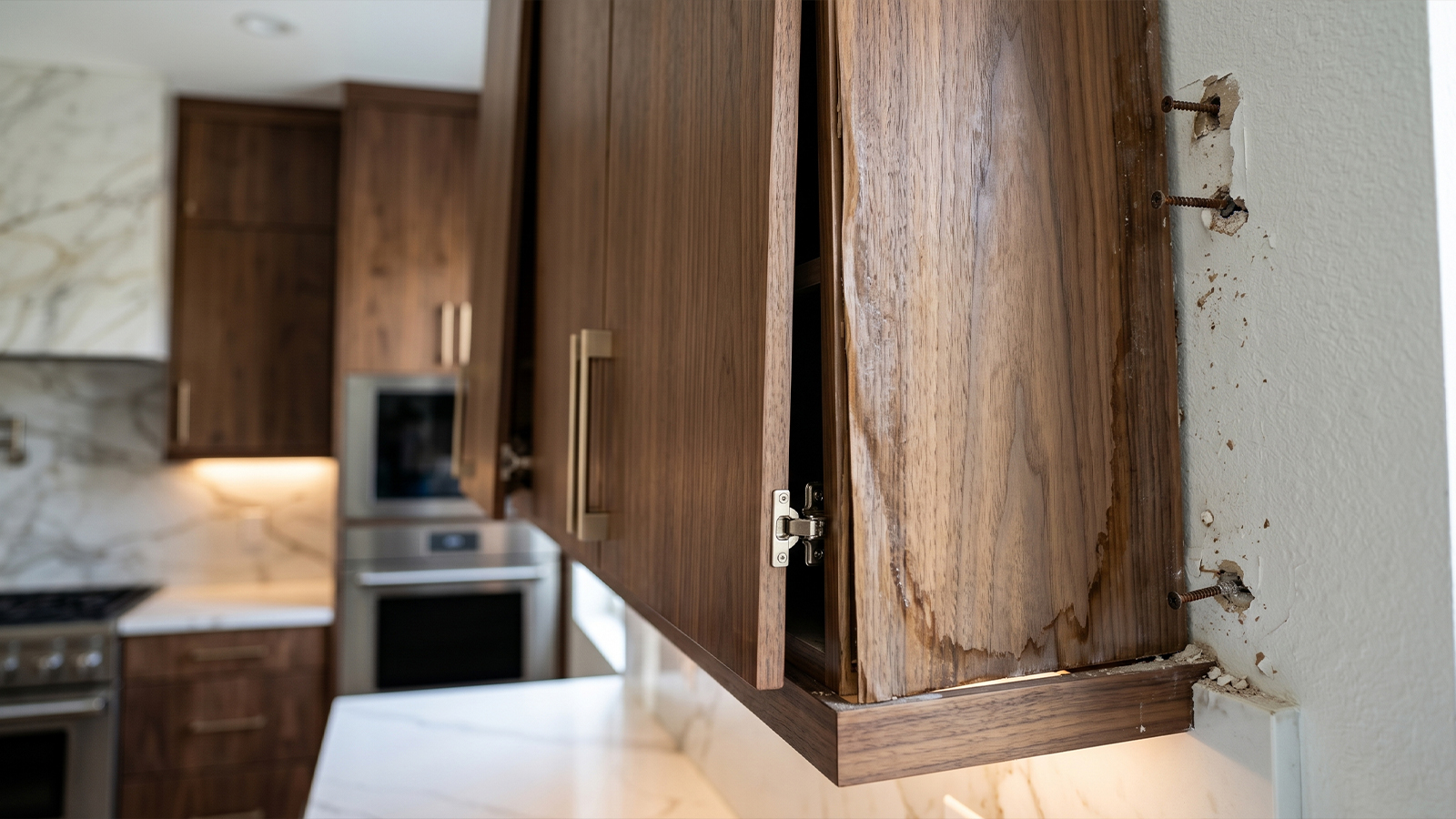
That cabinet door you keep pushing shut — the one that springs back open, or drags and catches before it finally holds — is not a quirk of an old house. It is what Houston’s climate does to kitchens that were never designed to handle it. For homeowners in Briargrove Park, it is also one of the most consistent signs that kitchen remodeling has moved from a someday project to a necessary one. In homes built between the mid-1960s and early 1970s — which describes most of Briargrove Park’s housing stock — the answer is rarely a simple hinge tightening.
Key Takeaways
- Houston’s clay soil causes ongoing foundation movement that shifts cabinet installations out of plumb, creating binding doors that look like warping but are structurally distinct
- Briargrove Park homes built between the mid-1960s and early 1970s frequently have original or early-renovation cabinetry that is highly reactive to Houston’s moisture cycles
- A sticking door may need only a hinge adjustment — but soft spots, delamination, or multiple failing cabinets signal a systemic problem
- Improving ventilation and adding a dehumidifier can slow moisture damage but cannot reverse it once the cabinet box is compromised
- Knowing when to call a Houston kitchen remodeling contractor rather than continuing to patch is the most cost-effective decision a Briargrove Park homeowner can make
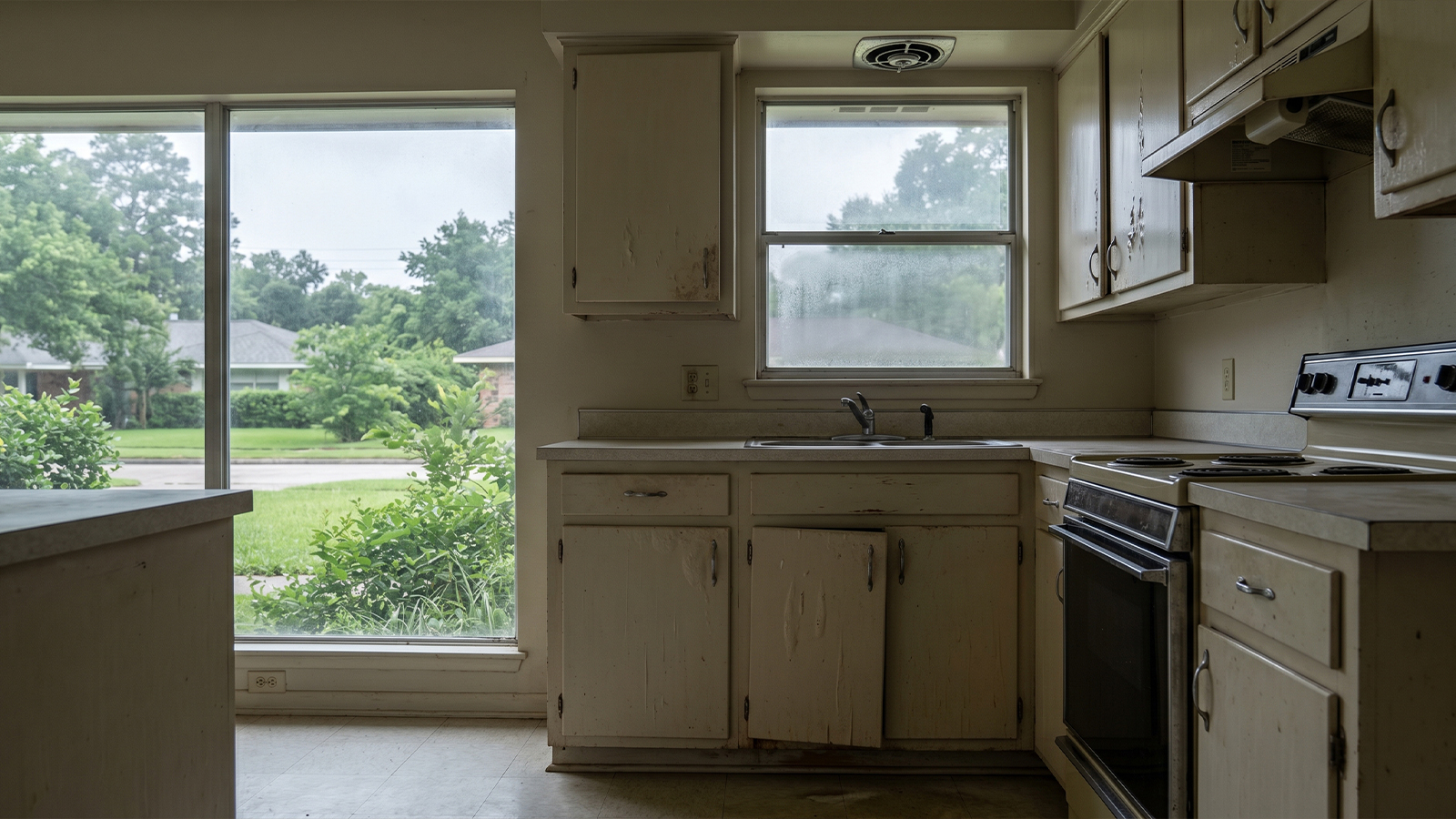
Why Houston Kitchen Cabinets Fail: Four Causes Specific to This City
Houston’s subtropical climate is relentless. From May through September, Houston’s heat and seasonal rainfall create constant moisture cycles that solid wood absorbs and releases repeatedly. Every cycle stresses cabinet joints, swells door stiles, and pulls finish away from substrate. Over fifty or sixty years, the cumulative effect in an older kitchen is not subtle.
The second cause is less obvious and more often misdiagnosed. Houston’s clay soil expands and contracts with rainfall and drought, producing subtle but ongoing movement in the slab beneath your home. That movement transfers up through wall framing and shifts the surfaces your cabinets are mounted to. In homes we have worked on just off Briargrove Drive, along Bering Drive, and in the Briargrove/Briarmeadow corridor just west of the Galleria, we regularly find cabinet bases that feel solid from the outside but are completely compromised at the toe kick — binding doors caused not by wood movement but by walls that drifted out of plumb over decades. We assess this before demo begins on every kitchen remodel in this corridor, because new cabinet installation on an unchecked wall will produce the same problem within a few years.
The third cause is ventilation failure. Most kitchens in these 1960s and 1970s builds were designed with minimal exhaust capacity. Steam from cooking and dishwasher cycles collects directly against cabinet surfaces with nowhere to go, cycling moisture into the wood week after week.
Fourth is hidden water. Slow leaks from dishwasher supply lines, sink drains, or aging plumbing connections saturate cabinet bases and subfloor from below. In an older kitchen where the original plumbing has never been updated, these leaks can weep for months before anyone notices.
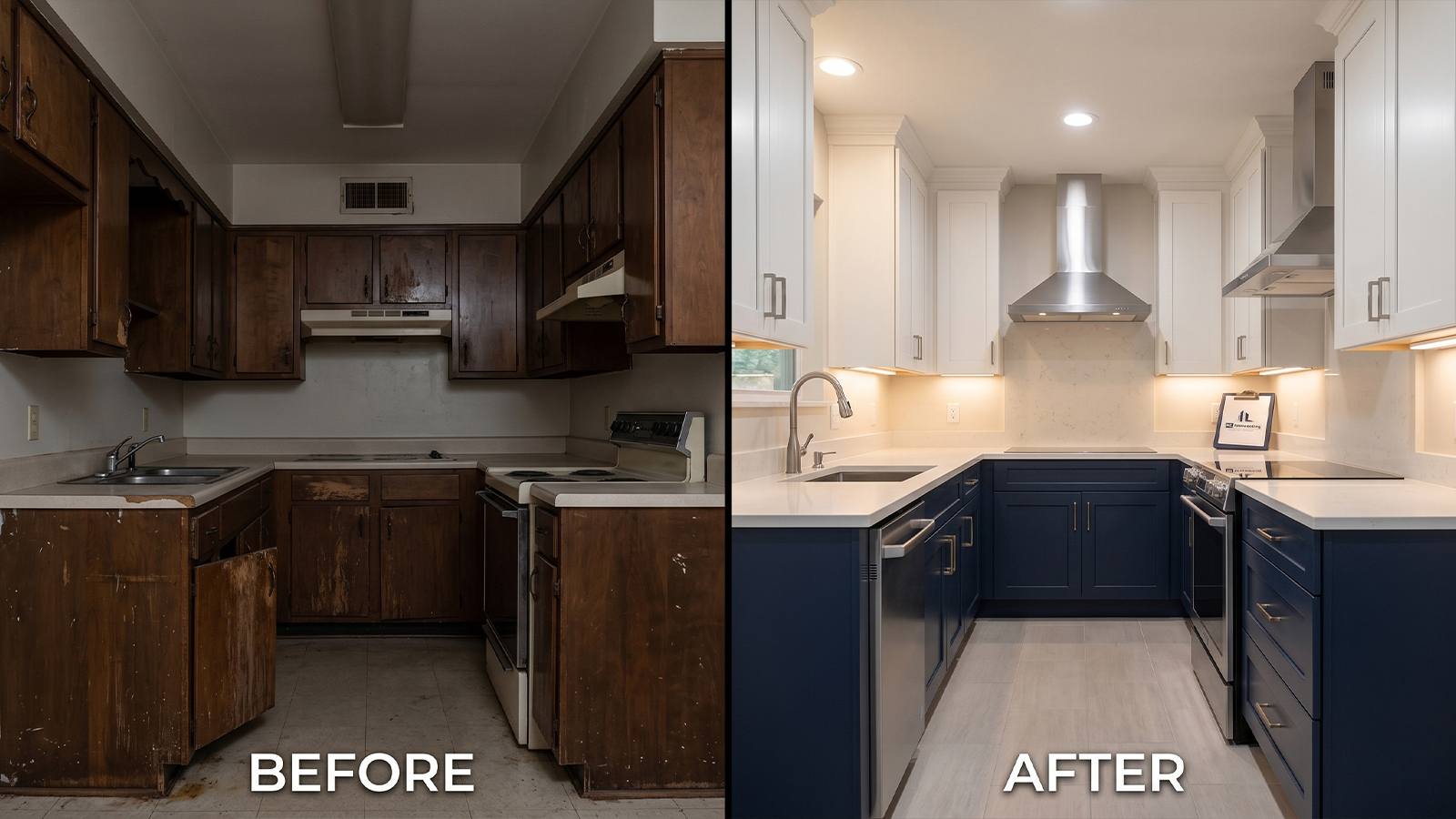
What We See in Houston Homes Before a Kitchen Remodel Begins
We regularly find that homes in the immediate Briargrove Park corridor — particularly those on streets running between Westheimer Road and the bayou — have never had their exhaust fan verified as exterior-venting. The duct terminates inside the wall cavity, recirculating steam back into the kitchen every time the range is used. That single design flaw accelerates cabinet deterioration faster than climate exposure alone.
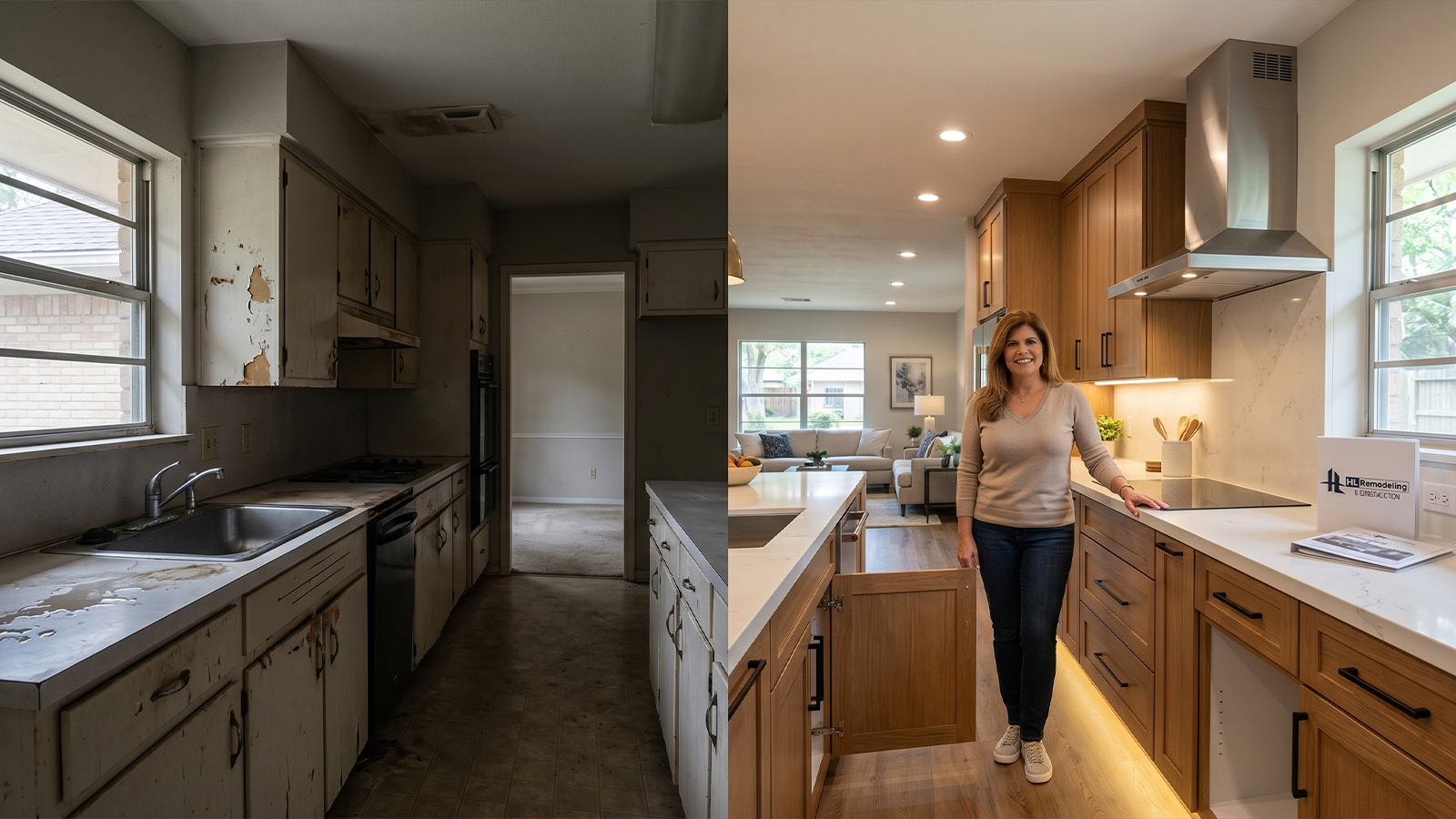
The original layouts here follow a consistent pattern: a galley-style kitchen along the north wall, a compartmentalized footprint disconnected from the living room, minimal window placement for cross-ventilation. These homes were built well. They just were not designed for the way Houston families live and entertain today. A kitchen remodel in this neighborhood is as much about correcting a sixty-year-old spatial design problem as it is about addressing damage.
The Briargrove Park Architectural Control Committee and Your Kitchen Remodel in Houston, TX
The Briargrove Park Property Owners, Inc. maintains an active Architectural Control Committee that reviews exterior modifications, structural additions, and changes visible from the street. For most interior kitchen work — cabinet replacement, countertop installation, plumbing updates — ACC review is not required. But if your project involves removing a wall that affects an exterior opening, adding a window for ventilation, or any structural change adjacent to the home’s exterior, committee review applies before construction begins.
We have navigated the ACC requirements on multiple remodeling projects in this neighborhood. Knowing what requires review before pulling a Houston building permit saves weeks of delay, and a contractor unfamiliar with this process can stall your project before the first cabinet is touched. Local experience in Briargrove Park specifically makes a practical difference in how a renovation runs.
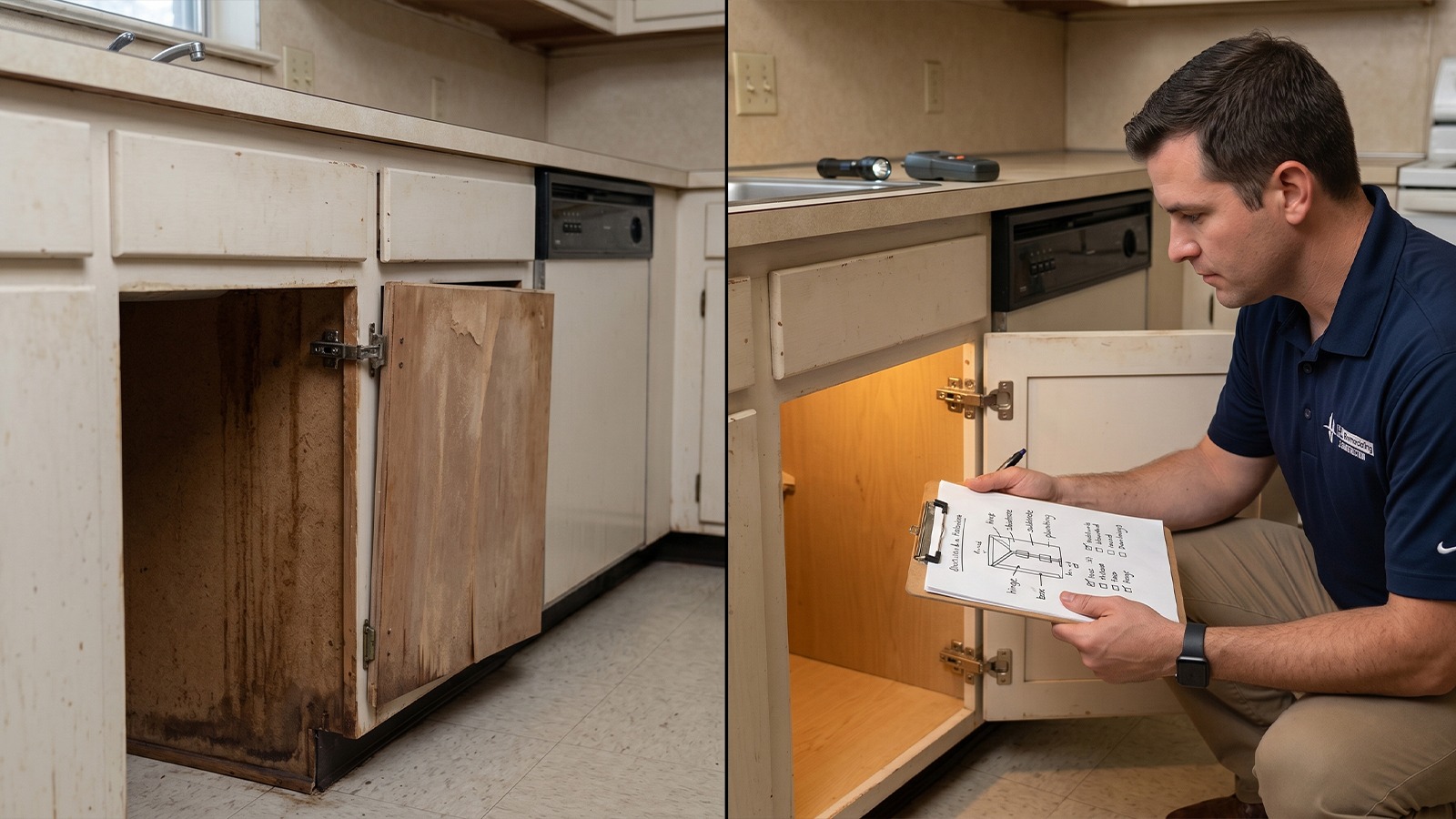
How to Triage the Damage Before Calling a Contractor
Start inside the cabinets. Open the base units under your sink and press along the bottom panel and toe kick. Soft, spongy, or discolored wood signals water damage beyond climate exposure. A musty smell with no visible stain often means moisture is sitting somewhere out of sight.
If the interior feels sound, check the hinges. Hinge screws work loose over decades in older homes, and what feels like warping is sometimes a hinge that needs tightening or replacement. Isolated to one door, that is a legitimate DIY fix. After that, test your exhaust fan by running your hand near the exterior termination while it operates. No airflow means the duct may be blocked or recirculating — worth correcting regardless of cabinet condition.
Before calling anyone, photograph the affected doors, measure how far they bow from the frame, and note how many cabinets are involved. That information helps a contractor give you an accurate first read before setting foot in your home.
| Condition Observed | Likely Cause | Recommended Action |
|---|---|---|
| One door drags, others fine | Loose hinge screws | DIY — adjust or replace hinge |
| Door bowed more than a quarter inch | Wood expansion or foundation settling | Monitor; consult contractor if worsening |
| Soft spots inside cabinet base or toe kick | Subfloor moisture or hidden leak | Contact contractor — structural assessment needed |
| Multiple cabinets failing throughout kitchen | Systemic climate or foundation issue | Kitchen remodel consultation recommended |
| Surfaces bubbling or delaminating | Advanced moisture damage | Replacement more cost-effective than repair |
| Home 50-plus years old with original cabinetry | Age-related material fatigue | Full kitchen remodel likely more cost-effective |
When multiple cabinets throughout the kitchen are failing rather than one isolated door, spot repairs will not hold. Any planned structural change — opening the kitchen layout, moving plumbing, upgrading to an exterior-venting exhaust — requires Houston building permits and may trigger ACC review. These are processes a qualified contractor handles as a standard part of the project.
Transform Your Kitchen: When a Houston Kitchen Remodel Is the Right Move
A properly executed kitchen remodel corrects every problem this article has described. New cabinets installed on walls that have been assessed and leveled will not bind. Moisture-resistant materials — engineered quartz countertops, cabinet boxes built for Houston’s climate — hold their shape through moisture cycles that would buckle solid wood within a few seasons. Opening the kitchen toward the living space creates a functional, contemporary layout that changes how the home works every day, not just during occasional gatherings.
This is also where the investment pays forward. Briargrove Park homes hold strong value in an above-average-income neighborhood, and a remodeled kitchen consistently delivers among the highest returns at resale. Many homeowners in this corridor also update their bathrooms in the same project cycle. Bathroom remodeling and kitchen remodeling in Houston frequently go together because permit coordination, contractor scheduling, and material lead times can all be managed efficiently when both spaces are scoped at once. A home remodeling approach that addresses the kitchen and bathroom together also avoids the disruption of two separate construction windows.
HL Remodeling provides full-service kitchen and bathroom remodeling for Houston homeowners, handling permit coordination, ACC review timelines, subfloor assessment, and installation from demo through final walkthrough.
What a Remodeling Project Looks Like for a Briargrove Park Home
A full kitchen remodel in a home of this age realistically runs eight to fourteen weeks from signed contract to final walkthrough. Standard permit approval adds two to four weeks before construction begins. Any contractor promising four weeks is not accounting for hidden conditions — subfloor damage, out-of-plumb walls, outdated wiring behind appliance niches — that surface during demo in homes built fifty-plus years ago. We account for those variables in the project schedule because we have encountered them consistently in this neighborhood, and that planning discipline is what keeps a project on schedule rather than quietly stretching to six months.
Conclusion
Houston does not give kitchen cabinets a quiet life. The clay soil, the aging plumbing, the ventilation gaps that have been there since the original build — it all compounds in homes that were built with quality but not with modern materials science. If you own a home in Briargrove Park and the cabinet doors have been getting worse each summer, that is a pattern we see in nearly every pre-assessment we conduct in this neighborhood, and it is one we know how to address.
If you’re in Briargrove Park or anywhere along the Westheimer corridor, schedule a free consultation with HL Remodeling. We know what’s behind your walls before we open them, and we build the project plan around what we actually find.
FAQ
How much does a kitchen remodel cost in Houston?
Most full kitchen remodels in Houston fall between $45,000 and $75,000 in 2025, with scope ranging from $30,000 for targeted updates to $150,000 for high-end work. Homes with hidden moisture damage or subfloor issues discovered during demo may see additional costs, and a pre-construction assessment helps identify those risks before budgeting is finalized.
Do I need permits for a kitchen remodel in Briargrove Park?
Houston building permits are required for plumbing modifications, electrical changes, or structural alterations. If your remodel involves removing a wall or any change affecting the home’s exterior, the Briargrove Park Architectural Control Committee may also require review. HL Remodeling handles both processes as part of every project.
How long does a kitchen remodel take for a 1960s home in Houston, TX?
Plan for eight to fourteen weeks for a full kitchen remodel in a home of this era. Standard permit approval adds two to four weeks before construction begins. Homes with original cabinetry, aging plumbing, or moisture-damaged subfloors may extend the timeline, and we account for those variables in the project schedule.
Can I live in my home during a kitchen remodel?
Yes. With proper planning, most homeowners remain in their homes throughout a kitchen remodel. Setting up a temporary space in another room — a microwave, toaster oven, and a small refrigerator — covers most daily needs. We coordinate sequencing to minimize the period when the kitchen is completely non-functional.
What cabinet materials hold up best in Houston’s climate?
Medium-density fiberboard and moisture-resistant plywood box construction outperform solid wood in Houston’s climate. Engineered quartz countertops are the most common choice in current Houston kitchen remodels because they resist moisture, heat, and staining without requiring sealing.
Does a kitchen remodel increase home value in Briargrove Park?
Kitchen renovations consistently recoup sixty to eighty percent of project costs at resale. In an above-average-income neighborhood like Briargrove Park, a well-executed remodel supports both sale price and days-on-market performance. For long-term residents not planning to sell, the daily return on a functional, updated kitchen is equally significant.
What are the signs my kitchen needs a full remodel rather than minor repairs?
When multiple cabinets are failing, surfaces are delaminating, you find soft spots under the sink, or your home is over fifty years old with original cabinetry, a full kitchen remodel is typically more cost-effective than continued patching. Single-door issues are often hinge-related. If you are not sure which category applies, a no-obligation consultation is the right starting point.