
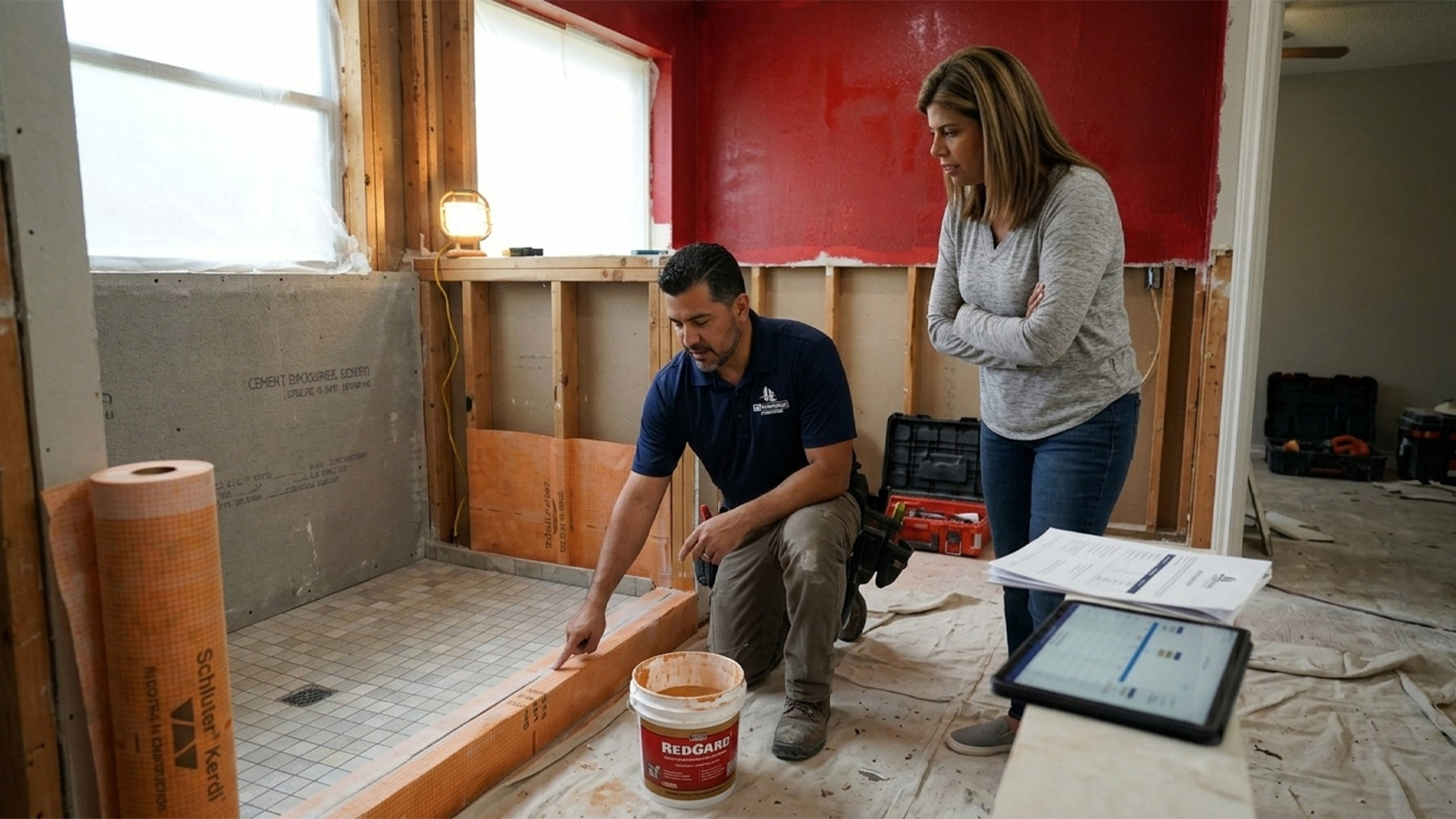
Bathroom waterproofing is a membrane, either sheet or liquid-applied, that sits between your tile and the framing behind it. It seals the shower pan, walls, curb, and niches so water never reaches the wood framing or subfloor. Not every contractor handles this the same way, and the method they choose matters more than most homeowners realize before starting a bathroom remodel. If you’re planning a remodeling project in Houston, this is the one system you won’t see once the tile goes on, which is exactly why it matters more than almost anything else in the project.
Most homeowners spend their energy picking tile color and vanity style, which makes sense since that’s the fun part. But the waterproof membrane behind that tile decides whether your remodel lasts fifteen years or starts leaking behind the walls in three. This article covers how these systems work, what Texas and Houston code require, and the warning signs that show whether a bathroom was waterproofed correctly the first time.
Key Takeaways
- A waterproofing system is a membrane, either sheet or liquid-applied, installed beneath tile at the shower pan, walls, curb, and niches to stop water at the source.
- Houston’s outdoor humidity runs between 75% and 90% for much of the year, raising the risk of mold in any bathroom remodel where the membrane was rushed or skipped.
- Contractors usually choose between sheet membrane, liquid-applied membrane, or traditional mud-set with a vapor barrier, and each one fits different shower designs.
- Waterproofing isn’t optional under code. IRC Chapter 7 and TCNA installation standards both require it in wet areas of a home.
- A short list of contractor questions, asked before you sign anything, can protect you from the most common and most expensive remodel mistake.
Why Waterproofing Matters More in Houston’s Humid Climate
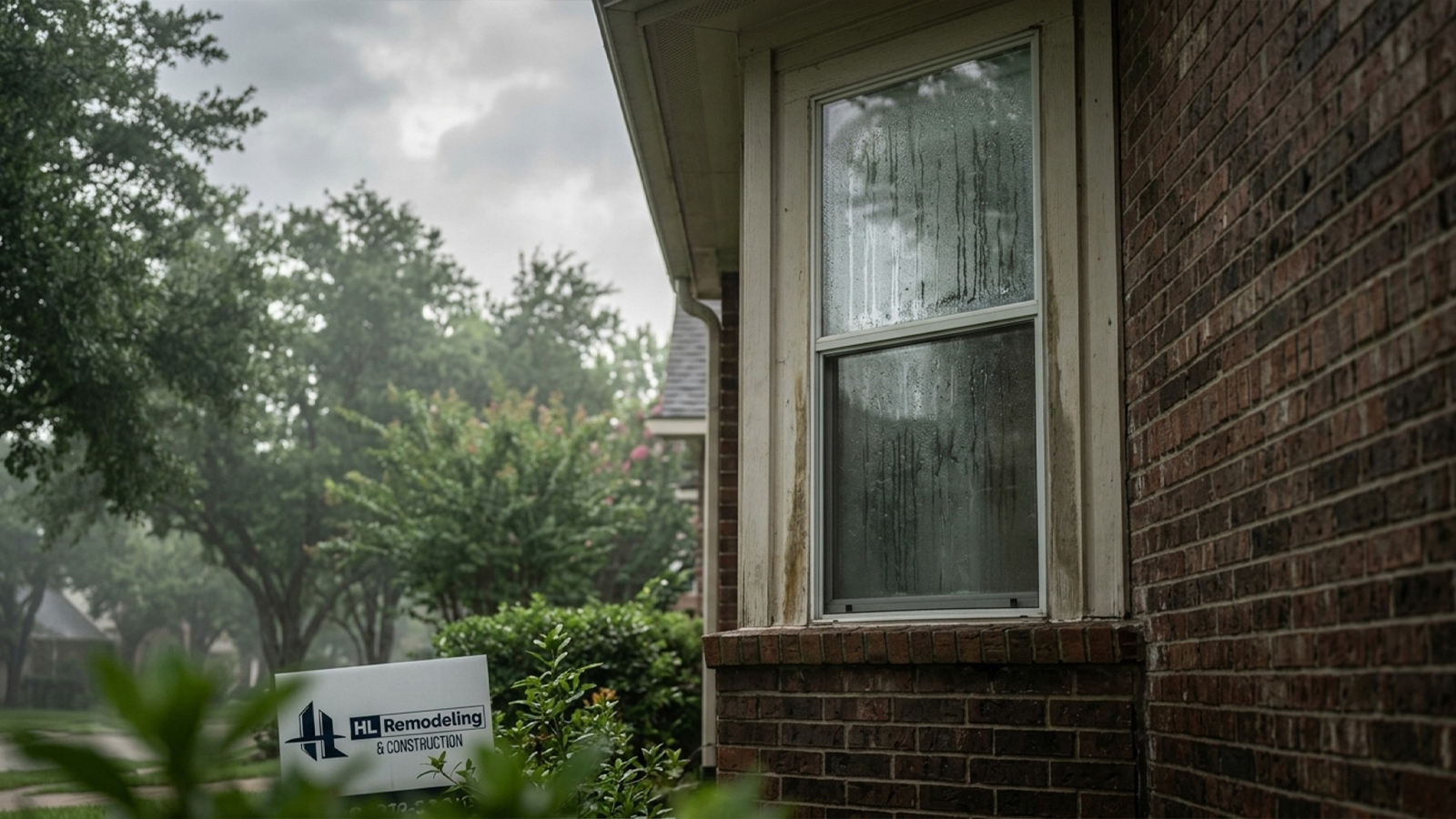
Water finds the smallest gap, every time. In a dry climate, a small mistake in waterproofing might sit unnoticed for years. In Houston, it won’t, because the air is already full of moisture, so any weak spot in a shower gets found out fast.
Houston Humidity and Mold Risk by the Numbers
Houston’s outdoor humidity typically runs from 75% to 90% for much of the year, and on roughly 80% of days there’s enough moisture in the air for mold to grow even without an active leak, according to COIT Cleaning and Restoration. That means your bathroom’s exhaust fan and ventilation aren’t just a nice extra. Proper ventilation, paired with a sound membrane, pulls moisture out before it settles into grout lines, drywall, or the wall space behind your shower.
Why Older Houston Bathrooms Are More Vulnerable For Wet Area Leaks
Many Houston homes built before current code updates were never properly waterproofed to begin with. A remodel in an older neighborhood is often the first real chance to fix decades of moisture damage that quietly worked against the framing. Add in hurricane season, when long stretches of wet weather push indoor moisture even higher, and you get a climate where skipping steps causes problems fast, not eventually.
The failure chain is easy to predict: unmanaged moisture leads to mold growth, mold growth left alone leads to structural damage in the framing and subfloor, and that turns into water damage that costs far more to fix than it would have cost to prevent. Houston homeowners planning a remodel are working against that chain from day one, whether they know it or not.
Waterproofing Methods: Sheet Membranes, Liquid-Applied, and Traditional Mud-Set
Contractors usually use one of three methods, and knowing the difference helps you understand what you’re actually paying for.
Sheet Membrane Systems (Schluter Kerdi)
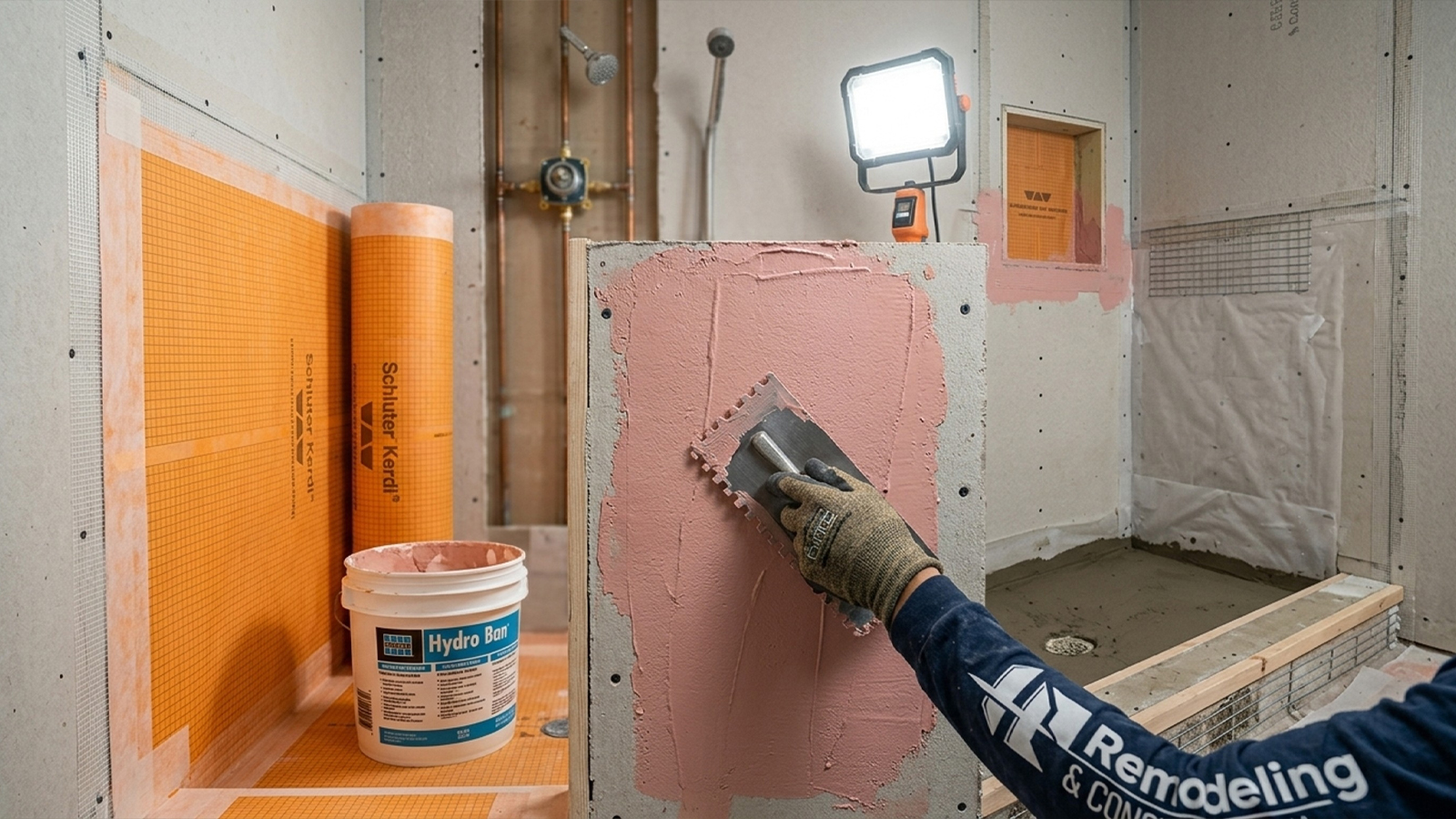
Schluter Kerdi membrane is a bonded fabric-and-plastic sheet installed over cement board in the shower area. It’s a common choice for a walk-in shower or curbless design, creating one continuous waterproof layer with fewer weak spots at seams and corners. That’s only true, though, if it’s installed with the right overlap and sealant at every joint.
Liquid-Applied Membranes (RedGard and Hydro Ban)
RedGard liquid waterproofing and Hydro Ban by Laticrete are roll-on membranes that dry into a seamless waterproof coating. They’re often used on walls, niches, and curbs, places where a sheet membrane’s stiff edges are harder to work with. Both need several coats and full drying time before tile goes down. Skipping that drying time is a common cause of early failure.
Traditional Mud-Set With a Vapor Barrier
The traditional method uses a mortar bed poured over a vapor barrier, most often for custom shower pans. It takes more skill and time than membrane systems, but it’s still a solid approach when done right. This is where the difference between a vapor barrier and a vapor retarder matters: a vapor barrier blocks moisture completely, while a vapor retarder slows it down. The right choice depends on the wall setup.
Cement backer board, whether Durock or Hardiebacker, is not waterproof on its own. It’s a stable, water-resistant base for ceramic tile or natural stone, but it still needs a membrane over or beneath it. Contractors who skip this step are cutting a corner most homeowners never notice until it’s too late.
| Method | Best Used For | Typical Dry/Cure Time |
|---|---|---|
| Schluter Kerdi (sheet) | Walk-in showers, curbless designs, niches | Ready for tile same day once bonded |
| RedGard / Hydro Ban (liquid) | Walls, curbs, irregular shapes | 1-2 days across multiple coats |
| Mud-set with vapor barrier | Custom shower pans | 3-5 days before sealing |
Code and Inspection Requirements: Is Waterproofing Required by Code in Texas Bathrooms?
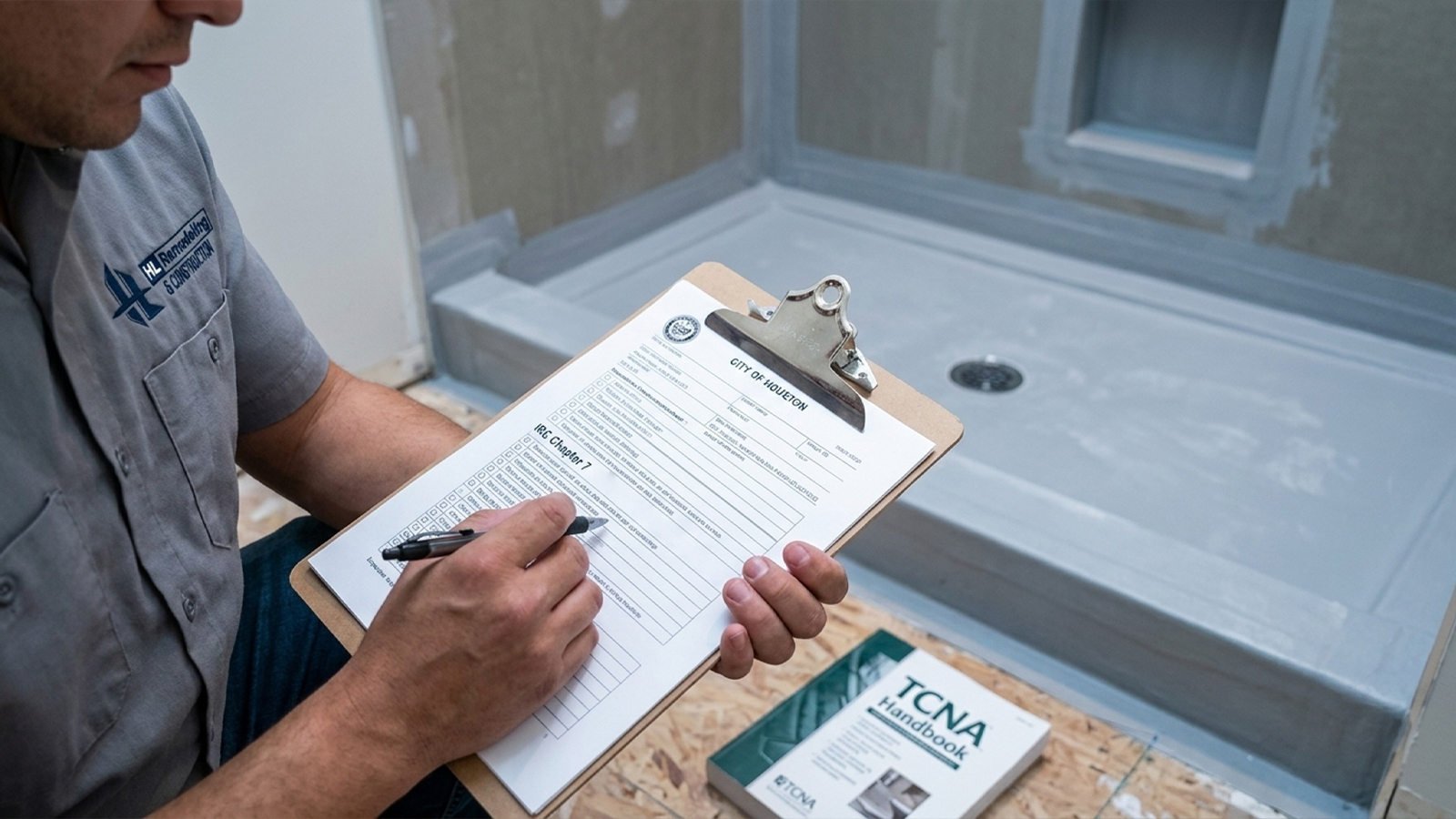
Yes. Waterproofing in wet areas is required, not optional, under the International Residential Code (IRC) Chapter 7, which covers wall and floor coverings in bathrooms and other moisture-prone spaces.
What IRC Chapter 7 and TCNA Standards Require
IRC Chapter 7 sets the baseline, but the Tile Council of North America (TCNA) standards, specifically methods B421 and B422, spell out exactly how a tile assembly must be waterproofed and sealed in a shower or wet area. These are the standards good contractors build every shower to, whether or not a homeowner ever asks about them. The Texas Administrative Code plumbing standards cover the plumbing side, including drain connections and fixture penetrations, and how those connections must be sealed where they pass through the waterproofed assembly. A licensed plumber typically handles the drain and fixture rough-in before the membrane goes in, and that order of work decides whether the seal around each opening actually holds.
City of Houston Permits and Inspection Expectations
Bathroom remodeling in Houston that involves moving plumbing or changing structural parts usually requires a permit through the City of Houston building permits process. Inspectors check that the shower pan holds water without leaking, and that the tile assembly meets code, before they sign off. A contractor with permit experience isn’t just handling paperwork; they’re protecting you from a failed inspection mid-project, one of the more costly surprises in any remodel.
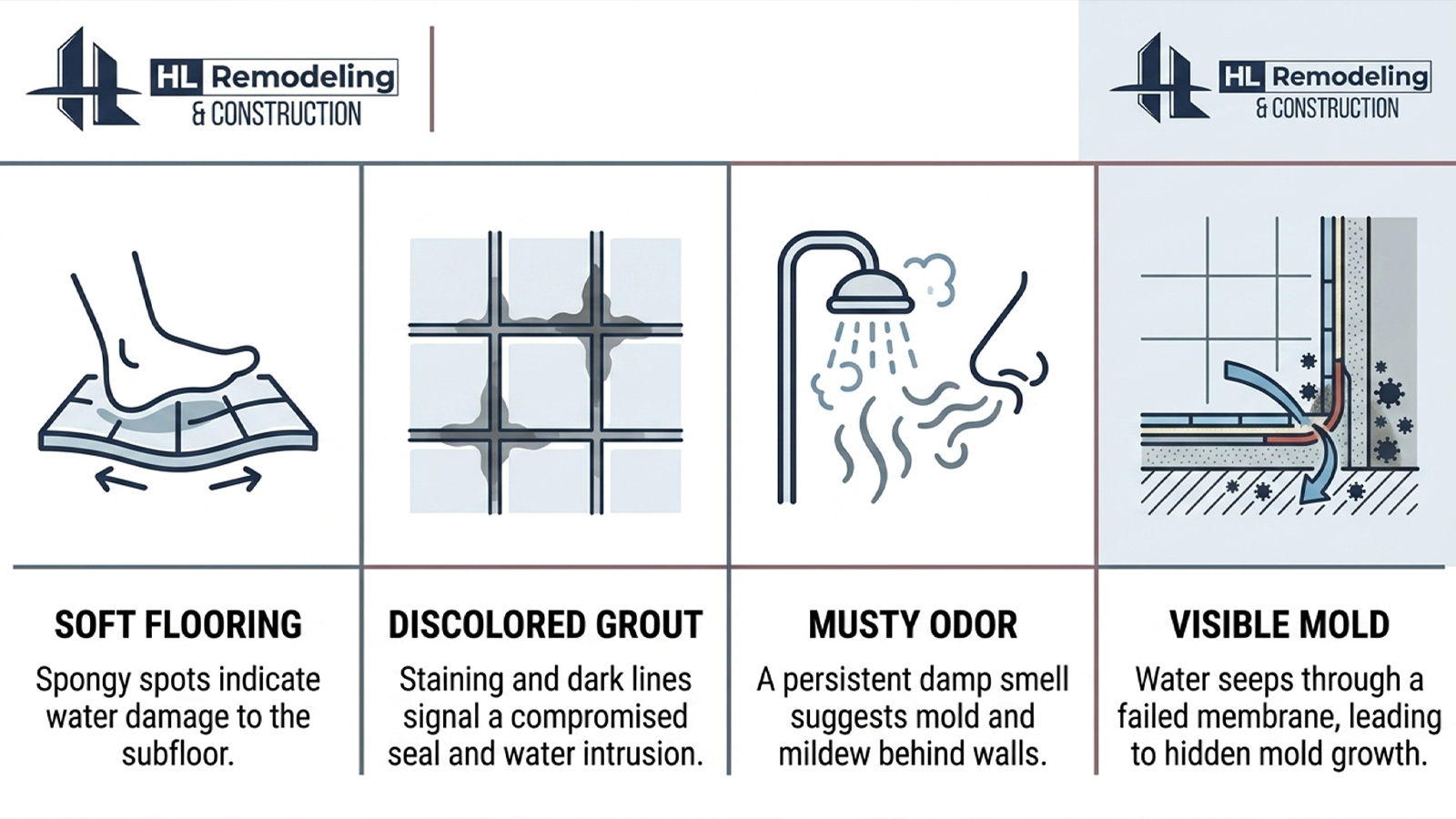
Warning Signs of Improper Waterproofing (And What Skimping Costs You)
Some signs of trouble show up before you ever call a contractor. Others hide behind the wall until the damage is already done.
Physical Signs Your Bathroom Has a Waterproofing Problem
- Soft or spongy floors near the shower or tub, which usually mean water has already reached the subfloor.
- Grout discoloration within tile joints, especially dark or uneven staining that cleaning won’t fix.
- A musty smell that returns within days of cleaning, a sign of moisture trapped behind walls, not just sitting on the surface.
- Peeling paint or bubbling near the vanity or baseboards, often the first visible clue of hidden water damage.
A leak behind walls often shows no outward sign until drywall or the wall space has already soaked up water for months. By the time you can see it, mold has usually set in, and removing it properly often means tearing out more than the original leak ever touched.
One homeowner in the Heights thought their thirty-year-old shower just needed new tile. Once demo started, the crew found a wall space soaked through from a mud-set pan that had failed years earlier, and a nearby wall stud had started to warp from long-term moisture. It was caught before any new tile was set, keeping the fix small instead of a full room rebuild.
Questions to Ask a Contractor Before You Sign
- Which waterproof membrane brand do you use, and why that one for my specific shower design?
- Is the shower pan tested for leaks before tile goes down, and how is that test documented?
- What warranty covers the waterproofing system itself, separate from the tile and grout work?
- Who pulls the City of Houston permit, and who is present for the inspection?
- Can I see a written, itemized cost breakdown that separates waterproofing labor and materials from the rest of the renovation?
- Will the walls be checked plumb and the framing confirmed level before the membrane goes on, so the finished tile lines stay straight?
Skimping on waterproofing rarely shows up in a bid as a missing line item. It shows up later, in a call about a soft floor or a smell that won’t go away.
A Stress-Free Bathroom Remodel Starts With A Proper Waterproofing System
Proper waterproofing is the difference between a bathroom that holds up for decades and one that repeats the same mistake in five years. It’s not the part of the project you’ll admire at the final walkthrough, but it’s the part that decides whether you ever have to think about this remodel again.
We build every project around written cost transparency and pre-trade arrival notices, so you know exactly which membrane, brand, and method is going into your walls before work starts, not after. If you’re planning a bathroom remodel in Houston and want a straight answer on what your space actually needs, a free consultation is a good place to start. We’ll walk the space with you before anything gets torn out, no pressure to commit on the spot. Call (346) 837-0007 whenever it’s convenient, or reach out online to get a time on the calendar.
FAQs
How much does bathroom waterproofing cost in Houston?
Bathroom waterproofing cost depends on the method used. Liquid-applied systems like RedGard or Hydro Ban generally cost less than a full mud-set pan with a separate vapor barrier. It’s typically bundled into the overall bathroom renovation cost rather than billed as its own line item, so the only way to know your real number is a written, itemized quote for your specific bathroom floors, walls, and shower shape.
What happens if a bathroom isn’t waterproofed properly?
An improperly waterproofed bathroom lets moisture leak into the wall space and subfloor. This leads to mold growth and eventually structural damage in the framing. Fixing this after tile is already installed costs far more than doing it right the first time, since it usually means tearing out finished work to reach the damage. That’s why the installer’s process matters more than how good the finished tile looks on day one.
Do you need a vapor barrier in a bathroom shower?
Some form of moisture control is required behind the wall in a bathroom shower. Whether that’s a true vapor barrier or a vapor retarder depends on the waterproofing method chosen. Traditional mud-set systems typically use a vapor barrier beneath the mortar bed, while membrane-based systems handle moisture control differently, so this is worth confirming directly with whoever is doing the install.
What is the best waterproofing method for a shower?
No single method wins out over the others. Schluter Kerdi, RedGard, and Hydro Ban all work well when installed correctly, and the right choice depends on your shower’s shape, including curbless designs, niches, and custom pan shapes. Installation quality matters more than brand choice, which is why checking the installer’s actual process is more useful than picking a product name off a list.
How long does bathroom waterproofing take?
Bathroom waterproofing usually takes two to five days within a full remodel timeline, depending on drying times for liquid membranes and the mud-set bed. Liquid-applied systems need full drying time between coats before tile can go down, and mortar beds need days to dry before they’re sealed. Rushing this step is one of the most common causes of early failure in an otherwise well-built bathroom.
Is waterproofing required by code in Texas bathrooms?
Waterproofing is required by code in Texas bathrooms under International Residential Code Chapter 7 and the Tile Council of North America installation standards. City of Houston inspectors check this before signing off on a final permit for any remodel that touched plumbing or structural parts. This is one more reason a licensed, permit-experienced contractor matters more than a lower bid.
Is cement board itself waterproof, or does it still need a membrane?
Cement backer board, including Durock and Hardiebacker, is water-resistant and sturdy, but it is not a waterproofing layer on its own. It still needs a sheet or liquid-applied membrane installed over or beneath it before tile goes on. This trips up a lot of homeowners comparing contractor bids, since some quotes quietly skip the membrane and rely on the board alone.