
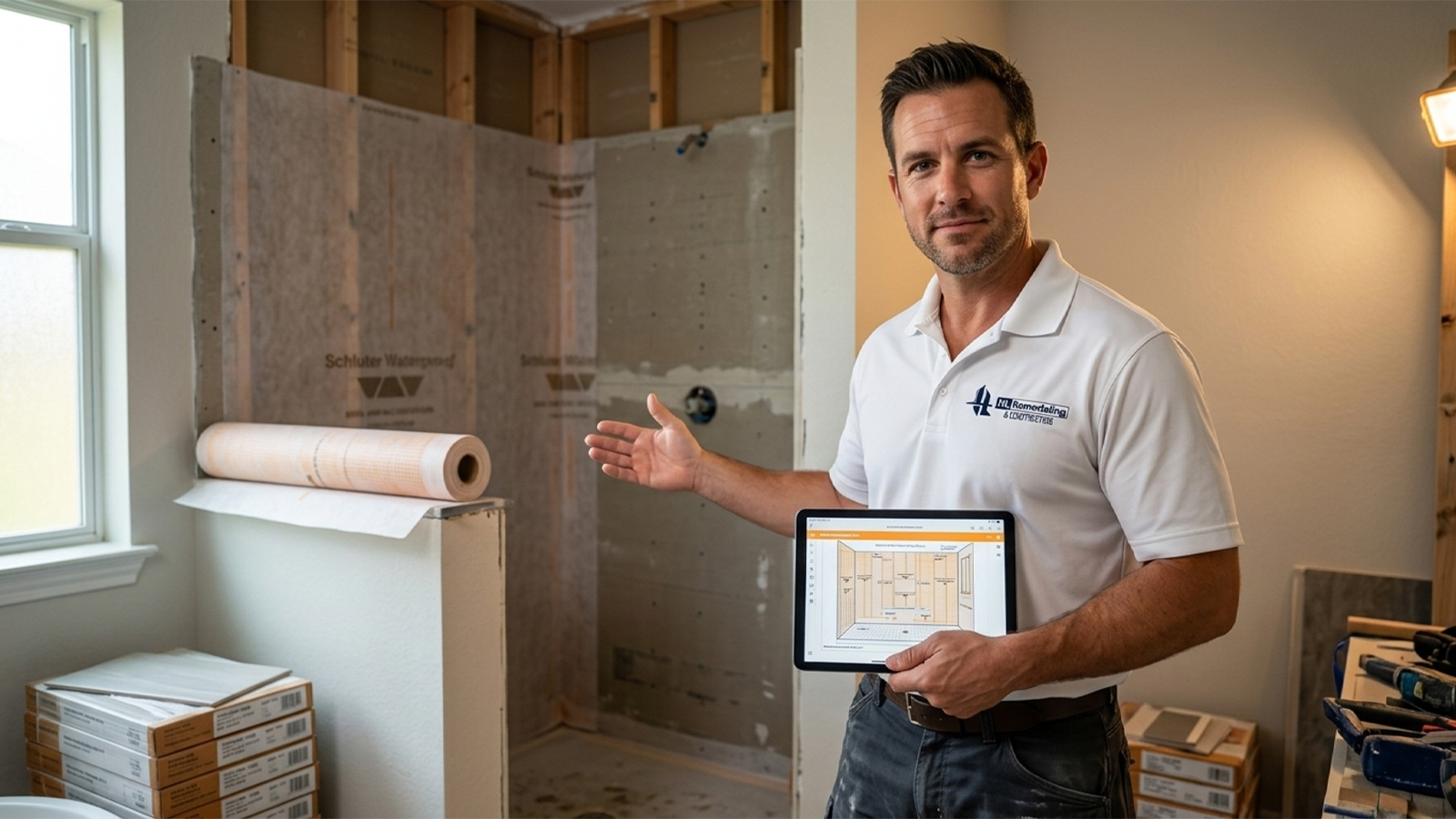
If you’ve been Googling Schluter Kerdi vs liquid waterproofing for the last hour, you already know both names and you’re still stuck on the same question: which one belongs in your shower. Here’s the part most articles skip: waterproofing for showers isn’t a two-option quiz with a right answer to memorize. It depends on your shower’s geometry, substrate, and how trades sequence the job, details a spec sheet can’t tell you. That’s the exact assessment we walk through during every bathroom remodeling consultation, before a single tile is set or a membrane is chosen.
Key Takeaways
- Schluter Kerdi and liquid membranes like RedGard or Laticrete Hydro Ban can both waterproof a shower reliably, but each demands different substrate prep, sequencing, and cure conditions.
- Houston’s clay soil causes foundation micro-movement that stresses waterproofing system seams, and homes without proper detailing at niches, benches, and drains often crack within one to two years.
- Undetected leaks can grow mold inside wall cavities within 48 to 72 hours, and a $400 waterproofing shortcut can quietly turn into a $15,000 structural repair.
- Manufacturer warranties, including Schluter’s 25-year system warranty, are void without certified installer documentation, meaning DIY or unlicensed work forfeits that protection.
- The membrane brand matters less than slope-to-drain accuracy, corner detailing, and tile placed over a properly cured waterproof membrane.
Schluter Kerdi: The Sheet Membrane Waterproofing System
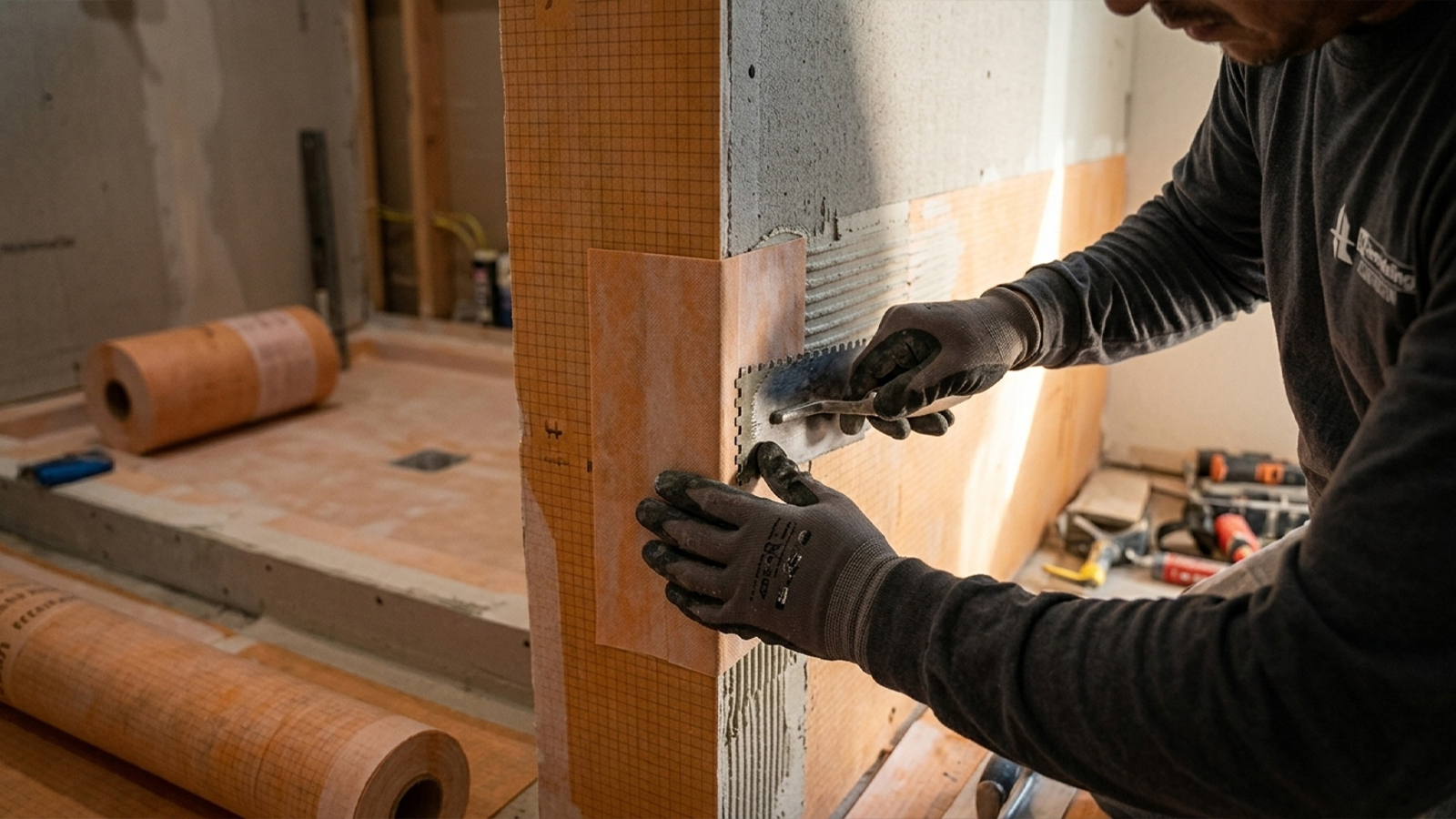
Schluter Kerdi is a bonded sheet membrane. It gets applied over Kerdi Board or cement board and paired with pre-formed shower pans, drains, and corner pieces built to remove guesswork at every transition. The system puts the waterproofing in the membrane itself, not in the tile or grout above it, which is a different approach than a liquid-applied system and changes how the whole shower gets built.
How the Kerdi System Is Built
A typical Kerdi shower starts with Kerdi Board or a comparable substrate like wedi. The sheet membrane then gets bonded over the walls and pre-form shower pan with unmodified thinset. Kerdi Board is a foam core panel that acts as both substrate and part of the waterproofing assembly once the membrane is bonded over it, which is part of why it’s become a default substrate choice for Houston remodels with irregular framing. Drains and inside corners use factory-made pieces designed to click into the layout rather than get hand-cut on site.
For older Houston homes in the Heights or Montrose with uneven studs and out-of-square alcoves, a pre-formed Kerdi Board shower pan often solves problems a hand-built mortar bed can’t. That’s a judgment call worth talking through with someone who’s opened up enough Houston walls to know what’s usually hiding behind them.
Learn More: Walk In Shower Remodels – What to Know About Before Replacing Your Tub
Where Seam Overlap and Thinset Precision Break Down
The Kerdi waterproof membrane only performs if seams overlap correctly and get set in unmodified thinset, never a modified mortar. Skip that detail and you get a pinhole failure that stays invisible for months. We see uncertified installs miss the same three spots every time: inside corners, the mortar bed slope beneath the shower pan, and improvised niche detailing where a factory piece should have been used instead.
Schluter’s 25-year warranty requires documented, certified installation. Most homeowners don’t find out that protection was forfeited until they’re already dealing with a leak, which is exactly the kind of gap a written, itemized proposal upfront is meant to close.
RedGard, Laticrete Hydro Ban, and Liquid-Applied Waterproofing Membranes
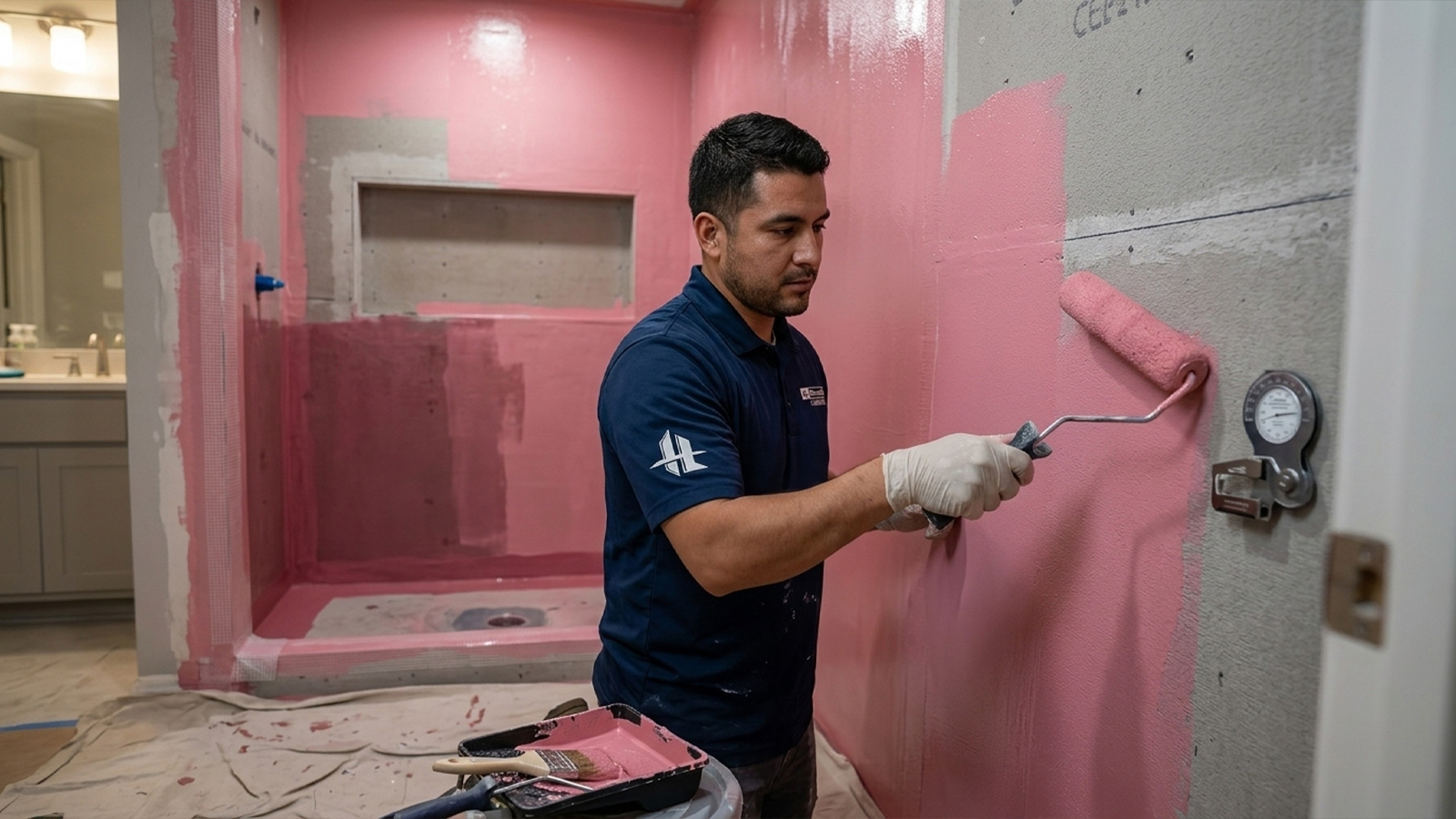
RedGard and Laticrete Hydro Ban work differently. These are examples of a liquid waterproofing membrane, paint-on or roll-on coatings that bond directly to cement board, and in Hydro Ban’s case sometimes to drywall in dry areas, rather than replacing the substrate the way a sheet membrane does.
How Liquid Membranes Bond to Cement Board and Drywall
A liquid waterproofing membrane gets rolled or brushed across the shower walls and floor, bonding to whatever backer board sits beneath it. Mil-thickness matters as much as brand name here. Each product specifies a minimum dry-film thickness, and under-application leaves thin spots that look fine to the eye but let water pass straight through. Hydro Ban Board exists as a board-based option in this same family, similar to how wedi and Kerdi Board relate to sheet systems.
Why Mil-Thickness and Cure Time Are Easy to Get Wrong in Houston
Cure time is the part that trips up even experienced installers. These coatings need full cure before mortar, backer board, or tile go on top. Houston’s summer humidity, which regularly runs 75 to 90 percent according to local restoration providers, stretches that cure window well past what the product label assumes [1].
On an enclosed bathroom remodel without active ventilation running during construction, a second coat applied too soon traps moisture instead of curing through it. Tile and grout set over an undercured waterproof membrane can hold that moisture against the wall instead of shedding it, a failure that stays hidden until the drywall on the other side starts to stain. If your project timeline has you wondering whether cure windows are being rushed to hit a deadline, that’s worth raising with whoever’s running your job before the tile goes down, not after.
Why the Wrong Choice (or a Bad Install) Fails in a Houston Shower
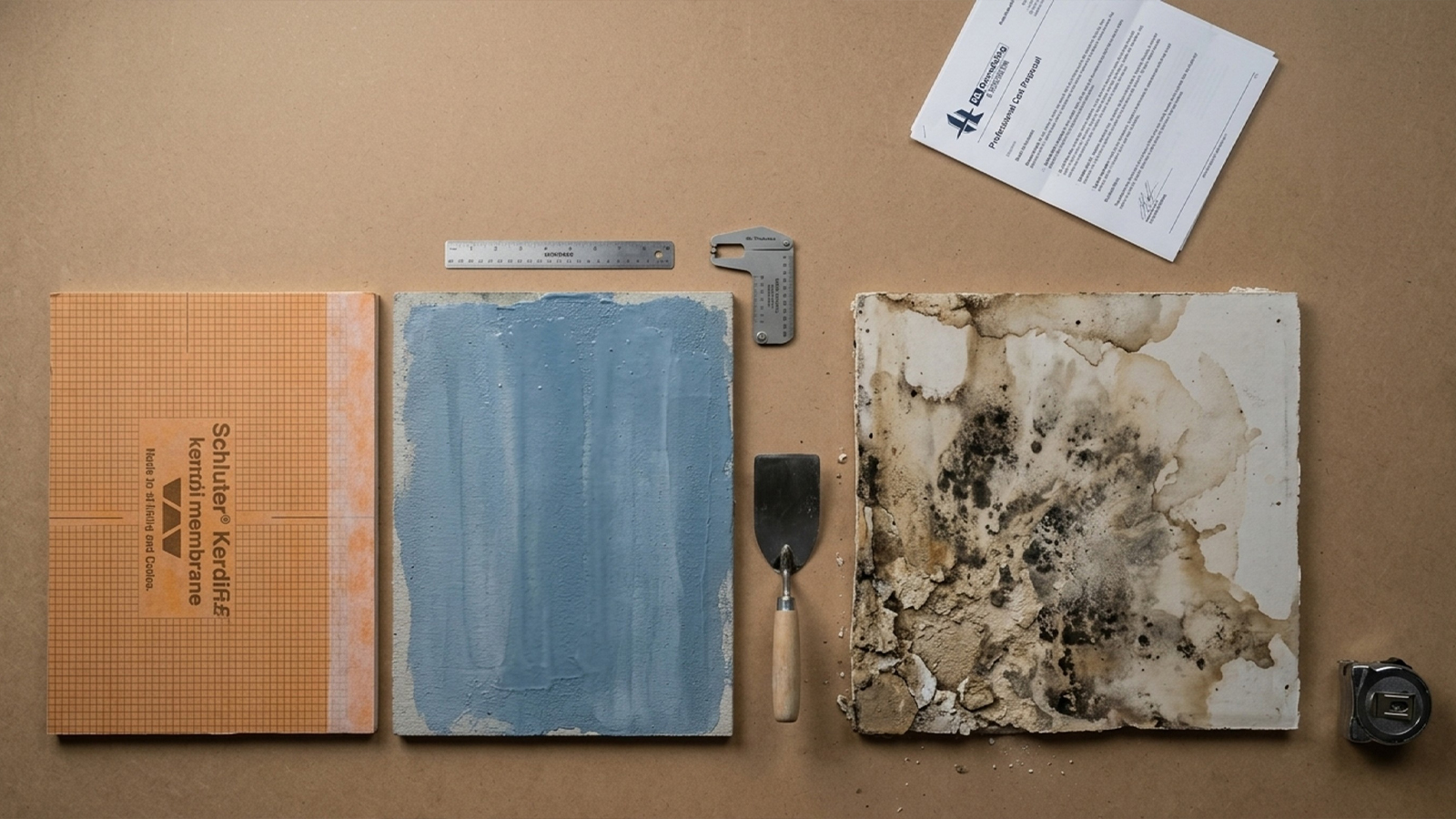
Both systems share the same failure points. Corners, niches, benches, and every valve or stud penetration require careful detailing, and that detailing is exactly what even experienced tilers miss.
How Kerdi and Liquid Membranes Compare on the Ground
| Factor | Schluter Kerdi (sheet membrane) | RedGard / Hydro Ban (liquid membrane) |
|---|---|---|
| Where waterproofing lives | In the bonded membrane itself | In the cured coating over cement board |
| Substrate needed | Kerdi Board, wedi, or cement board | Cement board, sometimes drywall in dry areas |
| Bonding agent | Unmodified thinset at seam overlaps | Rolled or brushed coats at specified mil-thickness |
| Biggest failure risk | Skipped seam overlap, wrong thinset | Under-cured coats, thin spots invisible to the eye |
| Houston-specific stress | Clay soil movement cracking seams over time | Humidity extending cure time past label assumptions |
How Houston’s Soil and Humidity Turn a Small Gap Into a Big Repair
The stakes compound because of where Houston sits. Expansive clay soil across much of the region swells and shrinks with seasonal moisture, and that ongoing foundation micro-movement stresses waterproofing seams in ways a national installation guide never accounts for [2]. A waterproof membrane that passes inspection on day one can crack behind the tile by year two, especially at corners and drain transitions that weren’t reinforced correctly.
One homeowner we consulted with in a 1970s ranch-style home near Spring Branch assumed a lingering bathroom smell was a ventilation issue. Once we opened the wall, we found a liquid waterproofing membrane with visible thin spots at the niche corners, and moisture had already reached the studs. Because it was caught early, the repair stayed contained to that one wall section instead of the whole bathroom.
The bigger risk list looks like this:
- Skipped seam or corner overlap at niches and benches, invisible until water reaches the drywall side.
- Foundation micro-movement from Houston’s clay soil stressing membrane seams over one to two years.
- Mold colonizing wall cavities within 48 to 72 hours of a sustained leak.
- Manufacturer warranty voided without certified installer documentation, leaving no recourse if the system fails.
- Insurance claims frequently denied for gradual leak or improper installation findings, leaving the homeowner covering remediation out of pocket.
A $400 material mistake rarely stays a $400 mistake. Once water gets past a failed waterproof membrane behind the tile, it keeps traveling into framing every week it goes unnoticed, turning a waterproofing shortcut into a structural repair running into the thousands.
Conclusion
The real question was never Kerdi versus liquid membrane. It’s whether the person installing either system is certified, accountable, and willing to put a written warranty behind the work once the walls are closed and the tile is set. Every shower has its own geometry, substrate, and sequencing needs. A watertight shower comes from matching the right system to that specific space, not from picking whichever brand came up first in a forum thread.
Here’s the simplest way to settle it: let us take a look before you decide anything. We’ll assess your shower’s layout in person, tell you plainly which system fits your walls, and hand you a written, itemized cost proposal before any work begins, no pressure attached. Call (346) 837-0007, or book a free consultation online and we’ll go from there.
FAQ
What is the most reliable shower waterproofing system available?
Both Schluter Kerdi and quality liquid membranes like RedGard or Laticrete Hydro Ban are reliable when installed to manufacturer specification. The real reliability factor isn’t the brand, it’s installation accuracy at seams, corners, and drain transitions. A homeowner can’t verify mil-thickness or seam overlap after the tile is set, which is exactly why a professional assessment before the work starts matters more than researching product data sheets.
What is the most common mistake made during shower waterproofing?
The most common mistake is skipped or rushed detailing at corners, niches, and benches, the exact spots even experienced tilers miss under time pressure. These are the areas where a sheet membrane needs precise overlap or a liquid membrane needs full mil-thickness coverage. It’s not something a homeowner can inspect visually once tile covers it, which is why certified installation documentation matters.
Is RedGard as good as Schluter Kerdi?
RedGard can perform just as well as Schluter Kerdi when it’s applied at the correct thickness over the right substrate. The variable that actually decides the outcome is your shower’s geometry and existing substrate condition, not which product wins on a spec sheet. A professional assessment settles that question faster and more accurately than comparing marketing pages.
Which waterproofing membrane is better for a shower, Kerdi or liquid membrane?
There’s no universal winner between Kerdi and a liquid-applied membrane. Geometry, substrate condition, and how trades sequence the job decide which system fits a given bathroom. We evaluate that fit in person during a consultation rather than recommending one system across every home.
Do you need a permit to waterproof or remodel a shower in Houston?
Houston typically requires a permit reviewed by the Houston Permitting Center when a bathroom remodel touches plumbing, fixture relocation, or the shower and tub structure itself [3]. Waterproofing tied to that plumbing work can trigger inspection requirements as part of the process. Licensed contractors handle that permitting step as a normal part of the job, which most DIY installs skip entirely.
What thinset should be used with Kerdi membrane?
Kerdi membrane requires unmodified thinset for proper bonding at every seam. Using modified thinset instead is a common DIY error, and it can compromise the bond enough to void Schluter’s system warranty. This is one of the easiest details to get wrong without training, and one of the hardest to catch after the tile goes up.
Does Houston’s humidity affect how long shower waterproofing takes to cure?
Houston’s humidity does extend cure times for liquid-applied membranes specifically, sometimes well beyond what the product label assumes for a national climate average. Running at 75 to 90 percent humidity in summer months, enclosed bathrooms without active ventilation slow that curing process further [1]. Rushing a second coat or setting tile before full cure is one of the most common local installation failures we see.
What happens if shower waterproofing fails behind the tile?
Failed waterproofing lets water travel into the wall cavity, where mold can begin developing within 48 to 72 hours of sustained moisture. By the time staining shows up on the visible side of the drywall, remediation often means removing surrounding drywall, insulation, and sometimes subfloor. Catching substrate and sequencing issues before tile goes up is the whole reason a professional assessment upfront saves homeowners from that outcome.