
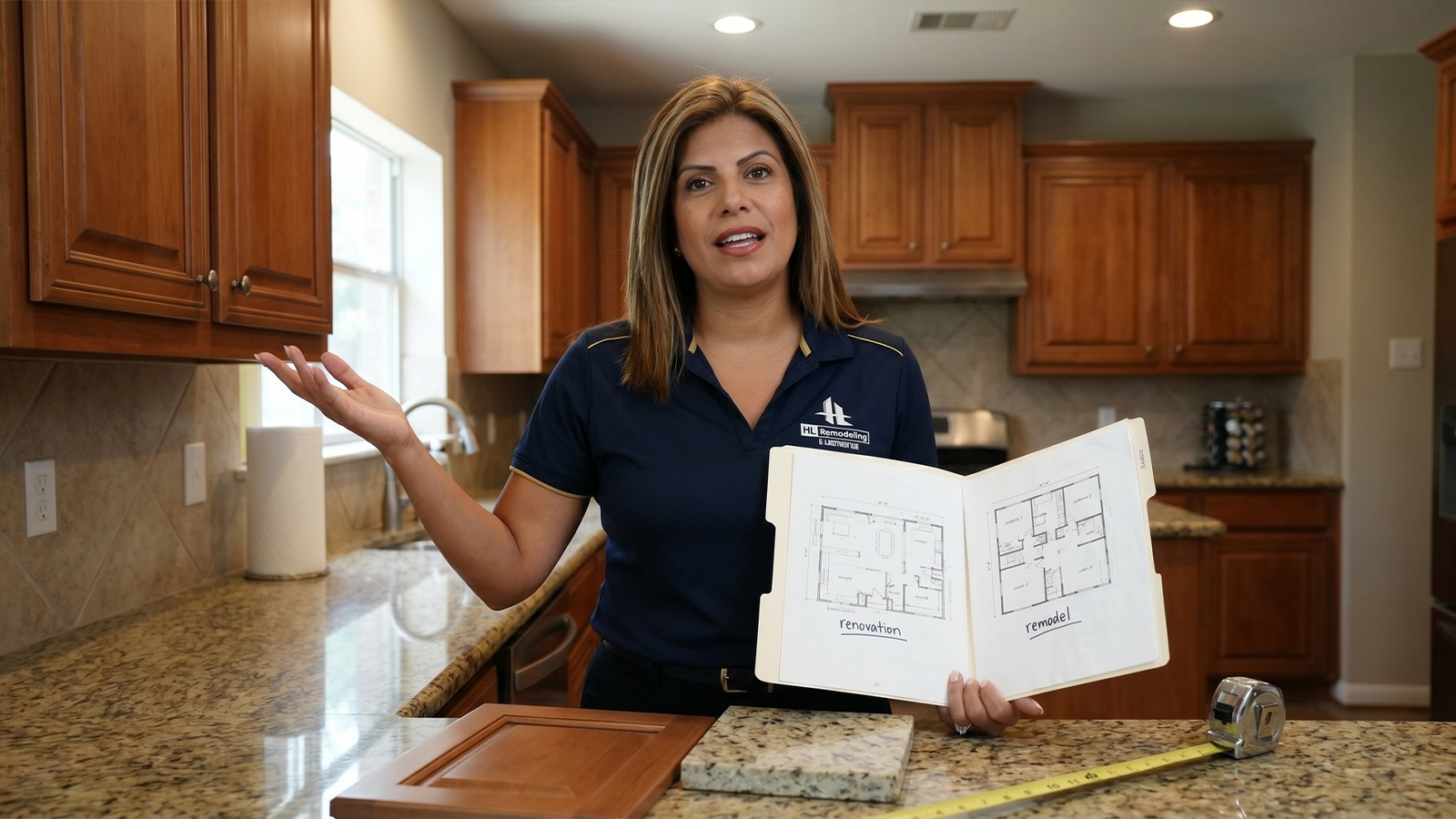
Most Houston homeowners searching kitchen remodel vs renovation already sense these are different things — they just need someone to draw the line clearly before calling contractors.
Here it is: a kitchen renovation updates what already exists — surfaces, fixtures, and finishes — without changing the layout or structure. A kitchen remodel changes the space itself, moving walls, relocating plumbing, and reconfiguring the floor plan.
Renovation restores. Remodel transforms.
If you are working through this decision before reaching out to a kitchen remodeling contractor in Houston, this guide will help you identify exactly which scope applies to your home.
Key Takeaways
- A renovation updates your kitchen’s appearance — cabinets, countertops, fixtures, and finishes — without structural change
- A remodel reconfigures how your kitchen functions — moving plumbing, removing walls, and redesigning the layout entirely
- Renovations cost less and take less time; a full remodel requires permits through the City of Houston Permitting Center and considerably more investment
- Cosmetic upgrades like painting cabinetry or swapping a backsplash do not require a permit in Houston; plumbing relocation and structural work always do
- Choosing the wrong scope leads to cost overruns or underscoping — the decision framework in this guide helps you self-identify before you call a contractor
Remodel vs Renovation — What Each Term Actually Means
These two words get used interchangeably in contractor estimates, home improvement store signage, and marketing materials from reputable kitchen brands. Even the National Kitchen and Bath Association (NKBA) acknowledges that the industry blurs the line regularly. But the functional and financial difference is real. Misclassify your project going in and you will either overpay for work you did not need or underfund work that cannot be avoided.
A renovation is the process of restoring or upgrading what already exists. The walls stay where they are. The sink stays on the same wall. The plumbing rough-ins stay in place. What changes is everything on the surface — the cabinetry finish, the countertops, the floor material, the fixtures, the appliances. Right choice when your kitchen functions adequately but looks outdated.
A remodel is something else. You are not updating the surface — you are changing how the space works. Moving plumbing, relocating or removing walls, rewiring circuits, repositioning appliances, redesigning traffic flow. The National Association of the Remodeling Industry (NARI) categorizes remodel work by its impact on the building’s systems and structure, and a true kitchen remodel touches at least one of those core systems.
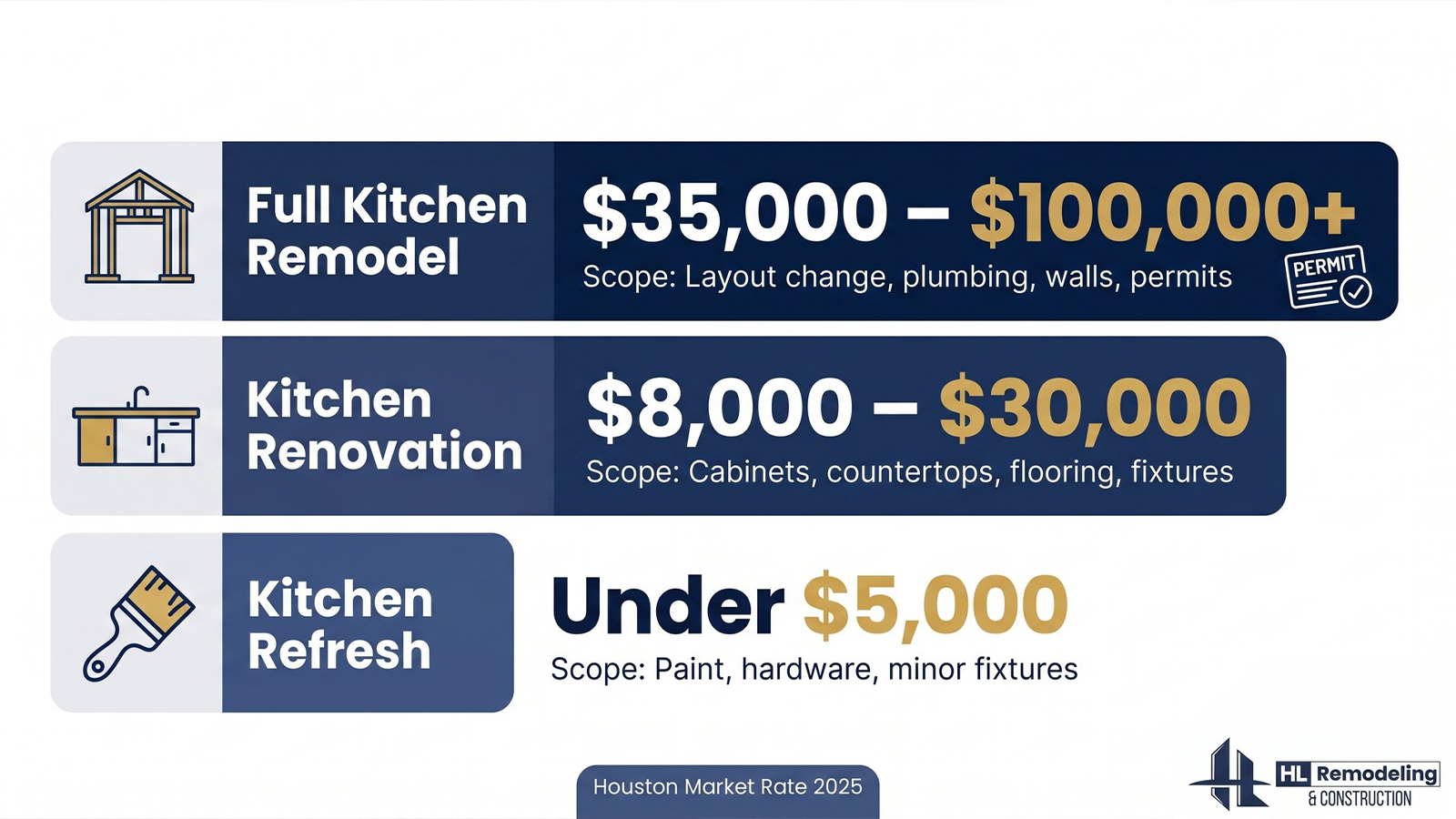
Below renovation in scope sits something worth naming separately: the kitchen refresh. Painting the cabinets, swapping hardware, replacing a fixture or two, making minor cosmetic changes that require no demo and no full material replacement. A refresh can meaningfully change how a kitchen looks for a fraction of what even a light renovation costs. Many Houston homeowners think they need a renovation when a targeted refresh would solve the actual problem.
In Houston’s contractor market, this classification determines whether your project triggers City of Houston Permitting Center requirements, whether Texas Department of Licensing and Regulation (TDLR) licensed tradespeople must be on site, and how your resale disclosure obligations work when you eventually list.
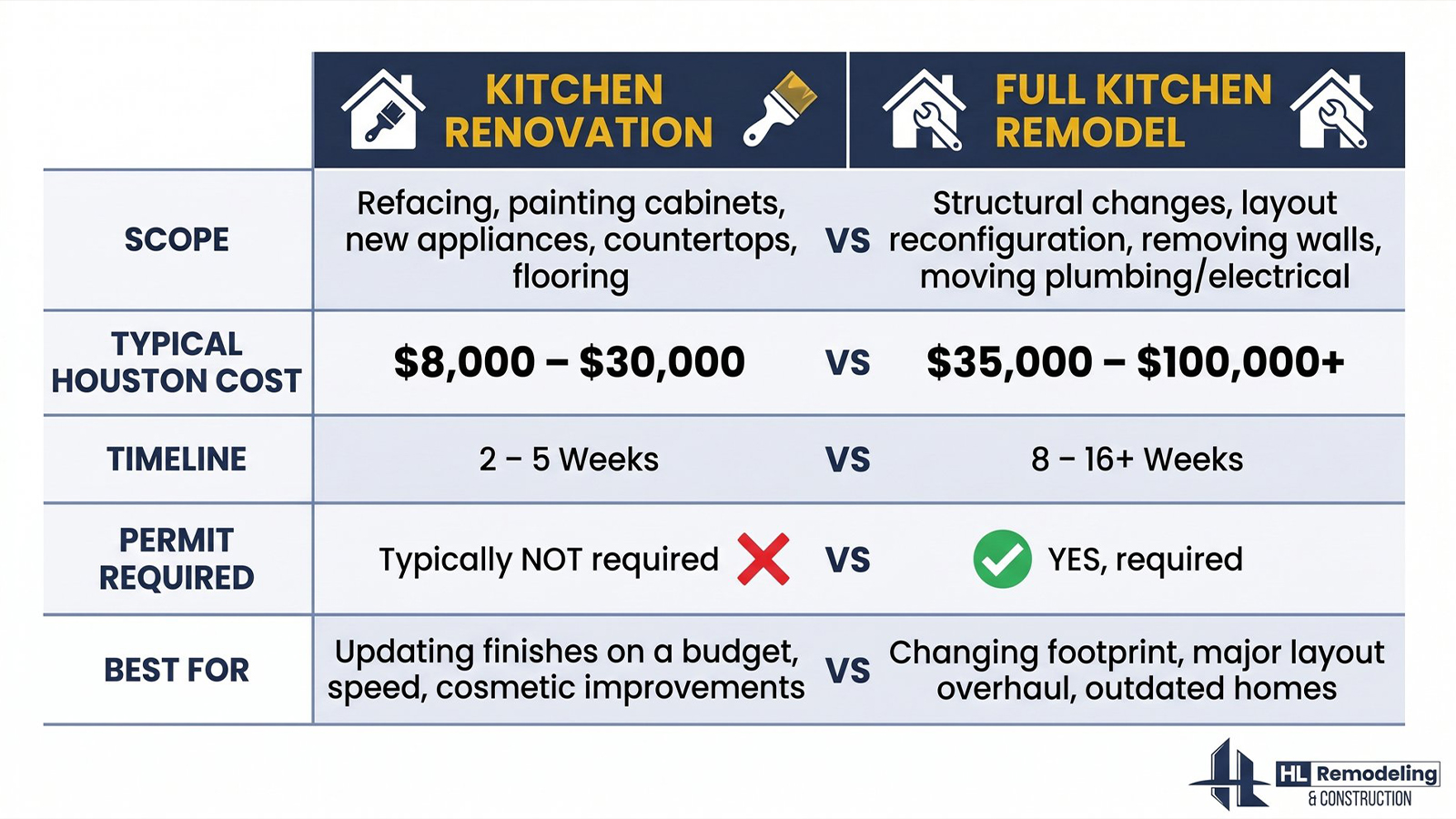
Remodel vs Renovation at a Glance — Side-by-Side Comparison
Houston-market figures drawn from local contractor data and the Cost vs. Value Report by Remodeling Magazine.
| Category | Kitchen Renovation | Full Kitchen Remodel |
|---|---|---|
| Scope | Surface updates within existing layout | Structural and system changes; layout reconfiguration |
| Typical Cost in Houston | $8,000 – $30,000 | $35,000 – $100,000+ |
| Timeline | 1 – 4 weeks | 6 – 16 weeks |
| Permit Required | Usually no (cosmetic work) | Yes — structural, plumbing, electrical |
| Best For | Dated finishes, worn surfaces, cosmetic upgrade | Broken layout, plumbing relocation, open-concept conversion |
The cost ranges reflect mid-grade materials and standard labor rates — not the budget-bottom or luxury-top of either category. The permit column reflects current City of Houston Permitting Center thresholds: cosmetic work such as painting, countertop replacement, cabinet refacing, and fixture swaps in the same location does not require a permit. Any work that touches plumbing rough-ins, load-bearing walls, or dedicated electrical circuits does. Timeline figures assume materials are on-site before demo begins — supply delays on custom cabinetry or specialty plumbing fixtures can extend both windows considerably.
If you are looking at these numbers and wondering where your project lands, HL Remodeling can answer that in a first conversation at (346) 837-0007 — no obligation to move forward.
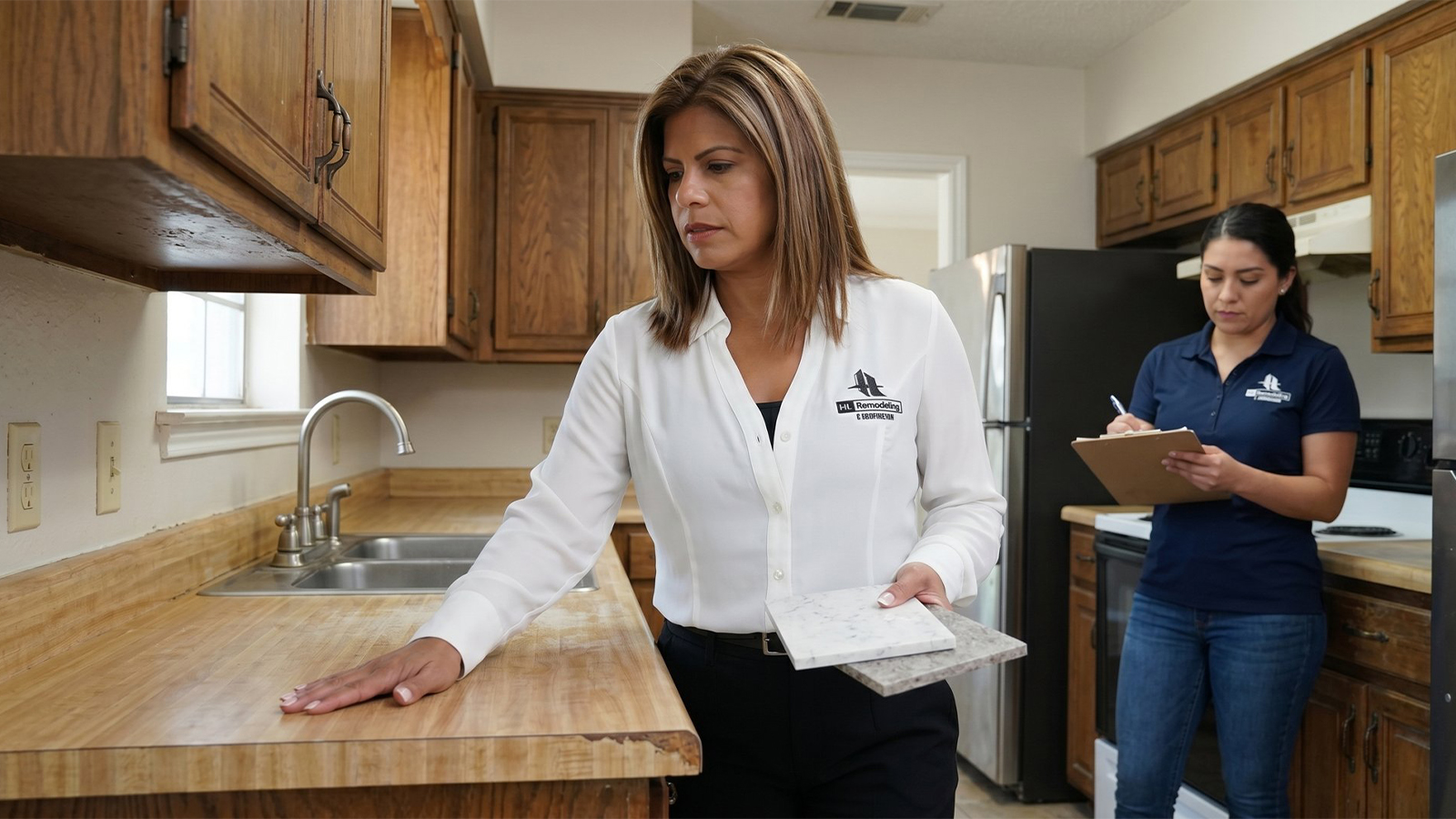
Your Kitchen Looks Outdated but Still Functions — That Is a Kitchen Renovation
Your cabinets are structurally sound but the finish is peeling. The countertops are scratched laminate. The backsplash predates your ownership. The faucet drips, the hardware is mismatched, and the floor material has seen better days — but the sink is where you want it, the range is positioned logically, and you have enough counter space to cook. That is a renovation-scope problem.
A kitchen renovation typically includes cabinet refacing or a full door and drawer-front replacement, new countertops in quartz or granite, new backsplash tile, fixture replacement at the sink, appliance refresh without relocating electrical or gas connections, and new floor material over the existing subfloor. A Kohler undermount sink swap is a common and high-impact renovation-level upgrade that changes how the kitchen feels without touching a single rough-in.
What a renovation does not include is moving anything. The moment you relocate the sink to an island, move the refrigerator to a different wall, or remove the wall between the kitchen and the living room, you have crossed into remodel territory. That distinction is the line between work requiring a licensed plumber and a permit and work that does not.
Energy Star-certified appliances are worth prioritizing during any appliance refresh in Houston specifically. Given year-round cooling demand, an Energy Star-rated refrigerator and dishwasher reduce monthly operating costs in ways that add up noticeably over a Houston summer.
Signs You Need a Renovation, Not a Remodel
Your cabinet boxes are solid — no rot, no water damage — and only the doors, drawer fronts, or finish are the problem. You are comfortable with where your sink, range, and refrigerator sit relative to each other. Traffic flow works. Your primary complaint is visual: the color is wrong, the material is dated, the style is out of place in an otherwise updated home. In that case, a renovation with new countertops, updated fixtures, refinished or refaced cabinetry, and a fresh floor can transform how the space feels without a single plumbing line being touched.
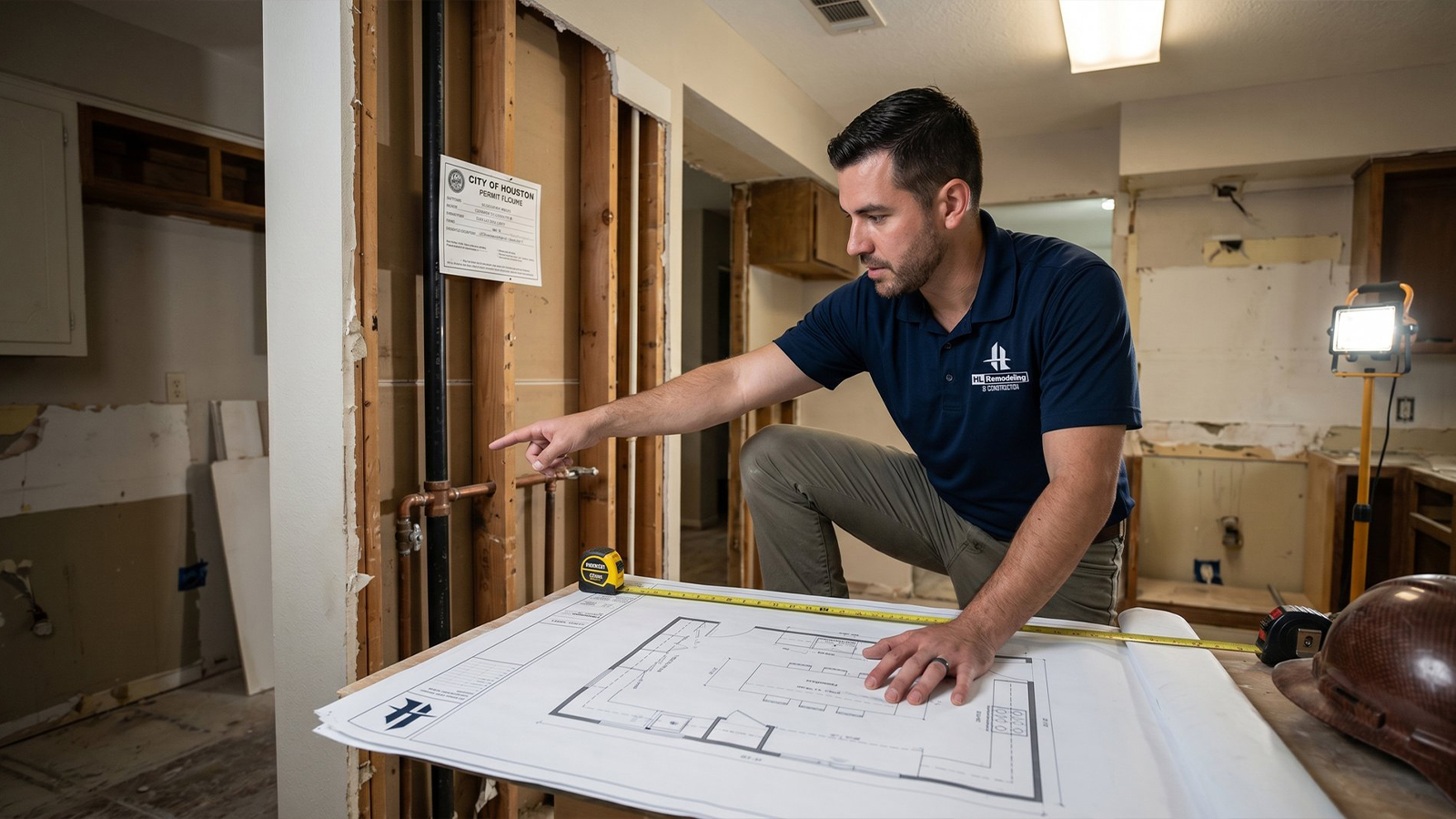
Your Kitchen Layout No Longer Works — That Is a Kitchen Remodel
The sink is on the wrong wall relative to the range. There is no prep counter between the refrigerator and the cooktop. The kitchen is closed off from the living area. The island blocks traffic from the back door to the range. No amount of fresh paint on the cabinet doors solves these problems. That is a remodel.
A kitchen remodel involves moving plumbing rough-ins, relocating or removing walls — which may be load-bearing and require a structural engineer’s assessment — rewiring circuits to meet current NEC standards, repositioning appliances, and installing new cabinetry in an entirely new configuration. The kitchen cabinets that existed before the remodel are often replaced entirely, not because they were worn but because the new layout renders the old configuration unusable.
The NKBA’s kitchen design guidelines recommend a minimum of 42 inches of clearance in a one-cook kitchen and 48 inches for two cooks. A remodel is frequently required to meet those standards in Houston homes built before 1980, where galley kitchens and closed floor plans were standard. A full remodel may also include widening a doorway, adding a window, or reconfiguring the kitchen’s relationship to a dining room to create the open-plan layout that contemporary buyers expect.
What a Full Remodel Changes That a Renovation Cannot
Plumbing is the clearest dividing line. A remodel can move the sink drain to a kitchen island, add a pot-filler line above the range, or relocate the dishwasher rough-in. All of those moves require a TDLR-licensed plumber and a plumbing permit filed with the City of Houston. A renovation swaps the fixture at the existing rough-in and stops there.
Electrical scope follows the same logic. Adding a 20-amp dedicated circuit for a built-in microwave, upgrading the panel to support a professional-grade induction range, or relocating outlets after a layout change — these are remodel-level electrical tasks.
Structural changes are where scope difference becomes most consequential in terms of cost. Removing the wall between a kitchen and dining area is one of the most commonly requested remodel projects in Houston’s inner-loop neighborhoods. That wall is frequently load-bearing, which means a licensed structural engineer must assess the span, a beam must be specified and installed, and permits must be pulled and inspected before drywall goes back up.
Remodel Cost in Houston — What Each Project Type Actually Costs
A kitchen renovation in Houston typically runs between $8,000 and $30,000 depending on material grades. A countertop upgrade to quartz with a new fixture and standard backsplash lands in the lower half. Add full cabinet refacing, new floor material, and a complete appliance package and you approach the upper end.
A kitchen remodel is a different conversation. Most projects involving plumbing relocation, structural wall removal, and full cabinetry replacement in a standard Houston home fall between $35,000 and $100,000. Custom millwork, professional-grade appliances, and luxury countertops push projects above that ceiling. According to the Cost vs. Value Report by Remodeling Magazine, a minor kitchen remodel in the South region recouped approximately 85% of its cost at resale in recent reporting years, while a major upscale remodel recouped closer to 38%. The more you spend on a kitchen remodel, the lower your percentage return tends to be.
One cost driver no competing article will warn you about: pre-1980 Houston homes — common in Montrose, the Heights, and Eastwood — frequently have galvanized plumbing. Galvanized pipes are zinc-coated during manufacturing, but that coating erodes over decades, leaving bare steel that oxidizes and sheds rust into the water supply.
Once a contractor opens walls for a kitchen remodel and finds galvanized supply lines, the responsible path is to repipe. That discovery can add $5,000 to $15,000 to a remodel budget planned around cosmetic work. It is not a contractor upsell — it is a code and safety reality specific to Houston’s older housing stock.
When Do You Need a Permit for a Kitchen Project in Houston?
The City of Houston Permitting Center handles residential kitchen permits, and the iPermits portal allows homeowners and contractors to submit applications, track status, and schedule inspections online. Cosmetic renovation work does not require a permit — replacing countertops, painting or refacing cabinetry, swapping a faucet or sink fixture in the same location. That threshold gets crossed the moment work touches plumbing rough-ins, load-bearing elements, or dedicated electrical circuits.
A general contractor’s license is not required to pull a building permit in Houston. But plumbing, electrical, and mechanical tradespeople must hold TDLR-issued state licenses, and those license numbers must be verifiable before work begins. Unpermitted work surfaces during real estate transactions — Houston Association of Realtors listing protocols and standard buyer inspections will find unpermitted plumbing or structural work, and when they do, the seller absorbs the remediation cost under time pressure.
Does a Kitchen Remodel or Renovation Add More Value to a Houston Home?
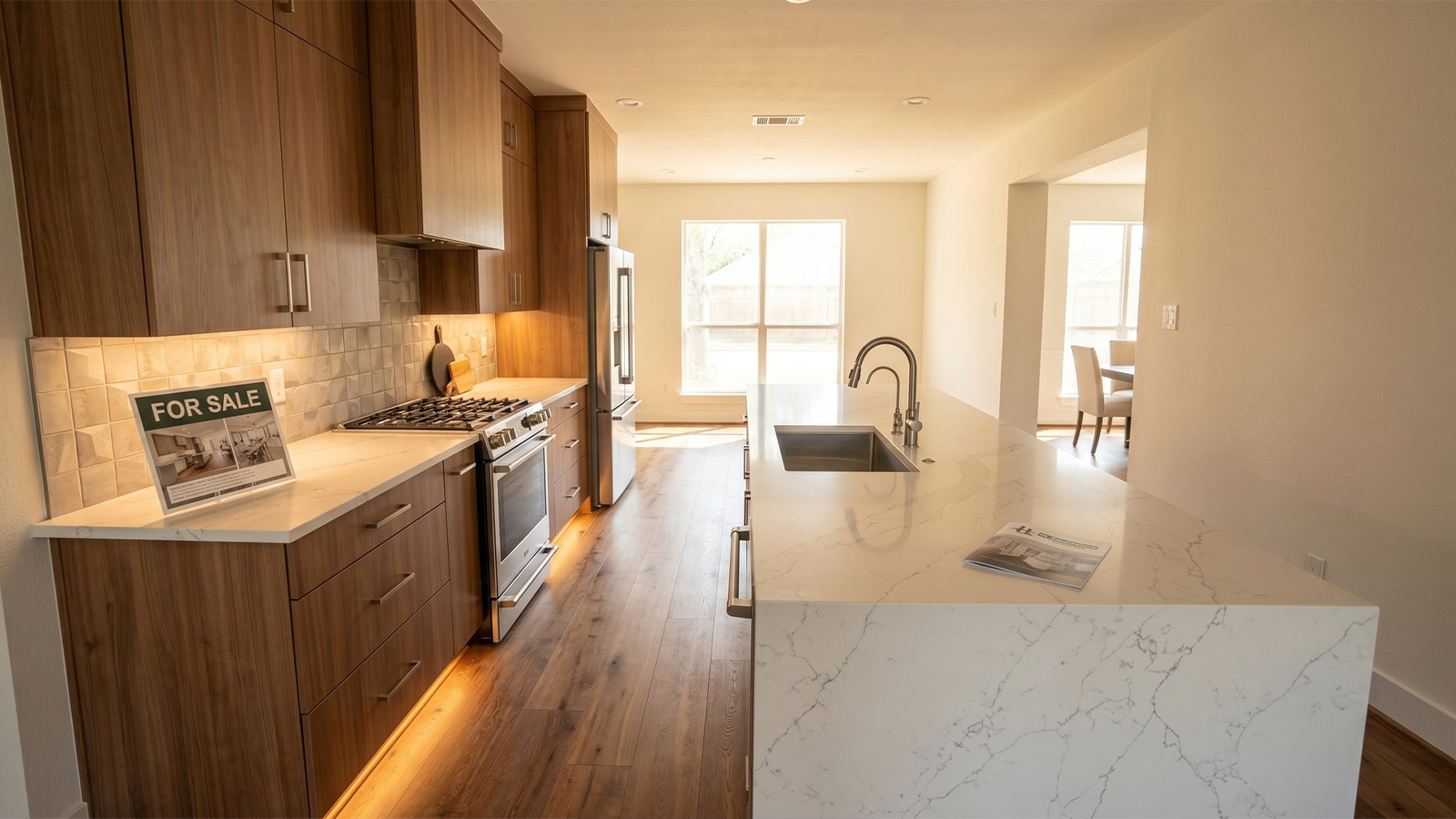
The Cost vs. Value Report by Remodeling Magazine consistently shows that a minor kitchen update — closer in scope to what this guide defines as a renovation — outperforms a major upscale remodel in percentage of cost recouped at resale. A minor kitchen update nationally recouped approximately 96% of its cost in recent reporting years. A major upscale kitchen remodel recouped closer to 50%.
If your goal is resale ROI, a targeted renovation — fresh countertops, updated cabinet hardware, replaced fixtures, an Energy Star appliance package, and new floor material — typically delivers more value per dollar than a full structural remodel. Houston’s real estate market rewards kitchens that feel current and function well, but the smarter investment is not always the larger one.
Should You Renovate or Remodel Before Selling in Houston?
If you are selling within twelve months, prioritize renovation-level upgrades — countertops, fixtures, cabinet hardware refresh, floor — because the ROI window is too short for a full remodel to pay back. If you are selling in two to five years, a targeted remodel fixing a genuine layout problem can increase your buyer pool, but only if the current kitchen layout is a recognized deterrent in your specific Houston market. Consult a Houston Association of Realtors member agent who knows your zip code before committing to major remodel scope for resale purposes alone.

Remodel or Renovation — A Quick Self-Assessment
If you can answer yes to all three of these, a renovation is almost certainly your scope. Your cabinet boxes are structurally intact. You are satisfied with where your sink, range, and refrigerator are positioned. Your primary complaint is visual, not functional.
If you answer no to any of them — or if your current kitchen has a layout that actively limits how you cook or live in the space — a remodel is worth evaluating. HL Remodeling works exclusively in the Houston market and can tell you within the first conversation which scope your project actually requires and what it is likely to cost. Reach our remodeling team at (346) 837-0007 or request a free consultation through the HL Remodeling website.
Frequently Asked Questions
What is the difference between a kitchen remodel and a kitchen renovation?
A kitchen renovation updates existing surfaces — cabinetry, countertops, fixtures, floor, and appliances — without changing the layout or moving any plumbing. A kitchen remodel changes the structure of the space itself: moving walls, relocating plumbing rough-ins, rewiring circuits, and reconfiguring the floor plan so the kitchen functions differently than it did before.
Which costs more — a kitchen remodel or renovation?
A remodel costs significantly more. In Houston, a kitchen renovation typically runs $8,000–$30,000. A full kitchen remodel ranges from $35,000 to $100,000 or more, depending on structural scope, plumbing relocation, and finish level.
Do I need a permit to renovate my kitchen in Houston?
Cosmetic renovation work — replacing countertops, refacing cabinets, swapping fixtures in the same location — does not require a permit in Houston. Work that touches plumbing rough-ins, load-bearing walls, or dedicated electrical circuits requires permits through the City of Houston Permitting Center and TDLR-licensed tradespeople.
Does a kitchen remodel or renovation add more value at resale?
According to the Cost vs. Value Report by Remodeling Magazine, minor kitchen updates recoup approximately 96% of their cost at resale compared to roughly 50% for a major upscale remodel. For most homeowners selling within a few years, a well-targeted renovation delivers stronger ROI than a full remodel.
How long does a kitchen remodel take compared to a renovation?
A kitchen renovation typically takes one to four weeks from demo to completion. A full kitchen remodel runs six to sixteen weeks, with additional time added for permit processing through the City of Houston Permitting Center and inspection scheduling before structural or plumbing phases can proceed.