
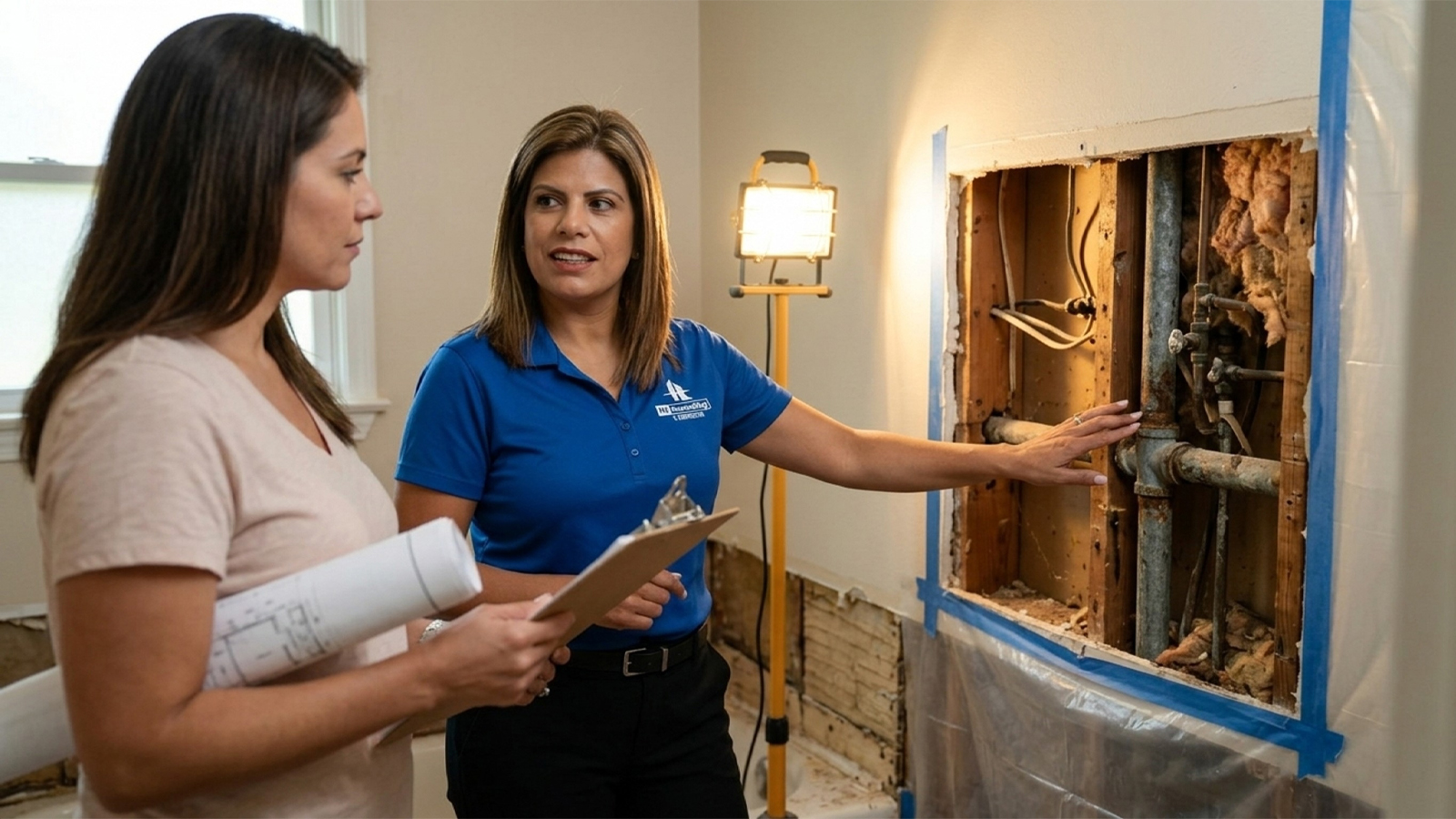
You got a fixed number from your contractor, and it felt solid. Then you picture demo day, and a quieter question creeps in: what happens to that number once the wall actually comes down? If your house was built before 1980, that question matters more than you think, and it’s the reason a Houston bathroom remodel in an older home deserves a real look behind the drywall before anyone signs anything. Before you commit money, have a Houston bathroom remodeling Contractor walk the space and tell you what’s actually there, not what a generic estimate assumes, allowing for necessary upgrades.
Key Takeaways
- Galvanized pipe, ungrounded wiring, and asbestos-containing materials show up regularly in Houston homes built before 1980.
- Houston’s humidity can grow mold inside an opened wall within 48 to 72 hours if it isn’t sealed and dried properly.
- Clay soil movement across Houston hides foundation cracks behind cabinetry until a remodel opens things up.
- A pre-demo walkthrough is the only reliable way to know what’s really behind your walls before you commit money.
- A skipped inspection can turn a small, cheap fix into a five-figure remediation bill later.
Why Older Homes Built Before the 1980s Hide Costly Surprises
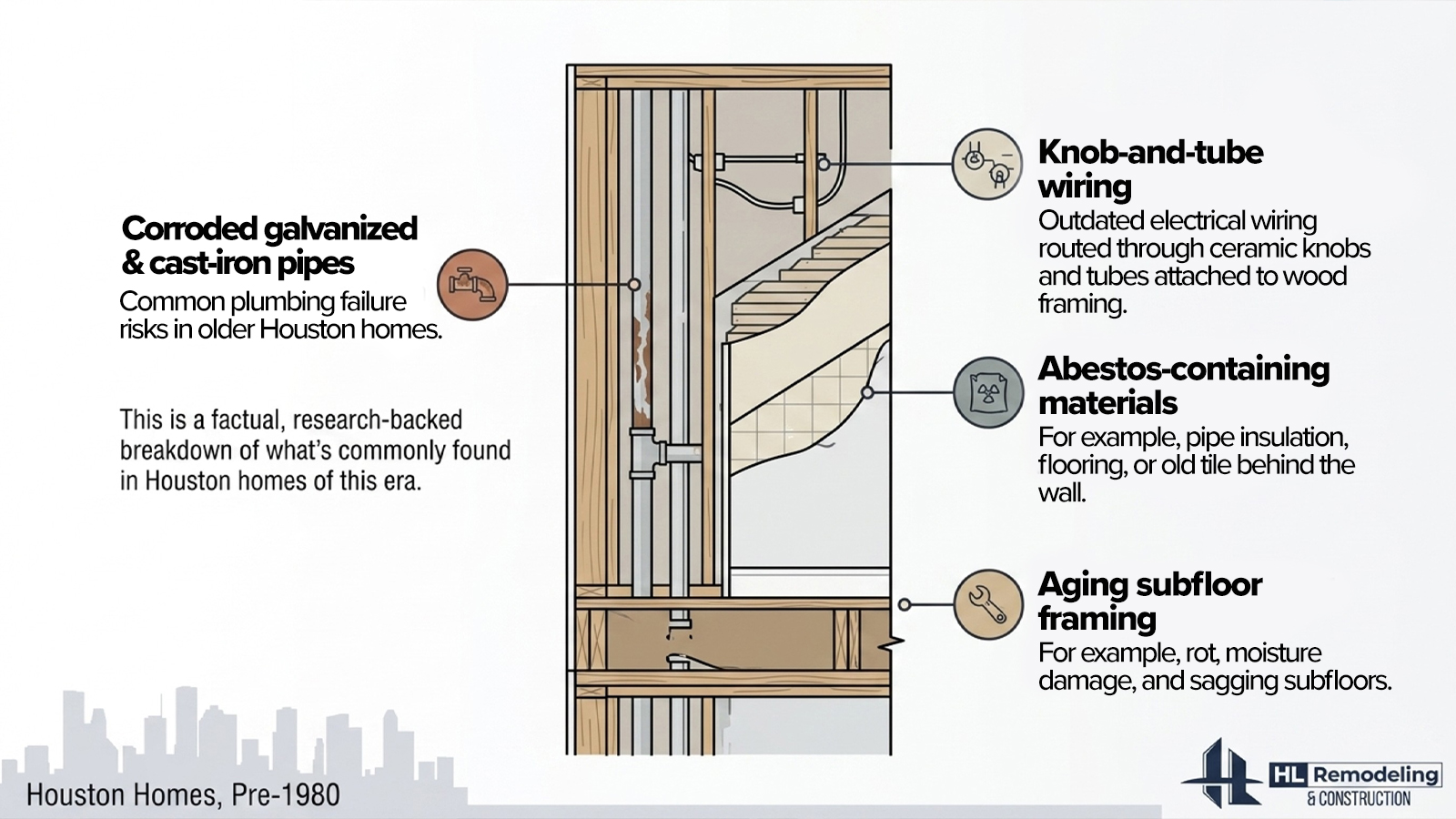
Houston’s median home age lands right around 1980, which often means outdated plumbing systems that may still use cast iron pipes. That means a large share of the local housing stock was built during an era when construction standards looked nothing like they do now. Not a knock on the builders. Just a fact that changes what a contractor should expect to find once a wall opens, especially for buyers concerned about hidden damage.
Galvanized Pipe and Old Wiring: The Two Most Common Culprits
Galvanized steel pipe corrodes from the inside out. A supply line can look fine right up until someone disturbs it, and then the rust and mineral buildup that’s been quietly narrowing the pipe for decades gives way. A project that never touched plumbing suddenly needs it.
Wiring tells a similar story. Knob-and-tube and ungrounded wiring were standard through the 1960s and into the 70s, and neither meets current Houston code. Original wood-frame joists and subfloor from this era also weren’t built to carry the fixture loads that modern vanities, soaking tubs, and tile installations demand.
Asbestos in Ceilings, Flooring, and Insulation
Popcorn ceilings, vinyl floor tile adhesive, and old pipe wrap insulation from this construction period frequently contain asbestos. None of it announces itself. A homeowner can’t look at a ceiling and know whether it’s safe to sand or scrape, and that’s exactly why this category gets handed to a professional rather than tackled with a home test kit. If your bathroom has any of these materials, it’s worth asking about testing before demo is even scheduled, not after.
What Opening the Wall in Your Bathroom or Kitchen Can Reveal
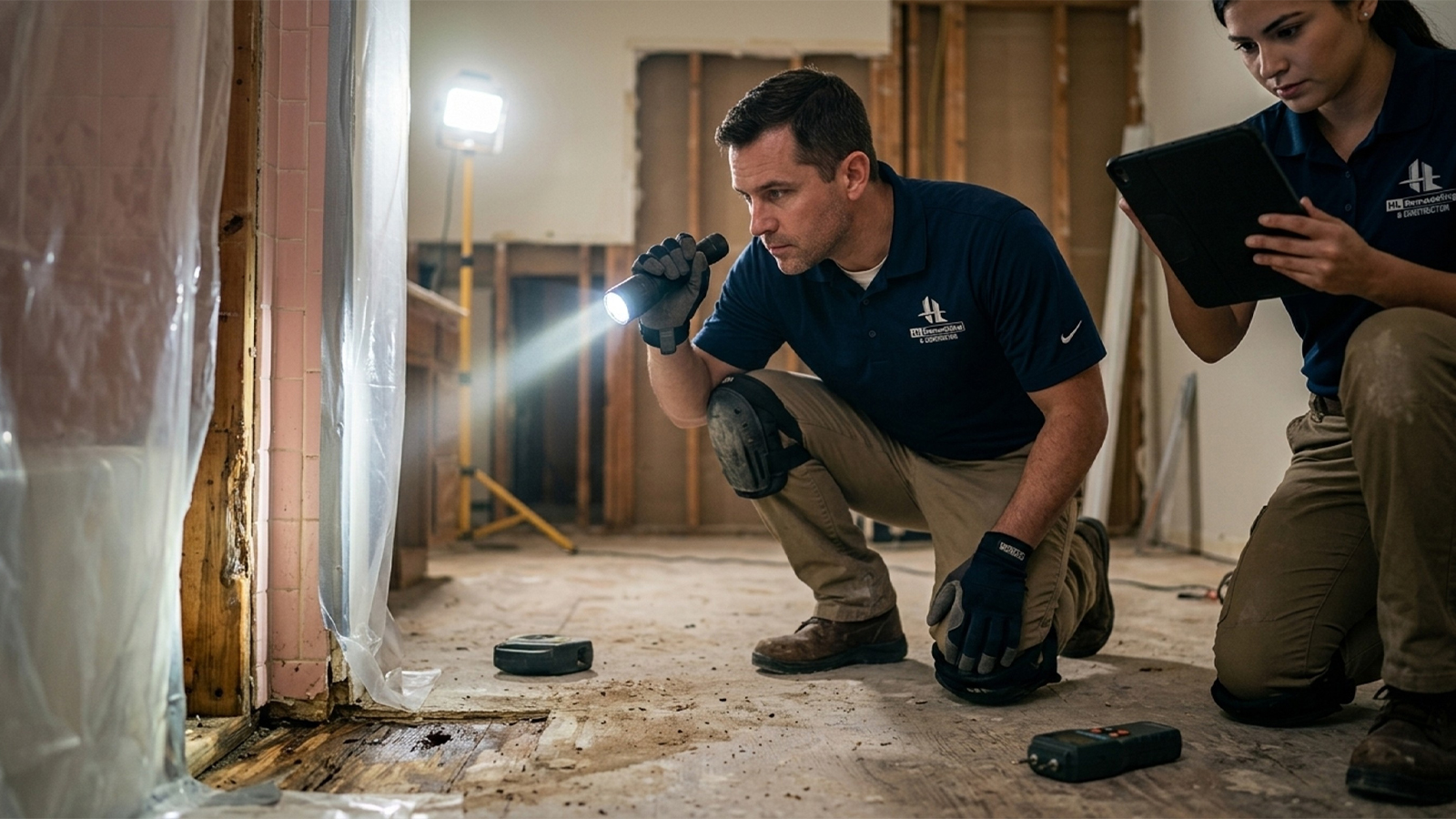
Once a wall actually comes down, Houston’s climate and soil start working against you fast.
Moisture and Mold Risk Behind Bathroom and Kitchen Walls
Houston’s humidity speeds up corrosion and moisture problems in ways drier climates don’t deal with. A wall cavity left open or improperly dried can grow mold colonies within 48 to 72 hours. That clock doesn’t pause for a busy work crew or a delayed material order. A shower wall or kitchen plumbing wall with a slow, unnoticed leak can hide months of moisture damage behind tile that looked fine from the front.
Foundation Shifting Hidden Behind Cabinetry and Drywall
Houston sits on expansive clay soil, often called Houston Black Clay or gumbo, that swells when wet and shrinks when dry. That constant movement creates cracks in walls, floors, and ceilings that frequently hide behind cabinetry until a remodel opens the space up. Once several of these issues stack in the same wall, cost and inspection complexity multiply, not just add.
Common finds include leaks behind walls and hidden moisture issues.
- Slow leaks behind shower tile that soften subfloor over months without any visible sign
- Foundation cracks masked by cabinetry, baseboards, or a fresh coat of paint from a previous owner
- Vent stack corrosion that traps humidity inside wall cavities
- Settling cracks around window and door frames that point to deeper structural movement often require plaster repair or other renovations.
A permitted job requires inspection. An inspector who spots ungrounded wiring or a code violation can halt the entire project until it’s corrected. That’s a hard stop nobody wants to hit mid-renovation, and it’s exactly the kind of finding a walkthrough should catch first.
The Real Cost of Waiting to Update Your Bathroom
Every one of these risks compounds the longer it goes unaddressed. Getting ahead of them starts with how to plan a bathroom renovation the right way, with the walls opened and inspected before pricing is locked in.
How a Small Surprise Becomes a Big Bill
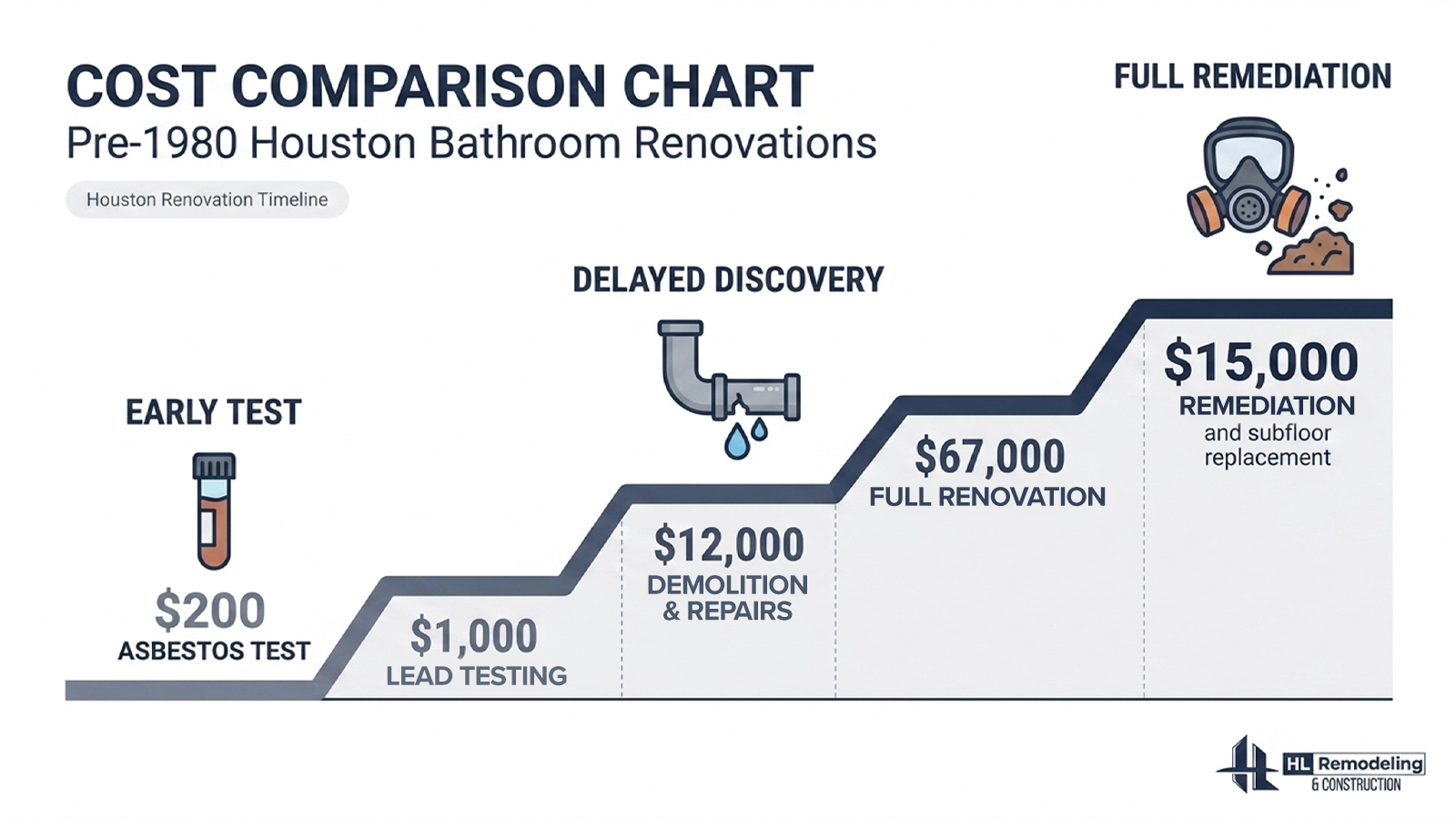
A $200 asbestos test skipped before demo can become a $15,000 remediation bill after exposure. The math never favors waiting. Same pattern with pipe and wiring: a repiping job planned into scope from the start costs far less than an emergency leak repair plus drywall replacement discovered mid-renovation.
Why Delays Cost More Than Just Time
One homeowner we worked with in an older Houston neighborhood assumed their bathroom project was purely cosmetic. Once demo started, we found corroded galvanized supply lines and ungrounded wiring behind the vanity wall. Because the discovery happened during a planned pre-demo walkthrough rather than mid-project, the fixes were priced and scheduled before the crew ever picked up a hammer, and the timeline held. These are exactly the kind of hidden costs of a bathroom remodel that catch homeowners off guard when nobody looks first.
Delays from a surprise finding don’t just cost money directly. They push your project into the next contractor’s queue, adding months to what was supposed to be a 90-day renovation. Unpermitted or code-blind work discovered later forces a redo of finished work, which doubles labor costs on that portion of the job and may void any warranty. A future buyer’s inspector will eventually find what your permit inspector would have caught first, so protecting resale value means dealing with it now.
| Hidden Issue Found Mid-Remodel | Cost If Caught Before Demo | Cost If Discovered During Demo |
|---|---|---|
| Asbestos in flooring or ceiling | About $200 for testing | $10,000 to $15,000+ for remediation |
| Galvanized pipe corrosion | Repiping planned into scope | Emergency leak repair plus drywall replacement |
| Ungrounded or knob-and-tube wiring | Rewiring should be budgeted upfront to replace aging plumbing and electrical systems. | Permit hold plus mid-project rework |
| Foundation shift behind cabinetry | Addressed before cabinet install | Cabinets and finishes removed and redone |
If your home fits the pre-1980 profile, this is the table worth sitting with for a minute before you approve any estimate.
Conclusion
A pre-1980 Houston home isn’t a liability. But it does come with a checklist most contractors won’t walk through with you before they hand you a number.
You don’t need to become an expert in galvanized pipe or knob-and-tube wiring to make a smart decision here. You just need someone who’s opened hundreds of Houston walls like yours to look before you sign anything. Knowing how to choose the right remodeling contractor in Houston starts with finding one willing to do that walkthrough before you sign. We walk every pre-1980 kitchen and bathroom in person, flag the risk areas on the spot, and put the cost picture in writing before demo day ever arrives. If you’d like that second set of eyes on your project, call (346) 837-0007 or request a free consultation and we’ll go from there.
FAQ
Do I need a permit to remodel a bathroom in Houston?
Most Houston bathroom remodels that touch plumbing, electrical, or structural elements require a permit and inspection. That inspection can flag exactly the outdated wiring or plumbing common in pre-1980 homes, and an inspector who finds a violation can stop work until it’s corrected. A pre-demo walkthrough catches these issues on your terms, before an inspector catches them on theirs.
What is commonly found behind walls when remodeling a home built before 1980 in Houston?
Galvanized pipe, ungrounded or knob-and-tube wiring, asbestos-containing materials, and moisture damage are the pattern we see most often. The exact combination varies from house to house, even on the same street. That variation is exactly why a professional look before demo matters more than assuming your neighbor’s remodel tells you what to expect.
How do I know if my pre-1980 Houston home has galvanized pipe?
The construction date and visible pipe material at your supply lines offer clues, but they don’t tell the whole story. Galvanized steel corrodes from the inside out, so a pipe can look sound while it’s failing internally. A contractor’s inspection is the only reliable way to confirm what condition your plumbing is really in.
How can I tell if my popcorn ceiling contains asbestos?
You can’t confirm it by looking at it. Lab testing is required to know for certain, and that test typically costs a fraction of what remediation costs if the material is disturbed without knowing. Given the stakes, testing before any ceiling work begins is the only responsible move.
Why do Houston homes develop foundation cracks, and does it affect my remodel?
Houston homes develop foundation cracks because expansive clay soil swells and shrinks with moisture, shifting the structure over time. Those cracks often hide behind cabinetry and baseboards until a remodel opens the space. Installing a new kitchen or bath on top of an unresolved foundation issue means rebuilding on the same problem you just paid to cover up.
What electrical wiring problems are common in homes built before 1980?
Knob-and-tube wiring and ungrounded circuits are the two issues we encounter most in this era of construction. Neither meets current Houston code, and either one can trigger a mid-project inspection hold on a permitted job. Identifying this before demo lets you budget for it instead of absorbing it as a surprise.
How much does it typically cost when a remodel uncovers hidden damage?
Costs vary by issue, but the pattern is consistent: catching a problem before demo costs a fraction of catching it during demo. Asbestos testing runs around $200 versus $10,000 to $15,000 in remediation after exposure, and repiping planned into scope costs far less than an emergency leak repair mid-project. A written cost picture from a pre-demo walkthrough is what keeps these numbers from becoming a surprise invoice.
Can unpermitted or outdated work stop my renovation or affect resale later?
Yes, on both counts. A current inspector can halt work on a permitted job the moment they spot code-blind wiring or plumbing, and a future buyer’s inspector will eventually find the same issues during a sale. Catching it now, on your own terms with an owner-led walkthrough, beats having a stranger find it later.