

You’re holding two or three contractor quotes right now, and they probably look nothing alike. That’s normal, and it’s a good sign you’re stopping to think instead of just picking the lowest number. A kitchen remodel contract should include a detailed scope of work, an itemized cost breakdown, a milestone-based payment schedule, a written change order process, permit responsibility, material allowances, warranty terms, and proof of coverage. Our kitchen remodeling team puts every one of these items in writing before asking for a deposit, and that level of detail is what you should expect from any team offering expert kitchen remodeling in Houston.
Most homeowners assume all kitchen remodel contracts look about the same, so they focus on the bottom-line number and move on. That’s backwards. The dollar figure on a quote tells you almost nothing about whether the project will finish on time, and it won’t tell you if a $30,000 estimate quietly turns into $42,000 by month two. The contract’s level of detail is what protects you. The price tag doesn’t.
Key Takeaways
- A solid kitchen remodel contract needs a written scope of work, an itemized cost breakdown, and a payment schedule tied to milestones, not one lump sum up front.
- Houston homeowners should confirm, in writing, who is responsible for permits. The Houston Permitting Center requires permits for most kitchen projects that involve electrical, plumbing, or structural work.
- A documented change order process stops the most common source of mid-project disputes: unapproved scope creep that shows up as a surprise invoice.
- Texas sets no legal cap on deposits. A fair deposit, commonly 10 to 30 percent, and a lien waiver at each payment stage are protections worth asking for directly.
- Verbal promises, vague allowances, and missing proof of coverage are clear signs it’s time to keep shopping.
Why Contract Details Matter for a Kitchen Remodel
Houston’s permitting process moves on its own schedule. If your contract doesn’t say who’s in charge of filing and tracking permits, you could find out three weeks in that inspections haven’t even been scheduled. That delay falls on you, not the contractor, unless the contract says otherwise.
Houston’s Older Homes Raise the Stakes
Many Houston kitchens sit inside homes built decades ago, in neighborhoods like Oak Forest, Garden Oaks, and Meyerland. Slab foundations, aging plumbing, and old electrical panels are common once demolition starts. A contract that says “repair as needed,” without a clear process for pricing that repair, gives a contractor room to treat every surprise as a blank check. Gulf Coast humidity and foundation movement make this worse, since ƒ and flooring installed without planning for moisture can warp or shift within a year.
What a Vague Kitchen Remodeling Contract Actually Costs You
National data puts the average kitchen remodel cost between roughly $25,000 and $50,000, with high-end projects running well past that, according to HomeLight. On a project that size, a contract missing specifics isn’t a small oversight. It’s a financial risk. Every undefined line item is a place where a kitchen remodeling project can quietly go over budget, and those overruns rarely get noticed until the invoice shows up.
If you’re mid-comparison right now, it’s worth sitting down with someone who will walk through this list line by line before you commit. A free consultation costs you nothing and gives you a second set of eyes on whatever quote you’re holding.
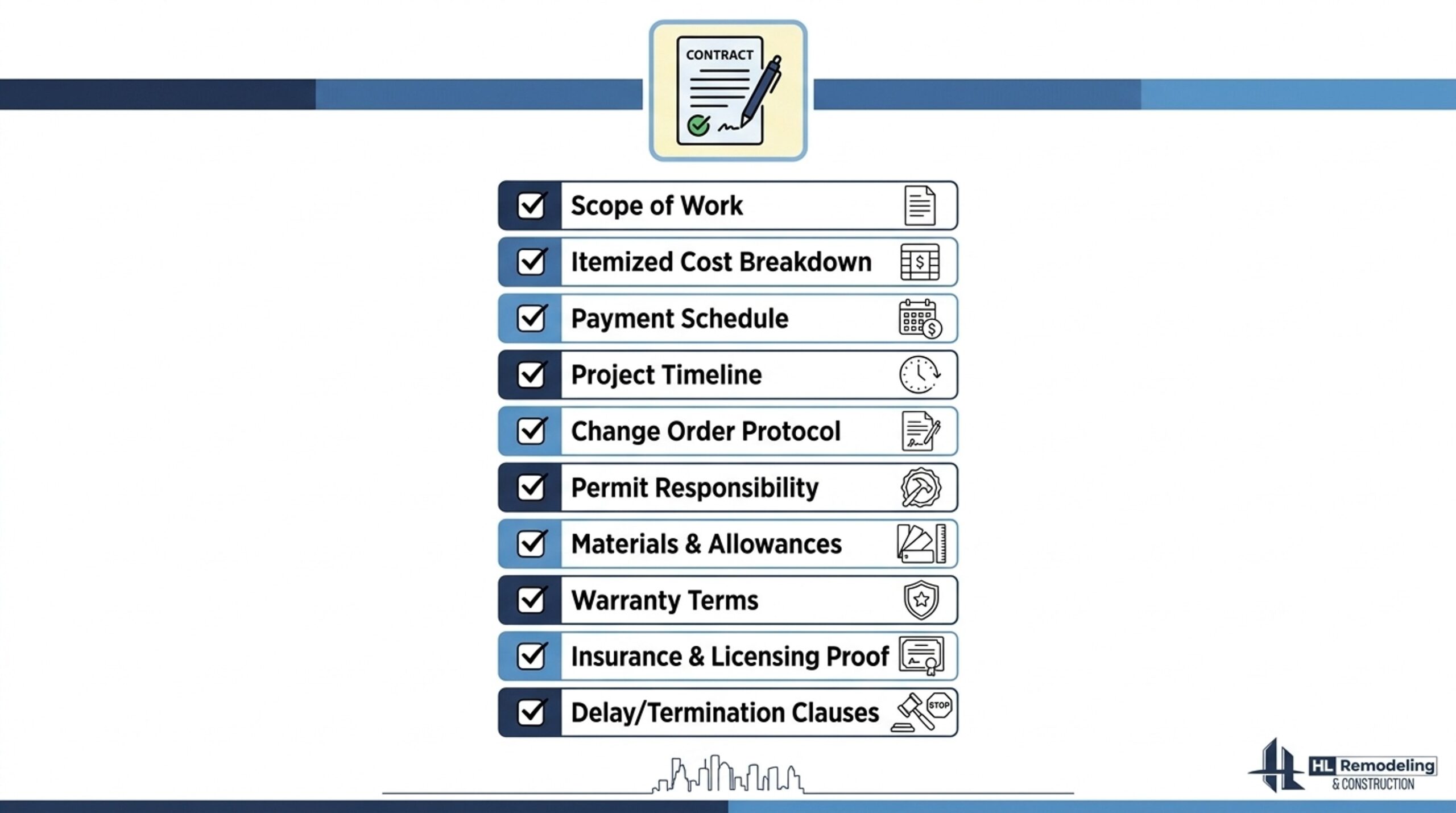
What Should Be Included In The Contract? The Must-Have Checklist
This is the part most homeowners skim past, and shouldn’t. A kitchen remodel contract is only as strong as what it requires each side to actually do, in writing.
Scope of Work & Specifications
Your contract should name brands, models, dimensions, and finish levels, not generic phrases like “install new cabinets.” Look for language that works both ways: the contractor agrees to supply and install specific named cabinetry and countertop materials by a stated date, and the client agrees to finalize finish choices by a matching deadline. That two-sided structure turns a vague promise into a project scope you can actually enforce.
Itemized Cost Breakdown & Payment Schedule
A real cost breakdown separates labor, materials, design fees, and permit costs into their own line items instead of bundling everything into one number. Your payment schedule should release funds based on finished milestones, like demo, rough-in, cabinet install, and final walkthrough, not random calendar dates. That setup protects you if work stalls, since payment stops when progress does.
Complete Project Timeline & Milestone Dates
Every contract needs a written timeline with real dates for each phase, not a vague guess of “8 to 12 weeks.” Ask for clear start and finish targets for demo, framing, electrical, plumbing, and finish work. A kitchen remodel without a written timeline leaves a contractor with no real accountability for delays, and it makes it harder to confirm when the project is truly complete.
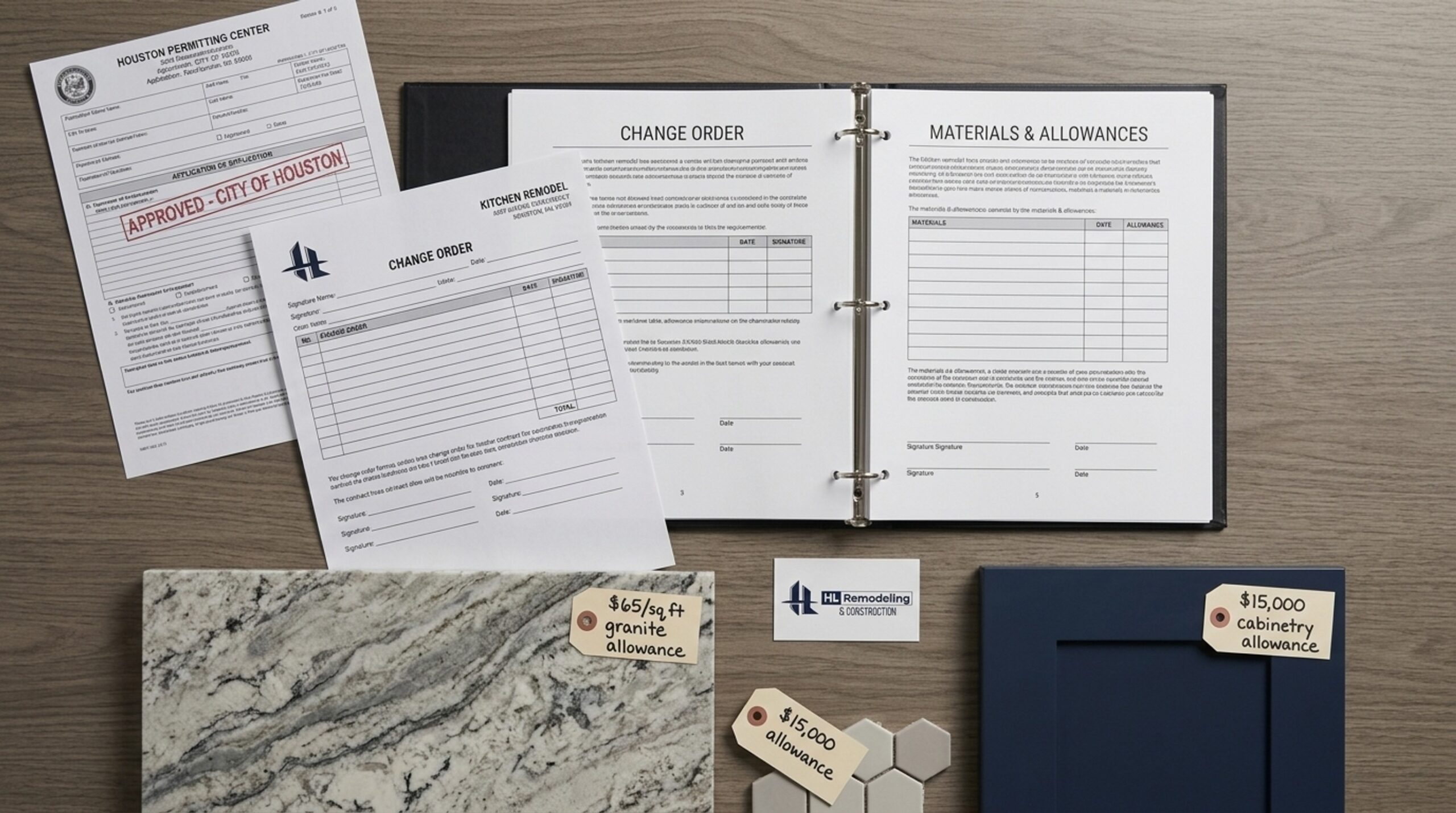
Change Orders, Permits, and Materials: The Clauses Homeowners Overlook
These three clauses cause more disputes than almost anything else in a remodeling contract, and they’re also the ones homeowners are most likely to skip reading closely.
What Counts as a Change Order
A change order is a written, signed document that spells out any shift in scope, cost, or time before new work begins. If a contractor wants to move a gas line that wasn’t in the original plan, that’s a change order, not a verbal “while we’re in here” add-on. No work outside the original scope should start without your signature first.
Who’s Responsible for Permits and Code Compliance
Your contract should name who pulls permits and who pays if an inspection fails. Houston permitting for kitchen remodels usually covers electrical, plumbing, and any structural changes. Building code rules for GFCI-protected outlets near countertops trip up inexperienced crews more often than homeowners expect.
Materials, Allowances, and Custom Appliances
Vague dollar allowances for tile, countertops, or appliances are a top cause of budget overruns, and this happens once a client picks something above the stated allowance. A fixed-price contract locks in your total cost no matter how many labor hours it takes. A cost-plus contract bills actual costs plus a fee, which means you need tighter allowance language and stricter change order rules to avoid surprises. For custom kitchens with specific appliance brands or finishes, get the exact model numbers written into the contract instead of settling for a dollar placeholder.
Warranty, Coverage, and Delay Protections Every Contract Needs
These three clauses protect you after the work is done, not just during it.
Warranty Terms Worth Getting in Writing
A workmanship warranty should last at least one to two years, matching standards set by the National Association of the Remodeling Industry (NARI) for its member contractors. The contract should separate workmanship coverage from manufacturer warranties on appliances and fixtures, since these are two different guarantees with different claims processes. Both should match the quality of materials actually installed.
Proof of Insurance and Licensing
Require proof of general liability insurance and workers’ compensation before any crew sets foot in your house. This protects you if someone gets hurt on your property or if bad work damages your home. A real remodeling business will hand this over without hesitation.
Delay and Penalty Clauses
Your contract should state exactly what happens if a milestone gets missed, with a financial remedy, not just an apology. If a contractor won’t put a delay penalty in writing, that tells you something about how seriously they take their own timeline. The Texas Deceptive Trade Practices Act also gives homeowners legal options if a contractor misrepresents warranty terms or project scope.
Red Flags: Contract Language That Signals Risk
Some warning signs show up before you even sign anything.
- A contractor who promises details verbally but says the written contract will “follow later,” after the deposit clears.
- Allowance language that lists a category, like “countertops: allowance TBD,” without a dollar figure or material grade attached.
- No mention of a lien waiver at each payment stage, which can leave your house exposed to a mechanic’s lien under Texas Property Code Chapter 53, even after you’ve paid in full.
- A deposit request well beyond the common 10 to 30 percent range, especially with no payment schedule tied to actual finished work.
One Houston homeowner we spoke with during an early consultation had already paid a 50 percent deposit to a previous contractor who vanished after demo. That left exposed plumbing and no signed scope of work to point to. Problems like that are preventable with a contract that ties payment to milestones instead of dates, and with hiring remodelers who put accountability in writing from day one. If a proposal shows more than one of these red flags, check the contractor’s standing with the Better Business Bureau before signing anything.
Houston-Specific Considerations: Permitting, Licensing, and Common Disputes
Permitting and licensing rules shift depending on exactly where your home sits, and that detail belongs in your contract.
The Houston Permitting Center Process
Kitchen remodels inside city limits go through the Houston Permitting Center, located on Washington Avenue, using the iPermits portal for electrical, plumbing, and mechanical permits. Houston enforces the 2021 International Residential Code with local add-ons, which means inspection rules for outlet placement and wiring near water sources are stricter than some homeowners expect.
Licensed Trades and the TRCC’s Defunct Status
Texas has no statewide general contractor license, but electricians and plumbers must carry their own state licenses no matter who the general contractor is. Homeowners sometimes think of the Texas Residential Construction Commission as the place to file a complaint, but that agency was shut down in 2010. Texas Property Code Chapter 53, the mechanic’s lien law, is the real legal protection homeowners rely on today, not the old TRCC rules.
Jurisdiction Matters: Look Between Counties
A kitchen remodel inside Houston city limits follows Houston Permitting Center rules. A home in Katy or unincorporated Harris County often falls under separate county permitting rules instead. Your contract should state which jurisdiction applies and confirm who’s responsible for filing there, since the process and timeline can differ.
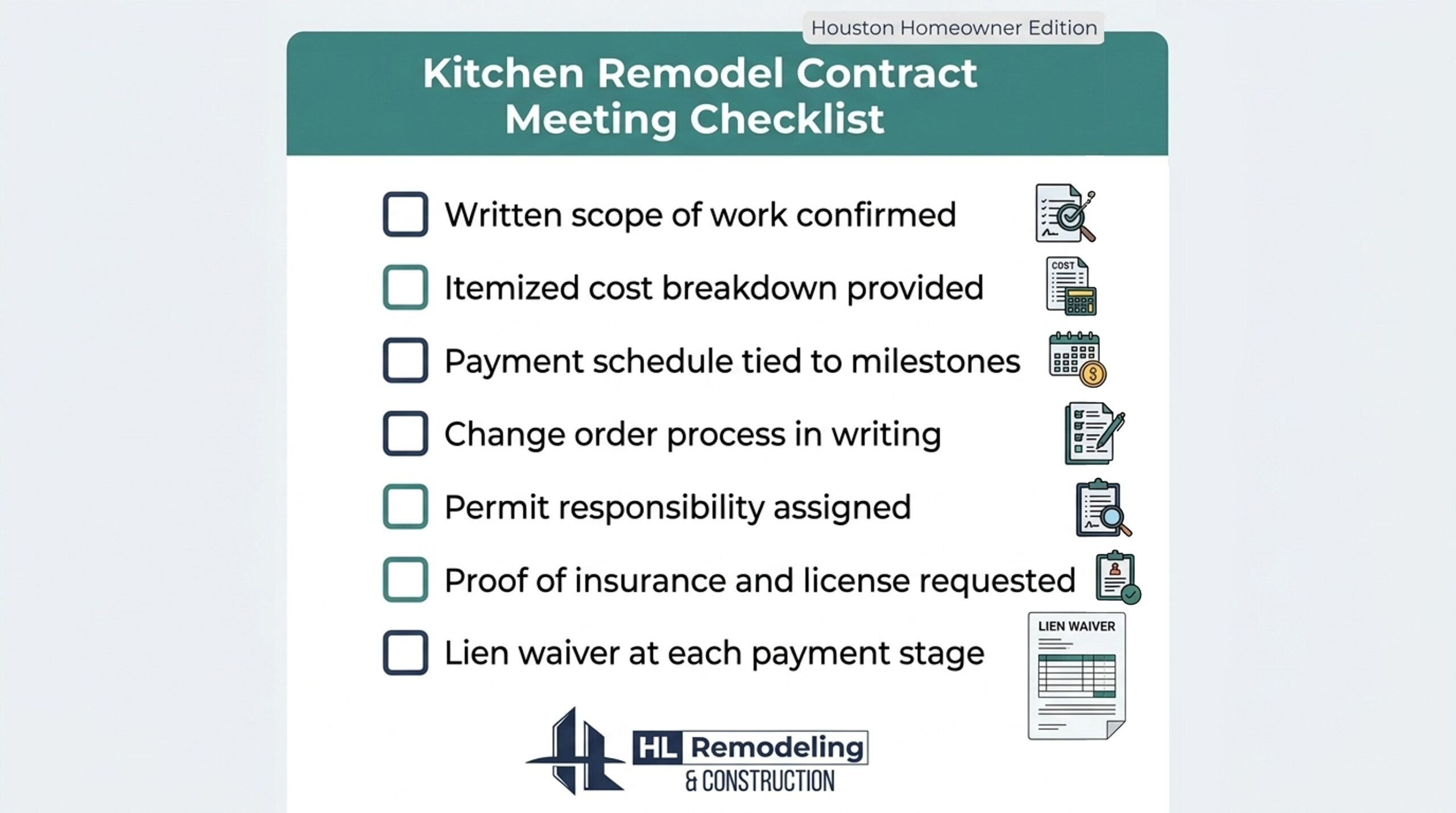
Sample Contract Checklist to Bring to Your Contractor Meeting
Bring this list to your next contractor meeting, whether you screenshot it or print it out.
| Contract Element | What to Confirm |
|---|---|
| Scope of work | Named products, dimensions, and finish levels, not generic descriptions |
| Cost breakdown | Labor, materials, permits, and design fees itemized separately |
| Payment schedule | Tied to milestones, not calendar dates |
| Timeline | Specific start and completion dates for each phase |
| Change order process | Written and signed before any new work begins |
| Permit responsibility | Named party, with Houston jurisdiction confirmed |
| Allowances | Dollar figures and material grades, not vague placeholders |
| Warranty | Duration and what’s covered, workmanship versus manufacturer |
| Proof of coverage | Certificate of liability and workers’ comp provided upfront |
| Lien waiver | Requested at every payment stage |
Before You Sign: Final Verification Steps
Ask for a written contract template before your first meeting, rather than reading one for the first time at the signing table. That gives you time to flag anything missing without pressure. Compare the proposal against NARI member standards, and check the contractor’s Better Business Bureau profile for complaint patterns before committing to anything.
We built our process around this exact checklist, and we’ve seen what happens when homeowners sign contracts without it. Every project starts with an itemized, written cost proposal, not a verbal estimate. You see labor, materials, and permit costs broken out line by line before any demo begins, and any change to that scope needs a signed change order that spells out the cost and time impact.
Our milestone guarantee credits $500 per week off your final invoice for any delay within our control, tied to a published schedule you see before ground breaks. We run our day-to-day operations around that schedule so nothing slips through the cracks. We also handle Houston permit filing and code compliance as part of our work, so you’re not finding out about a missed inspection after the fact. You get alerts before any crew shows up, plus a direct line to the owner throughout, from the first drawing to the final walkthrough. For custom material choices, our showroom lets you pick cabinetry, countertops, and fixtures with a dedicated specialist in one visit, so one team handles everything instead of a dozen vendors scattered around.
Conclusion
A kitchen remodel is a five-figure investment for most Houston homeowners, sometimes more. The contract is the one document that decides whether that investment goes smoothly or turns into a dispute. Every clause covered here, from scope of work to lien waivers, answers one specific question that comes up in nearly every kitchen remodeling and home remodeling project: who pays for this, who’s responsible for that, and what happens if something goes wrong. You now have the checklist. Use it to measure every quote sitting on your kitchen table, not just the one from HL Remodeling.
Ready to see what a written, itemized kitchen remodel contract looks like in practice? Schedule a free consultation with HL Remodeling, and we’ll walk through your scope, budget, and timeline in writing before any demo starts. Call (346) 837-0007 or request a consultation online, and bring whatever quotes you already have. We serve kitchen remodels across Houston and the surrounding suburbs.
FAQ
What should be included in a kitchen remodel contract?
A kitchen remodel contract should include a detailed scope of work, an itemized cost breakdown, a milestone-based payment schedule, a written change order process, permit responsibility, material allowances, warranty terms, and proof of insurance. Each item should be clear enough that two different contractors reading it would understand the project the same way. A licensed Houston remodeler will put all of this in writing before asking for a deposit.
What is a fair deposit for a kitchen remodel project?
A fair deposit for a kitchen remodel in Texas usually falls between 10 and 30 percent of the total project cost, tied to a signed scope of work. Texas has no legal cap on deposit amounts, but the Deceptive Trade Practices Act protects against unreasonably large upfront payments that aren’t backed by materials ordered or work scheduled. A contractor asking for 50 percent or more before work begins should be able to explain why in writing.
Do I need a permit for a kitchen remodel in Houston?
Most Houston kitchen remodels that involve electrical, plumbing, or structural changes need permits through the Houston Permitting Center. Projects limited to cosmetic updates, like painting or swapping hardware, usually don’t need permits. Your contract should name who files for permits and confirm which jurisdiction applies, since homes in unincorporated Harris County or Katy may follow different rules than homes inside Houston city limits.
What should I ask before signing a remodeling contract?
Before signing a remodeling contract, ask about the payment schedule, the change order process, proof of insurance, and warranty length. Also ask who pulls permits, what happens if a milestone is missed, and whether material allowances include clear dollar figures and brands. Bring a checklist like the one in this article to your contractor meeting. It makes it easy to confirm nothing important got left out.